
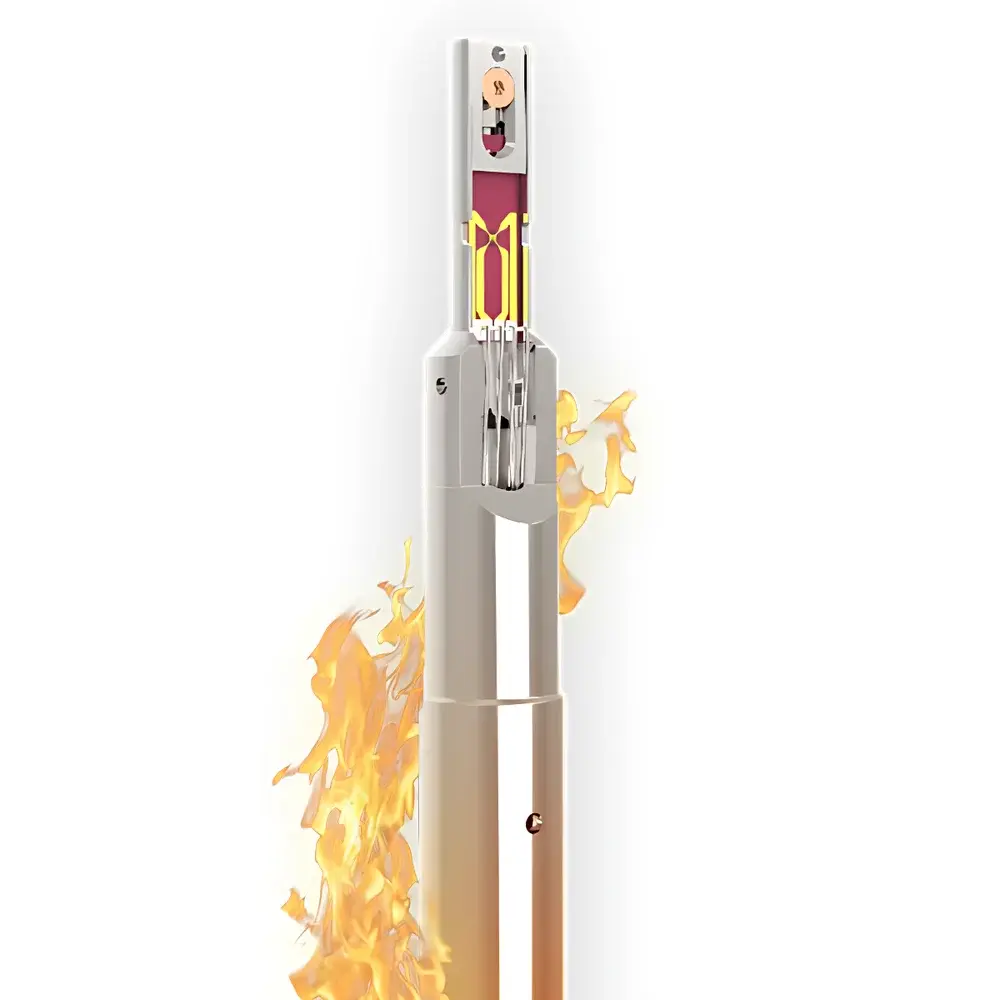
DENSsolutions Wildfire In Situ Heating TEM Holder
| Brand | DENSsolutions |
|---|---|
| Origin | Netherlands |
| Model | Wildfire |
| Temperature Range | RT–1300 °C |
| Displacement Resolution | < 200 nm |
| Tensile Rate | ≤ 0.5 nm/min |
Overview
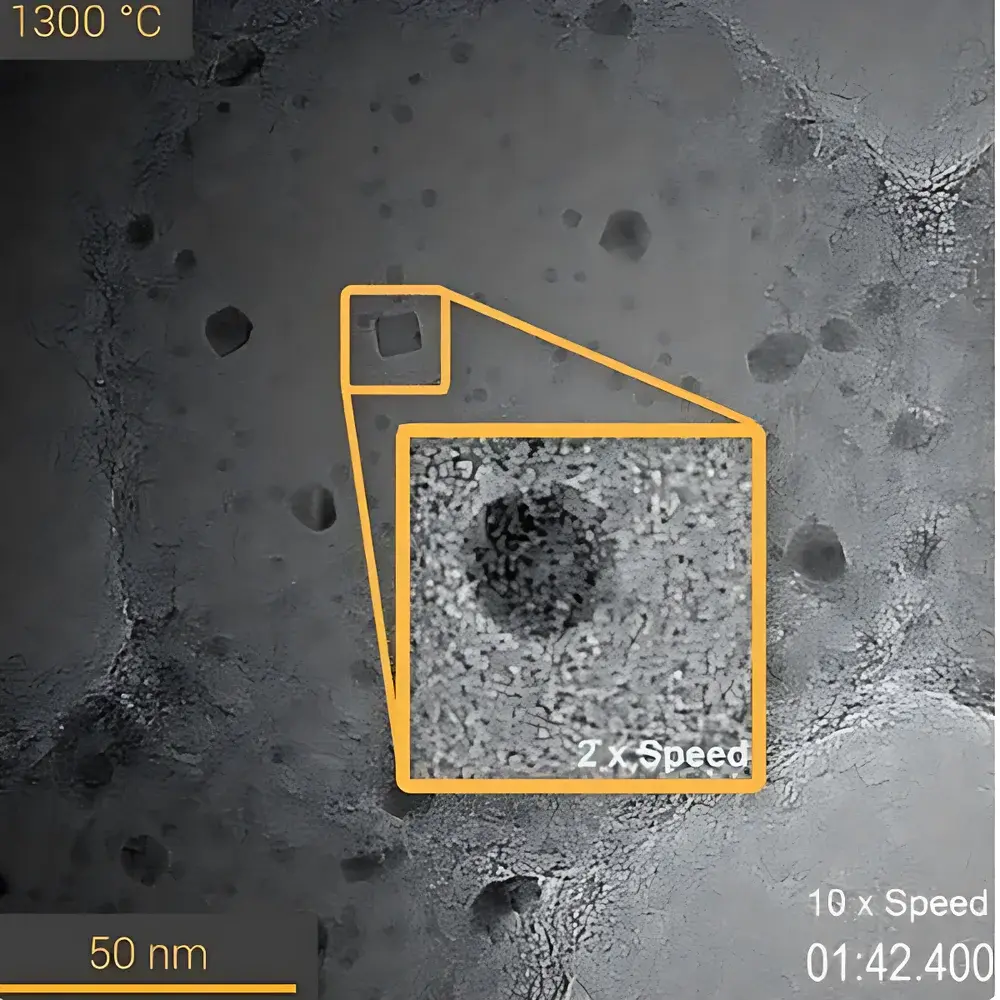
The DENSsolutions Wildfire In Situ Heating TEM Holder is an engineered solution for atomic-scale dynamic observation of materials under controlled thermal stimuli inside transmission electron microscopes (TEM). Built upon monolithic silicon nitride MEMS nanochip technology, the Wildfire enables precise, localized resistive heating of electron-transparent specimens while maintaining ultra-stable mechanical and thermal performance in high-vacuum TEM environments. Unlike conventional furnace-based or wire-heated holders, Wildfire employs a proprietary four-point probe measurement architecture integrated directly into the chip, allowing real-time, spatially resolved temperature feedback with sub-millikelvin stability—critical for quantitative in situ studies requiring reproducible thermal histories. Its design supports both standard bright-field/dark-field TEM and scanning transmission electron microscopy (STEM), preserving high-resolution imaging fidelity up to 1300 °C without compromising analytical capabilities such as energy-dispersive X-ray spectroscopy (EDS) or electron energy-loss spectroscopy (EELS).
Key Features
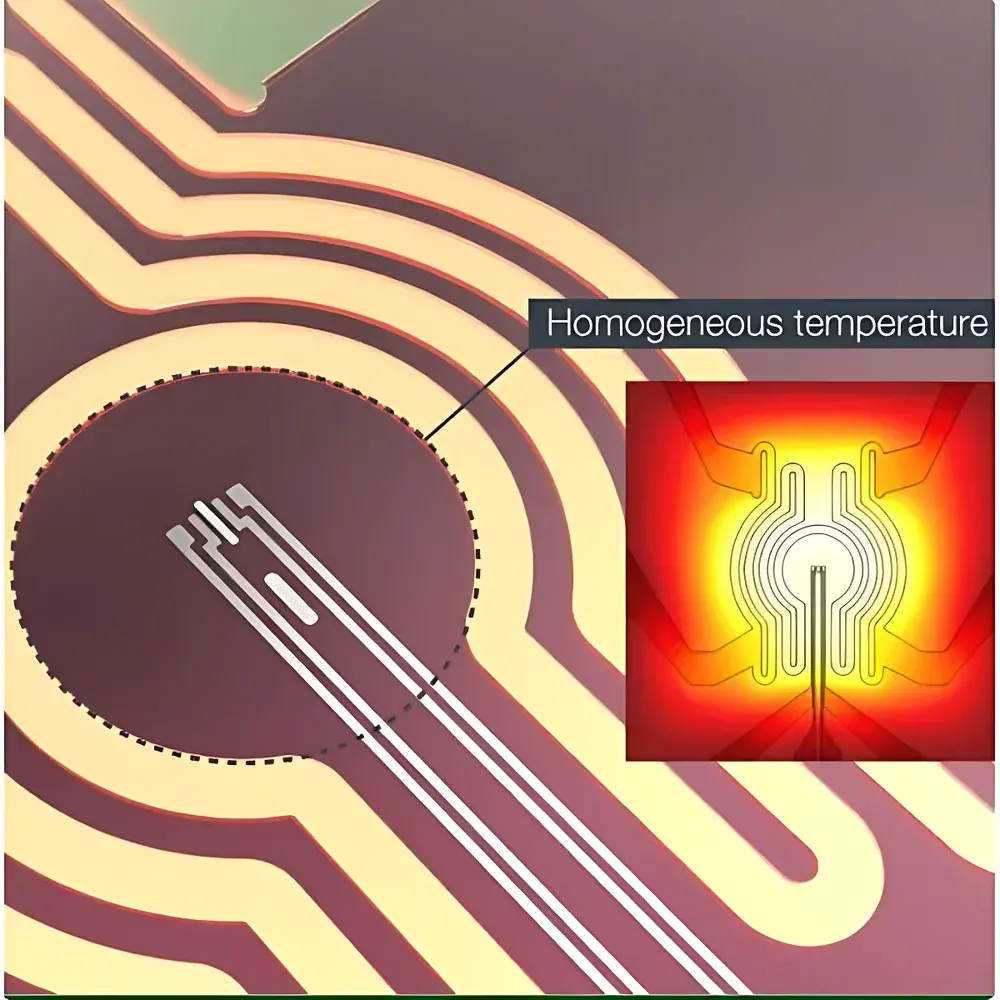
- MEMS-based nanochip architecture: Monolithic SiNx membranes with embedded Pt heaters and sensing electrodes ensure minimal thermal mass, rapid thermal response (< 100 ms step response), and negligible infrared background interference—enabling high-fidelity EDS acquisition even at 1000 °C.
- Four-point probe temperature metrology: On-chip voltage-current measurements eliminate lead resistance errors, delivering absolute temperature accuracy traceable to NIST standards and long-term stability ≤ ±0.005 °C at steady state.
- Sub-200 nm positional stability: Active thermal drift compensation and low-coefficient-of-thermal-expansion (CTE) materials maintain sample position within < 200 nm over extended heating cycles, ensuring reliable time-series imaging and tomographic reconstruction.
- Full-field thermal uniformity: Radial temperature gradients < 0.5% across the 10–20 µm observation window enable quantitative comparison of structural evolution across multiple particles or grain boundaries simultaneously.
- 70° α-tilt compatibility: Optional high-tilt configuration supports electron tomography workflows, enabling 3D structural quantification of phase transformations, sintering dynamics, or interface migration under thermal load.
- Streamlined specimen preparation: Compatible with standard FIB lift-out protocols; chips accept direct drop-cast nanoparticles, CVD-grown 2D materials, or exfoliated flakes without wrinkling or edge curling—preserving native morphology and minimizing capillary artifacts.
Sample Compatibility & Compliance
The Wildfire holder accommodates specimens ranging from single-crystal thin films to polycrystalline nanoparticle assemblies, amorphous oxides, and catalytic nanocomposites. Its chip design meets ISO 14644-1 Class 5 cleanroom handling requirements and is compatible with JEOL, Thermo Fisher Scientific (FEI), and Hitachi TEM/STEM platforms equipped with standard double-tilt or single-tilt pole pieces. All electrical interfaces comply with IEC 61000-4-2 ESD protection standards, and firmware supports audit-trail logging per GLP/GMP guidelines. Temperature calibration protocols are fully compatible with ASTM E2550 (thermal stability of materials) and ISO 11357-1 (differential scanning calorimetry reference methods), enabling cross-platform validation using SAED ring spacing or EELS plasmon peak shifts.
Software & Data Management
Control is executed via the DENSsolutions Stream Engine software suite, which provides synchronized acquisition of TEM images, temperature logs, and electrical parameters (voltage, current, resistance) at user-defined sampling rates up to 1 kHz. The software supports scripting (Python API), time-stamped metadata embedding (FAIR-compliant), and export to HDF5 or MRC formats for integration with DigitalMicrograph, HyperSpy, or TomoJ pipelines. All temperature setpoints, ramp profiles, and hold durations are stored with cryptographic hash signatures to satisfy FDA 21 CFR Part 11 requirements for electronic records and signatures in regulated research environments.
Applications
- Real-time observation of solid-state phase transitions (e.g., martensitic transformation, polymorphic switching)
- In situ sintering kinetics and grain growth analysis in ceramic and metallic powders
- Thermally driven surface reconstruction and facet evolution in catalytic nanoparticles (e.g., PdAu, NiFe, CoOx)
- Oxidation/reduction dynamics at buried interfaces under controlled thermal gradients
- Thermal stability assessment of 2D materials (MoS2, h-BN, graphene) and heterostructures
- Quantitative activation energy extraction via Arrhenius analysis of defect nucleation rates
FAQ
What vacuum compatibility does the Wildfire holder support?
The Wildfire operates reliably in standard TEM high-vacuum conditions (≤1×10⁻⁷ mbar) and is rated for use in UHV systems down to 1×10⁻⁹ mbar with optional bake-out procedures.
Can EDS spectra be acquired quantitatively at 1000 °C?
Yes—the low-emissivity heater design minimizes blackbody radiation in the X-ray detection window, and spectral deconvolution algorithms in modern EDS systems (e.g., Bruker ESPRIT, EDAX TEAM) accommodate thermal background correction without loss of peak-to-background ratio.
Is the temperature calibration traceable to international standards?
Calibration is performed using dual-reference methods: (1) EELS plasmon shift against known standards (e.g., Si, Al), and (2) SAED lattice parameter expansion validated against NIST SRM 640e silicon powder—both documented in the Certificate of Conformance supplied with each chip batch.
How is thermal drift corrected during long-duration experiments?
Drift compensation combines hardware-level thermal symmetry design with optional software-based image registration (via Stream Engine’s auto-alignment module), achieving sub-pixel stabilization over multi-hour acquisitions.
Are replacement chips available with different membrane thicknesses or geometries?
Yes—DENSsolutions offers customizable chip variants including ultra-thin (15 nm) SiN membranes for low-energy electron transmission, dual-heater configurations for thermal gradient studies, and pre-patterned electrode arrays for concurrent electrical biasing.





