
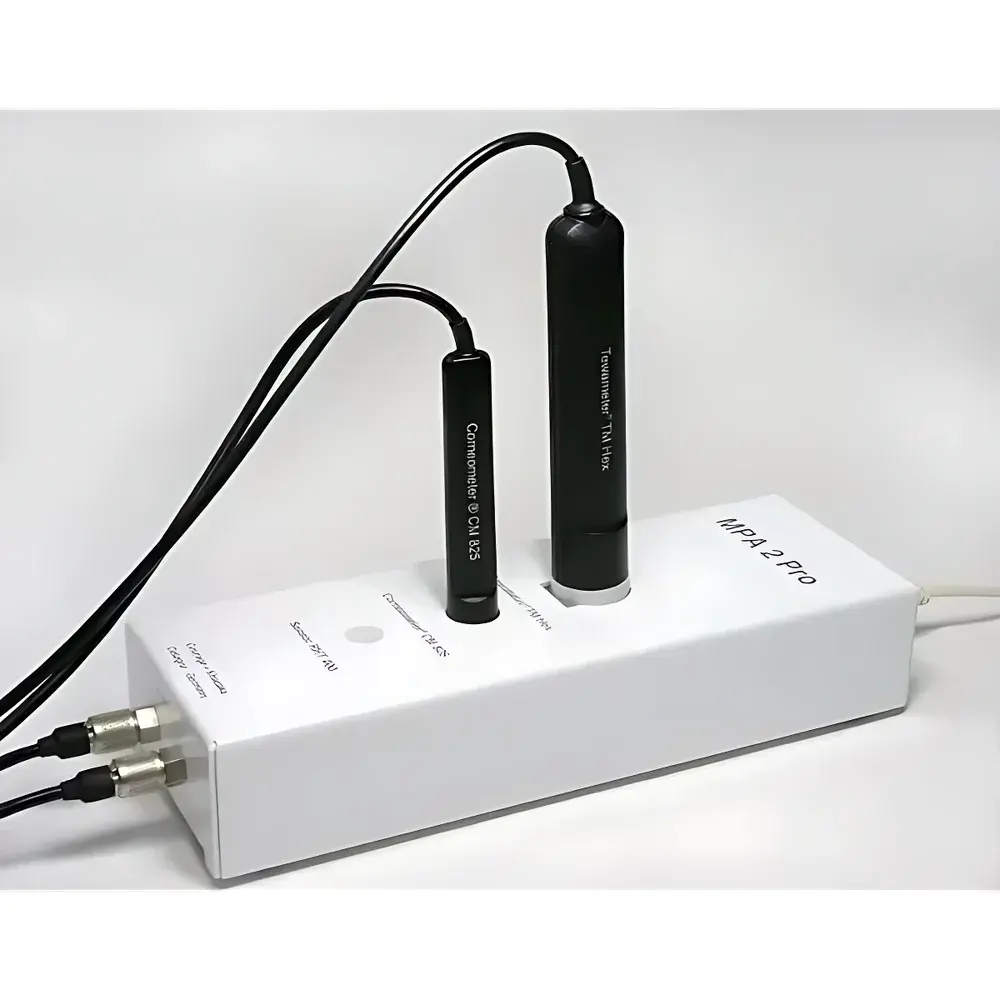
CK MPA2 PRO Skin Hydration and Transepidermal Water Loss (TEWL) Measurement System
| Brand | CK |
|---|---|
| Origin | Germany |
| Manufacturer Status | Authorized Distributor |
| Origin Category | Imported |
| Model | MPA2 PRO |
| Pricing | Upon Request |
Overview
The CK MPA2 PRO is a modular, research-grade skin biophysical measurement platform engineered for precise, non-invasive assessment of epidermal barrier function and hydration status. It integrates two independently validated probe technologies—capacitance-based corneometry and open-chamber vapor gradient-based TEWL measurement—within a single, ergonomically designed handheld unit. The system operates on established physiological principles: the Corneometer CM825 quantifies stratum corneum water content via dielectric capacitance (measuring changes in electrical permittivity correlated with hydration level), while the Tewameter TM Hex determines transepidermal water loss by calculating the water vapor flux across the skin surface using thermoelectric sensors and controlled air flow dynamics. This dual-parameter acquisition enables simultaneous, co-registered evaluation of both hydration reservoir capacity and barrier integrity—critical metrics in dermatological research, cosmetic efficacy testing, and clinical safety assessment.
Key Features
- Integrated dual-probe architecture: Corneometer CM825 (capacitance principle) and Tewameter TM Hex (open-chamber gravimetric/thermoelectric principle) mounted on a shared precision alignment frame.
- Onboard environmental monitoring: Integrated RHT 400 sensor continuously records ambient temperature, relative humidity, and atmospheric pressure—essential for TEWL normalization and GLP-compliant environmental logging.
- Real-time synchronized data acquisition: All parameters (skin hydration, TEWL, ambient T/RH/P) captured simultaneously at user-defined sampling intervals (1–60 s).
- Modular probe interchangeability: Quick-release mechanism allows field replacement of CM825 or TM Hex probes without recalibration; each probe retains individual calibration certificates traceable to PTB (Physikalisch-Technische Bundesanstalt).
- Robust mechanical design: Anodized aluminum housing, IP54-rated ingress protection, and shock-absorbing probe tips ensure durability in clinical, laboratory, and field settings.
- Compliance-ready firmware: Supports audit trail generation, electronic signatures, and user access levels per FDA 21 CFR Part 11 requirements when used with validated software configurations.
Sample Compatibility & Compliance
The MPA2 PRO is validated for use on human volar forearm, cheek, forehead, and dorsal hand sites—as well as porcine, murine, and reconstructed epidermal models (e.g., EpiDerm™, SkinEthic™). Probe geometry and contact pressure are standardized per ISO 13720:2014 (Skin moisture measurement) and ISO 29581-2:2021 (TEWL measurement methodology). All measurements adhere to Good Clinical Practice (GCP) and Good Laboratory Practice (GLP) documentation frameworks. Device calibration is performed annually against certified reference standards; full calibration reports—including uncertainty budgets—are provided with each service cycle. The system meets CE marking requirements under the EU Medical Device Regulation (MDR 2017/745) for Class I non-invasive diagnostic instruments.
Software & Data Management
MPA CTplus is the dedicated, Windows-based acquisition and analysis software included with the MPA2 PRO. It provides real-time visualization of all measured parameters, automatic baseline correction for TEWL drift, and built-in statistical modules for intra-subject variability assessment (CV%, ICC). Data files are stored in encrypted .ctd format with embedded metadata (operator ID, site annotation, environmental conditions, probe serial numbers). Export options include CSV (for SPSS, R, or Python integration), PDF reports compliant with ISO/IEC 17025 documentation templates, and XML for LIMS interfacing. Audit trail logs record every data modification, user login/logout event, and configuration change—supporting regulatory submissions to EMA, FDA, and PMDA.
Applications
- Efficacy evaluation of moisturizers, barrier-repair formulations, and occlusive agents via longitudinal hydration/TEWL kinetics.
- Safety assessment of surfactants, preservatives, and active pharmaceutical ingredients (APIs) through irritation potential profiling (e.g., cumulative irritation test protocols).
- Clinical endpoint measurement in Phase I–II dermatology trials evaluating eczema, psoriasis, xerosis, and rosacea interventions.
- Raw material screening for humectant activity, film-forming capacity, and occlusion index quantification.
- Regulatory dossier support for COSMOS, ECOCERT, and INCI claim substantiation (e.g., “clinically proven to improve skin barrier function”)
- Academic research in cutaneous physiology, transdermal delivery modeling, and environmental stress response (UV, cold, low humidity).
FAQ
Is the MPA2 PRO suitable for pediatric or sensitive skin studies?
Yes—the TM Hex probe features ultra-low contact pressure (< 0.1 kPa) and a 12 mm aperture optimized for small anatomical areas; CM825 uses passive capacitive coupling requiring no electrode gel or skin preparation.
How often does the system require calibration?
Annual calibration is recommended; however, daily verification using the included reference standards (ceramic hydration block and TEWL diffusion membrane) is required per ISO 29581-2.
Can TEWL data be corrected for ambient humidity gradients?
Yes—MPA CTplus applies real-time environmental compensation using the integrated RHT 400 sensor and implements the ISO-recommended logarithmic correction algorithm for non-standard RH conditions.
Does the system support automated study randomization and blinding protocols?
MPA CTplus includes configurable subject masking, randomized site assignment, and blinded operator mode—fully compatible with double-blind clinical trial designs.
What regulatory documentation is supplied with the instrument?
Each unit ships with Declaration of Conformity (CE), Factory Calibration Certificate (traceable to PTB), ISO 17025-accredited calibration report, and full technical file summary per MDR Annex II.





