
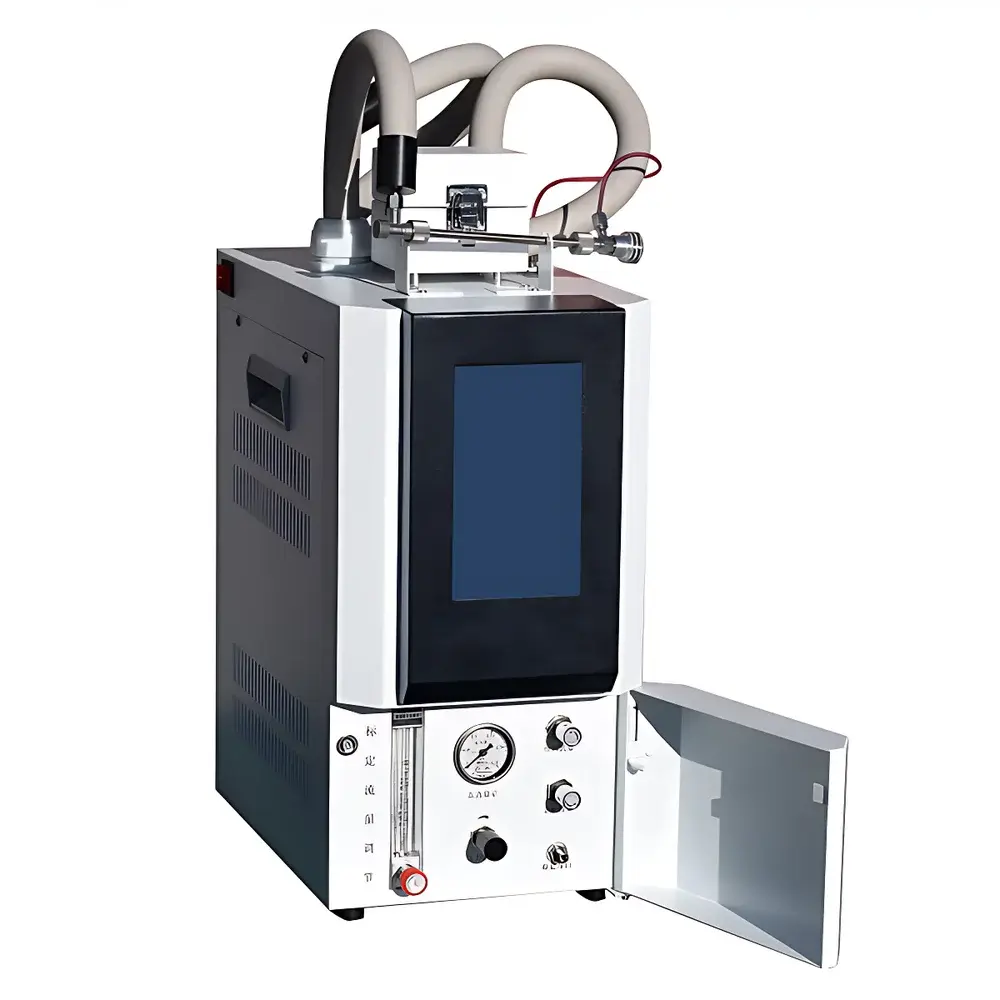
Beifen Sanpu ATDS-3430 Dual-Stage Thermal Desorber for Indoor Air VOC Analysis
| Brand | Beifen Sanpu |
|---|---|
| Origin | Beijing, China |
| Manufacturer Type | OEM Manufacturer |
| Country of Origin | China |
| Model | ATDS-3430 |
| Instrument Type | Dual-Stage Thermal Desorber |
| Primary Application | Compliance with GB 50325-2020 for Indoor Environmental VOC Monitoring |
| Desorption Temperature Range | Ambient to 450 °C |
| Cold Trap Temperature Range | −35 °C to Ambient |
| Desorption Recovery Rate | >99% (compound-dependent) |
| Sample Position Capacity | 1 tube |
Overview
The Beifen Sanpu ATDS-3430 Dual-Stage Thermal Desorber is an engineered solution designed specifically for trace-level volatile organic compound (VOC) analysis in indoor air matrices, fully aligned with the technical requirements of GB 50325-2020 “Standard for Indoor Environmental Pollution Control of Civil Building Engineering”, effective since August 1, 2020. This standard mandates rigorous quantification of benzene, toluene, ethylbenzene, xylene (BTEX), formaldehyde, TVOC, and other regulated VOCs in residential and commercial building interiors—requiring instrumentation capable of high recovery, low carryover, and precise thermal control across sequential desorption stages. The ATDS-3430 implements a two-stage thermally modulated desorption process: primary thermal desorption from sorbent tubes followed by cryofocusing in a Peltier-cooled trap (−35 °C), then rapid secondary desorption (>3000 °C/min) directly into the GC inlet. This architecture ensures narrow peak widths (<3 s), minimized band broadening, and enhanced sensitivity for sub-ppbv level detection—critical for meeting the ≤0.09 mg/m³ benzene and ≤0.60 mg/m³ TVOC limits defined in GB 50325-2020.
Key Features
- Integrated dual-stage desorption with independent temperature control for primary desorption zone, secondary desorption zone, valve oven, and transfer line—each programmable from ambient to 450 °C in 1 °C increments;
- Peltier-based electronic cooling system for cold trap, enabling stable operation from −35 °C to ambient with ±0.5 °C thermal accuracy;
- High-inertness sample pathway: all internal tubing (including valve-to-GC transfer line) constructed from deactivated fused silica or SilcoNert®-treated stainless steel to eliminate adsorption artifacts and cross-contamination;
- Motor-driven high-temperature six-port valve (rated to 240 °C), heated within the main oven to eliminate cold spots and preserve analyte integrity;
- Automated sequence programming: user-defined methods govern desorption, purge, trap focusing, secondary desorption, injection, and back-flush cycles—all executed without manual intervention;
- Dedicated back-flush functionality for both transfer line and valve, adjustable 0–100 mL/min, ensuring robust carryover mitigation between samples;
- Onboard simulated sampling module (0–160 mL/min flow control) for direct calibration curve generation using standard gas or permeation sources;
- Full integration capability: synchronized start/stop triggers for GC and chromatography data systems (CDS); compatible with Agilent, Thermo Fisher, Shimadzu, and domestic GC platforms via standardized electrical interfaces and mechanical adapters.
Sample Compatibility & Compliance
The ATDS-3430 accommodates standard 6 mm OD × 150 mm (minimum) sorbent tubes (e.g., Tenax TA, Carbopack B/C, or multi-bed configurations) and supports both single-tube and automated carousel-ready formats. Its performance meets or exceeds method-specific validation criteria outlined in multiple Chinese national standards, including HJ 644-2013 (ambient air VOCs by TD-GC/MS), HJ 583-2010 (benzene series by TD-GC), HJ 734-2014 (stationary source VOCs), and GB/T 18883-2002 (indoor air quality). For regulatory reporting under GB 50325-2020, the instrument delivers ≤2.5% RSD (n=6) for 0.05 μg benzene on Tenax TA, >99% recovery across C2–C12 aliphatics and aromatics, and full compliance with GLP-aligned audit trails when paired with 21 CFR Part 11–enabled CDS software.
Software & Data Management
Controlled via a 7-inch resistive touchscreen interface with embedded ARM-based microprocessor, the ATDS-3430 runs a real-time OS supporting method storage (≥100 protocols), time-segmented temperature ramping, event logging (timestamped valve actuations, temperature deviations, error codes), and USB export of raw operational logs. While the unit operates autonomously, it provides TTL-level trigger I/O and RS-232/485 serial communication for bidirectional synchronization with third-party GCs and LIMS environments. When integrated with compliant chromatography data systems, full electronic records—including method parameters, run metadata, and hardware status snapshots—are retained for FDA/EPA audit readiness.
Applications
- Regulatory indoor air testing per GB 50325-2020 in newly constructed or renovated civil buildings (residential, schools, hospitals, offices);
- VOC profiling in automotive cabin air (HJ/T 400-2007);
- Workplace exposure assessment and industrial hygiene monitoring;
- Material emission testing (carpets, adhesives, paints, composite wood products);
- Environmental forensics and source apportionment studies using TD-GC/MS;
- Method development and validation laboratories requiring reproducible, low-background thermal desorption performance.
FAQ
Does the ATDS-3430 support automated batch processing?
No—it is configured for single-tube operation (1 position). For high-throughput labs, Beifen Sanpu offers the ATDS-3600 series with 20+ position autosamplers.
Is the cold trap compatible with liquid nitrogen?
No—this model uses solid-state Peltier cooling only. LN2-based traps are available in the ATDS-3800 platform.
Can it be used with GC-MS systems?
Yes. The rapid secondary desorption pulse and inert flow path ensure compatibility with both quadrupole and TOF mass spectrometers when coupled via standard transfer lines.
What sorbent tube types are validated?
Tenax TA, Carbopack B, Carbopack C, and mixed-bed tubes (e.g., Carbopack B + Carbosieve SIII) are routinely qualified; tube conditioning and bake-out protocols are included in the operator manual.
How is calibration traceability maintained?
The built-in simulated sampling port enables direct dynamic dilution of certified standard gases (e.g., NIST-traceable BTEX mixtures), supporting gravimetric or dynamic vapor generation approaches per ISO/IEC 17025 requirements.




