
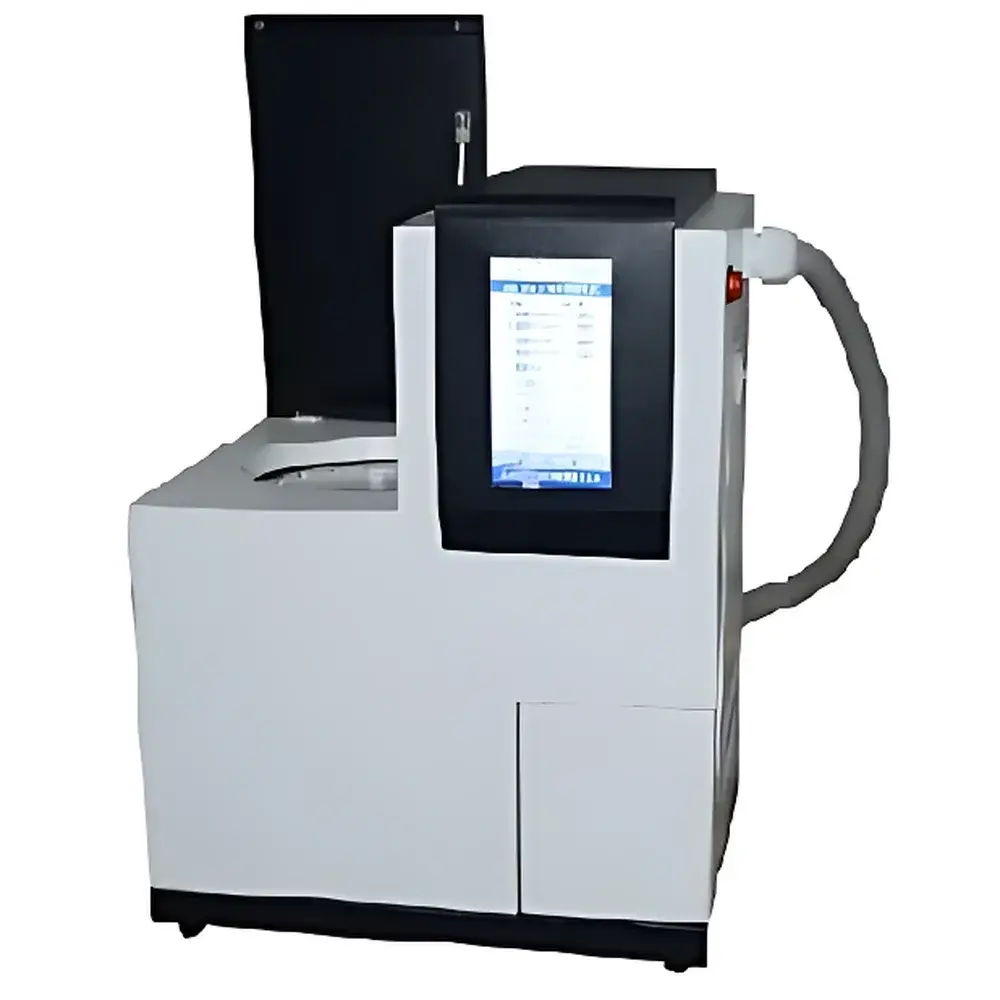
Beifen Sanpu ATDS-20A Dual-Stage Thermal Desorber
| Brand | Beifen Sanpu |
|---|---|
| Origin | Beijing, China |
| Manufacturer Type | Direct Manufacturer |
| Product Category | Domestic |
| Model | ATDS-20A |
| Instrument Type | Dual-Stage Thermal Desorber / Thermal Desorber |
| Primary Desorption Temperature Range | Ambient to 400 °C |
| Secondary Desorption Temperature Range | 100–400 °C |
| Cold Trap Temperature Range | Down to −35 °C |
| Desorption Recovery Rate | >90% |
| Sample Capacity | 20 positions |
Overview
The Beifen Sanpu ATDS-20A Dual-Stage Thermal Desorber is an automated, benchtop sample introduction system engineered for quantitative trace volatile organic compound (VOC) and semi-volatile organic compound (SVOC) analysis in conjunction with gas chromatography (GC) or GC–mass spectrometry (GC–MS). It implements a two-step thermal desorption process—primary desorption from sorbent tubes under controlled inert gas flow, followed by cryofocusing in a low-temperature cold trap (down to −35 °C), and rapid secondary desorption directly into the GC inlet. This architecture minimizes analyte dispersion, enhances sensitivity through analyte re-concentration, and improves peak shape fidelity—critical for compliance-driven environmental, occupational hygiene, and indoor air quality testing workflows.
Key Features
- Dual-stage thermal desorption architecture with independent temperature control for primary and secondary zones (ambient–400 °C and 100–400 °C respectively), enabling method flexibility across diverse sorbent media (e.g., Tenax TA, Carbopack B/C, graphitized carbon blacks)
- Integrated cryogenic cold trap operating down to −35 °C using Peltier-based cooling—eliminates reliance on liquid nitrogen or mechanical refrigeration, reducing operational cost and improving lab safety
- 20-position autosampler carousel with standardized 6 mm OD stainless steel or quartz sorbent tubes; compatible with ASTM D6196, ISO 16017-1, and EPA TO-17 compliant sampling protocols
- Full automation via 7-inch capacitive touchscreen interface; supports method storage, real-time status monitoring, and error logging without external PC dependency
- High-inertness sample pathway: all internal transfer lines constructed from SilcoNert®-treated fused silica or electropolished stainless steel to prevent adsorption, carryover, or catalytic degradation of reactive analytes (e.g., aldehydes, terpenes, sulfur compounds)
- Desorption recovery rate exceeding 90% for C3–C16 hydrocarbons and polar VOCs under validated method conditions—verified per ISO 16017-2 repeatability criteria
Sample Compatibility & Compliance
The ATDS-20A accepts standard 3.5″ and 6″ sorbent tubes conforming to ASTM D6196 Annex A1 geometry specifications. It supports multi-bed tubes (e.g., Tenax GR/Carbograph 1TD/Carboxen 1000) for broad volatility range coverage. The system meets functional requirements for regulatory methods including U.S. EPA Method TO-17 (Determination of Volatile Organic Compounds in Ambient Air Using Active Sampling Onto Sorbent Tubes), ISO 16017-1 (Indoor, ambient and workplace air — Sampling and analysis of volatile organic compounds by sorption on solid sorbents, thermal desorption and gas chromatography), and China’s HJ 644–2013 standard for ambient air VOC monitoring. All thermal zones are calibrated traceable to NIST-certified reference thermometers, and desorption timing precision is maintained within ±0.5 s across 20-sample sequences.
Software & Data Management
While standalone operation is fully supported via embedded firmware, optional USB- or Ethernet-enabled PC software provides advanced method development, sequence scheduling, audit trail generation, and electronic signature capability. The software complies with ALCOA+ principles and supports 21 CFR Part 11 readiness—including user access levels, instrument event logs, and immutable method version history. Raw desorption timing, temperature ramp profiles, cold trap equilibration data, and GC trigger signals are timestamped and exportable in CSV or XML formats for LIMS integration.
Applications
- Environmental monitoring: ambient air, stack emissions, soil headspace, and landfill vapor analysis
- Occupational health & safety: workplace air sampling for OSHA- and NIOSH-listed VOCs (e.g., benzene, toluene, xylene, styrene, formaldehyde precursors)
- Indoor air quality (IAQ): evaluation of building materials, adhesives, coatings, and HVAC system emissions
- Product emissions testing: automotive interior components, furniture composites, and consumer electronics under ISO 12219-4
- Forensic and failure analysis: off-gassing characterization of polymers, sealants, and encapsulants
FAQ
Does the ATDS-20A support unattended overnight operation?
Yes—fully programmable sequences for up to 20 samples, with automatic tube ejection and system cooldown post-run.
Is calibration verification included with the system?
A factory calibration certificate is supplied; users may perform routine performance checks using certified permeation tubes or standard gas mixtures per ISO 16017-2 Section 8.
Can the cold trap temperature be adjusted during method development?
Yes—the cold trap setpoint is fully configurable between −35 °C and +40 °C in 1 °C increments to optimize focusing efficiency for target analytes.
What maintenance intervals are recommended for long-term reliability?
Cold trap cleaning every 200 runs; desorption tube holder inspection quarterly; annual verification of temperature uniformity across primary/secondary zones.
Is the system compatible with third-party GC instruments?
Yes—standard GC trigger output (TTL) and analog signal inputs ensure seamless integration with Agilent, Thermo Fisher, Shimadzu, and PerkinElmer GC platforms.
Related Products





