
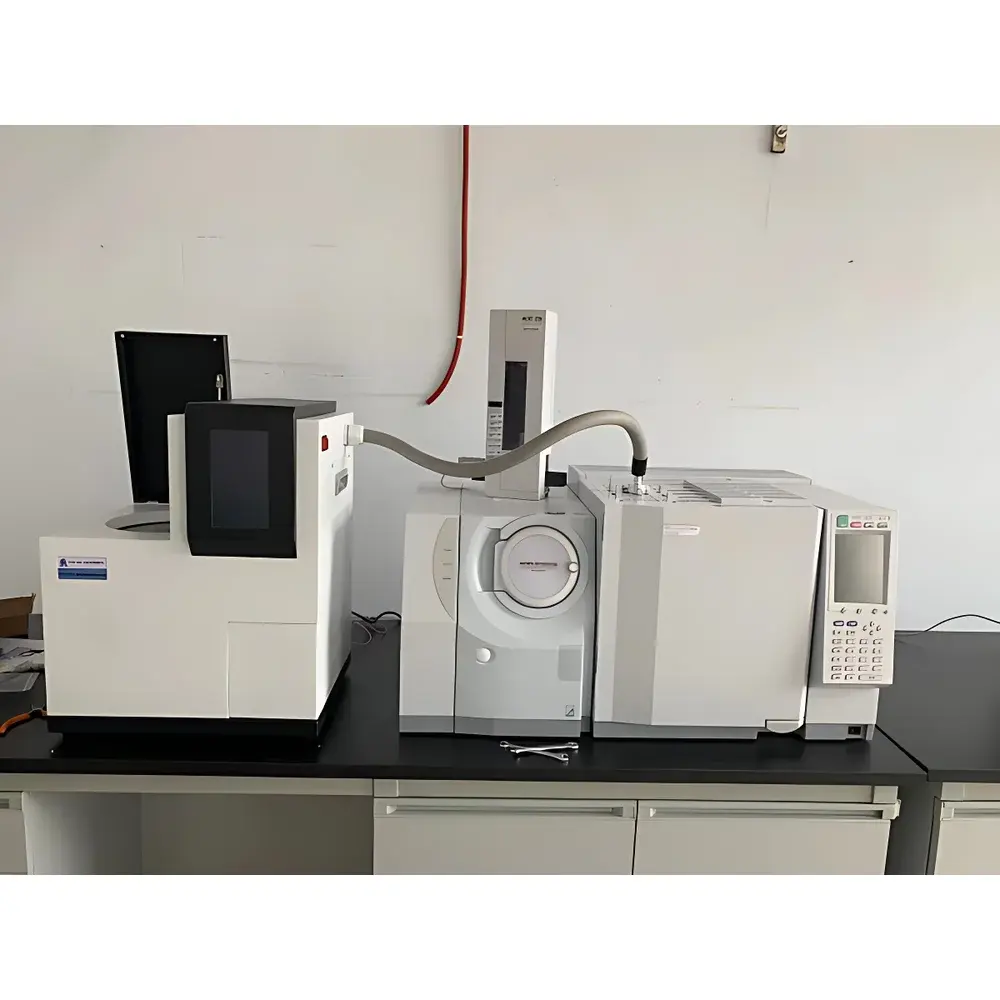
Beifen Sanpu ATDS-20A Fully Automated Two-Stage Thermal Desorber for GC/GC-MS
| Brand | Beifen Sanpu |
|---|---|
| Origin | Hebei, China |
| Manufacturer Type | OEM Manufacturer |
| Instrument Type | Two-Stage Thermal Desorber |
| Sample Capacity | 20 positions |
| Desorption Temperature Range | Ambient to 400 °C |
| Cold Trap Temperature Range | −40 °C to +40 °C |
| Desorption Recovery Rate | ≥95% (for target VOCs per ISO 16000-6 & HJ 644-2013) |
| Control System | Microprocessor-based with programmable multi-step thermal protocol |
Overview
The Beifen Sanpu ATDS-20A Fully Automated Two-Stage Thermal Desorber is an engineered solution for trace-level volatile and semi-volatile organic compound (VOC/SVOC) analysis in environmental, occupational health, and indoor air quality applications. It operates on the principle of two-stage thermal desorption: first, analytes are thermally released from sorbent tubes under controlled inert gas flow; second, evolved compounds are cryogenically focused in a low-temperature cold trap before rapid flash desorption into the GC or GC-MS inlet. This architecture eliminates solvent use, enhances sensitivity by 10–100× compared to direct injection, and delivers quantitative reproducibility (RSD < 5% for replicate analyses) essential for regulatory compliance. Designed for seamless integration with all major GC platforms—including Agilent, Thermo Fisher, Shimadzu, and domestic instruments—the ATDS-20A meets the instrumental requirements of ISO 16000-6, HJ 644–2013, HJ 583–2010, GB/T 18883–2002, and GB 50325–2020.
Key Features
- Fully automated 20-position sample carousel with robotic tube handling and barcode-compatible sample tracking
- Independent temperature control for desorption oven (ambient to 400 °C), cold trap (−40 °C to +40 °C), transfer line (up to 350 °C), and valve manifold (up to 250 °C)
- Pneumatic-electric hybrid valve system (solenoid + stepper-motor actuated) ensuring precise timing and leak-tight operation across >100,000 cycles
- Programmable multi-step method: primary desorption → cold trap focusing → secondary desorption → GC trigger synchronization (TTL/RS-232 output)
- Integrated back-flush capability to remove high-boiling interferences and extend trap lifetime
- Real-time pressure monitoring and flow regulation (0–100 mL/min N₂/He) via mass flow controller (MFC)
- Self-diagnostic firmware with error logging, thermal safety interlocks, and over-temperature cut-off (±0.5 °C stability)
Sample Compatibility & Compliance
The ATDS-20A accepts standard 6 mm OD × 110 mm sorbent tubes (e.g., Tenax TA, Carbopack B/C, Carboxen 1000) and supports dual-bed configurations for extended volatility range (C₃–C₂₀). It accommodates high-moisture samples via optional water management mode and handles concentration ranges from sub-ppt (ng/m³ air) to percent-level (mg/g solid). All operational parameters comply with QA/QC protocols required under EPA TO-17, ISO 16017-1, and Chinese national standards HJ 644–2013 and HJ 734–2014. The system supports GLP-compliant audit trails when paired with validated chromatography data systems (CDS), including 21 CFR Part 11–ready software configurations.
Software & Data Management
The embedded controller features a 5.7-inch VGA touchscreen interface with bilingual (English/Chinese) menu navigation and 20 preloaded method templates. Users define custom thermal profiles—including ramp rates, hold times, trap cooling setpoints, and purge durations—via intuitive drag-and-drop sequencing. Method files are stored in non-volatile Flash memory (no battery backup required) and exportable as CSV for LIMS integration. Optional PC-based software provides remote monitoring, batch report generation (ASTM E260–22 compliant), calibration curve fitting (linear/log-linear), and automatic peak integration with retention time locking. Audit trail logs record operator ID, method version, start/stop timestamps, and critical parameter deviations.
Applications
The ATDS-20A serves as a core front-end for accredited laboratories performing: ambient and indoor air VOC profiling (benzene, toluene, xylenes, formaldehyde precursors); workplace exposure assessment per OSHA/NIOSH methods; building material emissions testing (carpets, adhesives, paints); automotive cabin air analysis (HJ/T 400–2007); and fixed-source emission monitoring (HJ 734–2014). Its robustness supports routine use in third-party environmental testing labs, provincial CDCs, metrology institutes, university research facilities, and QC departments in pharmaceutical and electronics manufacturing where trace-level contaminant identification is mission-critical.
FAQ
What sorbent tube formats are supported?
Standard 6 mm OD × 110 mm stainless steel or glass tubes; compatible with industry-standard fittings (Swagelok 1/4″ compression).
Does the system support method validation per ISO/IEC 17025?
Yes—full documentation package includes IQ/OQ protocols, temperature mapping reports, recovery studies, and linearity verification data.
Can the cold trap be upgraded for lower temperatures?
The base configuration uses Peltier cooling (−40 °C); liquid nitrogen accessory kits are available for sub-ambient operation down to −100 °C.
Is remote diagnostics supported?
Yes—Ethernet port enables secure remote access for firmware updates, log retrieval, and real-time status monitoring.
What maintenance intervals are recommended?
Valve manifold cleaning every 500 runs; cold trap bake-out weekly; sorbent tube integrity verification prior to each batch.
Related Products




