
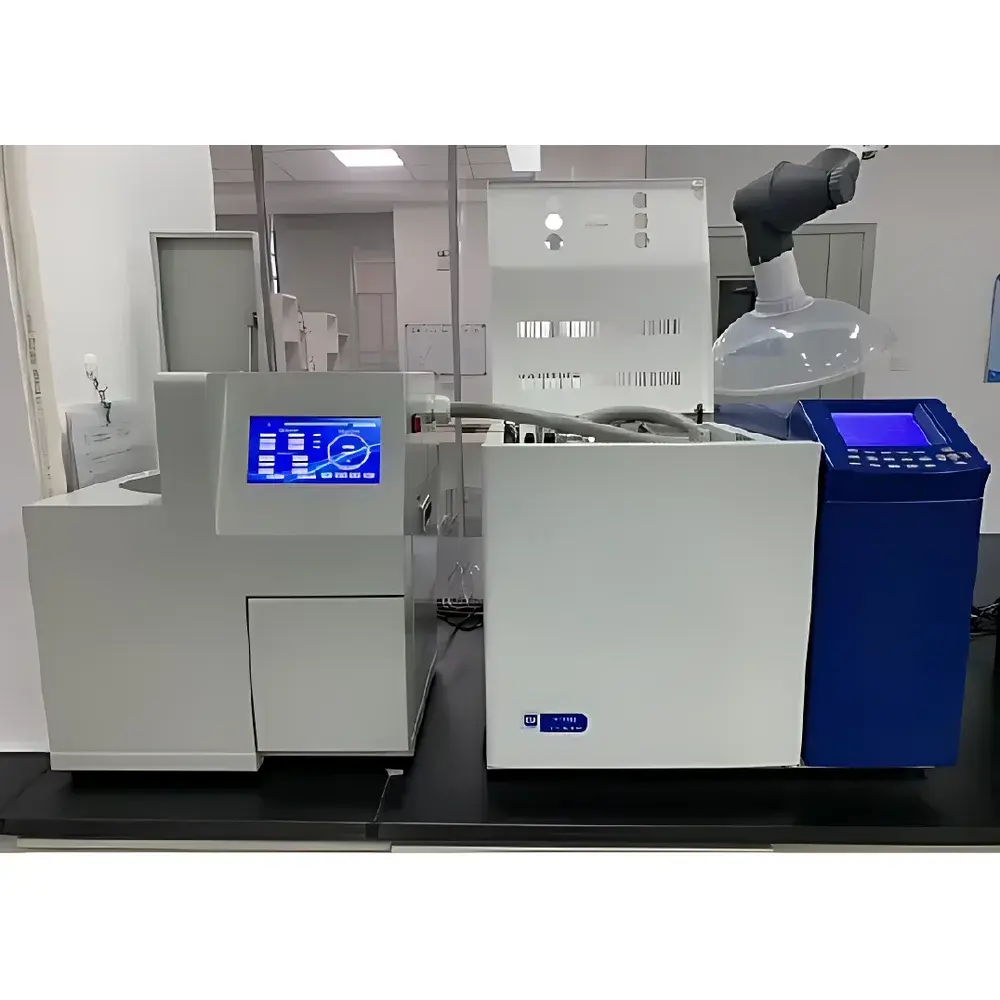
Beifen Sanpu AHHS-20A Plus Fully Automated Static Headspace Sampler
| Brand | Beifen Sanpu |
|---|---|
| Origin | Beijing, China |
| Manufacturer Type | Manufacturer |
| Product Origin | Domestic (China) |
| Model | AHHS-20A Plus |
| Instrument Type | Static Headspace Sampler |
| Automation Level | Fully Automatic |
| Sample Vial Heating Range | Ambient to 200 °C (1 °C increment) |
| Valve Oven Temperature Range | 40–220 °C (±1 °C accuracy) |
| Sample Loop Volume | 1 mL |
| Vial Capacity | 20 positions |
| Vial Size Compatibility | 10 mL or 20 mL |
Overview
The Beifen Sanpu AHHS-20A Plus is a fully automated static headspace sampler engineered for precise, reproducible quantification of volatile organic compounds (VOCs) in solid, semi-solid, and liquid matrices. It operates on the principle of phase equilibrium partitioning: samples are sealed in crimp-top vials and heated to a controlled temperature, allowing VOCs—including benzene, alkylbenzenes (e.g., toluene, ethylbenzene, xylenes), alcohols (e.g., ethanol, isopropanol), ketones (e.g., acetone, methyl ethyl ketone), and esters (e.g., ethyl acetate, butyl acetate)—to volatilize into the headspace above the sample. A precisely metered volume of this equilibrated vapor is then transferred via a thermostatted sampling valve and transfer line to a gas chromatograph (GC) for separation and detection. Designed specifically to meet the stringent requirements of YC/T 207–2014 (Determination of Solvent Residues in Tobacco Packaging Papers by Headspace-GC/MS) and aligned with ISO 17025–compliant laboratory workflows, the AHHS-20A Plus delivers robust performance for regulated VOC analysis in tobacco packaging, pharmaceutical excipients, food contact materials, environmental solids, and drinking water.
Key Features
- Fully automated 20-position carousel with programmable vial indexing and barcode-compatible sample tracking capability
- Independent, PID-controlled heating zones for sample vials (ambient–200 °C, ±0.5 °C stability) and valve oven (40–220 °C, ±1 °C accuracy), minimizing thermal carryover and ensuring method reproducibility
- 1 mL fixed-volume quantitative loop with inert, low-dead-volume stainless-steel construction and integrated septum-pierce syringe mechanism
- High-precision pressure-controlled vial pressurization (0.2 s pulse) and rapid, repeatable injection timing (0.05 s dwell)
- Integrated transmission line heating (up to 120 °C) with zero dead-volume connections to prevent condensation and analyte adsorption
- Compliance-ready architecture supporting audit trails, user-level access control, and electronic signature functionality per FDA 21 CFR Part 11 guidelines when operated with validated GC software platforms
Sample Compatibility & Compliance
The AHHS-20A Plus accommodates standard 10 mL and 20 mL crimp-top headspace vials with PTFE/silicone septa, enabling direct analysis of paper-based substrates (e.g., cigarette packaging paper cut to 80 cm²), polymer films, soil, sediment, aqueous extracts, and pharmaceutical dosage forms. Its thermal and mechanical design supports validated methods across multiple regulatory domains: YC/T 207–2014 (tobacco), HJ 642–2013 and HJ 643–2013 (environmental solids and wastewater), SN/T 4068–2014 (food contact materials), USP and Ph. Eur. 2.4.24 (residual solvents in pharmaceuticals), and GB 5749–2022 (drinking water). All operational parameters—including vial equilibration time (programmable up to 99.9 min), agitation speed (optional), and purge duration—are fully configurable to match matrix-specific extraction kinetics.
Software & Data Management
The sampler integrates seamlessly with industry-standard GC control software (e.g., Agilent OpenLab CDS, Thermo Chromeleon, Shimadzu GCsolution) via RS-232 or Ethernet interface. Method files store complete sequence parameters—vial position, temperature ramps, timing events, and calibration identifiers—with timestamped execution logs. Built-in diagnostics monitor valve actuation cycles, heater status, pressure transducer output, and vial seal integrity. For GLP/GMP environments, optional software validation packages provide IQ/OQ documentation templates, electronic logbook export (CSV/PDF), and full traceability from sample receipt to final report generation—ensuring alignment with ISO/IEC 17025:2017 Clause 7.7 (result reporting) and Annex A.2 (data integrity).
Applications
- Quantitative determination of 16 regulated VOCs in cigarette packaging paper per YC/T 207–2014, including benzene, toluene, xylene isomers, methanol, ethanol, acetone, MEK, ethyl acetate, and butyl acetate
- Residual solvent profiling in pharmaceutical active ingredients and excipients per ICH Q3C guidelines
- VOC screening in recycled cellulose films, laminated packaging, and adhesives per SN/T 3616–2013
- Halogenated hydrocarbon analysis in drinking water (HJ 810–2016) and soil (HJ 736–2015) using HS-GC/MS coupling
- Method transfer support for laboratories implementing EPA Method 502.2, ASTM D7622–19, or ISO 11423:2020
FAQ
Is the AHHS-20A Plus compatible with third-party GC systems?
Yes—it supports bidirectional communication with all major GC platforms via standard serial or TCP/IP protocols, and includes configurable trigger inputs/outputs for synchronized oven ramping and detector activation.
What maintenance intervals are recommended for long-term reliability?
Valve seals and syringe O-rings should be inspected every 500 injections; the quantitative loop requires cleaning with methanol every 100 runs when analyzing high-boiling esters or plasticizers.
Can the system perform dynamic headspace or purge-and-trap analysis?
No—the AHHS-20A Plus is designed exclusively for static headspace sampling. For dynamic applications, Beifen Sanpu offers complementary thermal desorption units (e.g., ATD-3420 series).
Does it support unattended overnight operation?
Yes—its embedded controller maintains stable thermal conditions for up to 72 hours, and the carousel auto-resumes sequencing after power recovery without data loss.
Are validation documents provided for GxP-regulated labs?
Factory-issued IQ/OQ protocols, as well as a comprehensive User Requirements Specification (URS) template, are supplied with each unit; full 21 CFR Part 11 compliance requires site-specific PQ execution under qualified IT infrastructure.



