
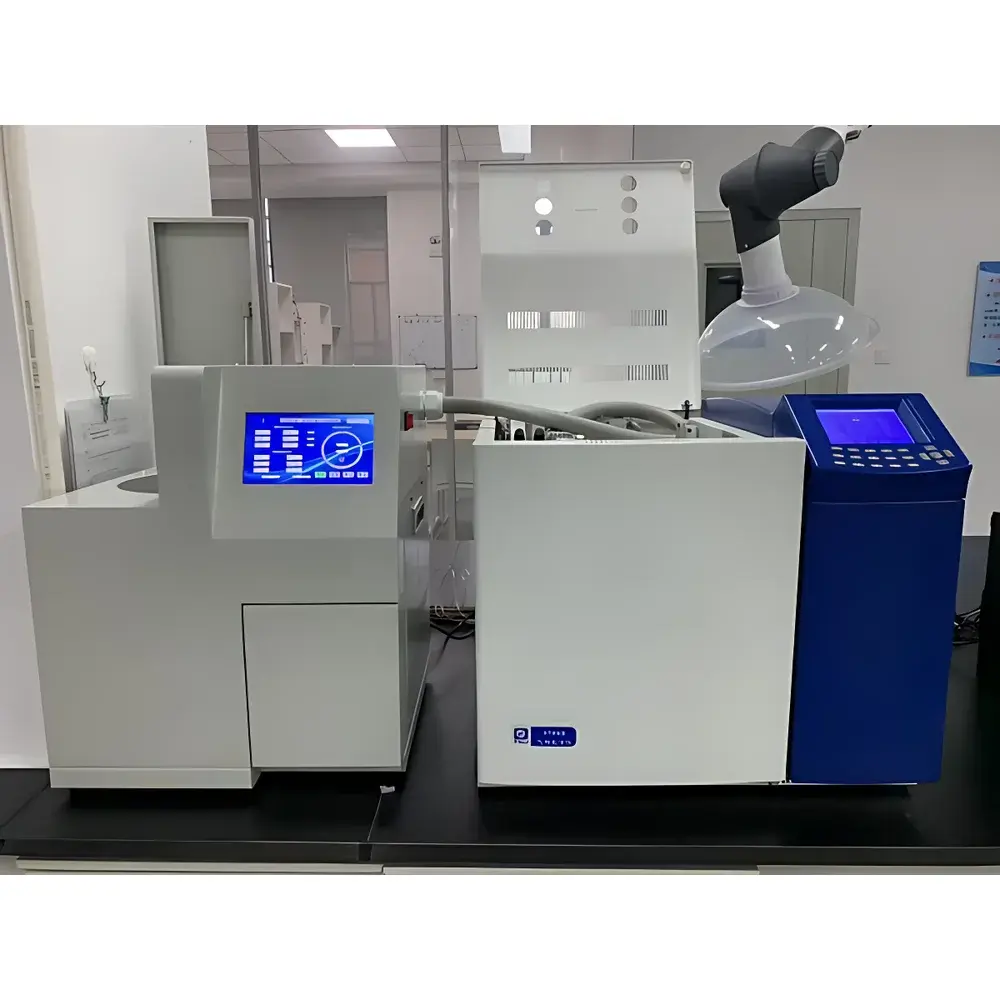
Beifen Sanpu AHS-20A PLUS Automated Headspace Sampler for Gas Chromatography
| Brand | Beifen Sanpu |
|---|---|
| Origin | Beijing, China |
| Manufacturer Type | OEM Manufacturer |
| Product Category | Domestic |
| Model | AHS-20A PLUS |
| Instrument Type | Laboratory Headspace Sampler |
| Application Scope | General-Purpose |
| Temperature Control Range | 100–350 °C |
| Heating Rate | 0.1–40 °C/min |
| Cooling Time | ~6 min (from 100 to 350 °C) |
| Carrier Gas Flow Range & Control | 0–1200 mL/min |
| Carrier Gas Pressure Range & Control | 0–970 kPa |
| Injection Port Max Operating Temperature | 100–350 °C |
| Injection Port Pressure Setting Range | 0–970 kPa |
| Total Injection Port Flow Setting Range | 0–1000 mL/min |
Overview
The Beifen Sanpu AHS-20A PLUS is a fully automated, 20-position headspace sampler engineered for precise, reproducible volatile compound analysis in conjunction with gas chromatography (GC). It operates on the principle of phase equilibrium partitioning: sealed sample vials are heated to a defined temperature, allowing volatile analytes—such as methanol, fusel oils (e.g., isoamyl alcohol, isobutanol), and other low-boiling organic compounds—to equilibrate between the liquid matrix and the headspace vapor phase. A precisely metered volume of this vapor is then transferred via pressurized gas injection into the GC inlet. This technique eliminates direct introduction of non-volatile residues, water, or particulates—thereby preserving column integrity, reducing maintenance frequency, and enhancing long-term system stability. Designed for seamless integration with benchtop GC systems—including Beifen Sanpu’s GC-9860 series—the AHS-20A PLUS supports method-driven automation, robust thermal management, and compliance-ready operation in regulated laboratory environments.
Key Features
- 20-position rotary sample carousel with barcode-compatible tray indexing and programmable vial position tracking.
- Independent, PID-controlled heating zones for oven, transfer line, and injection needle—each calibrated to ±0.1 °C accuracy over 100–350 °C range.
- Programmable equilibration time (1–999 min), pressurization time (0.1–9.9 min), and injection time (0.01–9.99 min) with real-time pressure monitoring.
- Integrated leak detection and pressure validation prior to each injection cycle; automatic fault logging and error reporting.
- Gas-tight syringe-based sampling mechanism with inert, passivated stainless-steel flow path (no septum contact during vapor transfer).
- Support for standard 20 mL headspace vials with crimp-seal aluminum caps and PTFE/silicone septa; compatible with ASTM D3699, ISO 11423, and USP residual solvents protocols.
- Front-panel touchscreen interface with embedded firmware and USB export for method backup; optional RS-232/RS-485 or Ethernet connectivity for LIMS integration.
Sample Compatibility & Compliance
The AHS-20A PLUS accommodates aqueous, alcoholic, and semi-viscous matrices—including spirits (brandy, whiskey, rum), fermented beverages (wine, beer), pharmaceutical formulations, polymer extracts, and environmental water samples. Its design mitigates matrix-induced variability by minimizing water co-elution (80% in direct liquid injection), thereby extending capillary column lifetime and improving FID/TCD baseline stability. The system complies with GLP and GMP operational prerequisites: audit-trail-capable method storage (20+ user-defined methods), electronic signature support (when paired with compliant chromatography data systems), and full traceability of temperature/pressure/time parameters per injection. It meets mechanical safety requirements per IEC 61010-1 and electromagnetic compatibility standards EN 61326-1.
Software & Data Management
When interfaced with BF-2002 Chromatography Data System (CDS) or third-party platforms (e.g., OpenLab CDS, Chromeleon), the AHS-20A PLUS enables synchronized method loading, event-triggered sequence execution, and post-run report generation—including calibration curves, %RSD calculations, and compliance summaries. All instrument logs—including equilibration temperature deviations, pressure drop events, and vial ID timestamps—are timestamped and exportable in CSV or XML format. Firmware supports secure user-level access control (administrator/operator modes), password-protected method editing, and automatic firmware update via USB drive. Memory retention is non-volatile (Flash-based); no battery-backed RAM dependency.
Applications
- Quantitative determination of methanol and fusel oils (isoamyl alcohol, isobutanol) in distilled spirits per GB/T 48–1996 and ISO 3696.
- Residual solvent analysis in pharmaceutical intermediates and final dosage forms (USP , ICH Q3C).
- Volatile organic compound (VOC) profiling in food flavorings, packaging leachables, and beverage authenticity testing.
- Environmental monitoring of BTEX (benzene, toluene, ethylbenzene, xylenes) and chlorinated hydrocarbons in groundwater per EPA Method 502.2.
- Quality control of ethanol-based disinfectants, hand sanitizers, and industrial solvents.
FAQ
What is the maximum recommended equilibration temperature for alcoholic samples?
For samples containing ≥30% (v/v) ethanol, 120 °C is the validated upper limit to ensure safe vial pressure (<900 kPa) and avoid membrane rupture. For lower-ethanol matrices, temperature must be adjusted downward and re-validated per matrix-specific calibration.
Does the AHS-20A PLUS support dynamic headspace (purge-and-trap) mode?
No—it is configured exclusively for static headspace analysis. Dynamic extraction requires external purge-and-trap instrumentation.
Can it be used with cryogenic GC inlets or cold traps?
Yes, provided the transfer line temperature is maintained above the dew point of target analytes; integration with cryo-focused inlets requires custom timing synchronization via external TTL trigger.
Is method validation documentation available for regulatory submissions?
Yes—Beifen Sanpu provides IQ/OQ documentation templates, system suitability test protocols, and performance qualification checklists aligned with ISO/IEC 17025 and FDA 21 CFR Part 11 expectations.
What maintenance intervals are recommended for optimal performance?
Vial septa replacement every 200 injections; needle cleaning after 500 cycles; annual calibration verification of temperature and pressure sensors using NIST-traceable references.





