
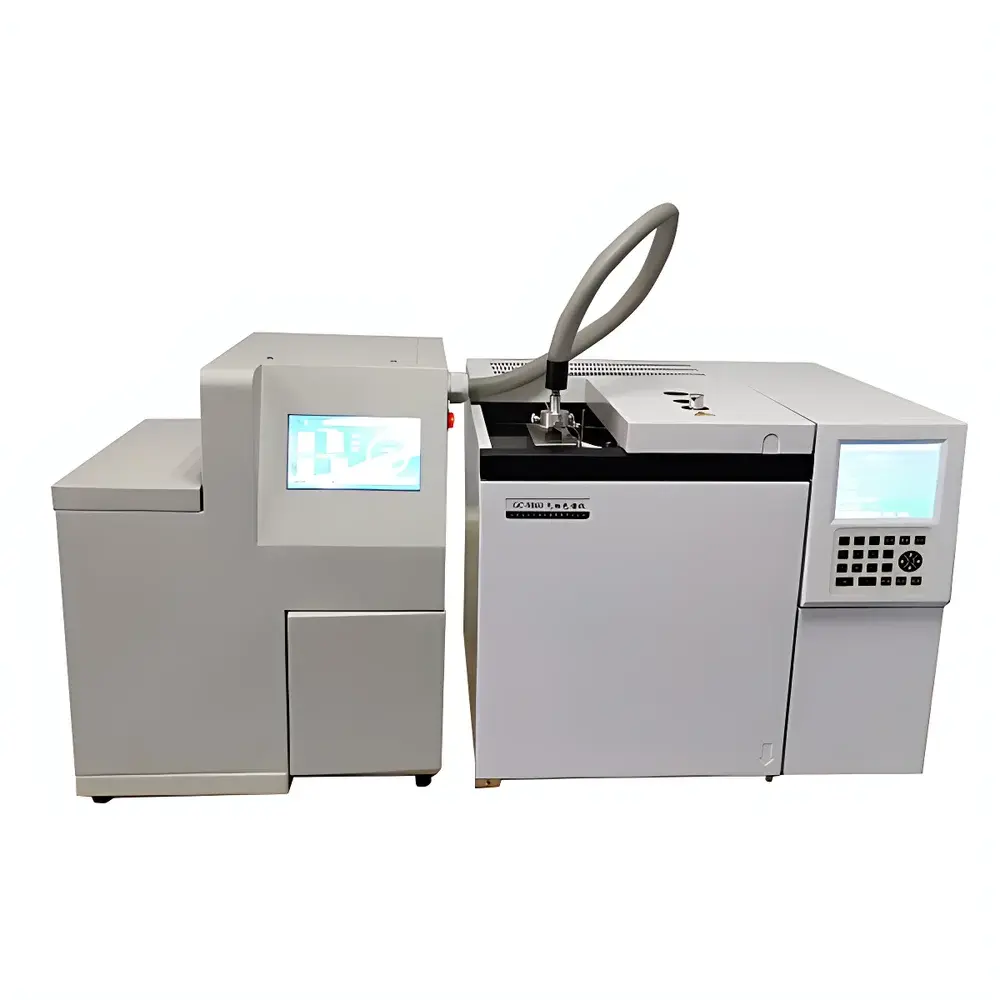
Beifen Sanpu AHS-20A PLUS Fully Automated Static Headspace Sampler for Ethylene Oxide (EO) Residual Analysis
| Brand | Beifen Sanpu |
|---|---|
| Origin | Beijing, China |
| Manufacturer Type | Direct Manufacturer |
| Region Classification | Domestic (China) |
| Model | AHS-20A PLUS |
| Instrument Type | Static Headspace Sampler |
| Automation Level | Fully Automatic |
| Sample Tray Capacity | 20 positions |
| Vial Size Compatibility | 10 mL or 20 mL vials |
| Vial Heating Range | Ambient to 200 °C (1 °C increments) |
| Valve & Transfer Line Temperature Control Range | 40–220 °C (±1 °C accuracy) |
| Loop Volume | 1 mL |
Overview
The Beifen Sanpu AHS-20A PLUS is a fully automated static headspace sampler engineered for precise, reproducible quantification of residual ethylene oxide (EO) in sterilized medical devices and pharmaceutical packaging materials. It operates on the principle of static headspace gas-phase equilibrium: solid or liquid samples are sealed in inert vials and heated to a controlled temperature, allowing volatile EO to partition into the headspace above the matrix. A precisely metered volume (1 mL) of this equilibrated vapor phase is then transferred via a thermostatted valve and transfer line to a coupled gas chromatograph (GC), typically equipped with a flame ionization detector (FID). This methodology eliminates matrix interference from non-volatile components and ensures high sensitivity (sub-ppm detection capability) and method robustness—critical for compliance with stringent regulatory limits on EO residuals in Class I–III medical devices.
Key Features
- Fully automated 20-position sample carousel with programmable sequence control and real-time status monitoring
- Independent, high-stability temperature zones: vial oven (ambient to 200 °C, ±1 °C), valve & loop (40–220 °C, ±1 °C), and transfer line (up to 220 °C), minimizing condensation and carryover
- 1 mL fixed-volume sampling loop with inert Siltek-treated stainless-steel construction for trace-level EO analysis
- Compatible with standard 10 mL and 20 mL crimp-top headspace vials—including septa designed for low-permeability and minimal EO adsorption
- Integrated leak-check routine and pressure monitoring at critical interfaces (vial seal, valve actuation, loop fill/flush)
- Modular architecture enabling seamless integration with major GC platforms (e.g., Agilent, Shimadzu, Thermo Fisher, and domestic GC-9860 series)
Sample Compatibility & Compliance
The AHS-20A PLUS supports direct analysis of diverse EO-exposed substrates including polyethylene packaging, PVC tubing, nonwoven surgical drapes, latex gloves, and polypropylene syringe barrels. Sample preparation follows standardized extraction protocols: 2.0 g of homogenized material is suspended in 10 mL ultrapure water, equilibrated at 60.0 ± 1.0 °C for 20 min under ambient pressure (40 mL headspace volume). The system complies with core regulatory frameworks governing EO residue testing, including ISO 10993-7:2018 (Biological evaluation of medical devices — Part 7: Ethylene oxide sterilization residuals), GB/T 16886.7–2015 (Chinese national adaptation of ISO 10993-7), GB/T 14233.1–2008 (Chemical tests for infusion sets), and GB 19083–2010 (Technical requirements for medical protective masks). Data integrity meets GLP and GMP-aligned practices when paired with 21 CFR Part 11-compliant GC data systems.
Software & Data Management
Instrument control and method development are performed via Beifen Sanpu’s proprietary HSControl software (Windows-based), supporting multi-step temperature ramping, dwell times, pressurization cycles, and loop purge parameters. All method files include embedded audit trails recording user ID, timestamp, parameter changes, and run history. Raw chromatographic data export conforms to ASTM E1946 and AIA/CDIF standards, facilitating import into third-party CDS platforms (e.g., OpenLab CDS, Chromeleon, or Empower). Software supports IQ/OQ documentation templates aligned with ISO/IEC 17025 requirements for laboratory accreditation.
Applications
- Quantitative EO residual testing in pre-market validation and routine QC release of sterile medical devices
- Stability studies assessing EO off-gassing kinetics during shelf-life storage
- Method transfer and verification between manufacturing sites and contract testing laboratories
- Root cause analysis of elevated EO levels linked to sterilization cycle deviations or packaging permeability issues
- Supporting ISO 13485-certified quality management systems through documented, repeatable analytical workflows
FAQ
What is the minimum detectable EO concentration achievable with this system?
Detection limits depend on GC/FID configuration and column efficiency but typically reach ≤0.1 µg/g (ppm) in solid matrices when using optimized splitless injection and 30 m × 0.32 mm × 0.5 µm PEG-based capillary columns.
Can the AHS-20A PLUS be used for other residual solvents beyond EO?
Yes—the system is broadly applicable to volatile organic compounds (VOCs) with boiling points below 200 °C, including chloroform, methylene chloride, isopropanol, and residual monomers such as vinyl chloride or styrene.
Is method validation support provided by the manufacturer?
Beifen Sanpu supplies application notes, SOP templates, and system suitability test protocols aligned with ICH Q2(R2) guidelines, including precision, linearity, LOD/LOQ, and robustness assessments.
How is carryover mitigated during high-concentration sample analysis?
The system employs three-stage loop and transfer line purging with carrier gas (N₂ or He), configurable flush volumes, and optional high-temperature bake-out cycles up to 220 °C between injections.
Does the instrument support remote operation and monitoring?
HSControl software enables LAN-based remote access, real-time run monitoring, email alerts for completion or error states, and integration with LIMS via CSV or XML export.




