
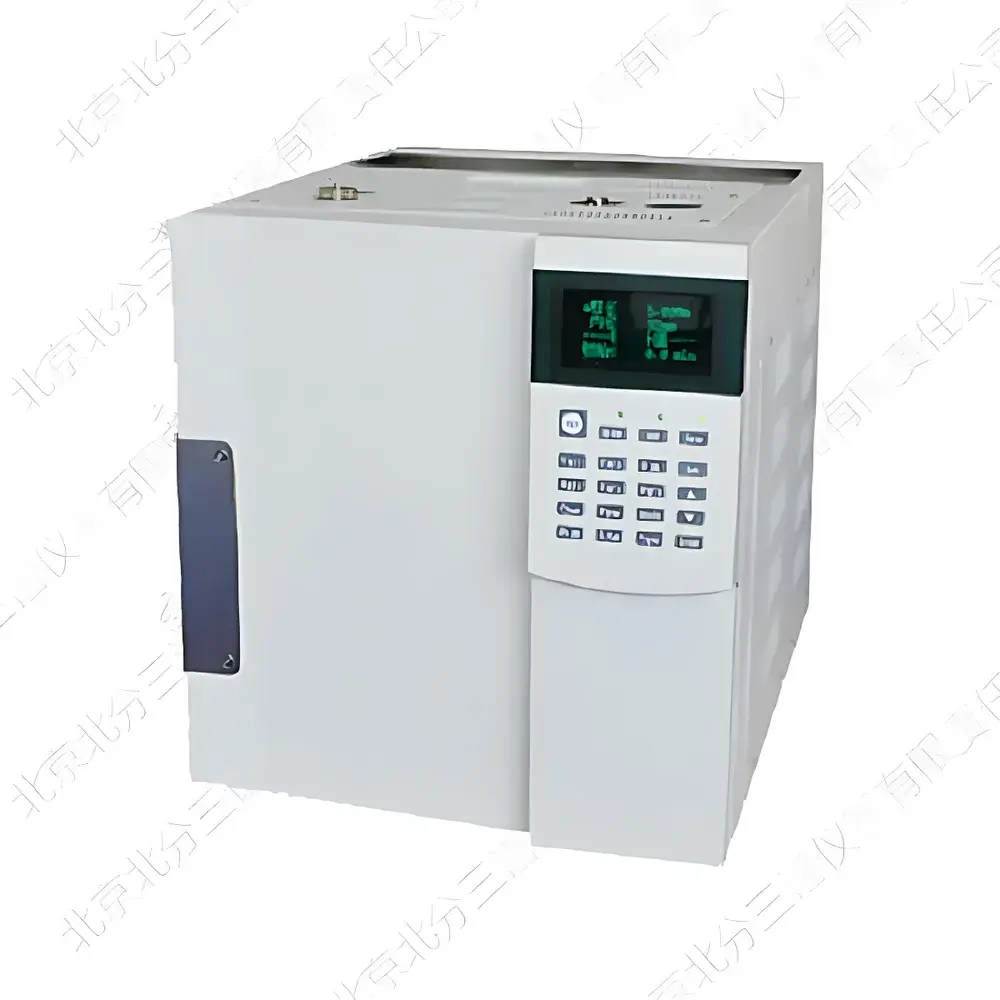
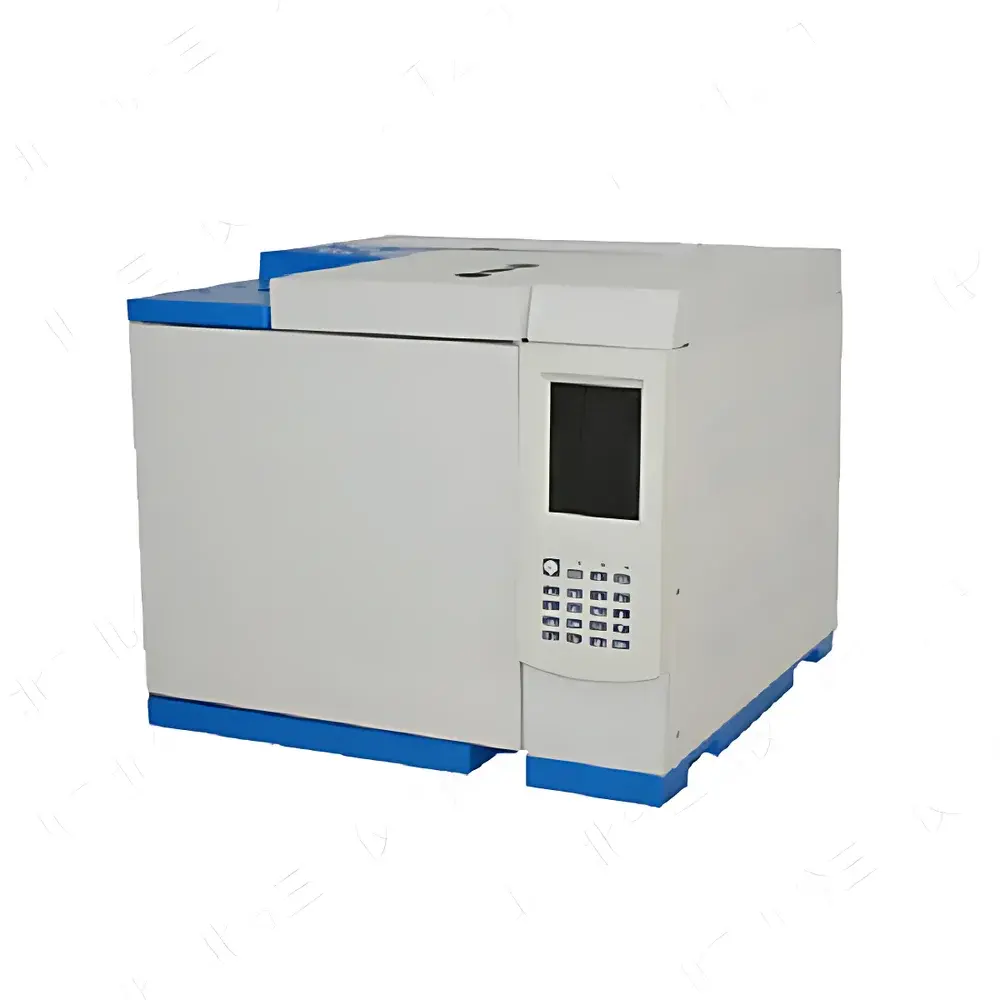
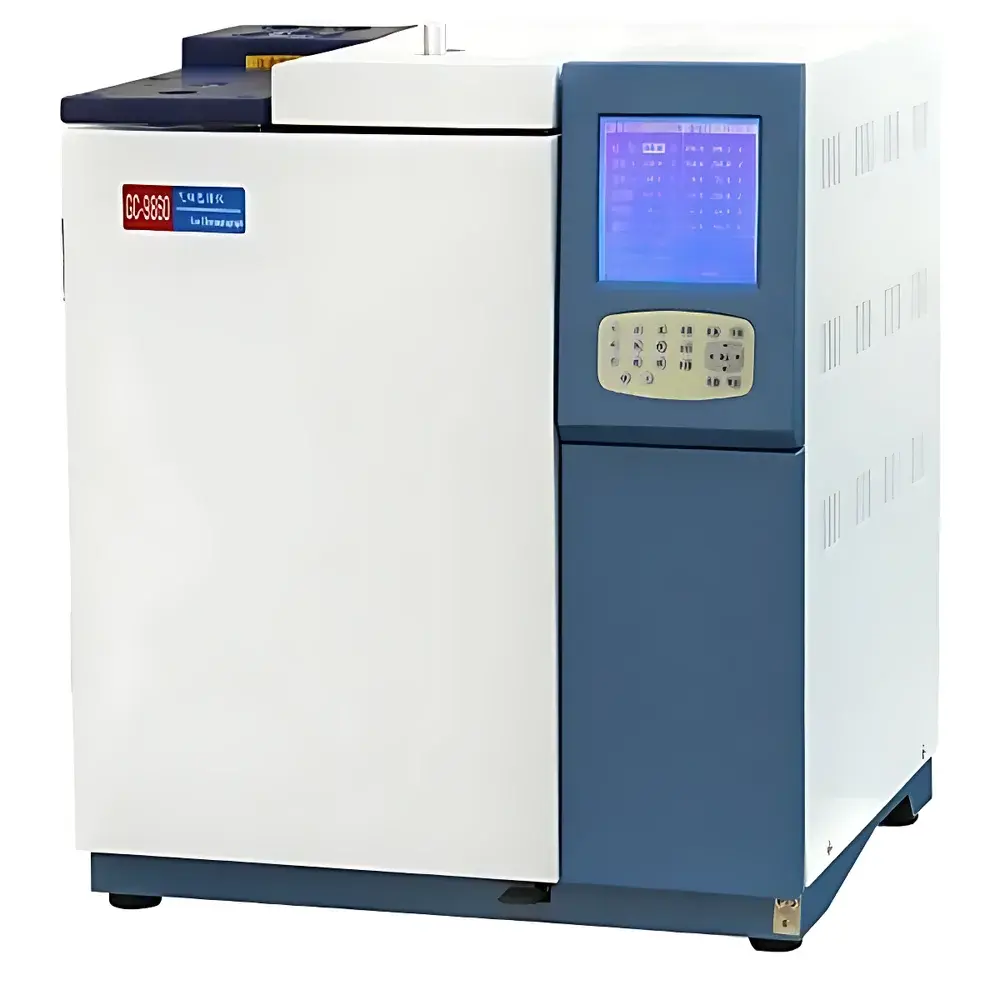
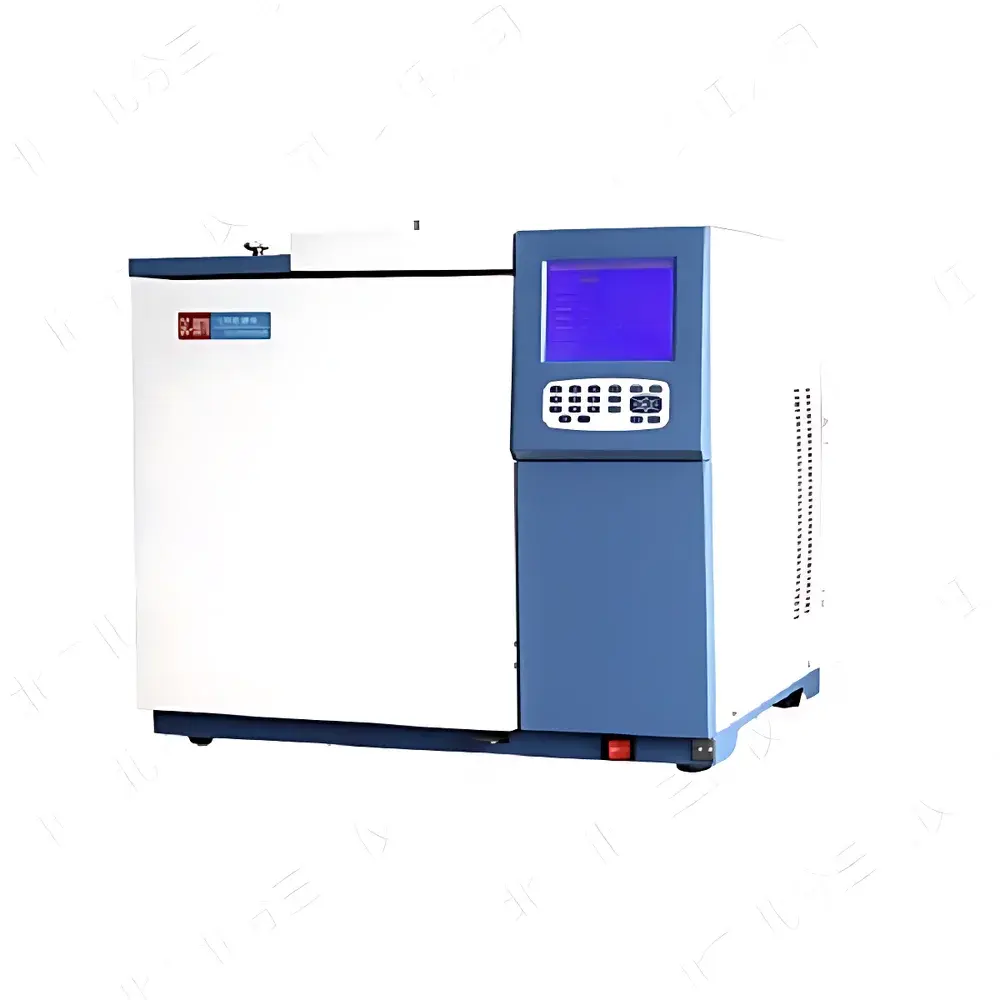
Beifen Sanpu GC-9860HP Network-Enabled Gas Chromatograph
| Brand | Beifen Sanpu |
|---|---|
| Origin | Beijing, China |
| Manufacturer Type | Direct Manufacturer |
| Instrument Type | Laboratory Gas Chromatograph |
| Model | GC-9860HP |
| Temperature Control Range | 100–450 °C |
| Oven Ramp Rate | 0.1–39 °C/min |
| Cool-down Time | ~7 min (from 450 °C to 100 °C) |
| Carrier Gas Flow Range | 0–1000 mL/min |
| Carrier Gas Pressure Range | 0–400 kPa |
| Injector Maximum Temperature | 450 °C |
| Injector Pressure Setting Range | 0–400 kPa |
| Injector Total Flow Setting Range | 0–100 mL/min |
| Number of Temperature-Controlled Zones | 6 |
| Max Programmed Temperature Ramps | 8 steps |
| Detection Modes | FID, TCD, ECD, FPD, NPD (configurable up to 3 detectors) |
| Data Interface | IEEE 802.3 Ethernet |
Overview
The Beifen Sanpu GC-9860HP is a network-enabled, laboratory-grade gas chromatograph engineered for high-reproducibility analysis of complex organic mixtures in regulated and research environments. Built upon a robust dual-channel pneumatic architecture with fully independent pressure and flow control for each inlet and detector, the system employs classical capillary and packed-column separation principles coupled with flame ionization detection (FID) as standard—optimized for quantitative analysis of volatile and semi-volatile compounds including fatty acids, residual solvents, ethanol congeners, and trace contaminants in food, beverage, pharmaceutical, and environmental matrices. Its design adheres to fundamental GC operational requirements defined in ASTM D3699 (gasoline analysis), ISO 17025-compliant method validation frameworks, and supports method transfer across laboratories via standardized Ethernet-based instrument control.
Key Features
- 6 independently programmable temperature zones—including oven, up to three inlets, and up to two detectors—with precision control (±0.1 °C) from ambient +8 °C to 450 °C
- Programmable 8-step temperature ramping with linear rates adjustable from 0.1 to 39 °C/min, enabling fine-grained resolution of co-eluting peaks in multi-component samples such as wine distillates or lipid extracts
- Dual-pneumatic control system featuring digital mass flow controllers (MFCs) and electronic pressure controllers (EPCs) for carrier, makeup, and detector gases—ensuring long-term retention time stability (<0.02 min RSD over 24 h)
- Modular detector configuration supporting simultaneous installation of up to three detectors (FID, TCD, ECD, FPD, or NPD), with hardware-level signal synchronization for multi-dimensional data correlation
- Embedded 192×64 dot-matrix display with Chinese/English bilingual interface; all parameters configurable locally or remotely via TCP/IP
- Four external event inputs and four auxiliary TTL outputs for integration with autosamplers, thermal desorption units, or headspace systems—fully compatible with third-party automation protocols
Sample Compatibility & Compliance
The GC-9860HP accommodates diverse sample introduction modes: split/splitless capillary injection, packed-column injection, gas sampling via 6-port valves, and optional integration with headspace or thermal desorption modules. It is routinely deployed in alcohol quality control (e.g., congener profiling per OIV Method OIV-MA-AS315-01A), residual solvent testing per ICH Q3C guidelines, and fatty acid methyl ester (FAME) analysis per AOAC 996.06. All firmware and control logic comply with GLP documentation requirements, including audit-trail-capable method storage, user-access logging, and electronic signature readiness. While not pre-certified for 21 CFR Part 11, the system’s Ethernet-native architecture permits integration with validated LIMS or CDS platforms that implement required electronic record controls.
Software & Data Management
The GC-9860HP operates with Beifen Sanpu’s GC-9860 Chromatography Workstation—a Windows-based application supporting real-time signal acquisition, peak integration using tangent skim and valley-to-valley algorithms, calibration curve generation (linear, quadratic, or multi-point weighted), and customizable report templates compliant with ISO/IEC 17025 clause 7.8. Raw data are stored in vendor-neutral .CDF format (compatible with OpenChrom and Chromeleon), and method files include embedded metadata (operator ID, instrument serial, calibration date). Remote monitoring and method deployment are supported via standard HTTP and Telnet protocols; no proprietary drivers or runtime dependencies are required for integration into enterprise IT infrastructure.
Applications
Primary application domains include: quantification of ethyl acetate, isoamyl alcohol, and fusel oils in distilled spirits; residual benzene/toluene/xylene (BTX) analysis in pharmaceutical excipients; fatty acid composition profiling in edible oils using CP-Sil 88 or SP-2560 columns; and environmental screening of chlorinated pesticides in soil extracts. The system’s low detection limit (≤3×10⁻¹² g/s for n-hexadecane on FID), wide dynamic range (≥106), and thermal stability at 450 °C make it suitable for both routine QC workflows and method development under variable matrix load conditions.
FAQ
Does the GC-9860HP support ASTM or ISO standard methods out of the box?
Yes—the instrument’s temperature programming flexibility, detector sensitivity, and pneumatic precision align with method requirements in ASTM D5501 (ethanol in gasoline), ISO 12966-2 (lipid analysis), and ISO 17025 Annex A.2 for method validation.
Can the system be integrated into an existing LIMS environment?
Absolutely. Native Ethernet connectivity enables direct communication via MODBUS TCP or custom REST API extensions developed by qualified integrators.
Is firmware upgrade support available internationally?
Yes—Beifen Sanpu provides remote firmware updates and technical documentation in English; regional service partners offer on-site preventive maintenance and IQ/OQ support.
What column dimensions and phases are recommended for fatty acid analysis?
CP-Sil 88 (100 m × 0.25 mm × 0.20 µm) or SP-2560 (100 m × 0.25 mm × 0.20 µm) are empirically validated for FAME separation; optimal performance requires precise oven temperature ramping and hydrogen carrier gas optimization.
How is data integrity ensured during extended unattended runs?
The workstation implements cyclic redundancy checksums on raw data files, automatic backup to network shares, and timestamped method versioning—all traceable through the embedded audit log.
Related Products






