
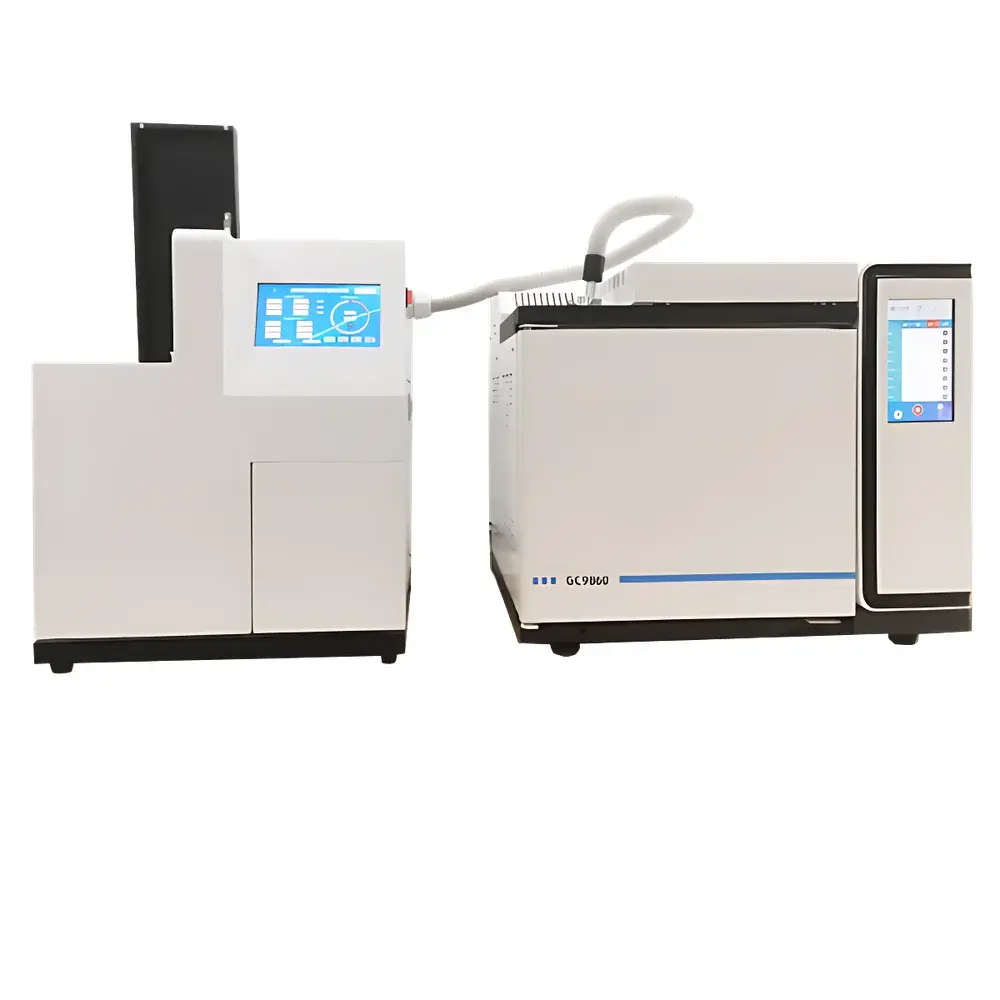
Beifen Sanpu AHS-20A PLUS Fully Automated Static Headspace Sampler for Dual-Column GC Analysis of Alcohols in Blood
| Brand | Beifen Sanpu |
|---|---|
| Model | AHS-20A PLUS |
| Type | Static Headspace Sampler |
| Automation Level | Fully Automatic |
| Sample Tray Capacity | 20 positions |
| Vial Size | 10 mL |
| Oven Temperature Range | 40–220 °C (±1 °C accuracy) |
| Valve & Transfer Line Temperature Range | 40–220 °C (±1 °C accuracy) |
| Loop Volume | 1 mL |
| Temperature Stability | < ±0.5 °C |
| Temperature Control Precision | ±0.5% of setpoint |
| Carryover | < 0.05% (verified with 100 ppm ethanol standard) |
| RSD | < 1.0% (n = 6, 100 ppm ethanol in aqueous matrix) |
| Pressure Control Range | 0–0.25 MPa (continuously adjustable) |
| Sampling Time | 0–30 min |
| Injection Time | 0–999 s |
| Purge/Flush Time | 0–30 min |
| Timing Resolution | 1 ms |
| Compatibility | Universal interface for all major GC systems (Agilent, Thermo, Shimadzu, PerkinElmer, and domestic GC platforms including Huipu GC-9860) |
Overview
The Beifen Sanpu AHS-20A PLUS is a fully automated static headspace sampler engineered for forensic toxicology laboratories requiring high-throughput, regulatory-compliant analysis of volatile alcohols—including ethanol, methanol, isopropanol, n-propanol, and n-butanol—in human blood and urine matrices. It operates on the principle of phase equilibrium partitioning: at controlled temperature and pressure, volatile analytes in a biological liquid sample (e.g., blood diluted with internal standard solution) migrate into the headspace gas phase above the sample. This equilibrated vapor is then pressurized and transferred via a heated, inert six-port valve and quantitative loop directly into the injection port of a dual-column gas chromatograph. The system’s design adheres to thermodynamic principles of Henry’s law and supports reproducible, matrix-independent quantitation—critical for legal defensibility in DUI/DWI investigations and clinical toxicology.
Key Features
- Fully automated 20-position sample carousel with real-time positional validation and mechanical fault detection—eliminates manual vial handling and minimizes operator-induced variability.
- Independent, precision-controlled heating zones for sample oven, valve block, and transfer line (all 40–220 °C, ±1 °C), ensuring no cold spots and complete analyte integrity during transfer.
- High-inertness flow path: Deactivated fused-silica capillary tubing and passivated stainless-steel quantitative loop (1 mL standard) minimize adsorption, carryover, and cross-contamination (<0.05% verified).
- Positive-pressure sampling architecture enables stable baseline performance without carrier gas disturbance—ideal for FID-based dual-detection workflows.
- Integrated EPC-compatible pressure control (0–0.25 MPa) and programmable timing (1 ms resolution) for method robustness across varying hematocrit or anticoagulant conditions.
- Self-diagnostic firmware with automatic tray alignment, valve actuation verification, and thermal stability monitoring—supports GLP audit readiness.
- Native synchronization protocol for simultaneous start of GC oven ramp, detector activation, and data acquisition—ensures temporal alignment per ISO/IEC 17025 requirements.
Sample Compatibility & Compliance
The AHS-20A PLUS is validated for use with whole blood, serum, plasma, and urine specimens collected in sodium fluoride/potassium oxalate (NaF/KOx) tubes. Its 10 mL vial capacity accommodates standard forensic collection volumes and allows for dilution with internal standard (e.g., tert-butanol or n-propanol) and buffer prior to equilibration. The system meets the instrumental specifications outlined in key regulatory standards, including:
- GA/T 842–2009 “Determination of Alcohol Content in Blood” (Public Security Industry Standard of the People’s Republic of China)
- SF/Z JD0107001–2016 “Determination of Ethanol in Blood by Headspace Gas Chromatography” (Judicial Identification Technical Specification)
- GB/T 38241–2024 “Determination of Ethanol, Methanol, Propanols, Acetone, and Butanols in Blood and Urine” (National Standard effective March 1, 2024)
All operational parameters—including equilibration time, temperature ramp profiles, and purge cycles—are configurable to satisfy method validation criteria per ISO 17025:2017 (clause 7.2.2) and FDA 21 CFR Part 11 (when paired with compliant chromatography data systems).
Software & Data Management
The AHS-20A PLUS communicates bidirectionally with third-party chromatography data systems (CDS) via RS-232, LAN, or hardware trigger signals. When integrated with DothuNet Workstation (or OpenLab CDS, Chromeleon, etc.), it supports full electronic record retention—including method parameters, run logs, calibration history, and audit trails. All temperature and timing events are timestamped with millisecond precision and stored in immutable binary format. System suitability tests (SST), such as repeated injections of control standards and blank vials, are automatically logged and flagged if RSD exceeds 1.0% or carryover exceeds 0.05%. Optional EPC upgrade enables closed-loop pressure feedback for long-term method transferability between instruments.
Applications
Primary applications include forensic blood alcohol concentration (BAC) testing for traffic law enforcement, postmortem toxicology screening for cause-of-death determination, emergency department rapid alcohol panel testing, and occupational health monitoring. Secondary applications extend to pharmaceutical impurity profiling (e.g., residual solvents in APIs), environmental analysis of volatile organic compounds (VOCs) in wastewater, and flavor/aroma compound profiling in food and beverage R&D. The dual-column configuration—typically employing one polar (e.g., DB-WAX, 30 m × 0.32 mm × 1.8 µm) and one mid-polarity column (e.g., DB-624, 30 m × 0.32 mm × 1.2 µm)—enables orthogonal retention for unambiguous identification and eliminates co-elution risks inherent in single-column assays.
FAQ
Is the AHS-20A PLUS compatible with non-Chinese GC systems such as Agilent 8890 or Thermo ISQ?
Yes. It features universal analog/digital trigger I/O and RS-232/LAN connectivity, with preloaded driver profiles for major GC platforms.
Can the system be validated under ISO/IEC 17025 or CLIA requirements?
Yes. Full IQ/OQ documentation packages—including temperature mapping reports, loop volume verification, carryover testing protocols, and electronic signature support—are available upon request.
What maintenance intervals are recommended for routine operation?
Valve seal replacement every 10,000 injections; transfer line bake-out weekly; quarterly calibration of temperature sensors against NIST-traceable reference thermometers.
Does the instrument support dynamic headspace or only static mode?
The AHS-20A PLUS is designed exclusively for static headspace analysis. For dynamic (purge-and-trap) applications, we recommend the companion model AHS-30A DHA.
How is data integrity ensured during power interruption or network failure?
All method parameters and run metadata are written to non-volatile flash memory in real time; queued samples resume automatically after recovery without loss of sequence or configuration.




