
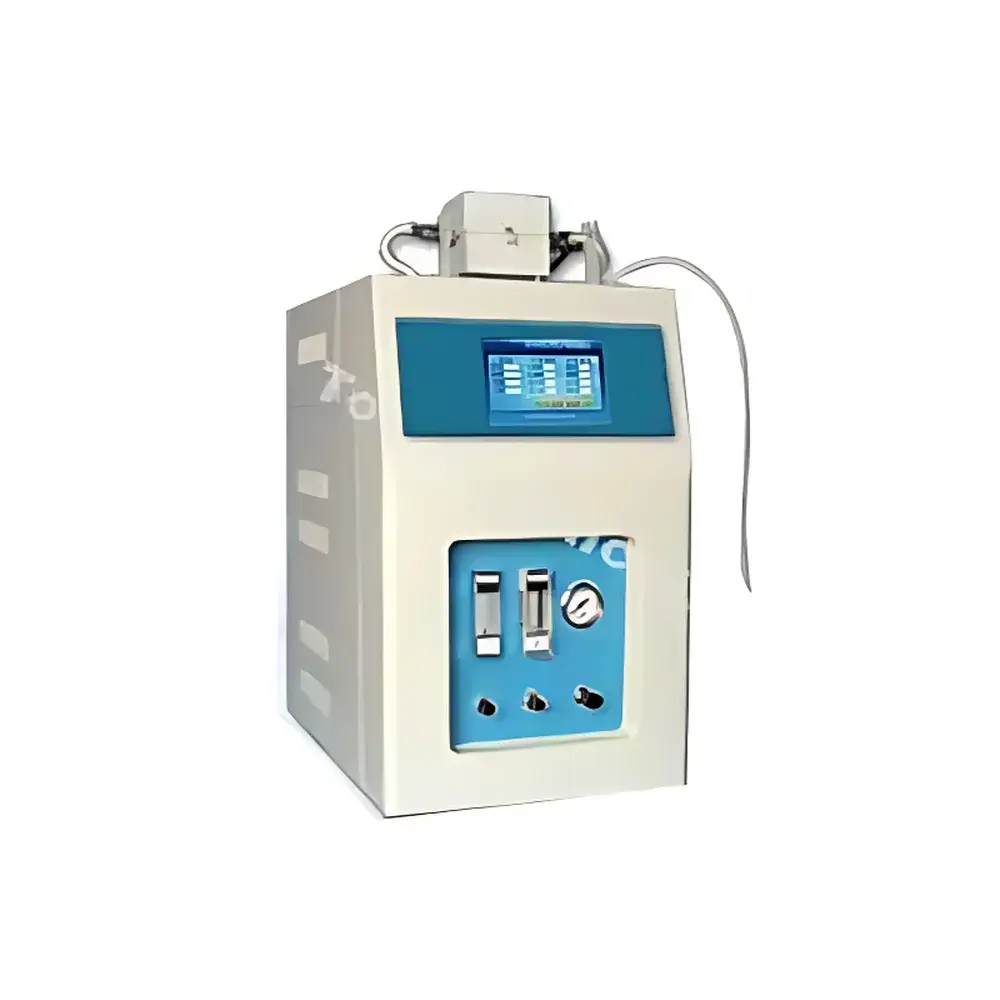
Beifen Sanpu AutoTDS-7820 Dual-Stage Thermal Desorber
| Brand | Beifen Sanpu |
|---|---|
| Origin | Beijing, China |
| Manufacturer Type | Direct Manufacturer |
| Instrument Type | Dual-Stage Thermal Desorber |
| Automation Level | Semi-Automatic |
| Primary Desorption Temp Range | 50–380 °C |
| Secondary Desorption Temp Range | 150–380 °C |
| Valve & Transfer Line Temp Range | Ambient to 200 °C |
| Cryo-Focusing Trap Temp | −30 °C |
| Temperature Control Accuracy | < ±0.1 °C |
| Desorption Recovery Rate | > 80% |
| Sample Position Capacity | 1 |
Overview
The Beifen Sanpu AutoTDS-7820 Dual-Stage Thermal Desorber is an engineered solution for trace volatile organic compound (VOC) and semi-volatile organic compound (SVOC) analysis in solid-phase sorbent tubes. It implements a two-step thermal desorption process—primary desorption followed by cryogenic focusing in an electronically cooled trap and rapid secondary desorption—to maximize analyte transfer efficiency, peak sharpness, and quantitative reproducibility. Unlike single-stage desorbers, the AutoTDS-7820 mitigates band broadening and analyte loss by trapping desorbed vapors at −30 °C in a Peltier-cooled cold trap, then releasing them as a narrow, high-concentration plug directly into the GC inlet via resistive heating at rates exceeding 1800 °C/min. This architecture ensures compatibility with both capillary gas chromatography (GC) and gas chromatography–mass spectrometry (GC–MS) systems, supporting compliance-driven workflows in occupational hygiene, environmental monitoring, public health laboratories (e.g., CDC), and regulatory testing facilities.
Key Features
- Dual-stage desorption architecture with integrated electronic cryo-trap (−30 °C) for analyte refocusing and enhanced sensitivity
- Independent temperature control for primary desorption oven (50–380 °C), secondary desorption zone (150–380 °C), valve manifold (ambient–200 °C), and transfer lines (ambient–200 °C)
- High-precision temperature regulation (< ±0.1 °C) across all thermal zones, ensuring method robustness and inter-laboratory reproducibility
- Semi-automated operation with full software control via integrated touchscreen interface; real-time monitoring of temperature profiles, sequence status, and system diagnostics
- Modular, field-deployable design: removable sorbent tubes facilitate off-site sampling, transport, and storage under ambient or chilled conditions
- Universal GC/GC–MS interface—no proprietary hardware coupling required; compatible with Agilent, Thermo Fisher, Shimadzu, PerkinElmer, and other major GC platforms
Sample Compatibility & Compliance
The AutoTDS-7820 accepts standard 6-mm OD stainless steel or glass sorbent tubes (e.g., Tenax TA, Carbopack B/C, Carboxen 1000) used in EPA Methods TO-17, ISO 16017-1, and EN 14662. Its validated desorption recovery rate (>80% for C2–C12 hydrocarbons and polar VOCs such as formaldehyde and acetaldehyde) supports quantitative analysis per ISO/IEC 17025 requirements. The instrument’s stable thermal performance and traceable calibration procedures align with GLP and GMP documentation expectations. While not inherently 21 CFR Part 11 compliant out-of-the-box, its software architecture supports audit trail configuration, electronic signature integration, and secure user access controls when deployed with validated LIMS or chromatography data systems (CDS).
Software & Data Management
Operation is managed through a dedicated Windows-based control application with intuitive workflow sequencing—users define desorption parameters, timing, and GC trigger signals without scripting. The software logs all thermal events, temperature setpoints, actual readings, and error flags with timestamps, generating CSV-exportable reports for QA/QC review. System calibration data (e.g., thermocouple verification records, cold trap cooldown validation) can be archived alongside sample runs. Remote monitoring is supported via Ethernet connection, enabling centralized instrument management in multi-user lab environments.
Applications
- Occupational exposure assessment per OSHA Method 52, NIOSH Methods 1501/1502, and EU Directive 2004/37/EC
- Ambient and indoor air quality monitoring (e.g., formaldehyde, benzene, toluene, xylenes, PAHs)
- Soil headspace and building material emission testing (e.g., adhesives, carpets, insulation)
- Product safety screening for consumer goods (toys, textiles, electronics housings)
- Method development and validation for accredited environmental testing laboratories
FAQ
What sample formats does the AutoTDS-7820 accept?
It is designed exclusively for standard 6-mm outer diameter sorbent tubes (e.g., 90 mm length, 1/4″ OD), including single-bed and multi-bed configurations.
Is the instrument suitable for unattended overnight operation?
Yes—its semi-automated sequence execution and built-in thermal fault protection allow reliable unattended runs for up to 24 hours when paired with a GC autosampler or timed injection protocol.
Can the cold trap temperature be adjusted below −30 °C?
No—the Peltier-based cooling module is rated for a minimum of −30 °C; lower temperatures require liquid nitrogen or mechanical cryocoolers, which are outside this model’s design scope.
Does it support internal standard addition during desorption?
Not natively—the AutoTDS-7820 lacks an integrated liquid standard injector; however, users may introduce internal standards pre-desorption via tube spiking or post-cold trap using a calibrated syringe port on compatible GC inlets.
How is temperature calibration verified?
Calibration is performed using NIST-traceable digital thermometers inserted into designated sensor ports; routine verification intervals are recommended every 6 months or per ISO/IEC 17025 internal procedure.




