
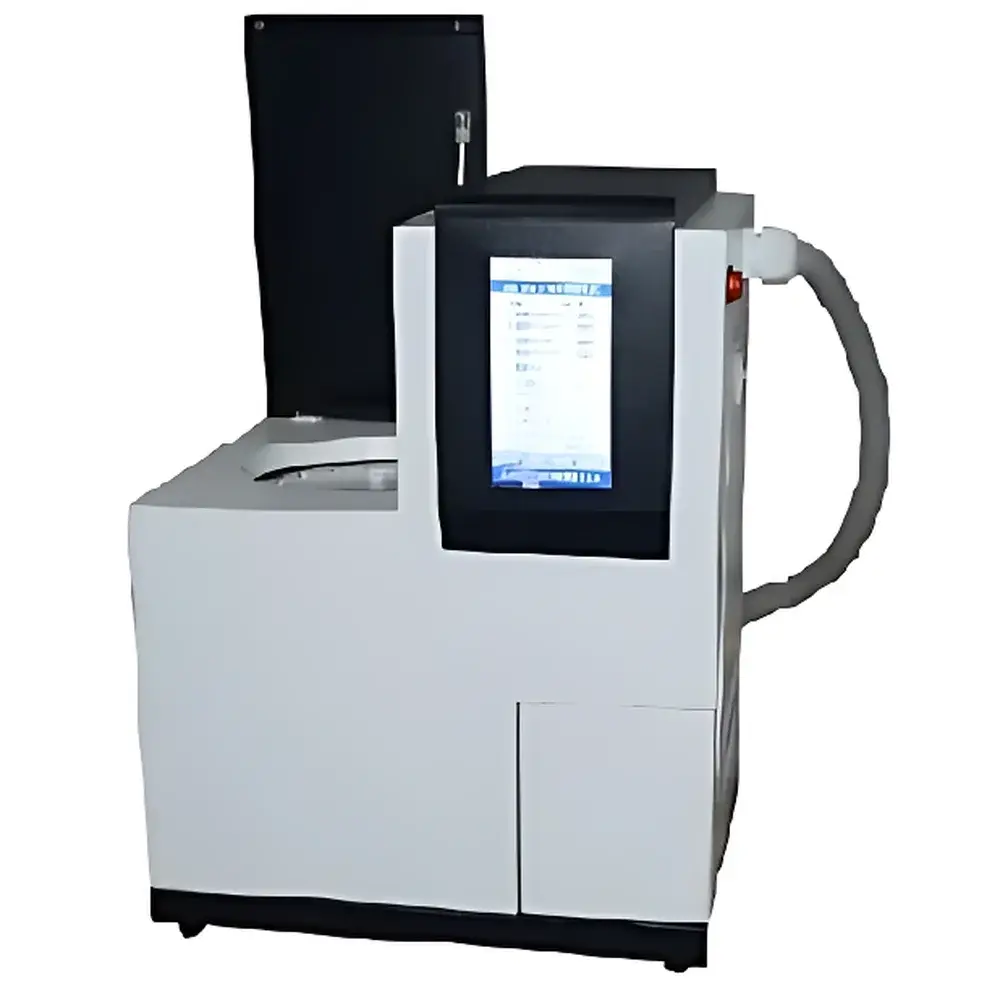
Beifen Sanpu ATDsS-20A Dual-Stage Thermal Desorber with Cryogenic Trap
| Brand | Beifen Sanpu |
|---|---|
| Origin | Beijing, China |
| Manufacturer | Beifen Sanpu Instruments Co., Ltd. |
| Model | ATDsS-20A |
| Instrument Type | Dual-stage thermal desorber |
| Primary Desorption Temp Range | Ambient to 450 °C |
| Secondary Desorption Temp Range | 100–450 °C |
| Cryo-Trap Temp Range | −35 °C to ambient |
| Desorption Recovery Rate | >99% (compound-dependent) |
| Sample Capacity | 20 positions |
| Temperature Control Precision | < ±0.5 °C |
| RSD | ≤2.5% (benzene at 0.05 μg) |
| Sample Tube Format | 1/4″ OD × 3.5″ (ASTM D6196-compliant) |
Overview
The Beifen Sanpu ATDsS-20A Dual-Stage Thermal Desorber with Cryogenic Trap is an automated, laboratory-grade sample introduction system engineered for quantitative trace volatile organic compound (VOC) analysis via gas chromatography (GC) and GC–MS. It implements a two-step thermal desorption process: first, analytes are thermally released from sorbent tubes under controlled inert gas flow; second, the evolved vapors are cryogenically focused in a low-temperature trap (down to −35 °C), then rapidly desorbed as a narrow, solvent-free band into the GC inlet. This dual-stage architecture—combined with precise, independent temperature control of the primary furnace, secondary desorption zone, transfer line, and six-port valve—minimizes band broadening and maximizes sensitivity, reproducibility, and recovery across a wide polarity and volatility range (C2–C18). The system is fully compliant with key environmental testing standards including HJ 644–2013, HJ 583–2010, HJ 734–2014, GB/T 18883–2002, and GB 50325–2010, supporting regulatory monitoring of indoor air, ambient air, vehicle cabin emissions, and fixed-source industrial exhaust.
Key Features
- Fully automated 20-position carousel with motor-driven indexing and self-calibrating positioning—enabling unattended overnight operation without manual intervention.
- Independent four-zone heating: primary desorption furnace (ambient–450 °C), secondary desorption chamber (ambient–450 °C), GC transfer line (ambient–300 °C), and programmable six-port valve (ambient–300 °C), all with ±0.5 °C stability and 1 °C resolution.
- Integrated Peltier-based cryogenic trap capable of sustained operation down to −35 °C, ensuring efficient analyte focusing and sharp, symmetrical peak shapes—even for light VOCs such as acetaldehyde and vinyl chloride.
- Programmable multi-step sequence: primary desorption → inert gas purge → cold trapping → rapid thermal flash desorption → GC injection → post-run valve and transfer line back-flush (0–100 mL/min, continuously adjustable).
- Onboard sample tube activation protocol with configurable heating profiles and purge gas flow, eliminating need for external conditioning stations.
- Simulated sampling mode with adjustable flow (0–160 mL/min) for direct calibration curve generation using standard gases or permeation tubes.
- Electronically actuated six-port valve with position feedback and real-time status monitoring; compatible with all major GC and GC–MS inlets via standardized 1/4″ Swagelok or VCO interfaces.
- Embedded 7-inch capacitive touchscreen interface with intuitive workflow navigation, method storage, and real-time graphical display of temperature profiles and timing events.
Sample Compatibility & Compliance
The ATDsS-20A accepts standard 1/4″ OD × 3.5″ stainless steel or quartz-lined sorbent tubes (e.g., Tenax TA, Carbopack B/C, Carboxen 1000), conforming to ASTM D6196 and ISO 16017–1 dimensional specifications. Optional fused silica transfer lines minimize adsorption of polar or reactive species (e.g., aldehydes, amines). The instrument supports full audit trail logging—including user login, method changes, run start/stop timestamps, and temperature deviations—meeting GLP and GMP documentation requirements. Its operational parameters align with U.S. EPA TO-17 methodology principles and are validated for use in laboratories subject to CNAS accreditation and China’s CMA certification framework.
Software & Data Management
The embedded firmware supports method-based automation with up to 99 user-defined protocols, each containing nested temperature ramps, flow setpoints, and valve timing sequences. All methods and run logs are stored internally and exportable via USB to CSV or PDF. Remote triggering is supported via TTL or RS232 signals, enabling synchronization with GC acquisition software (e.g., Chromeleon, OpenLab, Empower) or LIMS integration. Audit trails comply with data integrity expectations per FDA 21 CFR Part 11 when paired with validated third-party chromatography data systems.
Applications
- Environmental air monitoring: quantification of BTEX, chlorinated solvents, and oxygenated VOCs in ambient, workplace, and indoor air per HJ 644–2013 and GB/T 18883–2002.
- Automotive cabin air quality assessment: formaldehyde, acetaldehyde, and aromatic compounds per HJ/T 400–2007.
- Building material emission testing: VOC release from carpets, adhesives, and composite wood products under GB 50325–2010.
- Industrial stack and fugitive emission profiling: speciated VOC analysis from petrochemical, pharmaceutical, and coating manufacturing sources per HJ 734–2014.
- Method development and reference material verification: certified reference gas calibration, sorbent tube recovery studies, and breakthrough volume determination.
FAQ
What sample tube formats are supported?
Standard 1/4″ OD × 3.5″ sorbent tubes meeting ASTM D6196 dimensions; custom-length tubes may be accommodated with optional adapter plates.
Does the system support EPA TO-17 compliance?
While not pre-certified by EPA, the ATDsS-20A meets all critical TO-17 technical requirements—including dual-stage desorption, cryofocusing, and documented recovery validation—and is widely deployed in accredited labs performing TO-17–aligned analyses.
Can the cryo-trap operate continuously across multiple runs?
Yes—the Peltier cooling system maintains stable sub-ambient temperatures throughout extended sequences; no liquid nitrogen or consumables are required.
Is remote diagnostics or software update capability available?
Firmware updates are performed locally via USB; remote access is not implemented to preserve system security and regulatory compliance integrity.
What maintenance intervals are recommended?
Valve seals and O-rings should be inspected every 500 runs; trap frits cleaned quarterly; and temperature sensors calibrated annually using NIST-traceable references.





