
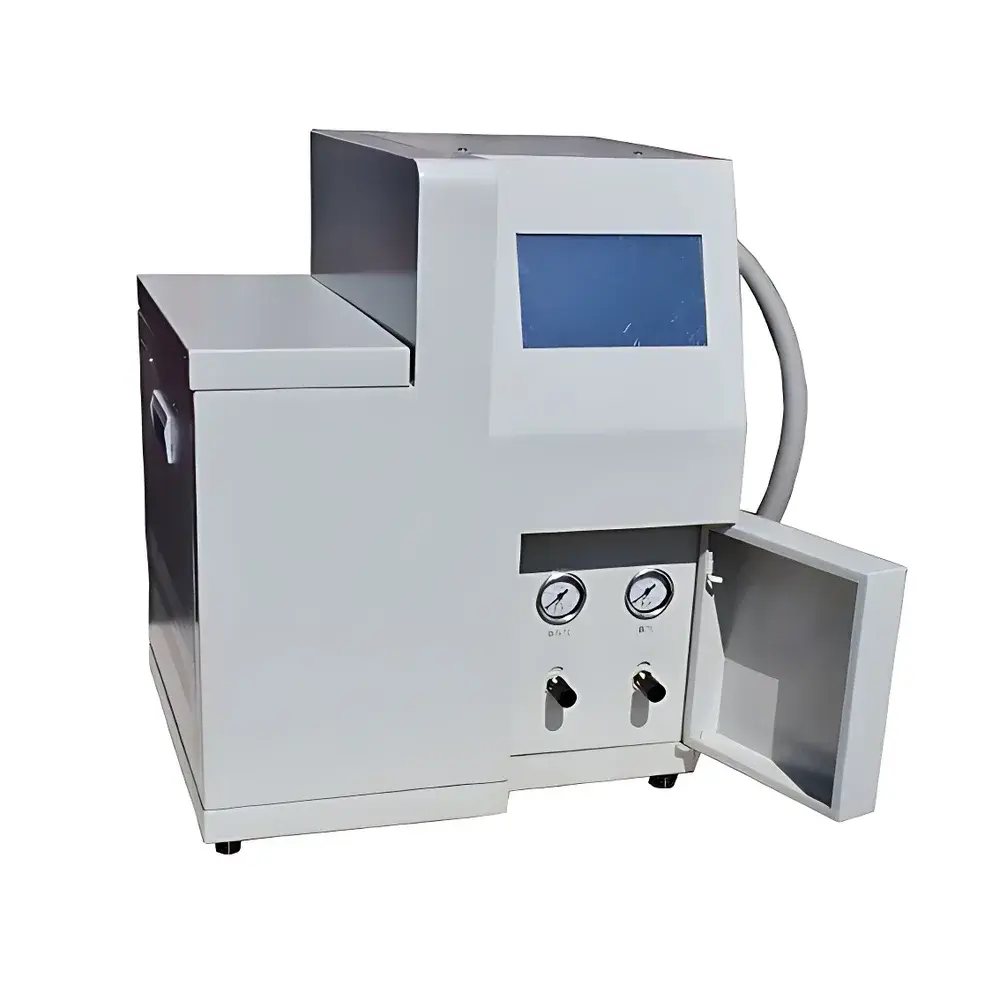
Beifen Sanpu AqHS-20A Plus Fully Automated Static Headspace Sampler
| Brand | Beifen Sanpu |
|---|---|
| Origin | Beijing, China |
| Manufacturer Type | Direct Manufacturer |
| Instrument Type | Static Headspace Sampler |
| Automation Level | Fully Automated |
| Sample Vial Capacity | 20 positions |
| Vial Size Compatibility | 10 mL or 20 mL |
| Vial Heating Range | Ambient to 200 °C (1 °C increment) |
| Valve & Transfer Line Temperature Range | 40–220 °C (±1 °C accuracy) |
| Quantitative Loop Volume | 1 mL |
| Pressure Control Range | 0–0.25 MPa (continuously adjustable) |
| Sampling Time | 0–30 min |
| Injection Time | 0–999 s |
| Pressurization Time | 0–999 s |
| Purge/Flush Time | 0–30 min |
| RSD | <1.0% (for 100 ppm ethanol in water) |
| Interface | USB |
Overview
The Beifen Sanpu AqHS-20A Plus is a fully automated static headspace sampler engineered for precise, reproducible analysis of volatile and semi-volatile organic compounds in solid, liquid, and polymeric matrices. It operates on the principle of phase equilibrium partitioning: samples sealed in heated vials reach thermal equilibrium between the condensed phase (liquid or solid) and the headspace gas phase; a representative aliquot of this equilibrated vapor is then transferred—via pressurized loop injection—into a coupled gas chromatograph (GC). This method eliminates matrix interference, minimizes carryover, and delivers high sensitivity for trace-level volatiles without solvent extraction or derivatization. The AqHS-20A Plus is purpose-built for regulatory-compliant residual solvent testing, particularly in medical device manufacturing where quantification of ethylene oxide (EO) residuals is mandated by ISO 10993-7 and GB/T 16886.7. Its robust thermal management architecture ensures consistent vapor-phase composition across all 20 sample positions, supporting unattended overnight operation under GLP-aligned workflows.
Key Features
- 20-position rotary sample carousel with automatic vial recognition and positional fault avoidance—prevents mechanical collision during unattended runs.
- Independent temperature control for vial oven (ambient–200 °C), six-port valve manifold (40–220 °C), and transfer lines (40–220 °C), all with ±1 °C stability and <±0.5 °C long-term drift.
- High-inertness flow path: deactived fused-silica quantitative loop (1 mL standard), PTFE/silicon septa, and electropolished stainless-steel tubing minimize adsorption and cross-contamination.
- Positive-pressure sampling mechanism ensures quantitative transfer without baseline disturbance—ideal for FID and other concentration-sensitive detectors.
- Full programmability via 7-inch TFT LCD touchscreen or USB-connected PC: customizable pressurization, equilibration, loop fill, injection, and post-injection purge sequences with 1-ms time resolution.
- Integrated self-diagnostic suite: real-time monitoring of motor position, heater status, pressure transducer output, and communication handshake with GC; automatic error logging and visual alarm prompts.
- Compliance-ready hardware design: supports audit trail generation when paired with 21 CFR Part 11–compliant chromatography data systems (CDS).
Sample Compatibility & Compliance
The AqHS-20A Plus accommodates standard 10 mL and 20 mL crimp-top headspace vials (also configurable for 50 mL and 100 mL upon request), enabling direct analysis of pharmaceutical excipients, sterilized polymer devices, food packaging materials, environmental soil extracts, and clinical specimens. Its thermal and pressure parameters meet method requirements specified in ISO 10993-7 (EO residuals), USP , EP 2.4.24, and multiple Chinese national standards including GB/T 17130-1997 (water VOCs), HJ 642-2013 (soil VOCs), and YC/T 207-2014 (tobacco solvent residues). For medical device QC labs, it satisfies the precision criteria (RSD <1.0% at 100 ppm ethanol) required by ISO/IEC 17025-accredited testing protocols.
Software & Data Management
Instrument control and sequence management are supported via native USB interface, enabling seamless integration with third-party GC data systems—including BF-2002 Chromatography Workstation—and major OEM platforms (Agilent, Shimadzu, Thermo Fisher). All method parameters—including vial heating ramp profiles, valve timing, pressure setpoints, and event-triggered GC start signals—are stored as encrypted binary files with timestamped revision history. When operated within validated CDS environments, the sampler contributes to full electronic record integrity: injection logs, error flags, and calibration events are embedded into raw data files, fulfilling ALCOA+ principles (Attributable, Legible, Contemporaneous, Original, Accurate) and supporting FDA 21 CFR Part 11 compliance for electronic signatures and audit trails.
Applications
Primary applications include residual solvent analysis in pharmaceuticals (ICH Q3C), EO sterilant validation in Class I–III medical devices, VOC profiling in food contact materials (SN/T 4068-2014), forensic toxicology (blood alcohol quantification), environmental monitoring (HJ 810-2016 water VOCs), and quality control of polymers, adhesives, and coatings. Its flexibility extends to method development for fragrance release kinetics, herbal volatile profiling, and controlled-release formulation stability studies—where reproducible headspace composition is critical for kinetic modeling.
FAQ
Is the AqHS-20A Plus compatible with non-Beifen GC systems?
Yes—it features universal TTL and contact-closure triggers for synchronized GC start, and its analog/digital I/O ports support integration with Agilent, Shimadzu, PerkinElmer, and Thermo Fisher gas chromatographs.
Can the instrument perform multiple injections from a single vial?
Yes—programmable multi-shot mode allows up to 99 repeated injections per vial without manual intervention, improving throughput for calibration curve generation.
What maintenance is required to sustain <1.0% RSD performance?
Quarterly verification of valve seal integrity, annual replacement of septa and O-rings, and biannual calibration of temperature sensors using NIST-traceable thermistors are recommended per ISO/IEC 17025 preventive maintenance guidelines.
Does the system support method transfer between laboratories?
Yes—method files contain all hardware-specific parameters (temperatures, pressures, timings); identical configuration across units ensures inter-laboratory reproducibility when combined with standardized vial types and crimping torque.
Is EPC (Electronic Pressure Control) available as a factory option?
EPC is offered as an optional upgrade for enhanced pressure stability and remote parameter adjustment—particularly beneficial for methods requiring dynamic pressure modulation during equilibration.



