
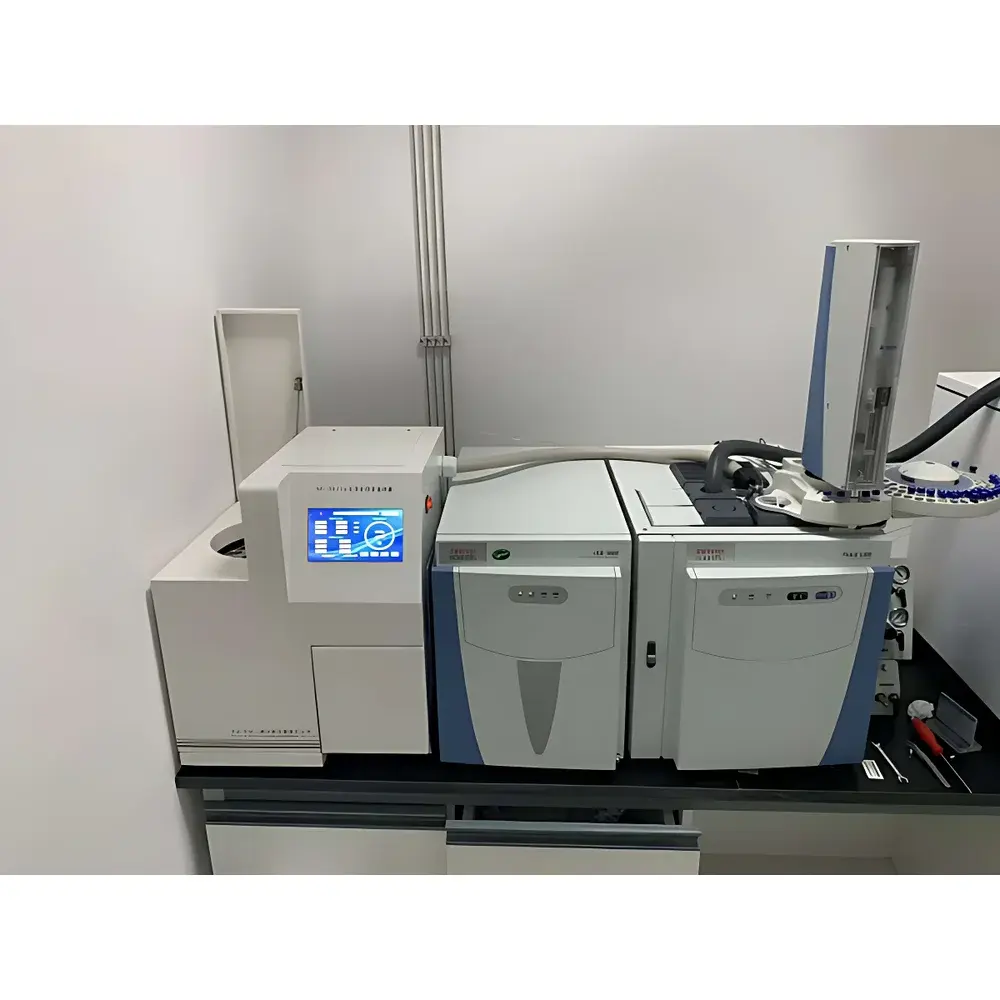
Beifen Sanpu AHS-20A PLUS Fully Automatic Static Headspace Sampler for Ethylene Oxide Residue Analysis in Medical Devices
| Brand | Beifen Sanpu |
|---|---|
| Origin | Beijing, China |
| Manufacturer Type | Manufacturer |
| Product Origin | Domestic (China) |
| Model | AHS-20A PLUS |
| Instrument Type | Static Headspace Sampler |
| Automation Level | Fully Automatic |
| Vial Heating Range | Ambient to 200 °C (1 °C increments) |
| Valve Temperature Control Range | 40–220 °C (±1 °C accuracy) |
| Sample Loop Volume | 1 mL |
| Vial Capacity | 20 positions |
| Compatible Vial Sizes | 10 mL or 20 mL |
Overview
The Beifen Sanpu AHS-20A PLUS is a fully automated static headspace sampler engineered for precise, reproducible quantification of residual ethylene oxide (EO) in medical devices—particularly single-use surgical masks, gowns, drapes, and sterilized packaging materials. EO is a highly effective, low-temperature sterilant widely adopted under ISO 11135 for terminal sterilization of heat-sensitive medical products. However, due to its classification as a Group 1 human carcinogen (IARC) and its acute toxicity (LC50 ~800 ppm, 4-hr inhalation), strict regulatory limits apply: ≤10 µg/g for most Class II/III devices per ISO 10993-7:2015 and GB/T 16886.7–2015. The AHS-20A PLUS implements static headspace gas chromatography (HS-GC), a validated, matrix-compatible technique that isolates volatile EO from solid or semi-solid samples without solvent extraction or derivatization. By equilibrating sealed vials at controlled temperature and pressure, the instrument transfers only the vapor-phase analyte into the GC system—ensuring minimal column contamination, high method robustness, and compliance with pharmacopeial requirements for residual solvent analysis (e.g., USP , EP 2.4.24).
Key Features
- Fully automated 20-position carousel with programmable vial selection, enabling unattended batch analysis of up to 20 samples per run
- Precise thermal control: independent heating zones for sample vials (ambient–200 °C, ±1 °C) and transfer valve (40–220 °C, ±1 °C), minimizing condensation and carryover
- 1 mL fixed-volume quantitative loop ensures volumetric accuracy and inter-run repeatability (RSD <1.5% for EO peak area)
- Integrated pressure-balanced injection mechanism eliminates syringe-based variability and reduces adsorption losses of polar EO molecules
- Robust architecture with corrosion-resistant internal surfaces and inert flow path (siliconized glass, PTFE, and stainless-steel components) to prevent EO degradation or surface retention
- Compliant with GLP/GMP documentation standards: audit trail-enabled method storage, user access levels, and electronic signature support via optional software modules
Sample Compatibility & Compliance
The AHS-20A PLUS accommodates standard 10 mL and 20 mL crimp-top headspace vials with magnetic or screw caps and pre-slit silicone/PTFE septa. It supports direct analysis of extracted swabs, cut mask fabric pieces (≤100 mg), polymer films, and lyophilized device components. Method validation aligns with ISO/IEC 17025:2017 requirements for testing laboratories and satisfies regulatory expectations outlined in FDA Guidance for Industry: Sterile Drug Products Produced by Aseptic Processing (2004) and EU Annex 1 (2022). All operating parameters—including equilibration time (typically 30–45 min at 80 °C), vial pressurization (typically 10–15 psi), and loop purge duration—are fully configurable to meet specific matrix challenges (e.g., high-density polypropylene or hydrophobic nonwovens). The system is routinely deployed in QC labs certified to ISO 13485 and accredited for EO residue testing per CNAS-CL01:2018.
Software & Data Management
Controlled via PC-based Beifen ChromaSoft™ v3.2 software, the AHS-20A PLUS supports method-driven operation with full parameter logging, real-time status monitoring, and automatic calibration verification. Data files comply with ASTM E1783-22 (Standard Practice for Data Exchange in Chromatography) and include embedded metadata (operator ID, vial position, timestamp, temperature profiles, pressure logs). Optional 21 CFR Part 11 compliance package provides role-based user authentication, electronic signatures, and immutable audit trails for raw data, method changes, and maintenance records. Integration with major GC platforms (Agilent, Shimadzu, Thermo, and domestic GC-9860 series) is achieved through standardized RS-232/USB protocols and ASCII command sets. Batch reports export to CSV, PDF, or LIMS-ready XML formats, supporting traceability across production lots and regulatory submissions.
Applications
- Quantitative EO residue testing in Class I–III medical devices per ISO 10993-7:2015 and GB/T 16886.7–2015
- Validation and routine monitoring of EO sterilization cycles in contract manufacturing organizations (CMOs)
- Stability studies assessing EO desorption kinetics from polymers under accelerated aging conditions (e.g., 40 °C/75% RH)
- Method development for alternative sterilants (e.g., hydrogen peroxide, ozone) where residual volatility profiling is required
- Environmental monitoring of EO off-gassing in cleanroom packaging areas and sterilization chamber exhaust streams
FAQ
What is the minimum detectable concentration of EO using the AHS-20A PLUS with FID detection?
Typical method detection limits range from 0.1–0.3 µg/g in solid matrices when coupled with a flame ionization detector (FID) and optimized GC conditions (e.g., SE-54 column, 60 °C isothermal hold). Confirmation by GC-MS is recommended for LOQ verification below 0.5 µg/g.
Can the AHS-20A PLUS be used for other residual solvents beyond EO?
Yes—the system is validated for Class 1 (benzene, CCl4) and Class 2 (acetone, ethanol, methanol, chloroform) solvents per ICH Q3C guidelines, provided appropriate calibration standards, vial equilibration parameters, and GC methods are applied.
Is method transfer supported between different GC platforms?
Absolutely. The AHS-20A PLUS uses vendor-agnostic timing and trigger protocols. Method parameters (equilibration time, oven temp, loop fill/purge durations) remain consistent across Agilent 8890, Shimadzu GC-2030, and domestic GC-9860 systems when using identical column dimensions and carrier gas settings.
Does the system require external gas supplies for operation?
No—only the connected GC requires carrier (N2), fuel (H2), and make-up (air) gases. The AHS-20A PLUS operates solely on standard 220 V AC power and ambient lab air for vial pressurization.
How is calibration verified during routine use?
Daily system suitability tests include injection of a mid-level EO standard (e.g., 5 µg/mL) to confirm retention time stability (<0.05 min RSD), peak symmetry (tailing factor <1.5), and area precision (<2.0% RSD over six injections). Calibration curves (1–10 µg/mL) are re-established weekly or after column replacement.




