
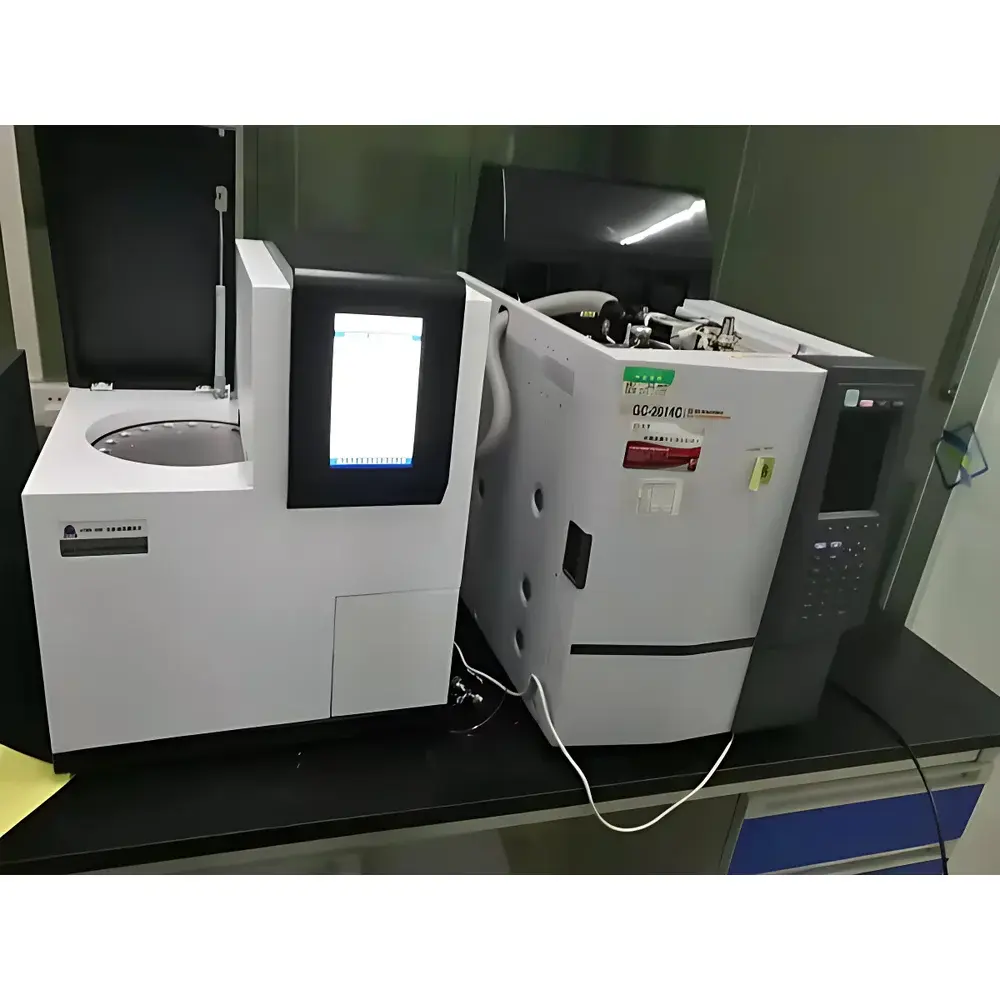
Beifen Sanpu ATDS-20A Automated Dual-Stage Thermal Desorber for GC/MS Analysis
| [Brand | Beifen Sanpu |
|---|---|
| Origin | Beijing, China |
| Manufacturer Type | Direct Manufacturer |
| Model | ATDS-20A |
| Instrument Type | Dual-Stage Thermal Desorber |
| Primary Desorption Temperature Range | Ambient to 400 °C |
| Secondary Desorption Temperature Range | 100–400 °C |
| Cryo-Focusing Trap Temperature Range | Down to −35 °C |
| Desorption Recovery Rate | >90% |
| Sample Capacity | 20 Adsorption Tubes] |
Overview
The Beifen Sanpu ATDS-20A is an automated dual-stage thermal desorber engineered for high-fidelity sample introduction into gas chromatography–mass spectrometry (GC–MS) and gas chromatography–flame ionization detection (GC–FID) systems. It operates on the principle of thermally driven analyte release from sorbent-packed tubes—first via controlled primary desorption (thermal release from the tube matrix), followed by cryogenic focusing in a low-temperature trap (−35 °C), and finally rapid secondary desorption directly into the GC inlet. This two-step process achieves effective analyte enrichment, minimizes breakthrough losses, and eliminates solvent dilution—enabling trace-level quantification of volatile and semi-volatile organic compounds (VOCs and SVOCs) at parts-per-trillion (ppt) concentrations. The system is designed to comply with core regulatory methodologies for environmental and indoor air analysis, including HJ 644–2013, HJ 583–2010, HJ 734–2014, GB/T 18883–2002, and GB 50325–2010.
Key Features
- 20-position fully automated sample carousel with programmable tube handling, enabling unattended overnight operation and high-throughput batch processing.
- Independent temperature control for primary desorption chamber, secondary desorption zone, transfer lines, and cryo-trap—ensuring precise thermal management and minimal memory effects.
- Hybrid pneumatic architecture combining motorized valves and solenoid actuators for reproducible, leak-tight switching across desorption, trapping, backflush, and injection phases.
- Integrated synchronization output signal to trigger GC oven start, data acquisition software, and detector activation simultaneously—eliminating timing misalignment and improving method robustness.
- Modular design supporting future expansion: optional upgrade paths to triple-stage (two-stage focusing) or semi-automated configurations without hardware replacement.
- Compliance-ready firmware architecture with audit trail logging, user access levels, and method versioning—facilitating GLP/GMP-aligned laboratory workflows and FDA 21 CFR Part 11 readiness when paired with validated chromatography data systems.
Sample Compatibility & Compliance
The ATDS-20A accommodates standard 6 mm OD × 89 mm length stainless steel or quartz adsorption tubes packed with multi-bed sorbents (e.g., Tenax TA, Carbopack B/C, Carboxen 1000). It supports direct analysis of ambient air, indoor air, vehicle cabin air, industrial stack emissions, and high-moisture samples (with optional moisture management accessories). Its performance meets or exceeds recovery and precision requirements specified in ASTM D6196–22 (Standard Practice for Selection of Sorbents, Sampling, and Thermal Desorption Analysis of Volatile Organic Compounds in Air), ISO 16017–1:2000 (Indoor, ambient and workplace air — Sampling and analysis of volatile organic compounds by sorbent tube/thermal desorption/capillary gas chromatography), and USP guidelines for residual solvent testing where applicable. All thermal zones are calibrated per ISO/IEC 17025–2017 traceability protocols using NIST-traceable reference standards.
Software & Data Management
The instrument is operated via Windows-based Beifen Sanpu Thermal Desorption Control Software (v3.2+), which provides intuitive method development, real-time status monitoring, and event-driven sequence programming. Each run logs full thermal profile history, valve actuation timestamps, trap temperature stability metrics, and GC synchronization confirmation. Raw method files include embedded metadata (operator ID, calibration date, tube lot number) to support ALCOA+ data integrity principles. Export formats include CSV, XML, and native .BFD for seamless integration with third-party chromatography data systems (CDS) such as Thermo Chromeleon, Agilent OpenLab CDS, and Waters Empower. Audit trails are encrypted and immutable post-acquisition, meeting requirements for regulated environments requiring electronic record retention.
Applications
- Environmental monitoring: VOC profiling in ambient air per HJ 644–2013 and HJ 734–2014; benzene, toluene, ethylbenzene, and xylene (BTEX) quantification in soil gas and landfill emissions.
- Indoor air quality (IAQ): Compliance testing per GB/T 18883–2002 and GB 50325–2010 for formaldehyde, TVOC, and aldehydes in residential, commercial, and institutional buildings.
- Automotive cabin air: VOC screening per HJ/T 400–2007 for interior materials off-gassing, including plasticizers, flame retardants, and adhesive residues.
- Forensic and safety labs: Trace-level detection of ignitable liquids, accelerants, and illicit drug precursors in fire debris and evidence swabs.
- Food and packaging: Migration testing of volatile migrants from polymers, coatings, and adhesives into food simulants.
FAQ
What sorbent tubes are compatible with the ATDS-20A?
Standard 6 mm OD × 89 mm stainless steel or quartz tubes packed with dual- or triple-bed sorbents (e.g., Tenax TA + Carbopack B + Carboxen 1000) are supported. Custom tube dimensions require mechanical adapter verification.
Does the system support moisture removal for humid samples?
The base configuration includes a water management option—either a chilled condenser or a selective water trap—available as an add-on module to prevent ice formation in the cold trap during high-humidity sampling.
Can the ATDS-20A be integrated with legacy GC systems?
Yes. It features universal analog TTL and RS-232 interfaces, plus configurable digital I/O ports for synchronization with any GC manufacturer’s start command protocol—including older Shimadzu, PerkinElmer, and Thermo instruments.
Is validation documentation provided?
Factory-installed IQ/OQ documentation is included, covering temperature uniformity mapping, flow rate verification, recovery testing per HJ 644–2013 Annex B, and electronic signature compliance for 21 CFR Part 11 implementation.
What maintenance intervals are recommended?
Valve actuation cycles are rated for ≥500,000 operations; cryo-trap cooling elements require annual performance verification; sorbent tube o-rings should be replaced every 6 months under continuous use.




