
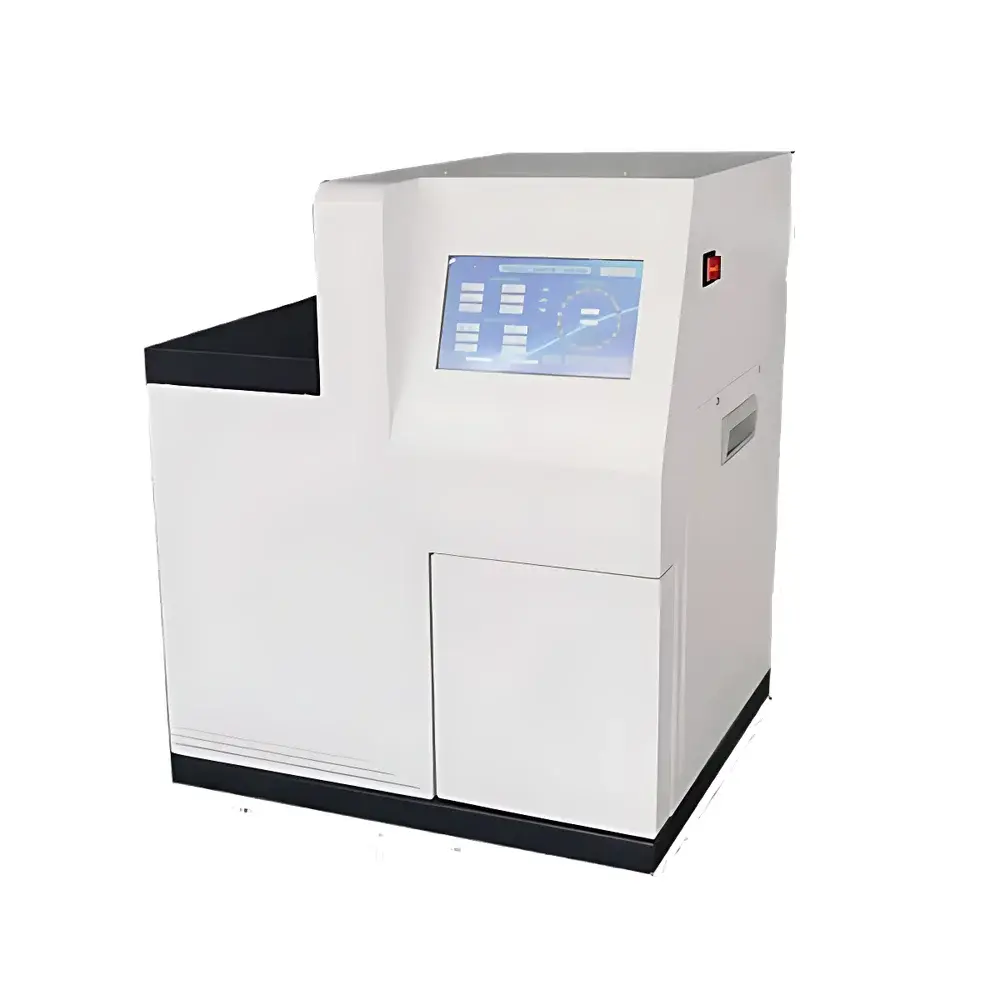
Beifen Sanpu FAHS-20A Plus Fully Automated Headspace Sampler for Rural Drinking Water Testing
| [Brand | Beifen Sanpu |
|---|---|
| Origin | Beijing, China |
| Manufacturer Type | Direct Manufacturer |
| Country of Origin | China |
| Model | FAHS-20A Plus |
| Sample Capacity | 20-position |
| Vial Size Compatibility | 10 mL & 20 mL (customizable up to 100 mL) |
| Sample Heating Range | 40–220 °C (optional to 300 °C), ±0.5 °C stability |
| Valve & Transfer Line Heating | 40–220 °C (optional to 300 °C), ±0.5 °C stability |
| Pressure Control Range | 0–0.25 MPa (continuously adjustable) |
| Pressurization Time | 0–999 s |
| Sampling Time | 0–30 min |
| Injection Time | 0–999 s |
| Bake-out/Clean Time | 0–30 min |
| Minimum Time Resolution | 1 ms |
| Quantitative Loop Volume | 1 mL (0.5/2/5 mL optional) |
| RSD | <1.0% (for 100 ppm ethanol in water) |
| Carrier Gas Flow Control | EPC-compatible (optional) |
| Interface | USB |
| Inert Flow Path | Deactivated fused-silica and PEEK tubing throughout |
| Valve Configuration | High-precision 6-port valve with minimized dead volume |
| Power Supply | AC 220 V ±10%, 50/60 Hz] |
Overview
The Beifen Sanpu FAHS-20A Plus Fully Automated Headspace Sampler is an engineered solution for regulated volatile organic compound (VOC) analysis in drinking water—specifically designed to meet the analytical rigor demanded by GB/T 5750.8–2006 (Standard Methods for Examination of Drinking Water: Organic Compounds) and GB/T 5750.10–2006 (Disinfection Byproducts). It operates on the principle of equilibrium headspace gas-phase extraction, where volatile analytes (e.g., chloroform, carbon tetrachloride, haloacetic acids, trihalomethanes) partition from aqueous or solid matrices into the headspace above the sample at controlled temperature and pressure. The instrument then performs positive-pressure transfer of the equilibrated vapor directly into a gas chromatograph (GC), eliminating manual syringe injection and minimizing carryover, adsorption loss, or thermal degradation. Its architecture supports compliance-driven workflows in rural water quality laboratories where reproducibility, trace-level sensitivity (<0.1 µg/L for THMs), and minimal operator intervention are critical under resource-constrained conditions.
Key Features
- 20-position autosampler with programmable carousel indexing and real-time vial position verification—avoids mechanical collision via intelligent fault-aware motion control.
- Triple-zone independent temperature control: sample oven (40–220 °C), valve block (40–220 °C), and transfer line (40–220 °C), all stabilized to ±0.5 °C; optional 300 °C extension available for high-boiling analytes.
- Full inert flow path: electropolished stainless-steel 6-port valve, deactivation-treated fused-silica quantitative loop (1 mL standard), and heated transfer lines—all housed within thermally insulated zones to prevent condensation or adsorption.
- Precision electronic pressure control (EPC-ready option) enables repeatable pressurization (0–0.25 MPa) and eliminates reliance on external gas cylinders or regulators.
- 7-inch full-color TFT LCD interface with animated workflow guidance, Chinese/English language toggle, and intuitive parameter navigation—no training required for routine operation.
- Multi-mode sampling logic: single-vial repeated injections, single-vial single injection, or sequential multi-vial batch analysis—configurable per method via USB or front-panel entry.
- Comprehensive self-diagnostic suite: automatic power-on calibration, positional encoder validation, heater continuity check, and real-time thermal drift monitoring with audible/visual fault alerts.
- GC synchronization support: TTL-triggered start for GC oven ramp, detector activation, and data acquisition software—ensures temporal alignment between headspace injection and chromatographic acquisition.
Sample Compatibility & Compliance
The FAHS-20A Plus accommodates standard 10 mL and 20 mL crimp-top headspace vials (ASTM D6227-compliant), with custom configurations available for 50 mL and 100 mL formats to accommodate low-concentration field-collected samples requiring pre-concentration. It is validated for direct integration with EPA Method 502.2, ISO 10301:1997, and GB/T 5750.8–2006 for chlorinated hydrocarbon detection—including chloroform (CHCl₃), carbon tetrachloride (CCl₄), bromodichloromethane, and dibromochloromethane—in raw source water, treated distribution system samples, and household tap water. All wetted surfaces comply with USP extractables testing requirements for polymeric components. The system meets GLP documentation prerequisites: audit trail-enabled method storage, user-access logging, parameter change timestamps, and electronic signature readiness for FDA 21 CFR Part 11–aligned environments.
Software & Data Management
Control and method development are performed either via the embedded touch interface or through USB-connected PC software supporting Windows 10/11. The software provides full parameter scripting—including incubation time gradients, multi-step pressure ramping, variable loop fill ratios, and post-injection bake-out profiles. All methods are saved with metadata (user ID, date/time stamp, instrument serial number) and exportable in CSV or XML format for LIMS integration. Chromatographic data synchronization ensures that each injection event is tagged with corresponding GC run ID, retention time lock status, and detector response baseline integrity flags. Raw method files are digitally signed to prevent unauthorized modification—supporting traceability in accredited drinking water testing labs operating under CNAS-CL01 (ISO/IEC 17025) or provincial CDC quality management systems.
Applications
- Regulatory monitoring of trihalomethanes (THMs) and haloacetic acids (HAAs) in municipal and village-level water supply systems per GB 5749–2006.
- Field-deployable VOC screening for groundwater contamination near agricultural runoff zones or industrial perimeters.
- Validation of disinfection efficacy and byproduct formation during chlorine/chloramine dosing trials.
- Method transfer support for inter-laboratory comparison studies coordinated by provincial Centers for Disease Control and Prevention (CDCs).
- Quality assurance in bottled water production facilities performing lot-release testing for residual solvents and packaging migrants.
FAQ
Is the FAHS-20A Plus compatible with non-Beifen Sanpu gas chromatographs?
Yes—it features universal TTL and contact-closure triggering, analog voltage output for GC oven start, and configurable delay timers to synchronize with Agilent, Shimadzu, Thermo Fisher, and PerkinElmer GC platforms.
Can it handle turbid or particulate-laden water samples without filtration?
Yes—the sealed vial equilibrium approach isolates only the vapor phase; suspended solids do not interfere with headspace partitioning. However, samples must be homogenized prior to vial filling to ensure representative VOC distribution.
What maintenance intervals are recommended for long-term reliability?
Valve rotor seal replacement every 10,000 injections; quantitative loop cleaning with methanol weekly; annual calibration verification using NIST-traceable ethanol/water standards per GB/T 5750.8–2006 Annex B.
Does the system support unattended overnight operation?
Yes—full 20-vial batch sequencing with automated cooldown, standby mode, and power-fail resume capability ensures uninterrupted multi-hour runs typical for rural water surveillance campaigns.
How is cross-contamination mitigated between high- and low-concentration samples?
Through programmable high-flow nitrogen purge (0–100 mL/min) of the entire flow path—including valve stator surface, loop interior, and transfer line—between injections, verified by blank run RSD <0.8% (n=6).
Related Products




