
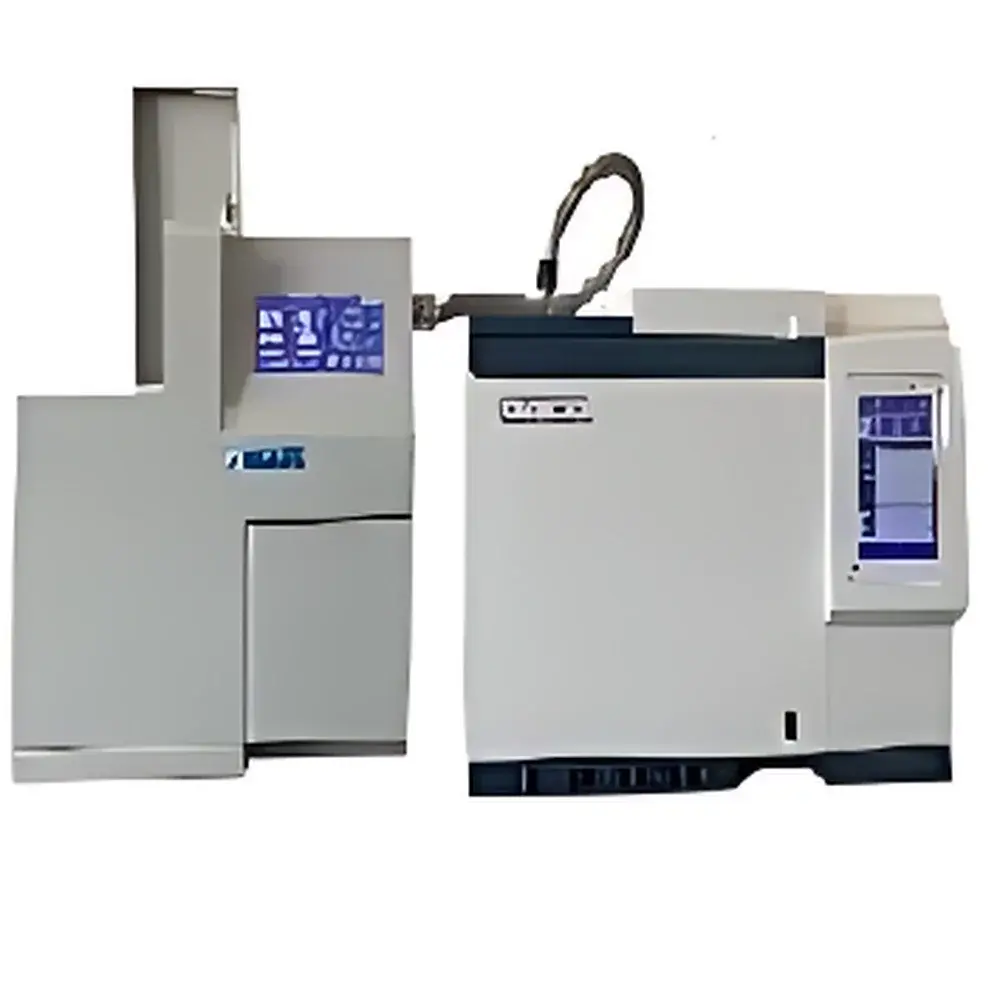
Beifen Sanpu AbHS-20A Plus Fully Automated Static Headspace Sampler for Ethylene Oxide Residue Analysis
| Brand | Beifen Sanpu |
|---|---|
| Origin | Beijing, China |
| Manufacturer Type | OEM Manufacturer |
| Product Category | Domestic |
| Model | AbHS-20A Plus |
| Instrument Type | Static Headspace Sampler |
| Automation Level | Fully Automatic |
| Vial Heating Range | Ambient to 200 °C (1 °C increments) |
| Valve & Transfer Line Temperature Control Range | 40–220 °C (±1 °C accuracy) |
| Sample Loop Volume | 1 mL |
| Sample Capacity | 20 positions |
| Compatible Vial Sizes | 10 mL or 20 mL |
Overview
The Beifen Sanpu AbHS-20A Plus is a fully automated static headspace sampler engineered for precise, reproducible quantification of residual ethylene oxide (EO) in sterilized medical devices—particularly critical for post-sterilization quality control of surgical masks, gowns, syringes, catheters, and other single-use healthcare products. It operates on the principle of static headspace gas-phase equilibrium: solid or liquid samples are sealed in heated vials, allowing volatile EO to partition into the headspace above the matrix; a precisely metered volume of this equilibrated vapor is then transferred via thermostatted valve and transfer line to a gas chromatograph (GC) for separation and detection. This method eliminates matrix interference from non-volatile components and ensures high sensitivity (sub-ppm detection limits achievable with FID/ECD), robustness, and compliance with internationally recognized pharmacopoeial and regulatory protocols—including ISO 10993-7:2008, GB/T 16886.7–2015, USP , and ASTM F2723–21. The system’s thermal stability, inert flow path, and programmable incubation parameters support GLP-compliant workflows in QC laboratories operating under ISO/IEC 17025 or FDA 21 CFR Part 11 environments.
Key Features
- Fully automated 20-position carousel with barcode-readable vial tray support for unattended batch analysis (up to 20 samples per run)
- Independent temperature control for vial oven (ambient–200 °C, ±0.5 °C uniformity) and valve/transfer line (40–220 °C, ±1 °C precision), minimizing condensation and carryover
- 1 mL fixed-volume sample loop with PTFE-coated stainless-steel construction for inert, low-memory sampling of EO
- Programmable equilibration time (0–999 min), agitation (optional magnetic stirring), and pressurization (via carrier gas) to optimize partitioning kinetics
- Integrated leak-check routine and real-time pressure monitoring for method validation and instrument qualification (IQ/OQ)
- RS-232 and USB interfaces compatible with major GC data systems (e.g., Shimadzu GCsolution, Agilent OpenLab, Thermo Chromeleon)
Sample Compatibility & Compliance
The AbHS-20A Plus accommodates standard 10 mL and 20 mL crimp-top headspace vials with silicone/PTFE septa, supporting both aqueous extraction (e.g., 5 mL water added to 1.0 g cut mask material) and direct solid-phase analysis. It meets essential requirements for EO residue testing as defined in GB/T 16886.7–2015 (equivalent to ISO 10993-7), which mandates static headspace–GC methodology with calibration traceability to certified reference materials. System performance qualifies for inclusion in laboratory accreditation scopes under CNAS-CL01 (ISO/IEC 17025) and supports audit-ready documentation including calibration logs, maintenance records, and electronic audit trails when paired with 21 CFR Part 11–compliant chromatography data systems.
Software & Data Management
Control software provides intuitive method building with multi-step temperature ramping, timing sequences, and vial position mapping. All acquisition parameters—including vial ID, equilibration time, loop fill/purge cycles, and valve actuation timestamps—are logged with ISO 17025–aligned metadata. Raw data files (.csv or native GC format) retain full parameter history for reprocessing. Optional LIMS integration enables automated result reporting to enterprise quality management systems (QMS). Software validation packages—including IQ/OQ documentation templates and electronic signature support—are available upon request for regulated environments.
Applications
- Quantitative EO residue analysis in ethylene oxide–sterilized Class I–III medical devices per ISO 10993-7 and GB/T 14233.1–2008
- Stability studies assessing EO desorption kinetics during product aging and storage
- Validation of aeration (off-gassing) protocols for EO-sterilized implants and packaging materials
- Residual solvent screening in pharmaceutical excipients (e.g., polysorbate 80, gelatin capsules) per ChP 2020 Vol II
- Environmental monitoring of EO emissions in sterilization facility exhaust streams
FAQ
What is the minimum detectable concentration of EO using this system with a standard FID detector?
Typical method detection limits range from 0.1–0.5 µg/g depending on sample mass, extraction volume, and GC column efficiency—achievable without preconcentration when using optimized headspace parameters.
Can the AbHS-20A Plus be used with cryogenic trapping or cold injection for enhanced sensitivity?
No—the AbHS-20A Plus is a static headspace platform and does not support dynamic enrichment or cryofocusing; for sub-ppb applications, consider coupling with a GC-MS system and isotopic dilution calibration.
Is the system compatible with USP and EP 2.4.24 methods?
Yes—its thermal control fidelity, loop accuracy, and vial sealing integrity meet the operational specifications outlined in both monographs for EO residue determination.
Does the instrument include validation documentation for GMP environments?
Factory-provided IQ/OQ protocols and test certificates are supplied; full 21 CFR Part 11 validation requires site-specific PQ execution and integration with validated CDS software.
What maintenance intervals are recommended for long-term reliability?
Valve seals and septa should be replaced every 3,000 injections; oven calibration verification is advised quarterly; full system performance qualification (SPQ) is recommended annually or after major component replacement.



