
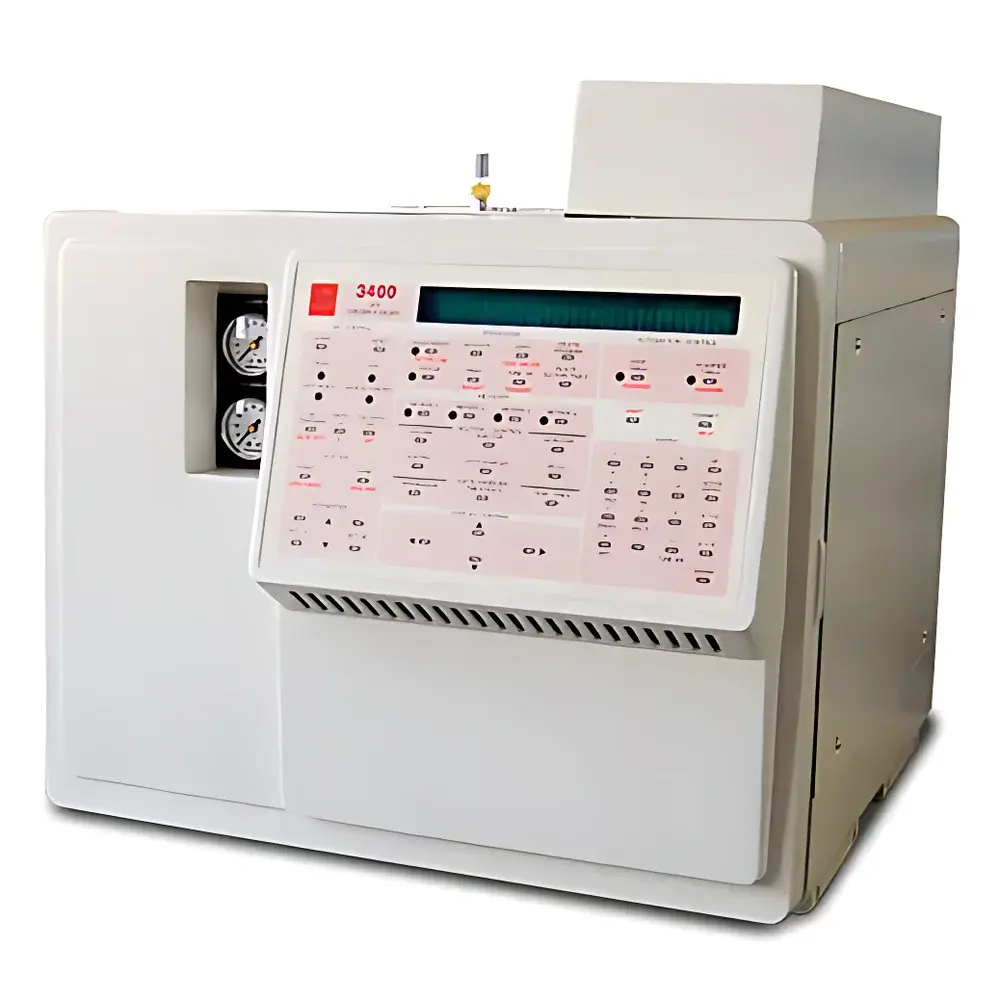
Beifen Sanpu SP-3420A Universal Laboratory Gas Chromatograph
| Brand | Beifen Sanpu |
|---|---|
| Origin | Beijing, China |
| Manufacturer Type | Direct Manufacturer |
| Country of Origin | China |
| Model | SP-3420A |
| Instrument Type | Benchtop Laboratory Gas Chromatograph |
| Application Scope | Universal (Petroleum, Chemical, Environmental, Pharmaceutical, Power, Mining, Research & Education) |
| Oven Temperature Range | Ambient to 420 °C |
| Oven Ramp Rate | 0.1–50 °C/min |
| Oven Cool-down Rate | 0.1–50 °C/min |
| Carrier Gas Flow Range & Control | 0–1200 mL/min |
| Carrier Gas Pressure Range & Control | 0–970 kPa (16-Step Programmable Pressure/Flow Gradients) |
| Injector Maximum Operating Temperature | 420 °C |
| Injector Pressure Setpoint Range | 0–970 kPa |
| Injector Total Flow Setpoint Range | 0–1200 mL/min |
| Column Oven Cool-down | <5 min (250 °C → 50 °C) |
| Programmed Temperature Ramping | Up to 16 temperature segments |
Overview
The Beifen Sanpu SP-3420A Universal Laboratory Gas Chromatograph is a robust, modular benchtop GC system engineered for precision separation and quantitative analysis of volatile and semi-volatile organic compounds across diverse sample matrices. Based on technology transfer from Varian (now Agilent), the instrument implements classical gas chromatographic principles—sample vaporization, carrier-gas-driven partitioning through a stationary phase, and detector-based signal transduction—to deliver high reproducibility and method stability in routine and research-grade applications. Its dual-zone temperature control architecture (oven + injector/detector zones), fully programmable pressure/flow gradients, and support for both packed and capillary columns make it suitable for method development, quality control, environmental monitoring, and regulatory-compliant testing in GLP and GMP environments.
Key Features
- Modular detector configuration: Supports simultaneous installation of up to three independent detectors—including TCD, FID, ECD, FPD, and TSD—with optional methane converter (built-in or external) for enhanced hydrocarbon speciation.
- Multi-injector flexibility: Accommodates up to three inlet modules concurrently (e.g., split/splitless capillary, gas sampling valve, headspace, thermal desorption), enabling seamless method switching without hardware reconfiguration.
- Advanced thermal management: Dual rear-opening oven design achieves rapid cool-down (<5 min from 250 °C to 50 °C); precise temperature ramping (0.1–50 °C/min) across 16 programmable segments ensures optimal resolution for complex mixtures.
- Comprehensive self-diagnostic suite: Real-time system health monitoring with four-tiered diagnostics—core, automatic, extended, and basic—provides actionable fault codes for proactive maintenance and minimal downtime.
- Integrated safety architecture: Includes over-temperature cutoff, TCD filament protection (auto-shutdown within 4 min upon He/H2 flow interruption), FID flame-out detection, FPD light-leak sensing, injector probe open/short alerts, and password-protected keyboard lockout.
- High-automation operation: Intuitive menu-driven interface supports method storage (up to 4 methods), on-the-fly parameter adjustment during run, automated method chaining, and unattended batch execution (up to 99 cycles).
Sample Compatibility & Compliance
The SP-3420A accommodates liquid, gaseous, and solid-phase extracted samples via compatible inlet systems—including direct injection, purge-and-trap, headspace, and thermal desorption. It meets essential performance criteria referenced in ASTM D3606 (benzene/toluene in gasoline), EPA Method 8021B (halogenated organics), USP (chromatographic separations), and ISO 17025-accredited laboratory workflows. All temperature and flow parameters are traceably calibrated against NIST-traceable standards. The system supports audit-trail-capable data acquisition when integrated with compliant chromatography data systems (CDS), satisfying FDA 21 CFR Part 11 requirements for electronic records and signatures where configured with appropriate software and procedural controls.
Software & Data Management
Control and data acquisition are performed via PC-based software supporting full instrument parameterization—including multi-segment oven programs, pressure/flow gradients, detector settings, and sequence scheduling. Raw data files adhere to standard formats (e.g., .CDF) for interoperability with third-party processing tools (e.g., OpenChrom, Chromeleon, Empower). Method validation reports include retention time precision (RSD <0.1%), peak area repeatability (RSD <1.5%), and linearity verification (r² ≥0.999 over specified concentration ranges). Audit trail functionality—recording user actions, parameter changes, and run events—is available when deployed with validated CDS platforms compliant with GLP/GMP documentation standards.
Applications
- Petroleum & fuels: Hydrocarbon group-type analysis (PIONA), benzene/toluene/xylenes (BTX), oxygenates (MTBE, ethanol), and sulfur compounds.
- Environmental: VOCs in air/water (EPA TO-17, TO-14), pesticide residues (EPA 8081/8082), PCB congeners, and chlorinated solvents.
- Pharmaceuticals: Residual solvents (ICH Q3C), assay purity, excipient profiling, and stability-indicating methods.
- Food & flavor: Fatty acid methyl esters (FAME), terpenes, aldehydes, and off-flavor compounds.
- Industrial chemicals: Monomer purity, catalyst residue screening, and reaction mixture monitoring.
FAQ
What types of columns are supported by the SP-3420A?
The system is compatible with both packed columns (1/8″ or 1/4″ OD) and fused-silica capillary columns (up to 0.53 mm ID), including polar, mid-polarity, and non-polar stationary phases.
Can the SP-3420A be used for regulated QC testing under GMP conditions?
Yes—when operated with validated software, documented calibration procedures, and audit-trail-enabled data handling, it fulfills core instrumentation requirements for GMP-compliant laboratories per ICH Q2(R2) and FDA guidance.
Is remote monitoring or network connectivity supported?
The instrument features RS-232 and USB interfaces; Ethernet connectivity is available via optional communication modules for integration into lab-wide instrument networks.
What maintenance routines are recommended for long-term reliability?
Routine checks include septum replacement every 100 injections, liner cleaning every 250 runs, detector cleaning per manufacturer schedule, and annual oven calibration verification using certified reference standards.
Does the system support method transfer from other GC platforms?
Yes—the modular inlet/detector design, standardized column connections, and consistent temperature/flow control logic facilitate straightforward method porting from Varian, Agilent, Shimadzu, or Thermo GC systems with minor optimization.
Related Products





