
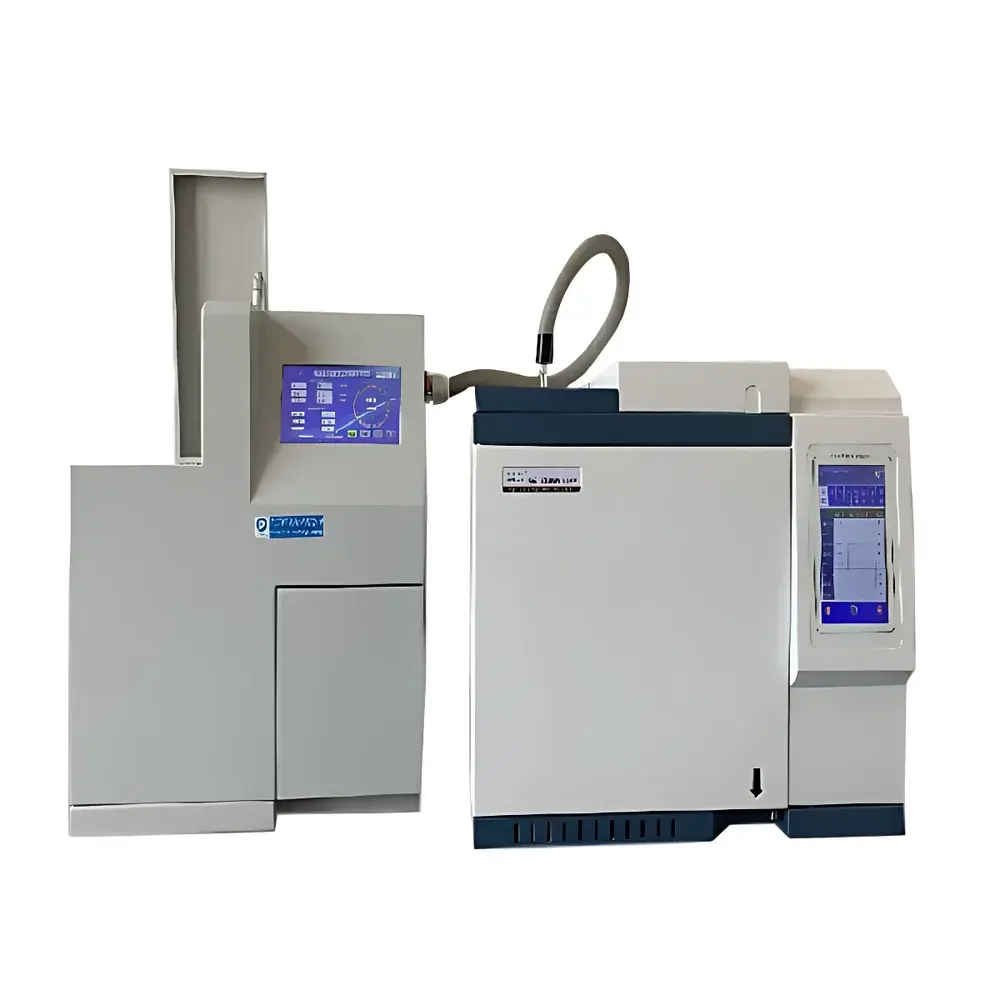
Beifen Sanpu A3HS-20A Plus Fully Automated Static Headspace Sampler with GC-9860 Gas Chromatograph
| Brand | Beifen Sanpu |
|---|---|
| Origin | Beijing, China |
| Manufacturer Type | OEM Manufacturer |
| Instrument Type | Static Headspace Sampler |
| Automation Level | Fully Automated |
| Sample Vial Heating Range | Ambient to 200 °C (1 °C increment) |
| Valve & Transfer Line Temperature Range | 40–220 °C (±1 °C accuracy) |
| Quantitative Loop Volume | 1 mL |
| Sample Capacity | 20 positions |
| Compatible Vial Sizes | 10 mL or 20 mL |
Overview
The Beifen Sanpu A3HS-20A Plus Fully Automated Static Headspace Sampler is engineered for precise, reproducible quantification of volatile organic compounds (VOCs) in solid and liquid matrices using static headspace–gas chromatography (HS-GC) methodology. This system operates on the principle of phase equilibrium partitioning: samples are sealed in heated vials, allowing volatile analytes to equilibrate between the condensed phase (liquid/solid) and the gaseous headspace above it. A precisely metered volume of this equilibrated vapor—delivered via a thermostatted six-port valve and inert transfer line—is introduced directly into the GC inlet. Coupled with the GC-9860 gas chromatograph equipped with an FID detector and dedicated EO separation column, the platform delivers trace-level detection (sub-ppm) of residual ethylene oxide (EO) and other low-boiling solvents in medical devices, pharmaceutical excipients, packaging materials, and environmental samples. Its design emphasizes thermal stability, minimal dead volume, and inert flow paths—critical for maintaining analyte integrity and preventing carryover in regulated quality control environments.
Key Features
- Fully automated 20-position carousel with programmable vial positioning logic; automatically detects and skips empty or misloaded vials to prevent mechanical collision.
- Independent temperature control for sample vials (ambient–200 °C), injection valve (40–220 °C), and transfer lines (40–220 °C), all with ±1 °C setpoint accuracy and <±0.5 °C short-term stability.
- High-inertness fluidic path: de-activated fused-silica quantitative loop (1 mL standard), PTFE-lined septa, and heated valve manifold eliminate adsorption and cross-contamination.
- Positive-pressure sampling mode ensures compatibility with both aqueous and heterogeneous solid samples without baseline drift or pressure surges at the GC inlet.
- 7-inch full-color TFT LCD interface with intuitive graphical workflow navigation; supports local parameter entry or full remote configuration via USB-connected PC.
- Integrated timing resolution down to 1 ms for pressurization, equilibration, sampling, injection, and post-run purge cycles—enabling method optimization per matrix complexity.
- Self-diagnostic firmware with real-time fault logging: monitors motor position, heater status, valve actuation, and communication handshake with GC and data system.
Sample Compatibility & Compliance
The A3HS-20A Plus accommodates standard 10 mL and 20 mL crimp-top headspace vials (custom sizes available upon request), supporting diverse sample types including sterilized polymeric medical devices, lyophilized drug products, soil extracts, water concentrates, and food packaging films. It meets the instrumental requirements of multiple internationally recognized analytical standards, including ISO 10993-7 (biological evaluation of medical devices—EO residue testing), USP Residual Solvents, EP 2.4.24, and Chinese Pharmacopoeia 2020 Edition Vol. IV (General Chapter 0861). The system’s thermal precision, repeatability (RSD <1.0% at 100 ppm ethanol in water), and electronic audit trail capability align with GLP and GMP documentation expectations for QC laboratories subject to FDA 21 CFR Part 11 and CNAS accreditation audits.
Software & Data Management
Instrument control and sequence management are fully supported through BF-2002 chromatographic data system (CDS), which provides validated method templates for EO residue analysis per GB/T 16886.7–2001 and ISO 10993-7. The CDS enables secure user access levels, electronic signature capture, raw data archiving with hash verification, and automatic generation of compliance-ready reports—including calibration logs, system suitability records, and peak integration summaries. All instrument parameters—including vial heating profiles, valve timing, and purge flow rates—are stored as metadata within each data file. USB-based firmware updates and method export/import functionality ensure seamless method transfer across laboratory instruments and facilitate multi-site harmonization.
Applications
Primary application domains include residual solvent analysis in Class I–III medical devices (e.g., catheters, syringes, surgical drapes), EO sterilization validation per AAMI ST-49 and ISO 11135, pharmaceutical excipient release testing, and environmental monitoring of VOCs in water (HJ 810–2016), soil (HJ 642–2013), and solid waste (HJ 643–2013). Additional use cases span flavor/aroma profiling in food science, forensic toxicology (blood alcohol quantification), polymer additive migration studies, and quality assurance of recycled cellulose packaging (SN/T 4068–2014). The system’s robustness and method flexibility make it suitable for routine batch testing in contract labs, R&D settings, and regulatory submission support.
FAQ
What regulatory standards does this system support for EO residue testing?
It complies with ISO 10993-7, USP , EP 2.4.24, GB/T 16886.7–2001, and AAMI ST-49—providing full traceability for medical device biocompatibility dossiers.
Can the system handle solid samples such as gauze or tubing?
Yes—static headspace equilibrium is effective for heterogeneous solids when combined with appropriate vial sealing, equilibration time, and temperature optimization.
Is EPC (Electronic Pressure Control) included as standard?
EPC is available as an optional upgrade for enhanced carrier gas flow stability and method robustness; base configuration uses precision mechanical flow control.
How is data integrity ensured during unattended operation?
All run parameters, timestamps, and hardware status flags are embedded in the raw data file; BF-2002 CDS enforces 21 CFR Part 11-compliant audit trails and electronic signatures.
What maintenance intervals are recommended for long-term reliability?
Valve rotor seal replacement every 10,000 injections; quantitative loop cleaning quarterly; annual calibration verification against NIST-traceable standards is advised for GLP environments.
Related Products





