
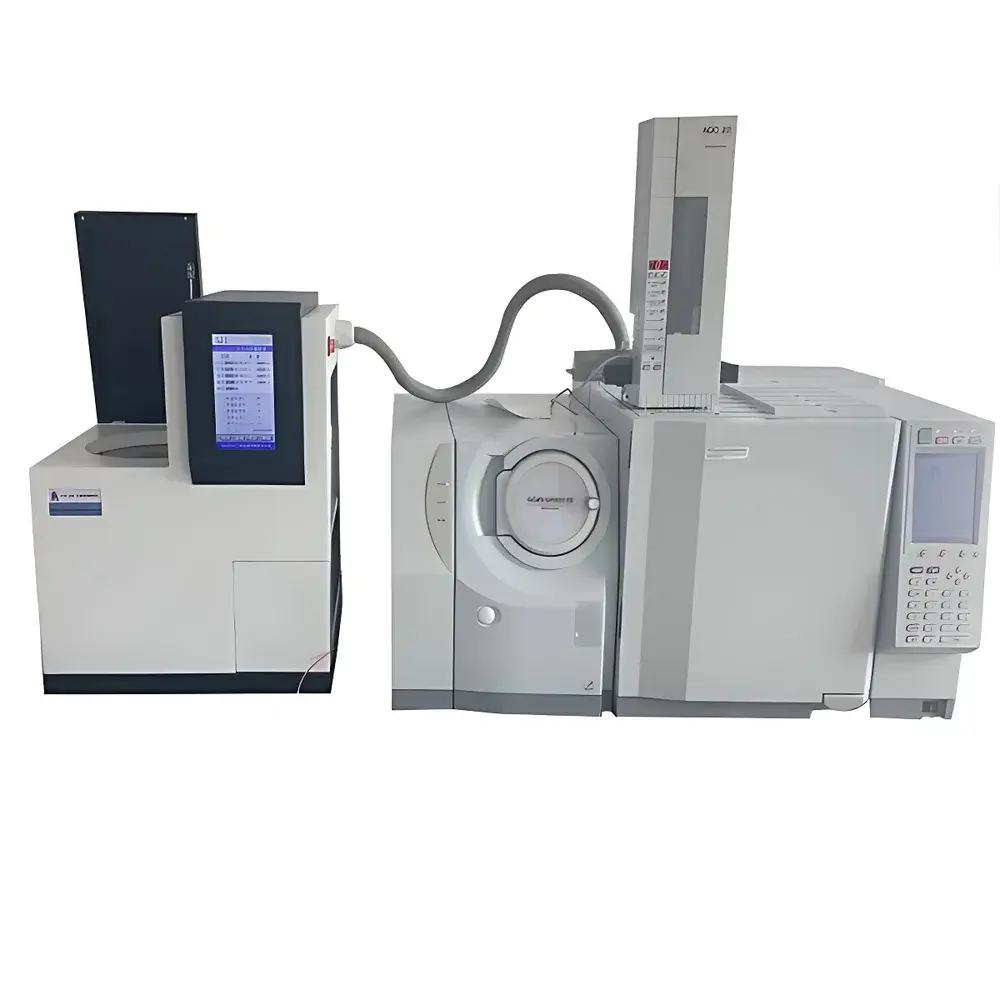
Beifen Sanpu ATD*S-20A Fully Automated Two-Stage Thermal Desorber for VOC and Benzene Series Analysis
| Brand | Beifen Sanpu |
|---|---|
| Origin | Beijing, China |
| Manufacturer Type | Direct Manufacturer |
| Instrument Type | Two-Stage Thermal Desorber |
| Primary Desorption Temp Range | Ambient to 400 °C |
| Secondary Desorption Temp Range | 100–400 °C |
| Cold Trap Temp Range | Down to –35 °C |
| Desorption Recovery Rate | >90% |
| Sample Capacity | 20 positions |
| Tube Format | 1/4″ OD × 3.5″ (US standard adsorption tubes) |
Overview
The Beifen Sanpu ATD*S-20A is a fully automated two-stage thermal desorber engineered for high-reproducibility quantification of volatile organic compounds (VOCs), benzene-series analytes (benzene, toluene, ethylbenzene, xylenes), and total volatile organic compounds (TVOC) in ambient air, indoor air, vehicle cabin air, and building material emissions. It operates on the principle of thermally driven analyte release from sorbent-packed sampling tubes—typically Tenax TA, Carbopack B/C, or T-C composite tubes (2,6-diphenylphenol porous polymer–graphitized carbon black–X)—followed by cryo-focusing in a low-temperature trap and sharp, solvent-free transfer into a gas chromatograph (GC) or GC–MS system. Designed to meet stringent regulatory requirements—including GB 50325-2020, HJ 644–2013, HJ 583–2010, and HJ 734–2014—the instrument delivers robust performance across environmental monitoring, occupational hygiene, and building commissioning applications where trace-level VOC detection (sub-ppbv range) and method compliance are mandatory.
Key Features
- Fully automated 20-position sample carousel with unattended sequential analysis, eliminating manual intervention during batch runs.
- Independent four-zone temperature control: primary desorption oven, secondary desorption chamber, transfer line, and six-port valve—all precisely regulated within ±0.5 °C accuracy.
- Electronically cooled cold trap capable of reaching –35 °C, enabling efficient analyte focusing and narrow peak formation for improved chromatographic resolution and sensitivity.
- Two-stage desorption architecture with programmable ramp rates (>3000 °C/min), ensuring complete release of high-boiling compounds (up to 350 °C boiling point) while minimizing thermal degradation.
- Integrated back-flush functionality for transfer line and valve, preventing carryover between samples and maintaining long-term analytical integrity.
- Embedded simulation mode for generating calibration standards directly on-tube; supports quantitative method development without external spiking.
- Automated tube activation protocol with configurable heating profiles and purge gas flow (0–100 mL/min), ensuring consistent sorbent conditioning prior to sampling.
- Universal GC interface compatibility—including dedicated hardware adapters for Agilent, Thermo Fisher, Shimadzu, and PerkinElmer instruments—ensuring seamless integration into existing laboratory workflows.
Sample Compatibility & Compliance
The ATD*S-20A accepts standard 1/4″ OD × 3.5″ stainless steel or quartz sorbent tubes compliant with ISO 16017-1, ASTM D6196, and Chinese environmental standards. It is validated for use with T-C composite tubes specified in GB 50325-2020 for TVOC analysis, as well as single-bed (Tenax TA) and multi-bed (Carbotrap/Carbopack) configurations for targeted benzene-series determination. The system supports full audit trail generation when paired with GLP/GMP-compliant chromatography data systems (CDS), and its timing-controlled sequence execution aligns with FDA 21 CFR Part 11 requirements for electronic records and signatures when configured with appropriate software controls. Method validation data confirm compliance with recovery criteria (>90% for C6–C10 aromatics and aliphatics) and precision targets (RSD ≤ 2.5% at 0.05 μg level), satisfying QA/QC benchmarks outlined in HJ/T 400–2007 and GB/T 18883–2002.
Software & Data Management
Operation is managed via an embedded 7-inch capacitive touchscreen running a deterministic real-time OS. All thermal and pneumatic parameters—including desorption hold times, trap refocus duration, carrier gas flow, and valve actuation sequences—are programmable through intuitive graphical menus. Time-based event scheduling enables full method automation: desorption → trap cooling → analyte focusing → rapid thermal flash → GC injection → post-run tube bake-out. The system logs operational parameters, error codes, and run timestamps locally; exportable CSV files support LIMS integration. When synchronized with third-party CDS platforms (e.g., Chromeleon, OpenLab, or BF-2002), it triggers GC start commands and embeds desorption metadata into raw data files—enabling traceable, metadata-rich reporting required for regulatory submissions.
Applications
The ATD*S-20A is routinely deployed in accredited environmental testing laboratories for: indoor air quality assessment per GB 50325-2020 (including mandatory 50% room sampling in schools and elderly care facilities); vehicular interior emissions profiling per HJ/T 400–2007; building material off-gassing studies under controlled chamber conditions; and ambient air monitoring networks implementing HJ 644–2013. Its dual-stage design ensures reliable quantification of both light volatiles (e.g., benzene) and semi-volatiles (e.g., n-undecane, styrene), making it suitable for TVOC summation (C6–C16 hydrocarbons) as defined in national standards. Additional use cases include forensic fire debris analysis, pharmaceutical residual solvent screening, and workplace exposure monitoring in paint manufacturing and adhesive formulation facilities.
FAQ
Which sorbent tube types are compatible with the ATD*S-20A?
Standard 1/4″ OD × 3.5″ tubes packed with Tenax TA, Carbopack B/C, or T-C composite (2,6-diphenylphenol/graphitized carbon black/X) media are fully supported.
Does the instrument support method validation per GB 50325-2020?
Yes—its thermal precision, recovery performance (>90%), and RSD (<2.5%) meet the instrumental requirements specified in Annex E of GB 50325-2020 for TVOC and benzene-series analysis.
Can the cold trap operate continuously at –35 °C during extended batch runs?
Yes—the solid-state Peltier cooling system maintains stable sub-ambient temperatures throughout 20-sample sequences without refrigerant or liquid nitrogen.
Is remote operation or network connectivity available?
The unit includes Ethernet and RS-232 ports for external PC control and status monitoring; however, it does not feature built-in Wi-Fi or cloud-based telemetry.
What maintenance is required for long-term reliability?
Routine tasks include quarterly valve seal inspection, annual cold trap cleaning, and biannual calibration verification using certified gas standards—procedures documented in the ISO/IEC 17025-aligned service manual.





