
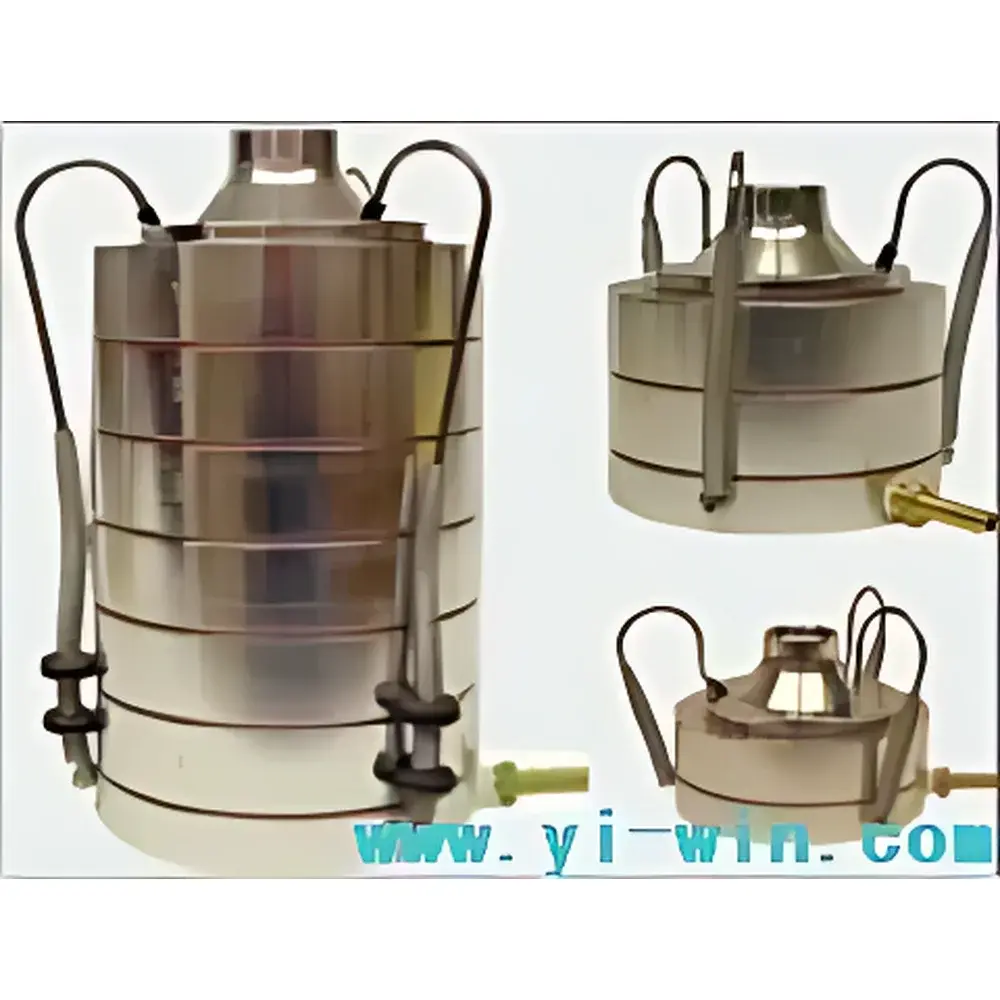
Tisch TE-10-800 Andersen-style Six-Stage Viable Bioaerosol Impactor Sampler
| Brand | Tisch |
|---|---|
| Origin | USA |
| Model | TE-10-800 |
| Sampling Principle | Inertial Impaction |
| Flow Rate | 28.3 L/min |
| Operating Humidity Range | 0–95% RH (non-condensing) |
| Stage Configuration | 6-stage cascade impactor with defined aerodynamic cut-points |
Overview
The Tisch TE-10-800 is a precision-engineered, six-stage viable bioaerosol impactor sampler designed for quantitative collection and size-resolved analysis of culturable airborne microorganisms—including bacteria, fungi, and yeasts—based on inertial impaction physics. It follows the established Andersen cascade impactor principle, where aerosol-laden air is drawn at a calibrated flow rate (28.3 L/min) through a series of progressively smaller nozzles, each stage targeting a specific aerodynamic diameter range. Particles with sufficient inertia deviate from the airstream and impact onto nutrient agar surfaces in Petri dishes placed beneath each stage. This enables not only enumeration but also subsequent isolation, identification, and viability assessment of collected microorganisms. The TE-10-800’s cut-point diameters (Stage 1: ≥7.1 µm; Stage 2: 4.7–7.1 µm; Stage 3: 3.3–4.7 µm; Stage 4: 2.1–3.3 µm; Stage 5: 1.1–2.1 µm; Stage 6: 0.65–1.1 µm) are aligned with human respiratory tract deposition models (ICRP and ACGIH conventions), supporting occupational health, infection control, and environmental exposure assessments.
Key Features
- Six-stage aluminum impactor head with precisely machined nozzle arrays and standardized stage geometry per ISO 14698-1 and ASTM D6060 guidelines for viable particle sampling.
- Calibrated nominal flow rate of 28.3 L/min (1 ft³/min), compatible with standard vacuum pumps meeting ANSI/AIHA Z9.5 and ISO 8573-1 Class 2 requirements for oil-free, low-pulsation airflow.
- Integrated silicone O-ring gasket system ensuring leak-tight interstage sealing and reproducible pressure drop characteristics across repeated sampling cycles.
- Modular design allows rapid disassembly, cleaning, and sterilization (autoclavable up to 121°C for 20 min); all wetted parts are anodized aluminum or medical-grade silicone.
- Includes rugged transit case with custom foam inserts for secure transport of impactor head, Petri dish holders, calibration tools, and documentation—designed for field deployment and laboratory mobility.
Sample Compatibility & Compliance
The TE-10-800 is validated for use with standard 85 mm or 100 mm Petri dishes containing bacteriological or mycological growth media (e.g., Tryptic Soy Agar, Sabouraud Dextrose Agar). Its performance meets criteria specified in ISO 14698-1 (Biocontamination control — General principles and methods), USP (Microbiological Control and Monitoring of Aseptic Processing Environments), and EU GMP Annex 1 (2022 revision) for environmental monitoring of Grade A–D cleanrooms. It supports GLP-compliant data generation when paired with traceable flow calibration (e.g., dry calibrator or mass flow meter) and documented maintenance logs. The device operates reliably across ambient temperatures of 5–40°C and relative humidity up to 95% non-condensing—making it suitable for indoor air quality surveys, hospital HVAC validation, pharmaceutical facility monitoring, and outdoor environmental bioaerosol studies.
Software & Data Management
While the TE-10-800 is a hardware-only, analog sampling platform (no embedded electronics or firmware), it integrates seamlessly into digital laboratory workflows. Users typically pair it with certified flow meters (e.g., Bios International or Mesa Labs devices) that provide NIST-traceable flow verification reports. Colony counts obtained post-incubation are entered into LIMS or Excel-based tracking systems compliant with 21 CFR Part 11 requirements when configured with electronic signatures, audit trails, and version-controlled templates. Optional accessories include pre-sterilized disposable Petri dish sets, stage-specific labeling kits, and incubation logbooks aligned with ISO/IEC 17025 documentation standards.
Applications
- Quantitative assessment of airborne microbial load in hospitals, clinics, and long-term care facilities for infection prevention and outbreak investigation.
- Environmental monitoring during aseptic manufacturing processes in pharmaceutical and biotechnology cleanrooms (ISO Class 5–8).
- Indoor air quality (IAQ) characterization in schools, offices, and residential buildings—particularly in mold contamination investigations.
- Research on atmospheric bioaerosol dynamics, including seasonal variation, source apportionment, and transport modeling.
- Validation of air filtration efficiency, UVGI systems, and laminar flow hoods using viable particle challenge tests.
FAQ
What is the recommended pump specification for optimal TE-10-800 performance?
A vacuum pump capable of sustaining 28.3 L/min at a minimum pressure drop of −10 kPa (−100 mbar) is required; oil-free diaphragm or rotary vane pumps with ≤5% flow fluctuation over 10 minutes are preferred.
Can the TE-10-800 be used for non-viable particle collection?
No—it is specifically engineered for viable (culturable) microorganism capture; non-viable particulate analysis requires alternative instrumentation such as optical particle counters or filter-based gravimetric samplers.
Is the TE-10-800 compliant with FDA or EPA regulatory frameworks?
While not directly certified by FDA or EPA, its methodology aligns with FDA guidance documents for environmental monitoring in sterile product manufacturing and EPA’s Compendium Method TO-11A for bioaerosol sampling in ambient air studies.
How often should the impactor nozzles be cleaned and inspected?
Nozzle inspection and ultrasonic cleaning in isopropyl alcohol are recommended after every 10 sampling runs or prior to each critical-use session, per Tisch Technical Bulletin TB-023.
Does the TE-10-800 include a built-in flow meter or timer?
No—flow rate must be verified externally using a calibrated flow measurement device; timing is managed via external stopwatch or programmable pump controller.







