
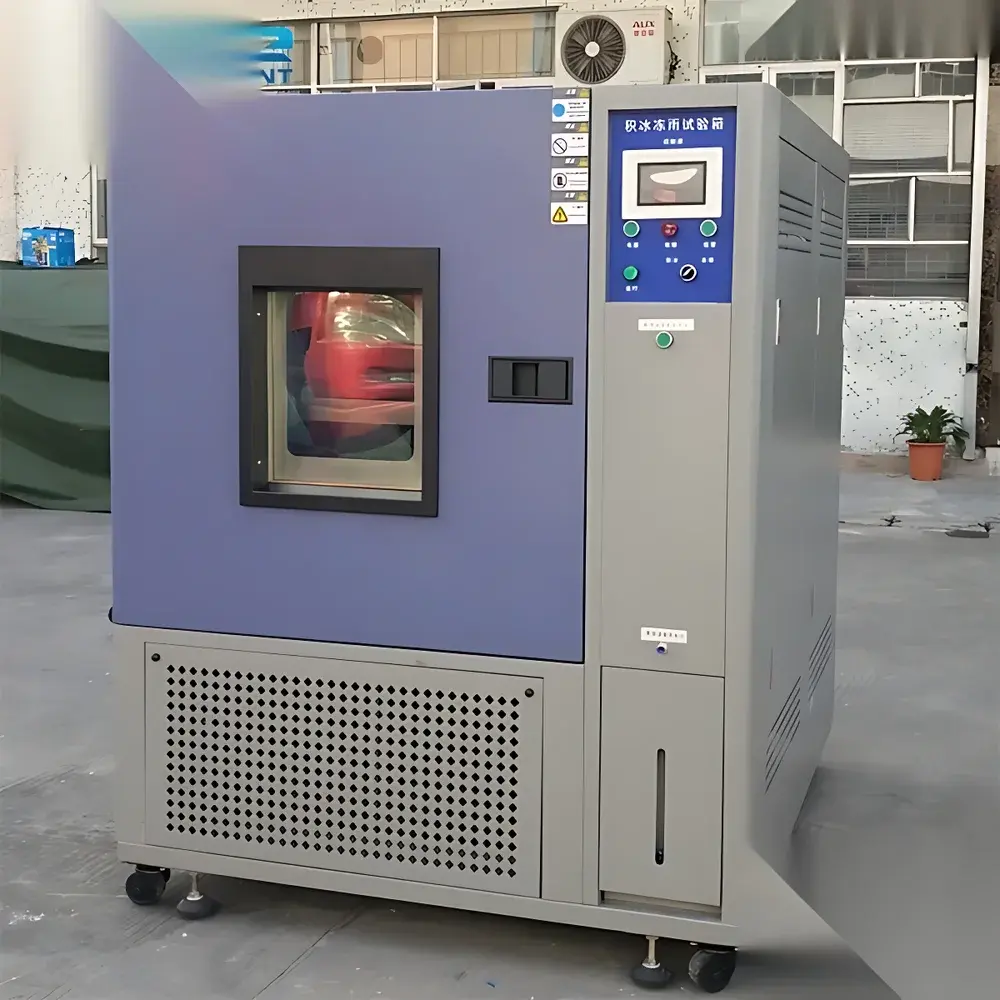
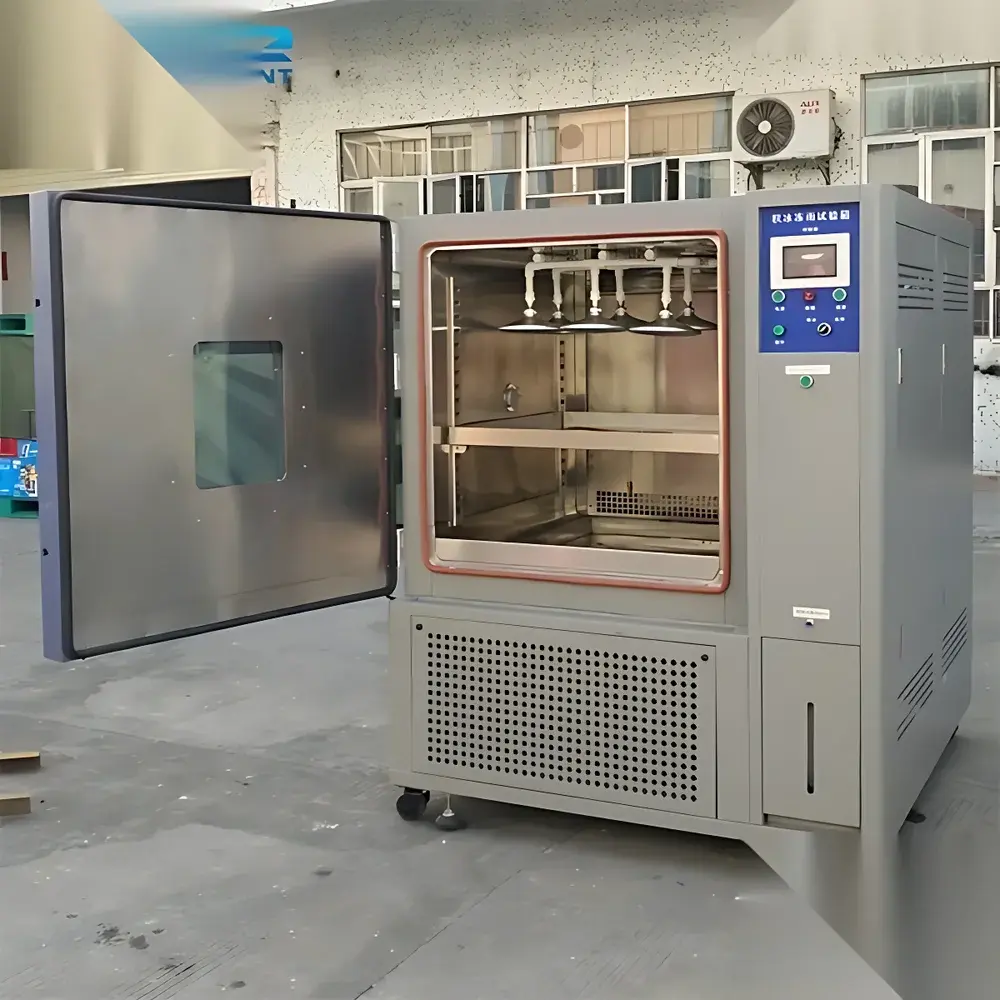
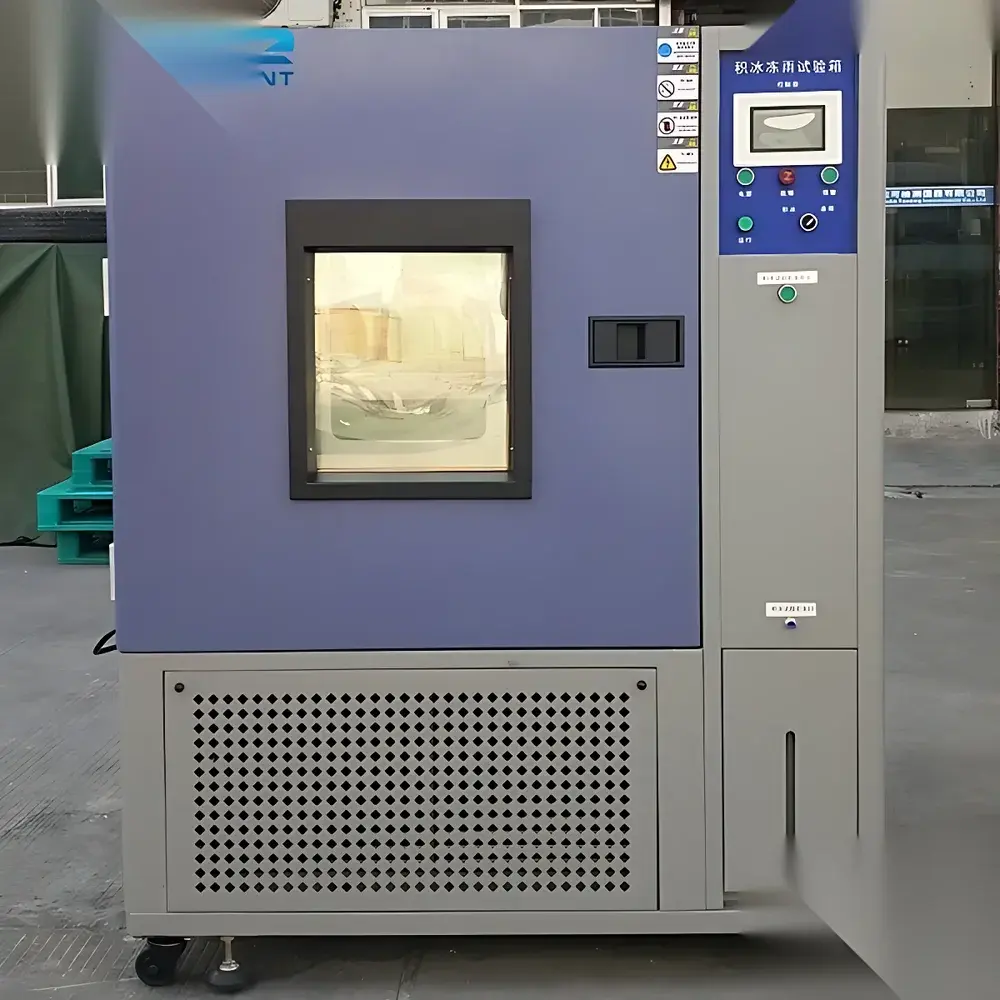
OK-JBDY Series Icing and Freezing Rain Environmental Test Chamber
| Brand | OK |
|---|---|
| Origin | Imported |
| Manufacturer Type | Authorized Distributor |
| Temperature Range | -10 °C to 80 °C (standard), optional down to -20 °C |
| Temperature Uniformity | ±2.0 °C |
| Temperature Fluctuation | ±0.5 °C |
| Rainfall Intensity | 25 mm/h |
| Nozzle Orifice Diameter | φ0.4 mm |
| Droplet Diameter | 1.0–1.5 mm |
| Ice Accumulation Thickness Options | 6 mm, 13 mm, 37 mm, 75 mm |
| Ice Density Range | 0.2–0.9 g/cm³ |
| Water Temperature Control | 0–5 °C |
| Inner Chamber Material | SUS304 Stainless Steel |
| Outer Chamber Material | Galvanized Steel with Powder Coating or Optional SUS304 |
| Refrigeration System | Hermetic Scroll Compressor (French/Tecumseh) |
| Controller | 5.7″ TFT Color LCD Touchscreen (Bilingual English/Chinese) |
| Power Supply | AC 220 V ±5%, 50 Hz ±0.5 Hz, Single-Phase Three-Wire |
Overview
The OK-JBDY Series Icing and Freezing Rain Environmental Test Chamber is a purpose-built climatic simulation system engineered for rigorous laboratory evaluation of equipment performance under atmospheric icing and freezing rain conditions. It operates on the principle of controlled nucleation and accretion—precisely regulating supercooled water droplet generation, impact velocity, surface temperature, and dwell time to replicate real-world ice formation mechanisms observed in aviation, wind energy, power transmission, and maritime defense applications. Unlike generic environmental chambers, this system integrates synchronized thermal control, calibrated droplet delivery, and programmable ice mass accumulation protocols aligned with military-grade environmental test standards. Its architecture enables reproducible simulation of glaze ice, rime ice, and mixed-phase accretion resulting from freezing drizzle, light rain, fog, or sea spray exposure—critical for validating structural integrity, sensor functionality, aerodynamic behavior, and de-icing system efficacy under defined GJB 150.22A-2009 test profiles.
Key Features
- Multi-stage droplet generation system with stainless steel nozzles (φ0.4 mm orifice) ensuring consistent droplet size distribution (1.0–1.5 mm diameter) and uniform rainfall intensity (25 mm/h) across test volume.
- Independent water temperature control (0–5 °C) using insulated circulation loop and Peltier-assisted cooling to maintain droplet supercooling without phase separation or premature freezing in supply lines.
- High-stability thermal chamber with dual-zone refrigeration/heating subsystems: hermetic scroll compressors (Tecumseh or equivalent EU-sourced units), spiral NiCr heating elements mounted on ceramic insulators, and embedded immersion-type humidifiers for precise moisture management.
- Programmable ice thickness accumulation modes—selectable target depths (6 mm, 13 mm, 37 mm, 75 mm) with real-time feedback via integrated load-cell-based ice mass monitoring (optional upgrade).
- TFT touchscreen controller with ISO/IEC 62443-compliant firmware architecture, supporting test sequence scripting, alarm logging, and audit-trail-enabled parameter change history per GLP/GMP documentation requirements.
- Modular chamber construction with SUS304 interior (electropolished finish) and corrosion-resistant exterior (powder-coated galvanized steel or full SUS304 option) for long-term reliability in high-humidity, saline-laden test environments.
Sample Compatibility & Compliance
The OK-JBDY chamber accommodates a wide range of test articles—from UAV airframes and radar domes to offshore substation enclosures and railway signaling hardware—with internal dimensions scalable from 500 × 600 × 500 mm (OK-JBDY-150) to 1000 × 1000 × 1000 mm (OK-JBDY-1000). All configurations include standardized 50 mm cable/port access holes and adjustable stainless-steel sample racks. The system complies with GJB 150.22A-2009 “Environmental Test Methods for Military Equipment – Part 22: Icing and Freezing Rain Testing” and supports method adaptation for ASTM D3718 (ice adhesion strength), IEC 60068-2-30 (cyclic damp heat with icing), and MIL-STD-810H Method 521.4 (freezing rain). Optional calibration certificates traceable to NIM (China) or PTB (Germany) are available upon request for regulatory submissions.
Software & Data Management
The embedded controller provides native support for test profile definition—including ramp/soak cycles, dynamic temperature-droplet coupling, and time-synchronized data capture from external sensors (e.g., strain gauges, thermocouples, optical ice thickness probes). Export formats include CSV and XML for integration into LIMS platforms. For regulated environments, optional software modules enable 21 CFR Part 11 compliance with electronic signatures, role-based user access control, and immutable audit trails recording all parameter modifications, start/stop events, and alarm triggers. Data retention is configurable up to 18 months onboard; remote monitoring via Ethernet (Modbus TCP) or optional Wi-Fi module allows secure offsite oversight without compromising network segmentation requirements.
Applications
This chamber serves as a primary qualification tool across aerospace (FAA/EASA DO-160 Section 22 validation), renewable energy (IEC 61400-22 wind turbine blade icing certification), defense electronics (GJB 150A-2009 compliance testing), and infrastructure (bridge sensor survivability under winter precipitation). Typical use cases include: evaluating thermal anti-icing system response latency; quantifying lift degradation on scaled wing sections; assessing optical obscuration on electro-optical surveillance systems; verifying seal integrity of outdoor telecom cabinets exposed to freezing fog; and validating ice-shedding dynamics of overhead conductors under simulated coastal salt-mist icing.
FAQ
Does the chamber support automated ice thickness measurement during test execution?
Yes—when equipped with the optional ice mass monitoring kit (load cell + calibration algorithm), the system calculates real-time ice thickness based on accumulated mass, surface area, and user-defined density range (0.2–0.9 g/cm³).
Can the droplet size distribution be verified independently?
Absolutely—the nozzle assembly is compatible with standard Phase Doppler Anemometry (PDA) calibration rigs. Factory verification reports include droplet Sauter mean diameter (SMD) and velocity profiles at specified pressure and flow rates.
Is remote diagnostic capability available for predictive maintenance?
Yes—integrated compressor discharge temperature, refrigerant pressure, and heater current diagnostics feed into a cloud-accessible health dashboard (optional subscription service) that flags anomalies prior to failure.
What electrical safety certifications does the chamber carry?
Standard configuration meets CE marking requirements per EN 61000-6-2 (immunity) and EN 61000-6-4 (emissions); UL/cUL listing and ATEX Zone 2 certification are available as custom options.
How is water purity maintained to prevent nozzle clogging during extended tests?
The system includes a 5 µm inline particulate filter, UV sterilization module, and automatic drain-and-purge cycle between test runs—ensuring >99.9% microbial reduction and eliminating mineral deposition risks associated with tap water use.



