
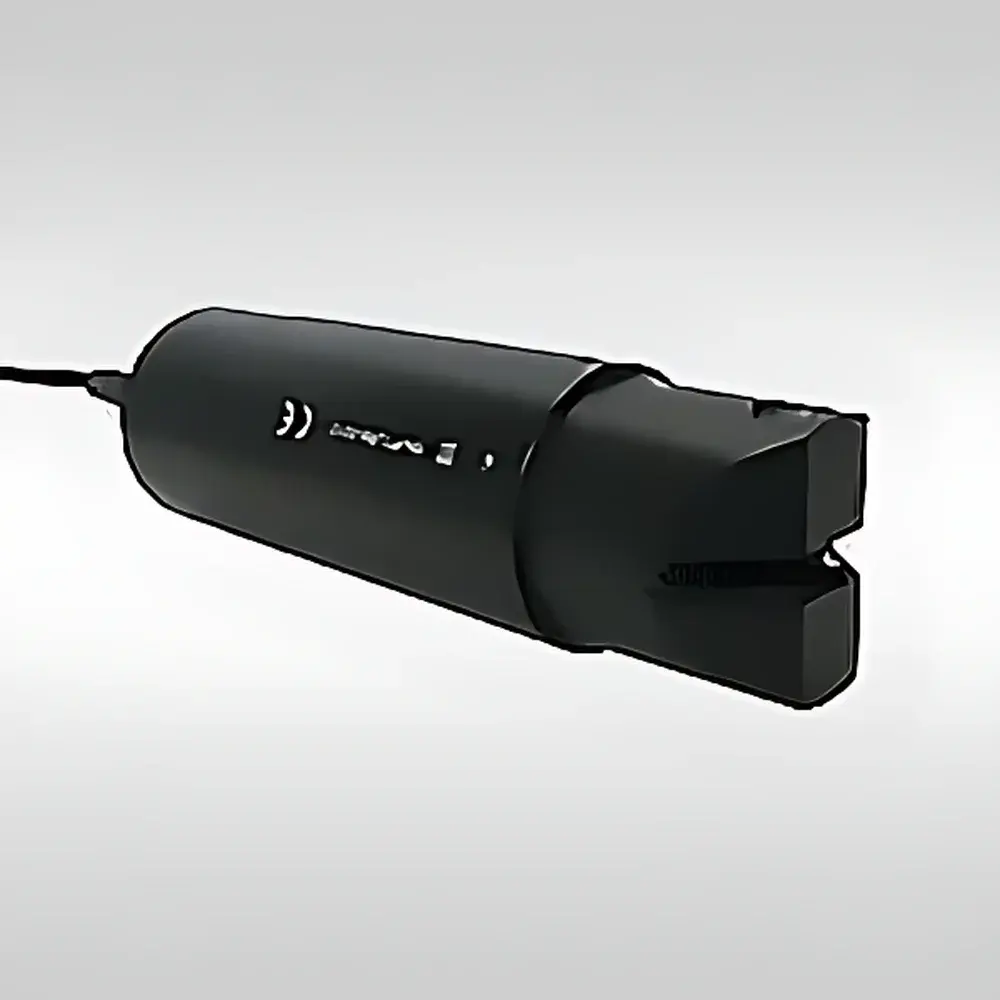
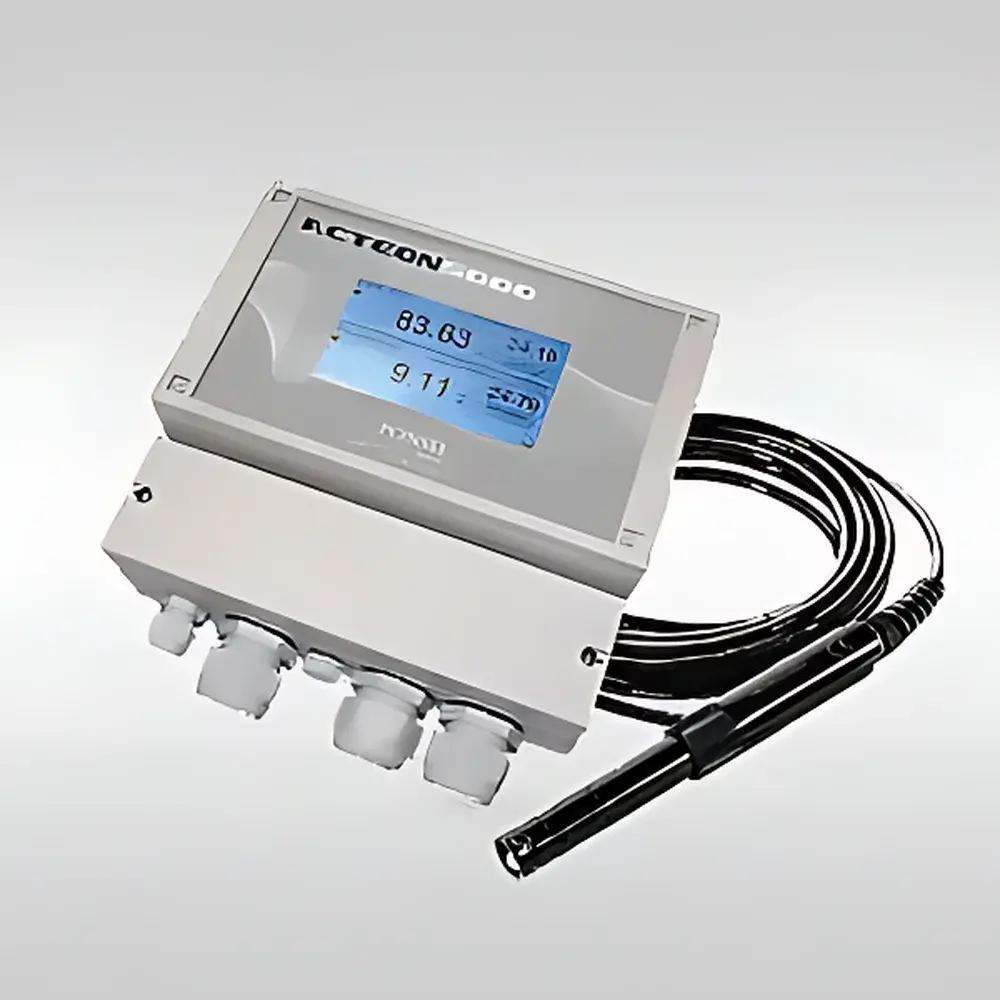
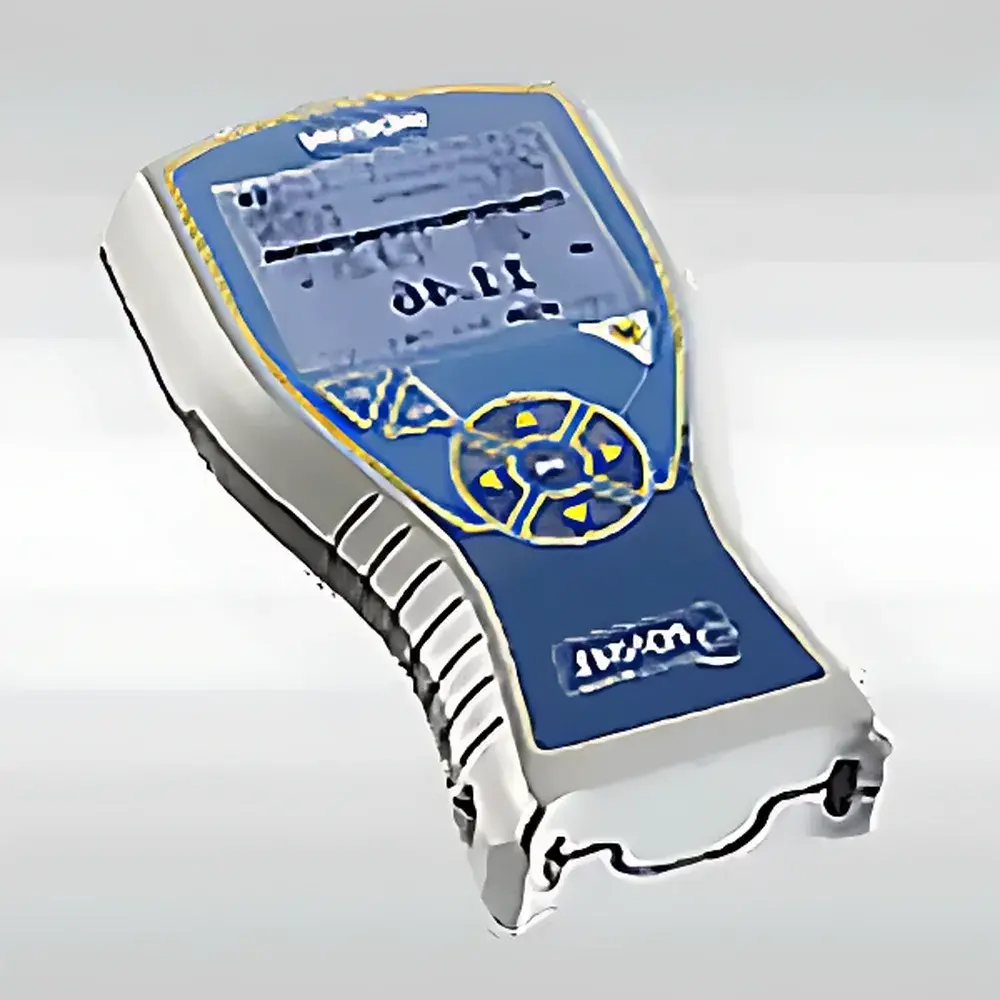
AQUALABO MES5 Sludge Concentration and Sludge Interface Analyzer
| Brand | AQUALABO |
|---|---|
| Origin | France |
| Model | MES5 |
| Measurement Principle | Infrared Absorption (870 nm, 5 mm optical path) |
| SS Range | 0–50 g/L |
| Turbidity Range | 0–4000 FAU |
| Sludge Interface Range | 0–100 % IR transmittance |
| SS Resolution | 0.01 g/L |
| Turbidity Resolution | 0.01–1 FAU |
| Interface Resolution | 0.01–0.1 % |
| SS Accuracy | <10% |
| Turbidity Accuracy | ±5% (200–4000 FAU) |
| Interface Accuracy | ±2% |
| Response Time | <35 s |
| Temperature Measurement | NTC thermistor, –5.00 to +60.00 °C, ±0.5 °C accuracy, 0.01 °C resolution |
| Storage Temp | –10 to +60 °C |
| IP Rating | IP68 |
| Communication | Modbus RTU over RS485 or SDI-12 |
| Data Update Interval | <1 s |
| Power Supply | 5–28 V DC |
| Standby Current | 25 µA @ 5 V |
| Active Current (RS485/SDI-12, 1 Hz) | 4.5 mA @ 5 V |
| Pulse Output Current | 100 mA (30 ms) |
| Heating Activation Time | 100 ms |
| Sensor Mass | 750 g |
| Housing Materials | Delrin®, nickel-plated brass, EPDM elastomer |
| Pressure Rating | 5 bar |
| Cable Options | 9-pin waterproof connector with polyurethane jacket & bare leads, or Fisher waterproof connector |
Overview
The AQUALABO MES5 Sludge Concentration and Sludge Interface Analyzer is an industrial-grade, submersible optical sensor engineered for continuous, real-time monitoring of suspended solids (SS), turbidity (FAU), and sludge interface position in municipal and industrial wastewater treatment processes. Its measurement core relies on infrared absorption photometry at a fixed wavelength of 870 nm, coupled with a precisely defined 5 mm optical path length. This configuration minimizes interference from colored dissolved organic matter while maintaining high sensitivity to particulate scattering and absorption—key characteristics of activated sludge, anaerobic digestate, and clarifier underflow streams. Unlike broad-spectrum turbidimeters, the MES5’s monochromatic IR source enables stable performance across variable pH, salinity, and temperature gradients commonly encountered in biological treatment units. An integrated Peltier-based thermal regulation system stabilizes the optical path temperature, reducing drift and enhancing long-term reproducibility—particularly critical when deployed in primary clarifiers or thickening basins where ambient thermal fluctuations exceed ±5 °C.
Key Features
- Triple-parameter output: Simultaneous real-time measurement of suspended solids concentration (g/L), turbidity (FAU), and sludge interface level (% IR transmittance)
- Optically stabilized design: Onboard temperature-controlled optics ensure consistent calibration integrity across operating temperatures from –5 to +60 °C
- Field-calibratable architecture: Direct calibration using representative sludge samples eliminates reliance on standardized reference suspensions; turbidity mode supports formaldehyde (FAU) calibration per ISO 7027-1:2016
- Embedded non-volatile memory: Stores up to 32 user-defined calibration profiles plus timestamped historical data (sensor ID, measurement values, temperature, diagnostics)
- True plug-and-play deployment: No external configuration tools required; automatic parameter recognition upon communication initialization
- Dual-protocol digital interface: Fully compliant Modbus RTU (RS485) and SDI-12 protocols enable seamless integration into SCADA systems, PLCs, data loggers, and cloud-based telemetry platforms
- Ruggedized submersible construction: IP68-rated housing fabricated from chemically resistant Delrin®, nickel-plated brass wetted parts, and EPDM sealing elastomers; validated for continuous immersion at pressures up to 5 bar
Sample Compatibility & Compliance
The MES5 is validated for use in heterogeneous, high-viscosity, and biologically active matrices typical of secondary clarifiers, aerobic digesters, gravity thickeners, and dewatering feed lines. It tolerates moderate biofilm accumulation without signal degradation due to its self-cleaning optical window geometry and optional periodic thermal pulse activation. The sensor complies with IEC 60529 (IP68), EN 61000-6-2 (EMC immunity), and EN 61000-6-4 (EMC emissions). Its measurement methodology aligns with the physical principles referenced in ISO 7027-1:2016 (turbidity) and ASTM D3977-98(2021) (suspended solids estimation via optical density correlation). While not certified for regulatory reporting per se, its traceable calibration framework and audit-ready data logging support GLP-aligned operational monitoring and process validation documentation.
Software & Data Management
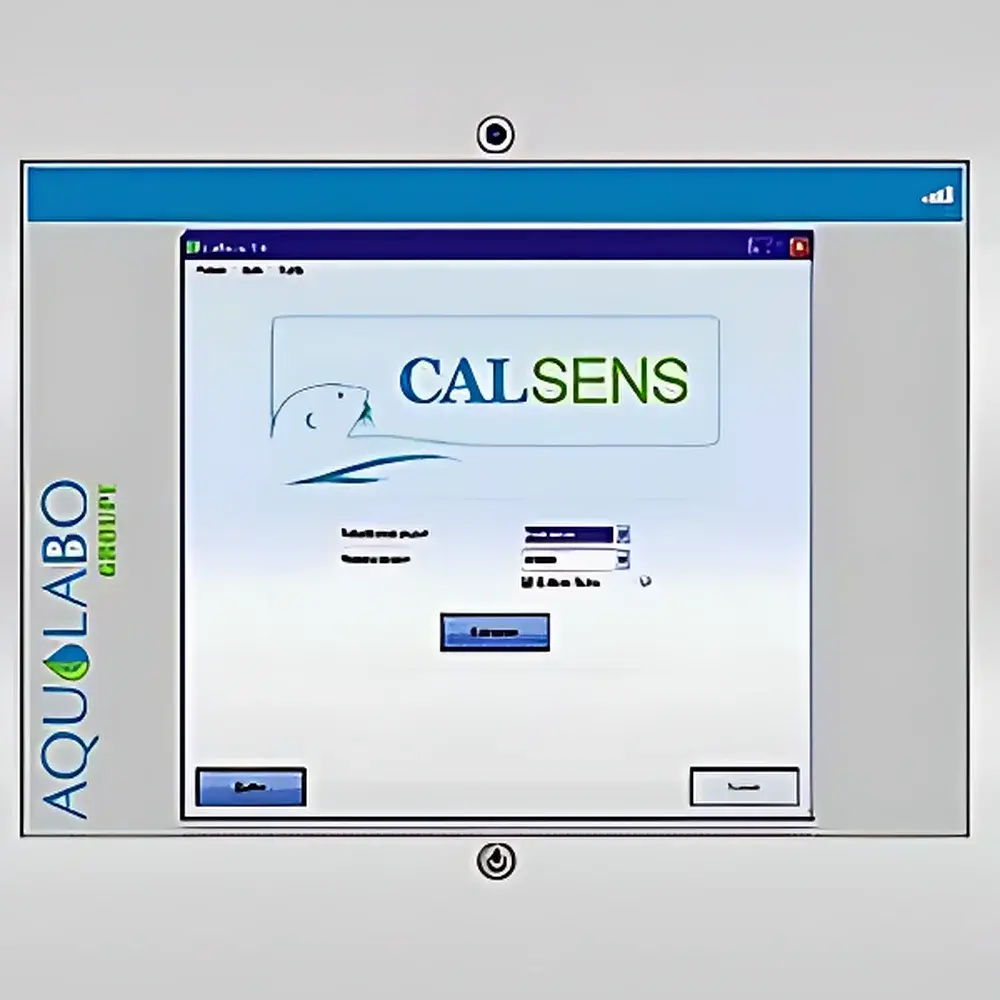
The MES5 operates autonomously without host software but supports full parameter interrogation, calibration upload/download, and diagnostic readout via standard Modbus function codes (e.g., Read Holding Registers 40001–40100). All stored calibrations include metadata: date/time stamp, operator ID (user-defined string), reference material batch number, and uncertainty estimate. When interfaced with supervisory systems compliant with FDA 21 CFR Part 11, the sensor’s immutable internal clock and write-once calibration logs provide foundational elements for electronic record integrity. Data update intervals are configurable from 100 ms to 300 s; default factory setting is 500 ms for rapid interface tracking during sludge blanket rise events. Raw output includes compensated temperature readings, signal-to-noise ratio indicators, and optical path health metrics—enabling predictive maintenance scheduling.
Applications
- Municipal wastewater treatment: Influent SS/turbidity screening, aeration basin MLSS trending, final effluent turbidity compliance monitoring, and secondary clarifier sludge blanket depth control
- Industrial pretreatment systems: Monitoring of FOG-laden streams, metal hydroxide precipitation basins, and membrane bioreactor (MBR) sidestream concentration
- Sludge processing facilities: Real-time feedback for centrifuge feed optimization, belt filter press dosing, and anaerobic digester influent solids loading rate management
- Dredging and sediment management: In-situ turbidity profiling during hydraulic dredge operations and containment berm integrity verification
- Research and pilot-scale bioreactors: High-frequency SS dynamics capture during nitrification/denitrification cycling and biomass settleability assessment
FAQ
Is the MES5 suitable for seawater or high-salinity wastewater applications?
Yes—the optical design and EPDM/Ni-brass material set resist chloride-induced corrosion; however, calibration must be performed in situ using representative saline sludge to account for refractive index shifts.
Can the sensor be installed in vertical or horizontal orientation?
It is rated for omnidirectional submersion; orientation does not affect optical path geometry or measurement validity, though mounting brackets should prevent sediment accumulation on the optical window.
What is the recommended recalibration interval under continuous operation?
Under stable process conditions, annual verification against a field reference sample is sufficient; in highly variable or abrasive environments (e.g., grit-laden influent), quarterly checks are advised.
Does the MES5 support HART or Profibus communication?
No—it implements only Modbus RTU (RS485) and SDI-12. Protocol conversion gateways may be used if legacy HART/Profibus infrastructure exists.
How is temperature compensation applied to SS and turbidity outputs?
The NTC thermistor measures optical block temperature in real time; compensation coefficients are embedded in each calibration profile and applied dynamically during signal processing—not as a post-hoc correction.
Related Products







