
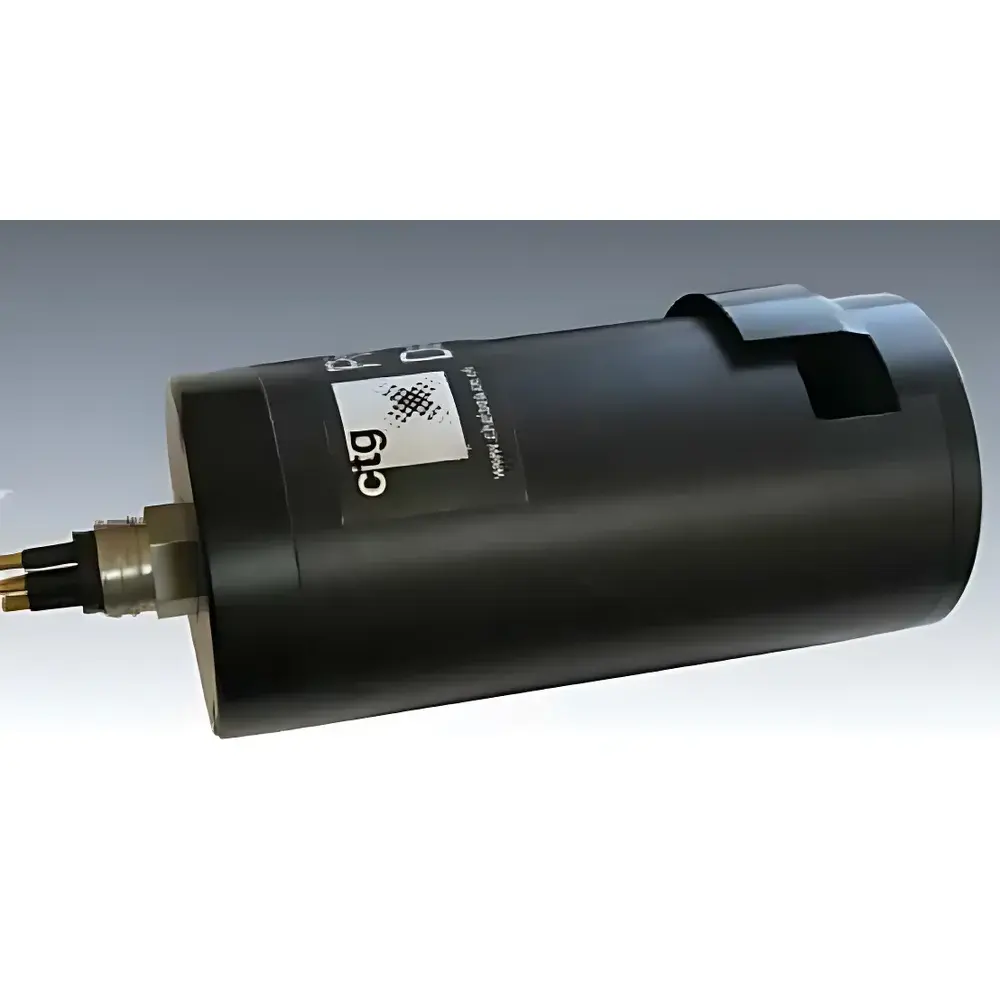
UviLux-BOD Portable BOD Analyzer by Chelsea Technologies Group
| Brand | CTG |
|---|---|
| Origin | United Kingdom |
| Model | UviLux-BOD |
| Instrument Type | Portable BOD Analyzer |
| Measurement Principle | UV-Vis Excitation of Tryptophan Fluorescence (DO-correlated surrogate method) |
| Measurement Range | 0–35 mg/L BOD₅ equivalent |
| Detection Limit | 0.1 mg/L |
| Accuracy | ±1% of reading |
| Single Measurement Time | 5 s |
| Repeatability | ±3% RSD |
| Output Interfaces | RS-232, Analog (4–20 mA), SDI-12 |
| Compliance | Designed for field-deployable environmental monitoring per ISO 5815-1:2019 (BOD reference methodology context), EPA Method 405.1 (fluorescence-based surrogates), and EU Bathing Water Directive 2006/7/EC monitoring frameworks |
Overview
The UviLux-BOD Portable BOD Analyzer is an engineered field instrument developed by Chelsea Technologies Group Ltd. (CTG), a UK-based leader in optical environmental sensing. Unlike conventional 5-day biochemical oxygen demand (BOD5) incubation methods, the UviLux-BOD employs a rapid, optical surrogate approach based on the quantification of tryptophan-like fluorescence under controlled UV-Vis excitation (280 nm / 350 nm). This intrinsic fluorophore serves as a robust proxy for biodegradable organic load in aqueous matrices. The instrument applies empirically validated, matrix-specific calibration functions—derived from co-located BOD5 reference measurements—to convert raw fluorescence intensity into BOD-equivalent concentration (mg/L). Its design prioritizes operational robustness in variable field conditions, enabling real-time, on-site estimation without reagents, incubation, or laboratory infrastructure.
Key Features
- True portable architecture: Handheld form factor with integrated rechargeable battery, IP67-rated enclosure, and ergonomic grip for extended field deployment.
- Sub-second optical measurement cycle: Full spectral acquisition and BOD-equivalent calculation completed within 5 seconds—enabling high-frequency profiling during dynamic events (e.g., CSO spills, diurnal wastewater fluctuations).
- Multi-interface data output: Simultaneous RS-232 serial, 4–20 mA analog, and SDI-12 digital outputs facilitate seamless integration with SCADA systems, dataloggers, and telemetry networks.
- Factory-calibrated and field-verifiable: Pre-loaded with application-specific calibration curves for municipal wastewater, combined sewer overflows (CSOs), and surface water; users may perform traceable verification using certified fluorescent standards (e.g., quinine sulfate dihydrate).
- Stable photometric performance: Temperature-compensated LED excitation source and thermally stabilized photodiode detection ensure <3% repeatability across ambient operating range (0–40 °C).
- Low-maintenance operation: No consumables, membranes, or wet chemistry required—reducing total cost of ownership and eliminating drift associated with electrochemical sensors.
Sample Compatibility & Compliance
The UviLux-BOD is validated for use in turbid, colored, and particulate-laden samples typical of raw sewage, primary effluent, stormwater runoff, riverine inputs, and coastal receiving waters. It maintains functional accuracy in suspended solids concentrations up to 500 mg/L and absorbance values ≤1.2 AU at 350 nm. While not a direct replacement for standardized BOD5 (ISO 5815-1:2019), its correlation protocol adheres to the statistical validation requirements outlined in ISO/IEC 17025:2017 for surrogate methods. Data outputs support regulatory reporting frameworks including US EPA’s Beach Monitoring and Notification Act (40 CFR Part 136), the EU Bathing Water Directive (2006/7/EC), and the UK Environment Agency’s WFD monitoring guidelines. Instrument firmware includes audit-trail logging compliant with GLP principles.
Software & Data Management
The UviLux-BOD ships with Windows-based UviSoft™ GUI software, enabling configuration, real-time visualization, calibration management, and export of time-stamped datasets in CSV and XML formats. All measurement metadata—including temperature, signal-to-noise ratio, internal diagnostics, and calibration version—are embedded in each data record. Optional cloud synchronization via MQTT protocol supports centralized dashboarding in platforms such as Grafana or Microsoft Power BI. Software logs meet FDA 21 CFR Part 11 requirements for electronic records when deployed with user authentication and digital signature modules.
Applications
- Real-time process control in wastewater treatment plants: Optimization of aeration energy use during primary sedimentation, activated sludge, and tertiary polishing stages.
- Rapid response to sanitary sewer overflows (SSOs) and combined sewer overflows (CSOs): Quantification of organic loading magnitude and decay kinetics during emergency events.
- Surface water quality surveillance: Mapping BOD gradients in rivers, estuaries, and nearshore marine zones to identify illicit discharges or agricultural runoff impacts.
- Source tracking of greywater/blackwater cross-connections: Discrimination of domestic vs. industrial influent signatures through fluorescence fingerprinting.
- Regulatory compliance monitoring: Supporting beach water safety programs mandated under EPA’s BEACH Act and EU’s revised Bathing Water Directive implementation timelines.
FAQ
Is the UviLux-BOD certified as a reference BOD method?
No—it is a validated surrogate method providing BOD-equivalent estimates. It does not replace ISO 5815-1:2019 or ASTM D5210 for regulatory compliance where absolute BOD5 is mandated.
Can it be used in seawater or high-salinity environments?
Yes—calibration models include salinity correction factors validated across 0–35 PSU; instrument housing is marine-grade stainless steel and corrosion-resistant.
How often does the instrument require recalibration?
Factory calibration remains stable for ≥12 months under normal field use; annual verification against traceable standards is recommended per ISO/IEC 17025.
Does it measure true BOD or only a proxy?
It measures tryptophan-like fluorescence intensity and converts it to BOD-equivalent concentration using statistically derived regression models anchored to parallel BOD5 reference data.
What maintenance is required?
Routine cleaning of the optical window with isopropyl alcohol; no optical alignment, lamp replacement, or membrane servicing is needed.







