
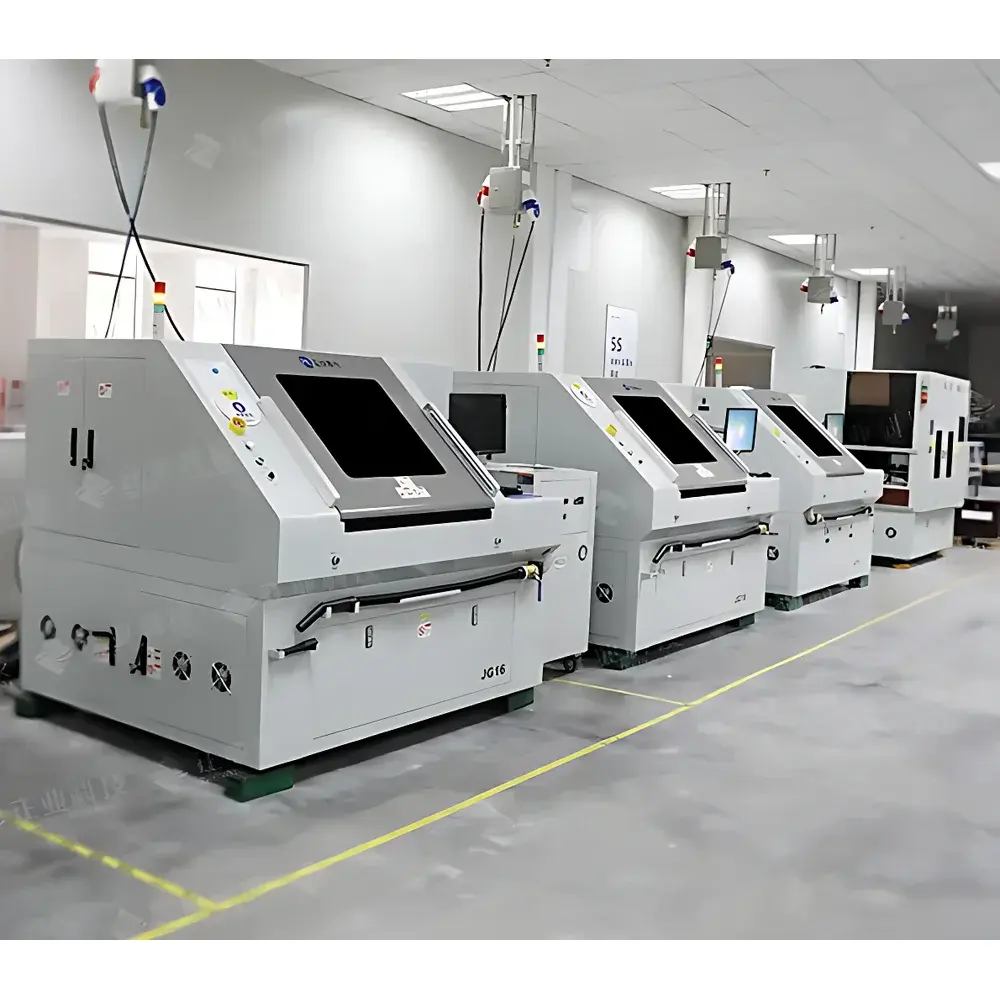
Zhengye PIL3000RC-F Dual-Station High-Precision FPC Laser Cutting System
| Brand | Zhengye |
|---|---|
| Origin | Guangdong, China |
| Manufacturer Type | Authorized Distributor |
| Country of Origin | China |
| Model | PIL3000RC-F |
| Instrument Type | Precision Laser Cutting System |
| Price Range | USD 112,000 – 140,000 (FOB Guangdong) |
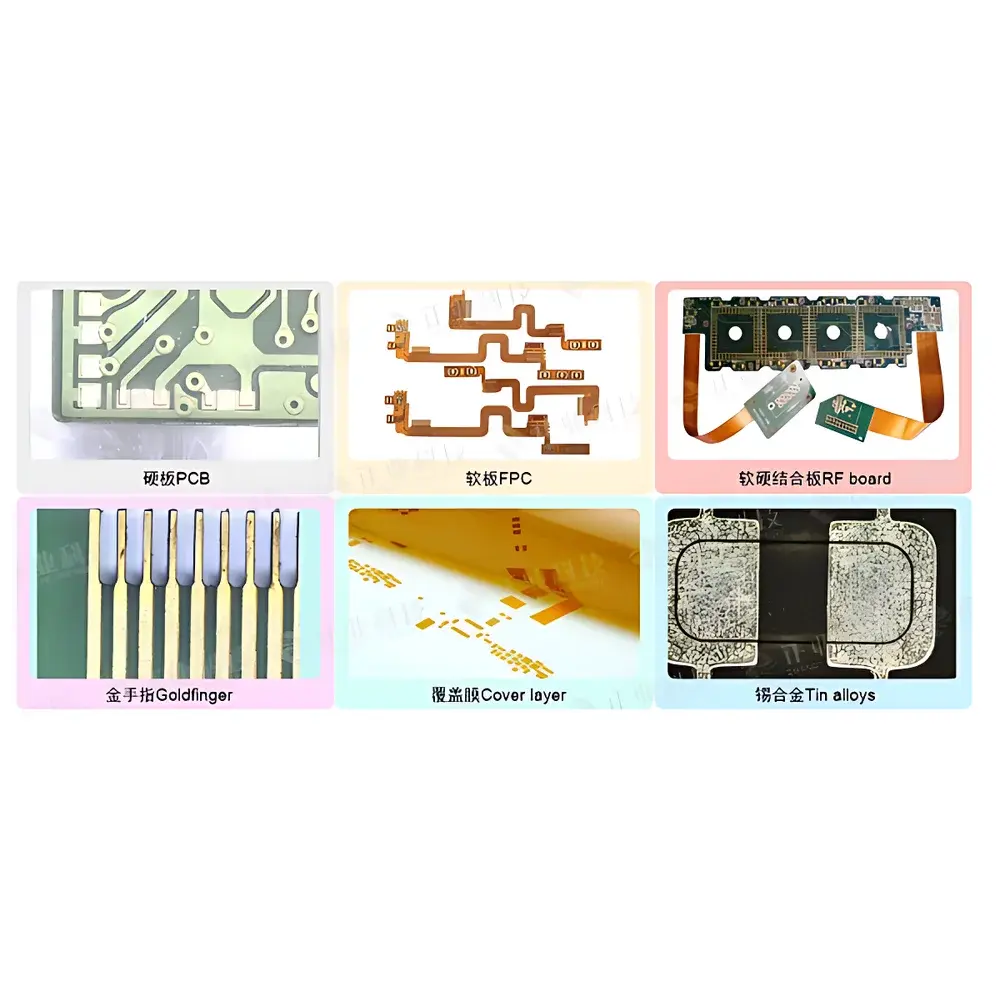
| Application Scope | CVL, FPC, RF, Thin Multilayer PCBs |
Overview
The Zhengye PIL3000RC-F Dual-Station High-Precision FPC Laser Cutting System is an industrial-grade, non-contact micromachining platform engineered for the precise ablation, contour cutting, window opening, and coverlay delamination of flexible printed circuitry. It employs a high-stability UV or green nanosecond pulsed laser source (typically 355 nm or 532 nm, configurable per material absorption profile), coupled with galvanometric scanning optics and a high-resolution CCD vision alignment system. Unlike mechanical dicing or CO₂-based thermal cutting, this system delivers minimal heat-affected zones (HAZ), sub-50 µm kerf widths, and micron-level positional repeatability—critical for maintaining trace integrity, impedance stability, and solder mask registration in high-density FPC and rigid-flex assemblies. Designed for integration into pilot-line and low-volume production environments within R&D labs, NPI centers, and quality assurance departments, the PIL3000RC-F supports rapid prototyping and iterative design validation under controlled laboratory conditions.
Key Features
- Dual independent workstations with synchronized Z-axis auto-focus and vacuum-assisted substrate clamping—enabling true zero-load/unload cycle time through parallel processing: while one station is under laser machining, the other undergoes loading, alignment, or unloading.
- Real-time pre-cut simulation and optical preview mode: integrated camera captures high-magnification image of the loaded sample; software overlays the programmed cutting path with pixel-accurate registration to fiducials or edge features—allowing immediate verification prior to laser firing and preventing costly scrap of high-value FPC panels.
- Integrated 2D barcode/QR code marking module using the same laser source and motion platform—supporting traceability-compliant serialization (e.g., IPC-2581-compatible identifiers) directly on coverlay or PI substrate without tool change or repositioning.
- Modular motion architecture with linear motor-driven X/Y stages (±0.5 µm bidirectional repeatability) and closed-loop feedback control—ensuring geometric fidelity across large-format substrates up to 300 × 300 mm.
- Intuitive touchscreen HMI with role-based access control (operator, engineer, administrator) and audit-trail-enabled job logging compliant with GLP documentation requirements.
Sample Compatibility & Compliance
The PIL3000RC-F accommodates a broad spectrum of flexible and hybrid substrates, including polyimide (PI)-based coverlays (CVL), copper-clad polyimide films (FPC), FR-4-reinforced rigid-flex laminates (RF), and thin (<0.3 mm) multilayer flex circuits with embedded stiffeners. Material thickness range: 25–250 µm (coverlay), 50–150 µm (copper), and up to 0.8 mm total stack height. The system complies with IEC 60825-1:2014 (laser safety class 1 enclosure), CE Machinery Directive 2006/42/EC, and RoHS 2011/65/EU. All cutting parameters—including pulse energy, repetition rate, scan speed, and focus offset—are fully programmable and stored in recipe files that support version-controlled revision history per IPC-J-STD-020 and IPC-A-600G guidelines.
Software & Data Management
Controlled by Zhengye’s proprietary LaserCut Pro v4.x software suite, the system provides native import of Gerber RS-274X, ODB++, and DXF formats—with automatic layer registration, fiducial detection, and vector-to-raster path optimization. All process data (laser power logs, stage position traces, camera timestamps, operator IDs) are timestamped and exported in CSV/JSON format for external LIMS or MES integration. Audit trails meet FDA 21 CFR Part 11 requirements for electronic records and signatures, including user authentication, action logging, and immutable archive export. Remote diagnostics and firmware updates are supported via TLS-encrypted Ethernet connection with optional VPN tunneling.
Applications
- Rapid prototyping of antenna flex circuits for 5G mmWave modules requiring precise RF window apertures.
- Controlled揭盖 (delamination) of coverlay layers for selective exposure of test pads or bond fingers in wafer-level packaging qualification.
- Cutting intricate stencils and gasket patterns from silicone or fluoropolymer films used in microfluidic device assembly.
- Manufacturing of sensor interconnects for wearable electronics where bend-cycle reliability depends on clean, burr-free edges.
- Failure analysis sample preparation—localized isolation of defective traces or vias without collateral damage to adjacent functional layers.
FAQ
What laser wavelength options are available for the PIL3000RC-F, and how are they selected?
The standard configuration uses a 355 nm UV DPSS laser optimized for polyimide absorption and minimal carbonization; optional 532 nm green laser modules are available for enhanced copper ablation efficiency in high-copper-thickness FPCs.
Does the system support automated fiducial recognition for warped or stretched FPC substrates?
Yes—the vision system performs real-time distortion correction using up to 12 user-defined fiducials per panel, applying affine transformation to compensate for thermal expansion or mechanical stretch during vacuum clamping.
Can cutting recipes be exported and shared across multiple PIL3000RC-F units in a lab network?
Yes—recipes include full parameter sets, layer mappings, and alignment logic, and are exportable as encrypted .lcr files compatible with Zhengye’s centralized Recipe Management Server (RMS) for cross-platform synchronization and change control.
Is the dual-station architecture compatible with inline integration into automated material handling systems?
The system provides SECS/GEM interface compliance and PLC-ready I/O signals (24 V DC, opto-isolated), enabling seamless handshake with SMEMA-conformant conveyors and robotic end-effectors for lights-out operation.
What maintenance intervals and consumables does the PIL3000RC-F require?
Recommended preventive maintenance includes quarterly galvo mirror calibration, biannual laser cavity inspection, and annual replacement of vacuum filter cartridges and focusing lens protective windows—documented in the ISO 9001-certified service manual provided with each unit.



