
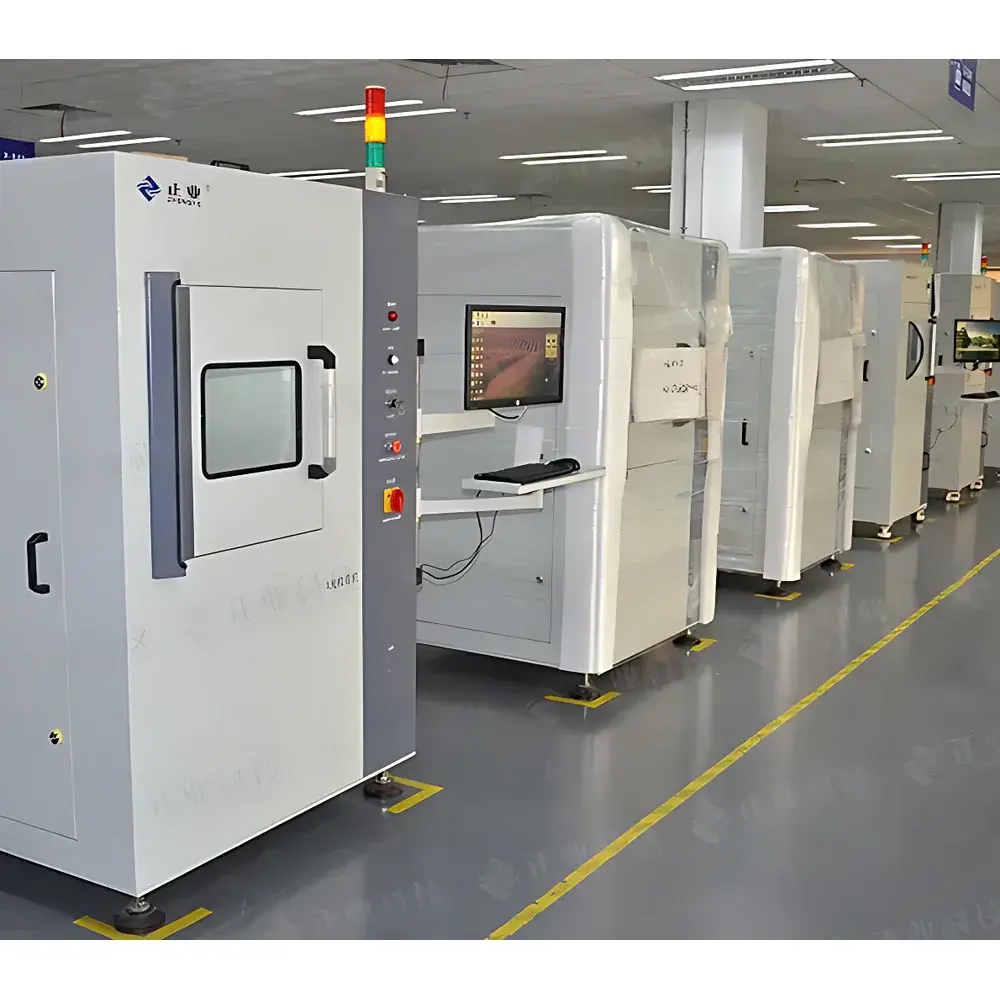
Zhengye X-ray Transmission Inspection System for PCB Solder Joint Non-Destructive Testing
| Brand | Zhengye |
|---|---|
| Origin | Guangdong, China |
| Manufacturer Type | OEM/ODM Manufacturer |
| Regional Classification | Domestic (China) |
| Model | ZX-NDT Series |
| Pricing | Available Upon Request |
Overview
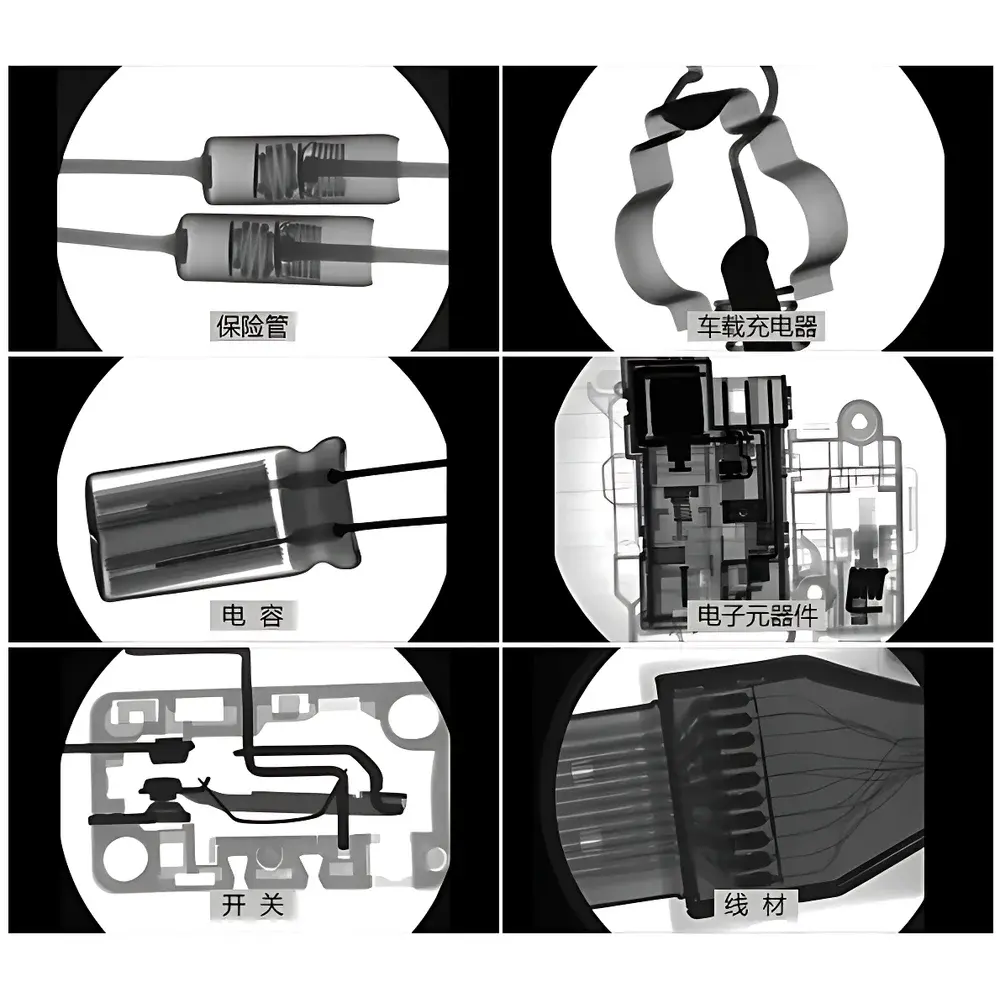
The Zhengye ZX-NDT Series is an industrial-grade X-ray transmission inspection system engineered specifically for non-destructive evaluation (NDE) of solder joints on printed circuit boards (PCBs). Operating on the fundamental principle of differential X-ray attenuation, the system projects a controlled low-to-medium energy X-ray beam through the sample; variations in material density and thickness—such as voids, insufficient solder, bridging, tombstoning, or head-in-pillow defects—produce contrast differences captured by a high-sensitivity image intensifier or flat-panel detector. Real-time digital radiography enables millisecond-level frame acquisition, supporting both offline failure analysis and inline process verification in high-mix, low-volume (HMLV) and medium-volume manufacturing environments. Designed for integration into electronics assembly quality control workflows, the ZX-NDT complies with IEC 61215 (for PV module interconnect inspection), IPC-A-610 Class 2/3 acceptance criteria, and supports traceability requirements aligned with ISO 9001:2015 and IATF 16949 audit frameworks.
Key Features
- 2.5D Metrology Engine: Supports calibrated geometric measurements—including linear distance, circle diameter, concentricity of coaxial pads, and point-to-center offset—with sub-pixel interpolation accuracy. Measurement data is exportable in CSV and XML formats for statistical process control (SPC) integration.
- CNC Path Programming: Enables teach-and-repeat operation via intuitive graphical path recording. Users define inspection waypoints directly on the live radiograph; motion sequences are stored with positional repeatability ≤ ±2 µm (X/Y) and ≤ ±5 µm (Z), ensuring consistency across small-batch production runs.
- Smart Navigation Interface: Features a synchronized dual-view layout: a real-time low-resolution overview map (≥1280 × 960 px) and a high-resolution zoom window. Clicking any region within the overview triggers servo-controlled repositioning to that coordinate with <1.2 s settling time and visual crosshair confirmation.
- Multi-Modal Image Processing: Supports DICOM, TIFF, BMP, and PNG import/export. Includes real-time contrast enhancement (CLAHE), edge sharpening (unsharp masking), noise suppression (non-local means filtering), and dynamic range compression for optimal defect visibility across varying solder alloy thicknesses.
- Stable Mechanical Architecture: Employs precision-ground ball screws (C5 grade), synchronous belt-driven stepper motors, and anti-backlash linear guides across all three axes (X, Y, Z). The X-ray tube and image intensifier move independently while the sample stage remains fixed—eliminating vibration-induced blur and enabling repeatable focal spot positioning.
Sample Compatibility & Compliance
The ZX-NDT accommodates PCB substrates up to 400 mm × 300 mm (L × W) and thicknesses from 0.4 mm to 4.0 mm, including FR-4, polyimide, and metal-core laminates. It supports BGA packages (≥0.3 mm pitch), QFN, SOIC, and fine-pitch SMT assemblies. Radiation safety conforms to GBZ 130–2020 (Chinese X-ray equipment protection standard) and includes interlocked shielding doors, dose monitoring sensors, and automatic beam cutoff during door opening. System documentation satisfies GLP/GMP-aligned record-keeping requirements, with optional audit trail logging per FDA 21 CFR Part 11 (when paired with validated software configuration).
Software & Data Management
The proprietary Zhengye VisionInsight™ software (v4.2+) provides full workflow automation—from acquisition and measurement to pass/fail classification and report generation. Each inspection session logs timestamped images, motor coordinates, exposure parameters (kV, µA, ms), and measurement metadata in an encrypted SQLite database. Batch reports comply with IPC-7351B naming conventions and include annotated defect maps, statistical summaries (Cp/Cpk), and configurable PDF/Excel exports. Optional API access enables integration with MES platforms (e.g., Siemens Opcenter, Rockwell FactoryTalk) via RESTful endpoints and OPC UA protocol support.
Applications
- Fault isolation in new product introduction (NPI) labs for solder joint integrity validation
- Root cause analysis (RCA) of field returns involving thermal cycling or mechanical shock failures
- Process capability assessment of reflow oven profiles and stencil printing parameters
- Qualification testing of lead-free solder alloys (SAC305, SAC405) under JEDEC J-STD-020 moisture sensitivity level (MSL) conditions
- Supplier incoming inspection for automotive ECUs and medical PCBAs requiring AS9100 or ISO 13485 compliance
FAQ
What X-ray energy range does the ZX-NDT operate within, and is it suitable for leaded vs. lead-free solder inspection?
The system utilizes a microfocus X-ray source with adjustable tube voltage (40–90 kV) and current (0.1–1.0 mA), optimized for imaging solder joints containing Sn-Pb, SAC305, or Bi-based alloys. Contrast resolution is maintained across both material systems without hardware modification.
Does the system support automated defect classification using AI or machine learning?
VisionInsight™ v4.2 includes rule-based classification logic (thresholding + morphology) and supports third-party model deployment via ONNX runtime integration; however, no embedded deep learning inference engine is included by default.
Can the ZX-NDT be integrated into a cleanroom environment (ISO Class 7)?
Yes—the enclosure meets IP54 ingress protection rating, and optional HEPA-filtered air purge kits are available for particulate-sensitive applications.
Is remote diagnostics and software update capability available?
Yes—licensed users may enable secure TLS-encrypted remote maintenance sessions via Zhengye’s certified support portal, subject to customer network policy approval.





