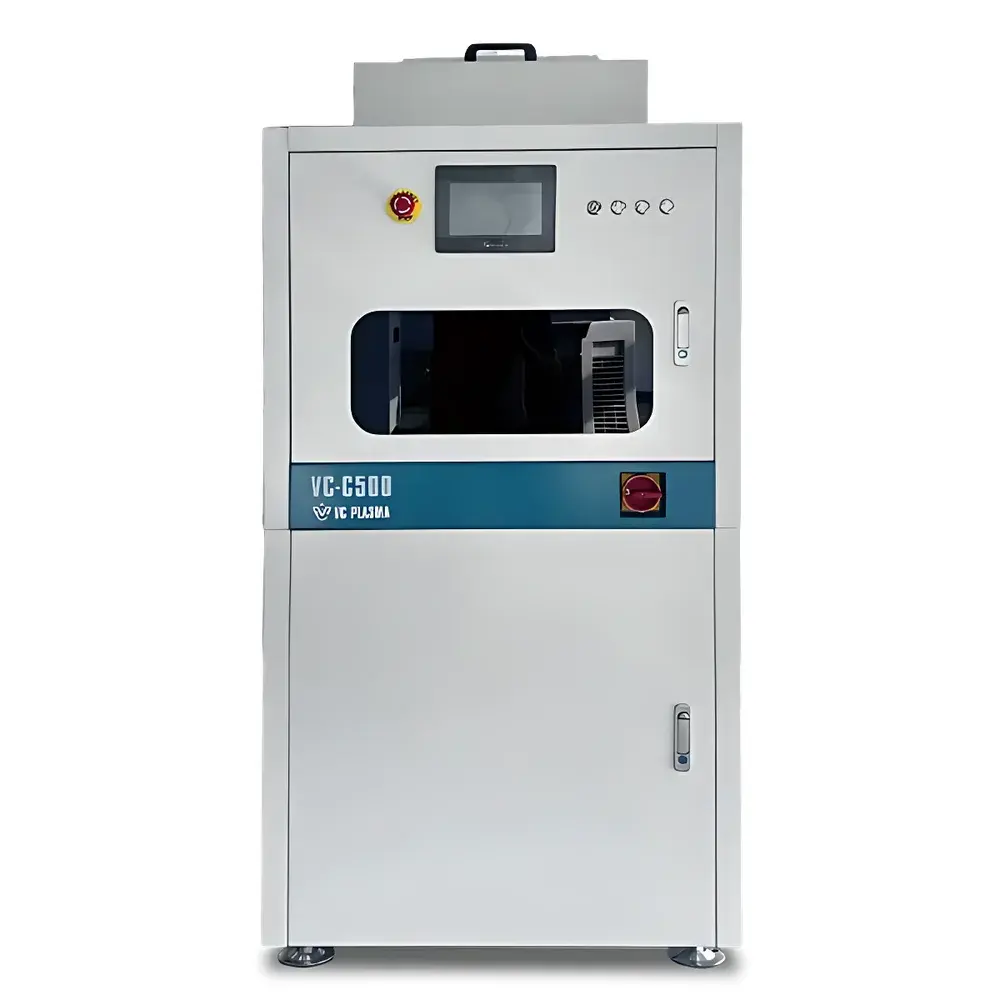
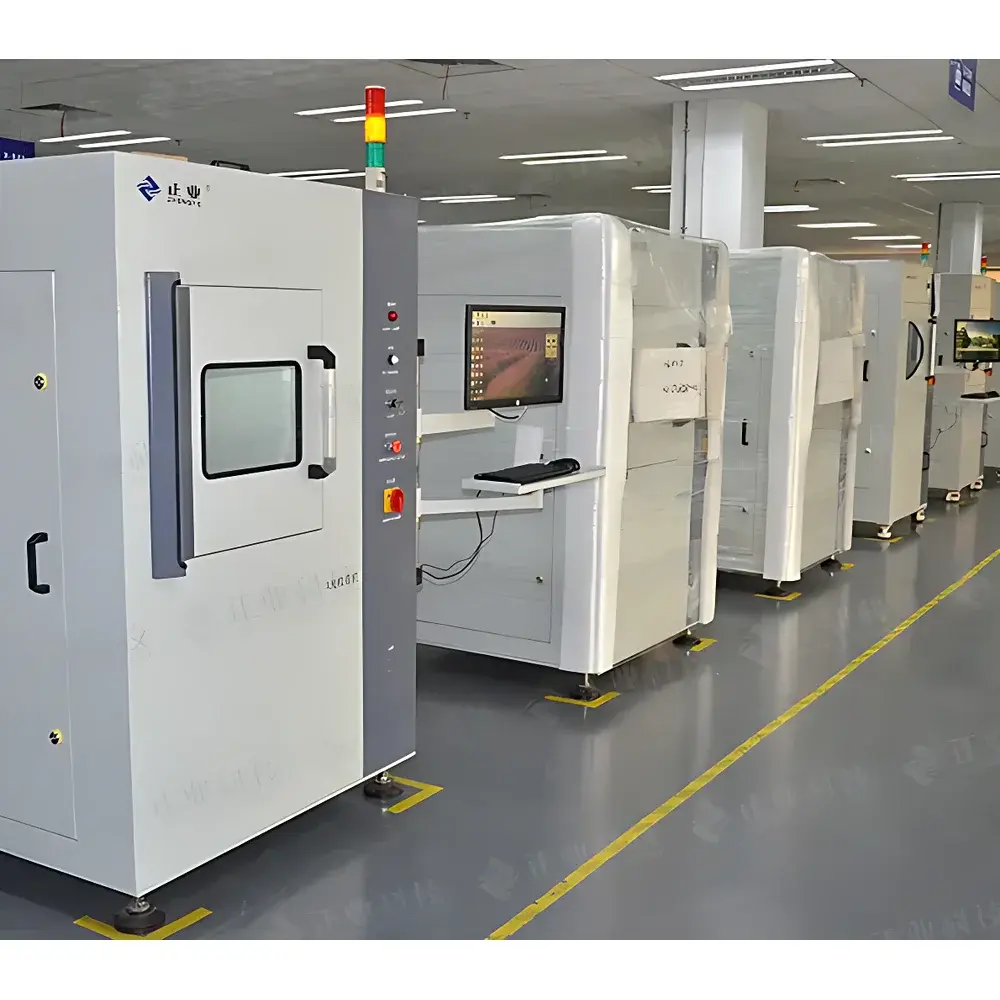
Zhengye X-ray Inspection System for Semiconductor Packaging
| Brand | Zhengye |
|---|---|
| Origin | Guangdong, China |
| Manufacturer Type | OEM/ODM Producer |
| Product Category | Domestic |
| Model | XIS-SEM Series |
| Pricing | Available Upon Request |
Overview
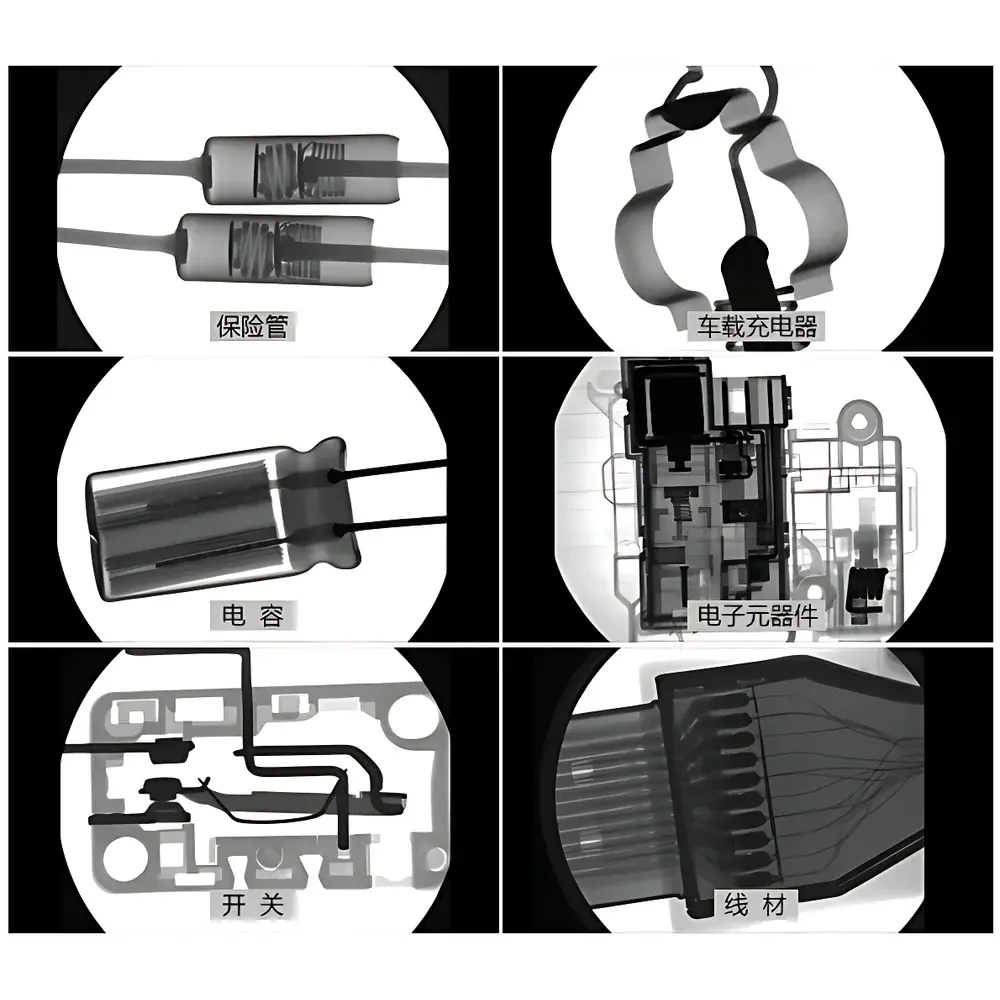
The Zhengye XIS-SEM Series is a high-stability, industrial-grade X-ray inspection system engineered specifically for non-destructive evaluation (NDE) of semiconductor packaging assemblies. It operates on the principle of transmission radiography: a microfocus X-ray source emits photons that penetrate the sample, and differential attenuation—governed by material density, thickness, and atomic number—is captured by a high-resolution flat-panel detector or image intensifier. The resulting 2D projection images enable real-time visualization of internal structural features—including wire bond integrity, die attach voids, lead frame alignment, solder joint bridging, and package delamination—at micron-level contrast resolution. Designed for integration into semiconductor final test and reliability labs, the system supports both offline FA (failure analysis) workflows and inline QC screening in low-to-medium volume production environments.
Key Features
- 2.5D Metrology Engine: Supports calibrated geometric measurements—including linear distance, circle diameter, concentricity of nested rings, and point-to-center offset—with sub-pixel interpolation accuracy. Measurement data is traceable to NIST-traceable calibration standards.
- CNC Path Programming: Enables repeatable, script-driven motion sequencing across X, Y, and Z axes. Users can record, edit, and replay multi-point inspection trajectories—ideal for batch verification of identical IC packages or BGA substrates.
- Intelligent Navigation Interface: Features a dual-display architecture: a large overview map (100% scale thumbnail) with real-time pan/zoom and click-to-move targeting. Mouse selection triggers coordinated stage repositioning with closed-loop stepper feedback for <±5 µm positional repeatability.
- Triple-Axis Motion Architecture: X-ray tube and detector move independently along orthogonal axes via precision-ground ball screws and synchronous belt-driven stepper motors. All axes support programmable velocity profiles (0.1–10 mm/s), acceleration ramping, and soft-limit protection.
- Digital Image Processing Suite: Native support for DICOM, TIFF, PNG, and BMP formats. Includes real-time histogram equalization, edge enhancement (Sobel/Canny), noise suppression (non-local means), ROI-based dynamic range stretching, and lossless image annotation with timestamped metadata.
Sample Compatibility & Compliance
The XIS-SEM accommodates standard JEDEC trays (TR-8, TR-13), gel packs, waffle packs, and bare dies up to 150 mm × 150 mm. Sample height clearance is adjustable from 10 mm to 80 mm, enabling inspection of stacked-die modules and fan-out wafer-level packages (FOWLP). The system complies with IEC 61000-6-3 (EMC emission limits) and IEC 61000-6-2 (immunity requirements). Radiation shielding meets national Class II X-ray equipment safety standards (GBZ 138–2002); all operational modes enforce interlocked door safety circuits and real-time dose monitoring per ISO 15708-1. For regulated environments, audit trail logging, user access levels, and electronic signature support align with GLP and FDA 21 CFR Part 11 readiness guidelines.
Software & Data Management
Zhengye’s proprietary XRayVision™ software (v4.2+) provides a unified interface for acquisition, analysis, reporting, and database archiving. It includes configurable pass/fail rule sets based on thresholded defect area, grayscale deviation, or geometric tolerance bands. Reports export in PDF/A-1b format with embedded image thumbnails, measurement tables, and operator ID/time stamps. Raw image datasets are stored in hierarchical folder structures with SHA-256 checksum validation; optional integration with enterprise LIMS or MES platforms is supported via RESTful API and HL7-compliant metadata tagging.
Applications
- Wire bond lift-off and neck fracture detection in QFN/DFN packages
- Void quantification in Cu pillar and solder bump underfills (ASTM F2795)
- Die tilt and warpage assessment in 2.5D/3D IC stacks
- Lead frame coplanarity verification per IPC-7351B
- Post-reflow solder joint integrity screening for automotive-grade ASICs
- Failure root cause correlation between X-ray findings and electrical test data (e.g., open/short faults)
FAQ
What is the minimum detectable feature size under standard operating conditions?
Typical resolution is 5–8 µm at 90 kV/100 µA with optimized magnification and detector binning—dependent on sample composition and geometry.
Does the system support automated defect classification using AI algorithms?
XRayVision™ v4.2 includes optional pattern-matching templates and statistical process control (SPC) dashboards; full deep-learning classification requires integration with third-party vision engines via ONNX-compatible inference pipelines.
Is radiation safety training required for operators?
Yes—operators must complete site-specific radiation safety orientation aligned with local regulatory authority requirements (e.g., NRC or provincial health department protocols). A certified radiation safety officer (RSO) must oversee initial commissioning and annual leakage testing.
Can the system be integrated into a cleanroom environment (ISO Class 5)?
The base model is rated for ISO Class 7 environments; cleanroom-compatible variants feature stainless-steel housings, HEPA-filtered internal airflow, and static-dissipative stage components—available upon request with full environmental qualification documentation.