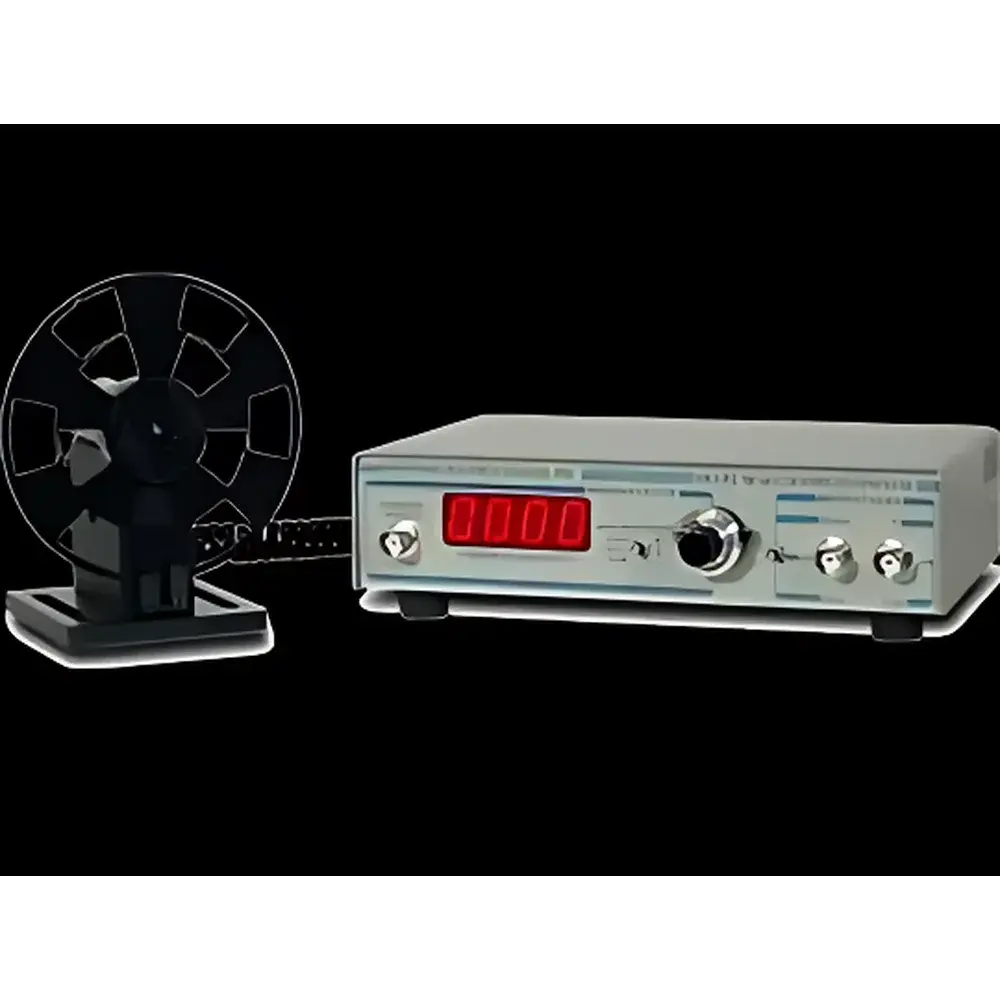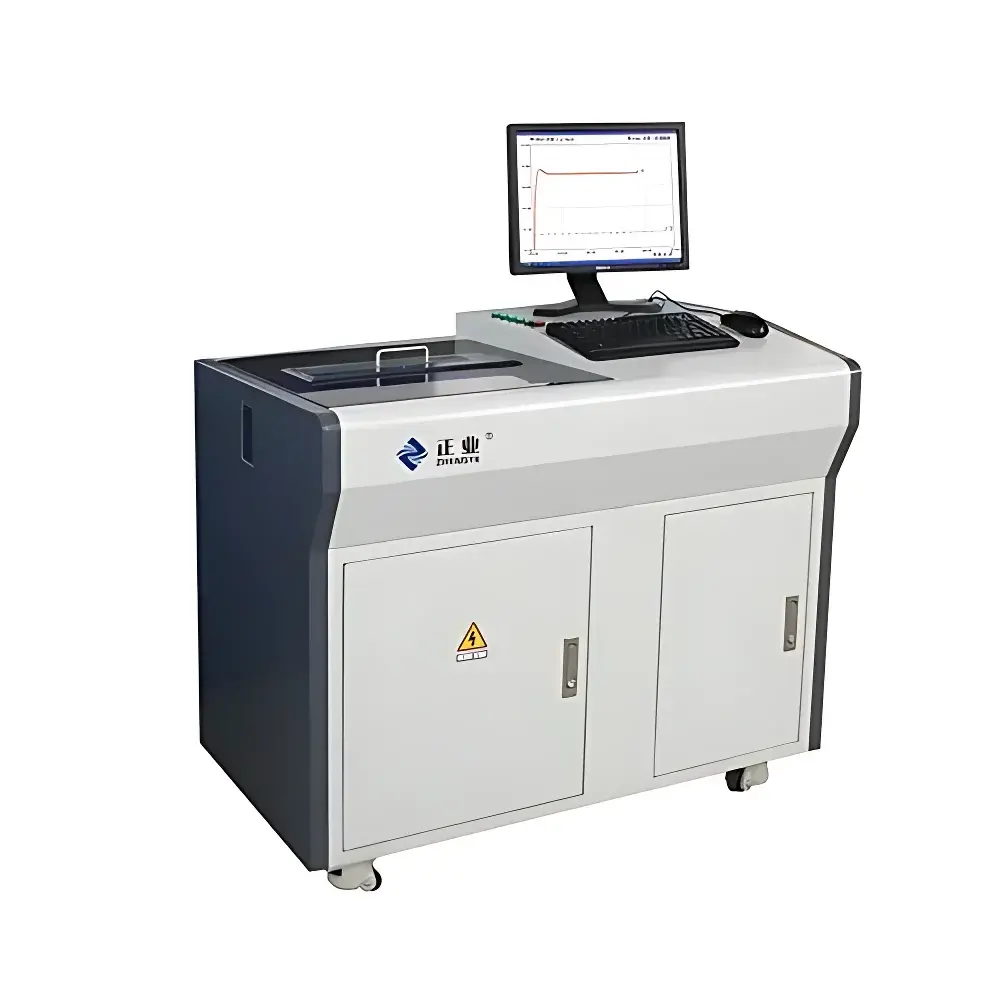
Zhengye LZ22 PCB Ionic Contamination Tester
| Brand | Zhengye |
|---|---|
| Origin | Guangdong, China |
| Manufacturer Type | Manufacturer |
| Region of Origin | Domestic (China) |
| Model | LZ22 |
| Quotation | Upon Request |
| Test Method | Dynamic & Static Extraction |
| Water Tank Dimensions | 352 × 70 × 600 mm (L×W×H), 15 L capacity |
| Max. Test Board Size | 35 cm × 60 cm |
| Weight | ≈115 kg |
| Measurement Accuracy | ±5% |
| Conductivity Resolution | 0.001 µS/cm |
| Conductivity Range | 0.001–20 µS/cm (equivalent to NaCl contamination: 300–10,000 µg) |
| Measurable Board Area | 800–4,200 cm² |
| Extractant Specific Gravity | 0.80–0.855 |
| Reference Standard | IPC-TM-650 2.3.25 (Ionic Contamination by Resistivity of Solvent Extract, ROSE) |
Overview
The Zhengye LZ22 PCB Ionic Contamination Tester is an engineered analytical instrument designed for quantitative assessment of ionic residues on bare printed circuit boards (PCBs) and assembled substrates prior to or following critical process steps—including solder paste printing, reflow, cleaning, conformal coating, and final inspection. It operates on the principle of Resistivity of Solvent Extract (ROSE) testing, as standardized in IPC-TM-650 Method 2.3.25. In this method, ionic contaminants—including halides (Cl⁻, Br⁻), sulfates (SO₄²⁻), organic acids, and metal cations (Na⁺, K⁺, NH₄⁺)—are extracted from the board surface using a precisely formulated isopropanol–deionized water mixture (typically 75:25 v/v). The resulting extract’s electrical conductivity is measured in real time via high-stability platinum conductivity electrodes, with automatic temperature compensation (±0.1 °C resolution) ensuring trace-level repeatability across ambient lab conditions (15–30 °C). Unlike qualitative wipe tests, the LZ22 delivers gravimetrically traceable results expressed in µg NaCl-equivalent per cm²—enabling direct correlation with industry acceptance thresholds (e.g., ≤1.56 µg/cm² for Class 3 electronics per IPC-A-610).
Key Features
- Integrated dual-mode operation: supports both dynamic (continuous flow-through extraction) and static (immersion-based) test protocols—enabling method flexibility for low-volume R&D validation or high-throughput production line verification.
- Sealed recirculating solvent system with mixed-bed ion exchange resin cartridge, minimizing reagent consumption and maintaining consistent extract purity over extended test sequences.
- High-resolution conductivity measurement engine (0.001 µS/cm resolution, ±5% full-scale accuracy), calibrated traceably to NIST-traceable standards.
- Heated extraction bath (adjustable 25–45 °C) accelerates contaminant dissolution kinetics while preserving board integrity—critical for low-solubility flux residues and post-reflow residues.
- Modular chamber design accommodates PCBs up to 35 × 60 cm; optional LZ22A variant extends to 68 × 68 cm with reinforced support frame and enlarged 15-L reservoir.
- Embedded microprocessor control with real-time conductivity trending, auto-zeroing, and endpoint detection algorithms—reducing operator dependency and inter-lab variability.
Sample Compatibility & Compliance
The LZ22 is validated for use with rigid FR-4, polyimide, ceramic, and metal-core PCBs ranging from single-layer prototypes to multilayer HDI assemblies with surface finishes including ENIG, immersion silver, OSP, and HASL. It complies with IPC-TM-650 2.3.25 (Revision F, 2022) and supports audit-ready documentation per ISO 9001:2015 and IATF 16949 quality management systems. While not FDA-certified (as it performs non-invasive ex situ analysis), its data output format aligns with GLP/GMP requirements for electronic manufacturing records—supporting 21 CFR Part 11–compatible software add-ons for electronic signatures and audit trails when integrated into enterprise MES environments.
Software & Data Management
The instrument includes embedded firmware with USB-C data export (CSV/Excel-compatible), timestamped test logs, and user-defined pass/fail thresholds. Optional PC-based software (LZ-Control Suite v3.2) enables automated report generation compliant with IPC-A-600 and IPC-J-STD-001 Annex B, batch-level statistical process control (SPC) charting (X̄-R, Cpk), and historical trend analysis across multiple instruments. All raw conductivity curves, temperature profiles, and calculated µg/cm² values are stored with immutable metadata—including operator ID, lot number, board serial, and environmental ambient readings—facilitating root-cause analysis during failure investigations or customer audits.
Applications
- Process validation of aqueous and semi-aqueous cleaning systems—quantifying residual flux ions pre- and post-cleaning to optimize dwell time, temperature, and rinse cycle count.
- Qualification of no-clean solder pastes and low-residue conformal coatings under accelerated aging (85 °C/85% RH) per J-STD-020.
- Failure analysis of electrochemical migration (ECM) and dendritic growth in field-failed assemblies.
- Supplier qualification and incoming material inspection for bare PCBs and populated boards.
- Supporting IPC-CC-830B certification testing for conformal coating ionic purity compliance.
FAQ
What extraction solvent is required for the LZ22?
The instrument is calibrated for use with a 75% isopropanol / 25% deionized water (v/v) mixture meeting ASTM D1193 Type II specifications. Solvent purity directly impacts baseline conductivity and must be verified before each test batch.
Can the LZ22 measure non-NaCl contaminants like weak organic acids?
Yes—the ROSE method detects total ionic charge carriers. While results are reported as NaCl-equivalent, the instrument’s wide dynamic range (0.001–20 µS/cm) ensures sensitivity to low-conductivity species such as formic or acetic acid residues when present above detection thresholds.
Is temperature compensation mandatory during testing?
Yes. Conductivity varies ~2% per °C; the LZ22 applies real-time Nernstian compensation using a Pt1000 sensor immersed in the extract bath—ensuring metrological equivalence across laboratories operating at different ambient temperatures.
How often does the ion exchange resin require replacement?
Under typical usage (≤20 tests/day), the mixed-bed cartridge maintains performance for ≥3 months or 500 extractions—indicated by a sustained rise in blank conductivity (>0.05 µS/cm) or deviation from calibration slope.
Does the LZ22 support GLP-compliant audit trails?
The base unit stores tamper-evident test records locally. Full 21 CFR Part 11 compliance—including electronic signatures, role-based access control, and change history—is available via the optional LZ-Control Suite with SQL database backend and Windows Active Directory integration.