Zhengye X-ray Non-Destructive Inspection System XG-250 Series
| Brand | Zhengye |
|---|---|
| Origin | Guangdong, China |
| Manufacturer Type | OEM/ODM Manufacturer |
| Regional Classification | Domestic (China) |
| Model | XG-250 Series |
| Pricing | Available Upon Request |
Overview
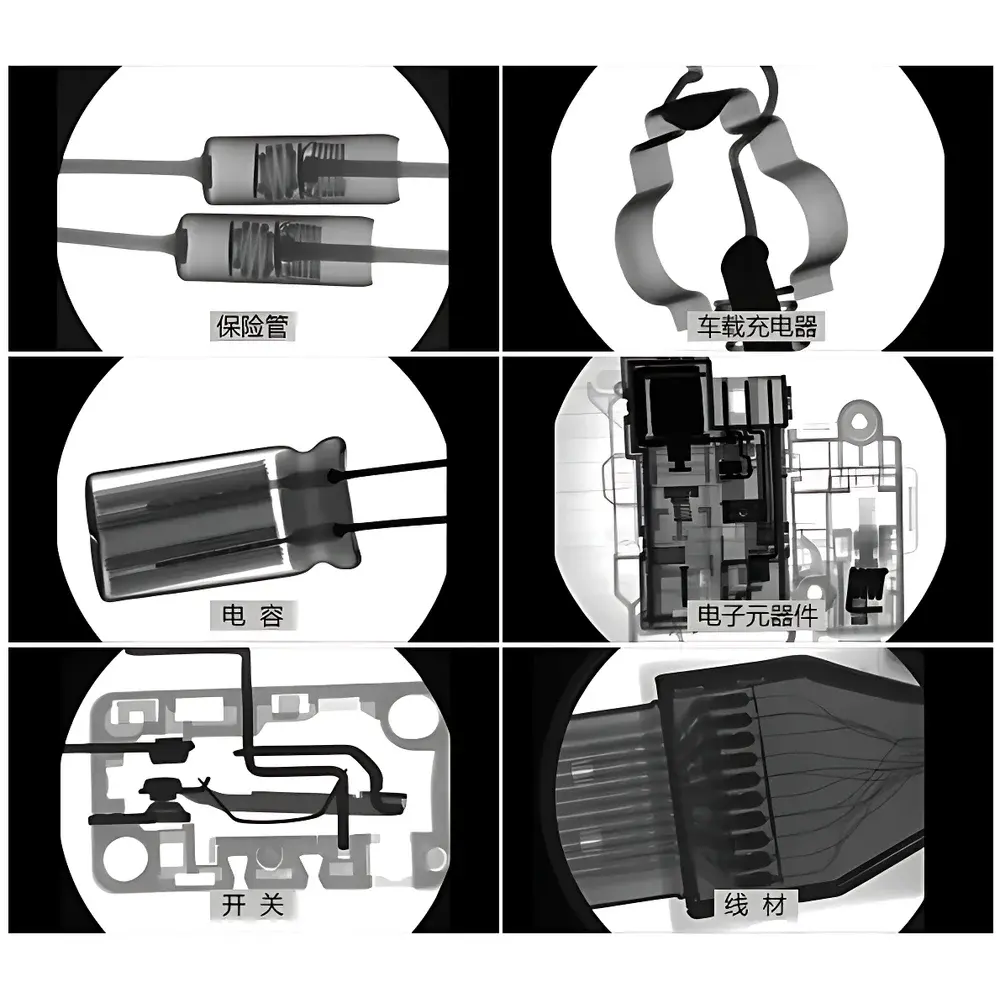
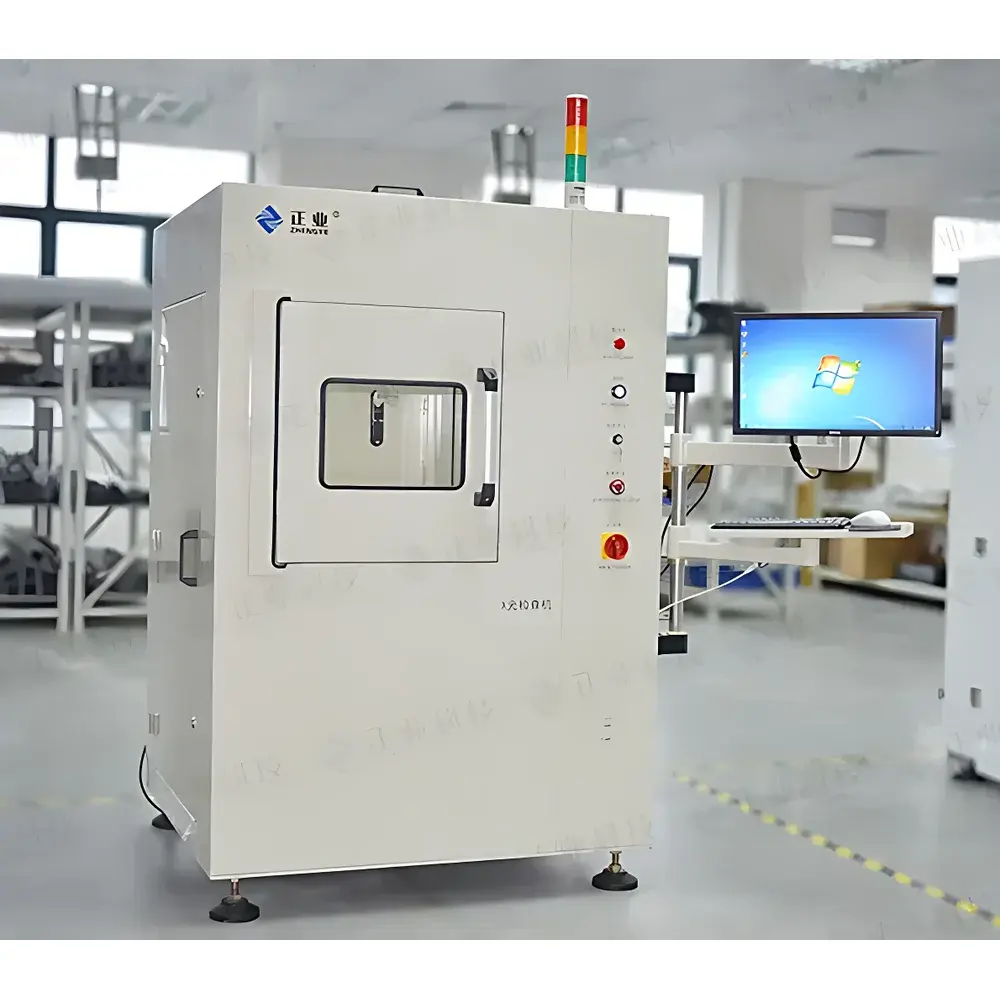
The Zhengye XG-250 Series X-ray Non-Destructive Inspection System is an industrial real-time radiographic imaging platform engineered for high-resolution internal structural analysis without physical sample alteration. Based on the fundamental principle of differential X-ray attenuation—where variations in material density and atomic number produce contrast in transmitted radiation—the system enables quantitative visualization of internal geometry, voids, delaminations, foreign inclusions, electrode misalignment, and weld integrity. Designed specifically for high-throughput production environments, it supports continuous inline or offline inspection of electrochemical cells, lithium-ion battery modules, power electronics assemblies, and precision metal-ceramic components. Its sealed microfocus X-ray source (≤5 µm focal spot), flat-panel digital detector (14-bit dynamic range, 120 kV max tube voltage), and motorized XYZ manipulator provide stable geometric magnification and repeatable imaging conditions essential for metrology-grade defect classification.
Key Features
- 2.5D Metrology Engine: Measures linear distances, circle diameters, concentricity of coaxial features, radial offset between points and centroids—all traceable to NIST-calibrated reference standards. Measurement uncertainty complies with ISO 15530-3 for coordinate measuring systems.
- CNC Path Programming: Stores multi-step inspection routines—including stage positioning, exposure parameters, and region-of-interest (ROI) definitions—for batch-consistent re-execution. Supports G-code import and manual teach-mode path recording with sub-micron repeatability.
- Intelligent Navigation Interface: Features a synchronized dual-display architecture: a full-field low-resolution overview window (1920 × 1080) and a high-resolution zoom viewport. Click-to-navigate functionality enables direct cursor-based targeting with automated stage motion and auto-focus correction.
- Real-Time Image Processing Pipeline: Includes dynamic range compression, adaptive noise reduction (non-local means algorithm), edge enhancement (Laplacian-of-Gaussian kernel), and grayscale threshold segmentation—all applied during acquisition without latency impact.
- Modular Hardware Architecture: Integrates interchangeable collimators, programmable apertures, and optional dual-energy filtration for material discrimination (e.g., Al vs. Cu layer differentiation in pouch cells).
Sample Compatibility & Compliance
The XG-250 accommodates samples up to 300 mm × 300 mm × 150 mm (W × D × H) and 5 kg maximum weight. Compatible with cylindrical (18650, 21700), prismatic, and pouch-format lithium-ion batteries; PCBAs with BGA/CSP packages; hermetically sealed relays; and sintered metal powder parts. System design conforms to IEC 61000-6-3 (EMC emissions), IEC 61000-6-2 (immunity), and GB/T 18801–2015 (Chinese national standard for industrial X-ray equipment safety). Radiation shielding meets ANSI N43.3 Class II requirements, with leakage dose <1 µSv/h at 5 cm from cabinet surface. Optional integration with factory MES via OPC UA enables audit-ready data logging aligned with ISO 9001:2015 clause 8.5.2 (identification and traceability).
Software & Data Management
Zhengye’s proprietary XVision Pro software (v4.2+) provides FDA 21 CFR Part 11-compliant operation through role-based access control, electronic signatures, and immutable audit trails for all measurement events, parameter changes, and image annotations. All acquired projections and reconstructed slices are stored in DICOM 3.0 format with embedded metadata (exposure time, kV/mA, detector gain, calibration timestamp). Batch reporting exports PDF/CSV summaries with pass/fail status per AOI, annotated defect maps, and statistical process control (SPC) charts (X̄-R, Cpk). Raw image archives support lossless TIFF export and third-party analysis in MATLAB, Avizo, or Dragonfly.
Applications
- Lithium-ion battery quality assurance: Anode/cathode coating uniformity, separator wrinkles, tab weld porosity, jelly-roll concentricity, and post-cycle swelling quantification
- Electronics manufacturing: Solder joint voiding (IPC-A-610 Class 2/3), component placement accuracy, wire bond lift-off, and underfill coverage verification
- Automotive powertrain: Valve seat integrity in cast aluminum housings, brazed heat exchanger fin gaps, and EV motor stator winding insulation gaps
- Medical device assembly: Hermetic seal validation in implantable pulse generators, tungsten marker alignment in catheter shafts, and polymer weld seam continuity
FAQ
What is the minimum detectable feature size under standard operating conditions?
Typical resolution is 5–8 µm at 10× geometric magnification, dependent on source-detector distance, sample thickness, and detector pixel pitch (75 µm). Resolution verification uses ASTM E2737 line-pair test patterns.
Does the system support automated defect classification using AI models?
Yes—optional DeepInspect AI module enables supervised training on user-provided defect libraries (voids, cracks, inclusions) with inference latency <200 ms per frame. Models comply with ISO/IEC 23053 for AI system documentation.
Can the XG-250 be integrated into a cleanroom environment?
Standard configuration meets ISO Class 8 (Class 100,000); optional HEPA-filtered air purge and static-dissipative enclosure upgrades support ISO Class 7 deployment.
Is remote diagnostics and firmware update capability available?
Yes—secure TLS 1.3 encrypted remote session mode allows Zhengye service engineers to perform health checks, calibrate geometry, and deploy validated firmware patches without onsite intervention.