
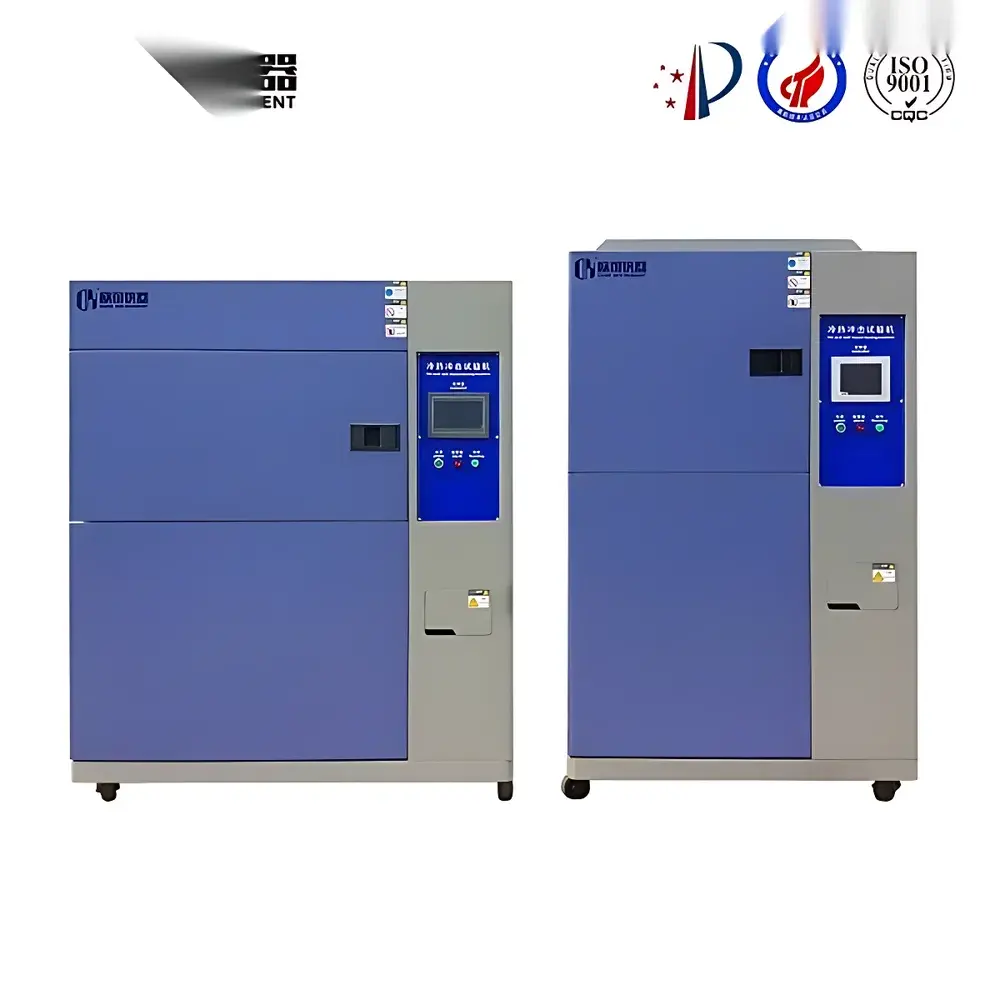
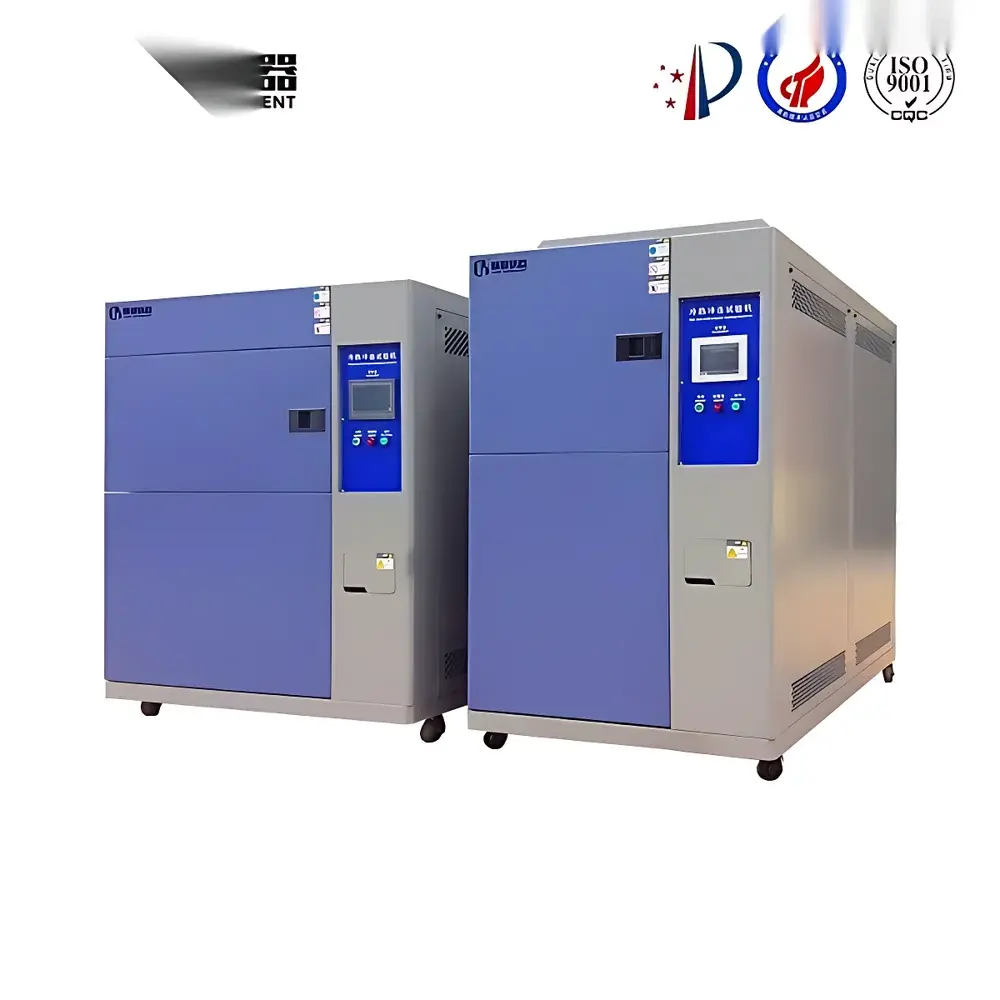
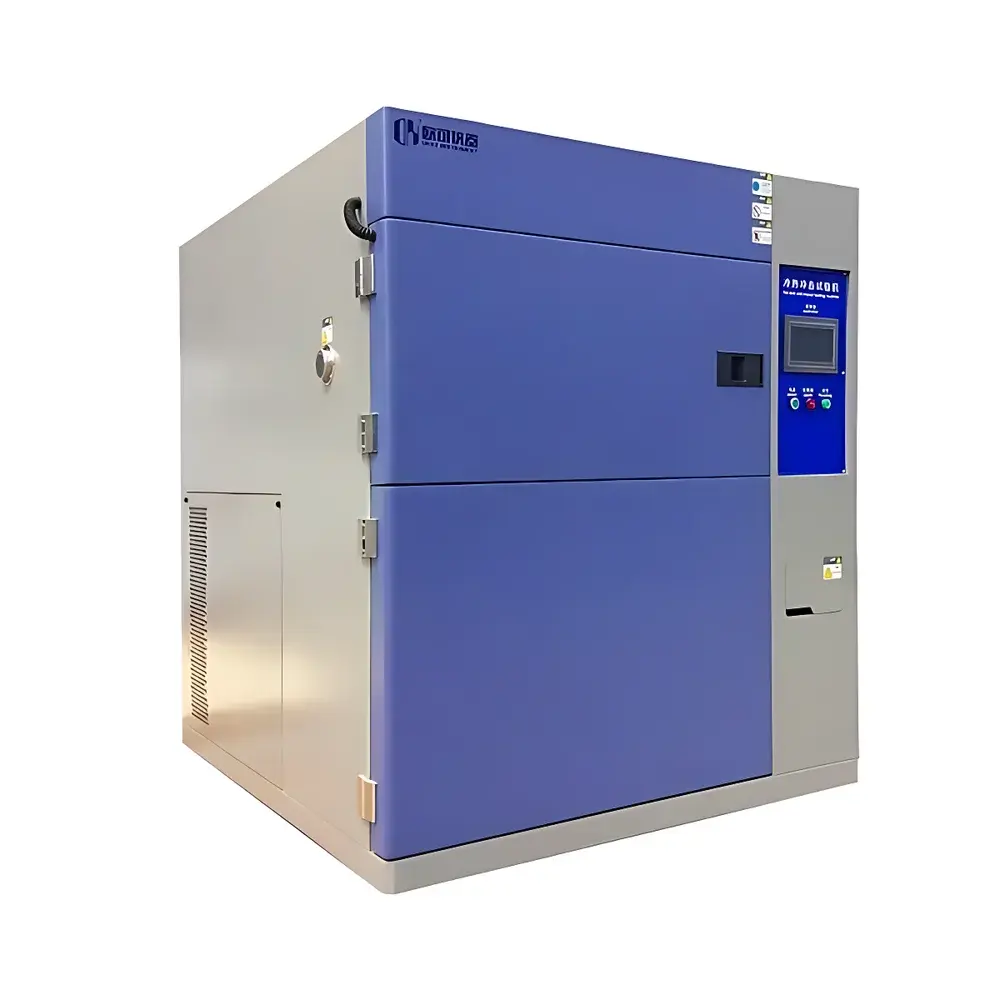
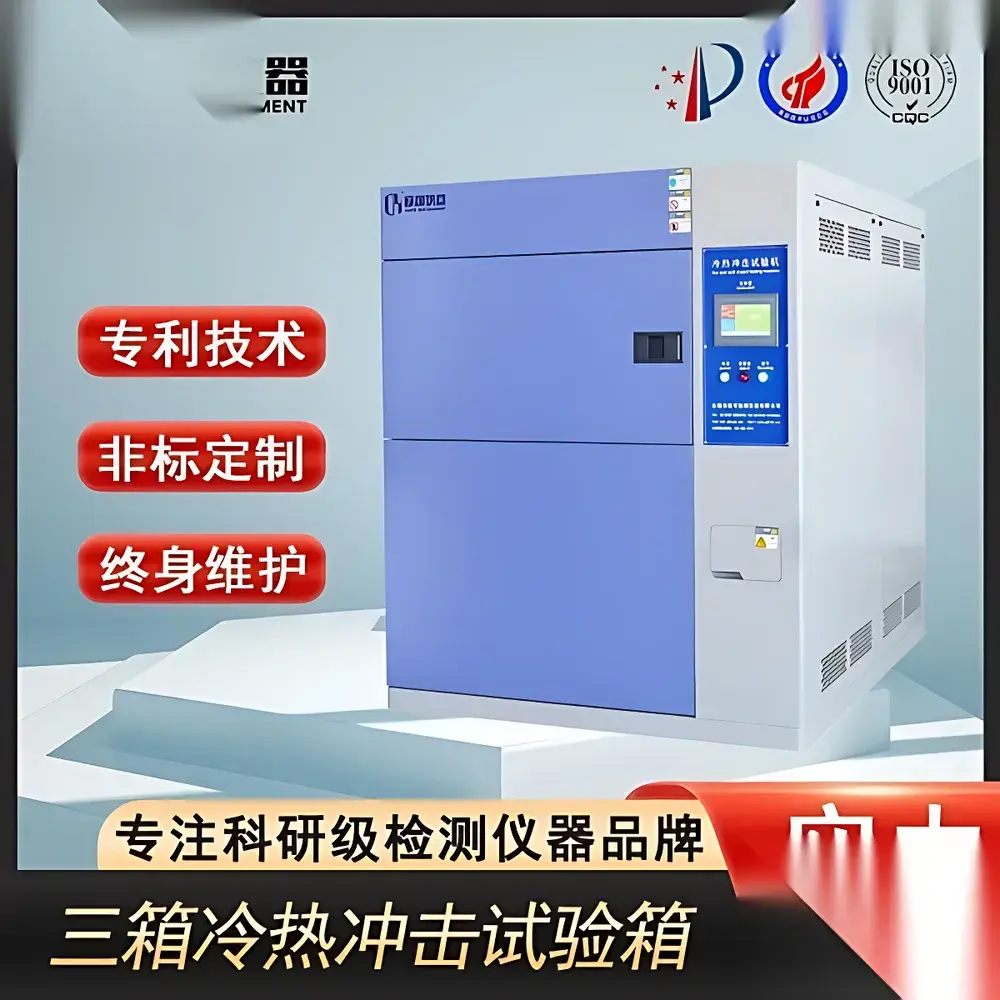
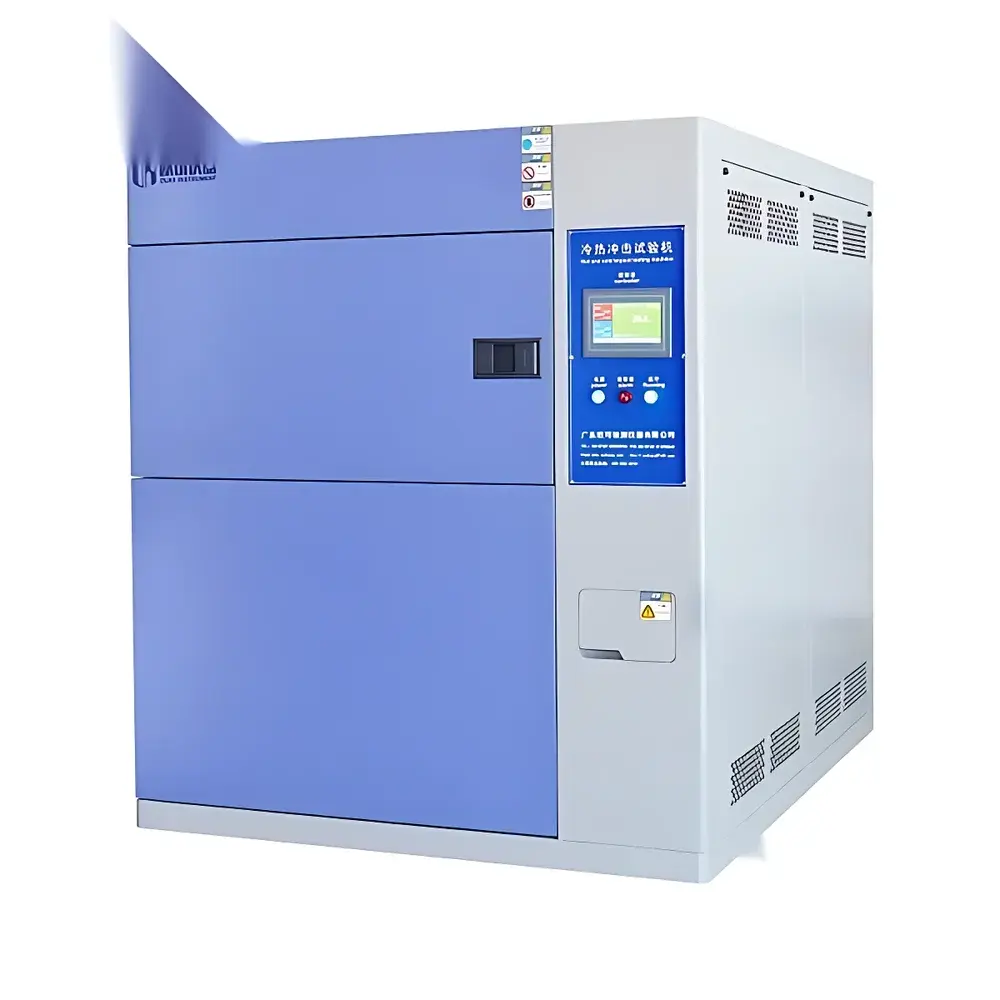
Thermal Shock Test Chamber – Standard Two-Zone and Three-Zone Configurations
| Brand | OEM |
|---|---|
| Origin | Imported |
| Manufacturer Type | Authorized Distributor |
| Price | USD 11,200 (FOB Shanghai, ex-works pricing |
| Temperature Range | -65°C to +180°C (standard) |
| Transition Time | ≤15 s (typical between chambers, per IEC 60068-2-14) |
| Internal Volume | 50 L to 1000 L (customizable) |
| Compliance | IEC 60068-2-14, MIL-STD-810H Method 503.5, ASTM D6279, GB/T 2423.22–2022, GJB 150.5A–2009, QC/T 17–2019 |
Overview
The Thermal Shock Test Chamber is an engineered environmental stress screening (ESS) system designed to evaluate material and component reliability under rapid, extreme temperature transitions. Operating on the principle of thermal shock—defined as the abrupt transfer of test specimens between thermally isolated high-temperature and low-temperature zones—the chamber subjects products to controlled, repeatable thermal gradients that simulate real-world operational stresses such as aerospace re-entry, automotive under-hood cycling, or electronics power-on/off transients. Two primary architectures are available: dual-zone (hot/cold chambers with specimen carrier transfer) and tri-zone (separate hot soak, cold soak, and test chambers enabling zero-load transition and precise dwell control). Both configurations comply with the fundamental physics of transient heat transfer and are calibrated to meet ISO/IEC 17025 traceable temperature uniformity and stability requirements across the working volume.
Key Features
- Modular dual- or tri-zone architecture with independent PID-controlled heating and refrigeration circuits for high reproducibility in transition timing and temperature accuracy
- Two-stage cascade refrigeration system utilizing imported semi-hermetic compressors (Germany-sourced), R404A/R23 mixed-refrigerant cycles, and evaporative condensers for stable operation down to −65 °C
- Water-cooled condensing unit requiring external cooling tower (10 m³/h flow rate, 32 °C inlet water temperature)—designed for continuous-duty industrial environments
- Energy modulation system dynamically adjusts refrigerant mass flow and heater output to maintain setpoint stability while minimizing compressor cycling and energy consumption
- Stainless steel 304 interior chamber with insulated double-wall construction, silicone-sealed observation window, and non-condensing internal lighting
- Integrated safety interlocks including over-temperature cutoff, refrigerant pressure monitoring, door lock during operation, and emergency stop circuit compliant with IEC 60204-1
Sample Compatibility & Compliance
This chamber accommodates a broad spectrum of physical samples—including PCB assemblies, automotive ECUs, battery modules, optical sensors, and polymer enclosures—without requiring fixture modification beyond standard basket or tray mounting. Specimen weight capacity ranges from 5 kg (compact units) to 50 kg (large-volume configurations), with dimensional constraints defined by internal chamber clearances and carrier stroke limits. The system meets mandatory regulatory frameworks for qualification testing: IEC 60068-2-14 (Test Nb: Change of temperature), MIL-STD-810H Method 503.5 (Temperature Shock), ASTM D6279 (Thermal Cycling of Coatings), and Chinese national standards GB/T 2423.22–2022 and GJB 150.5A–2009. Full traceability documentation—including factory calibration certificates, temperature mapping reports (per ISO 17025), and compliance summaries—is provided with each shipment. Optional validation packages support GLP/GMP audit readiness, including IQ/OQ protocols aligned with FDA 21 CFR Part 11 data integrity requirements.
Software & Data Management
Equipped with a Windows-based controller running proprietary embedded firmware (v4.2+), the chamber supports real-time logging of chamber temperatures, specimen surface thermocouple inputs (optional), cycle count, transition time, and alarm history at 1-second resolution. Data export is available in CSV and PDF formats, with timestamped records digitally signed and archived locally on an encrypted SD card. Remote monitoring via Ethernet (Modbus TCP/IP or optional OPC UA) enables integration into centralized MES or LIMS platforms. Audit trail functionality logs all user actions—including parameter edits, manual overrides, and calibration events—with immutable timestamps and operator ID tagging. Software complies with data integrity principles outlined in Annex 11 (EU GMP) and ALCOA+ criteria for electronic records.
Applications
- Qualification testing of avionics hardware per DO-160 Section 4 (Temperature Variation)
- Failure mode analysis of solder joints and wire bonds in semiconductor packaging
- Validation of conformal coating adhesion and cracking resistance on printed circuit boards
- Reliability screening of lithium-ion battery cells under accelerated thermal cycling conditions
- Material compatibility assessment for sealants, gaskets, and elastomers used in HVAC and defense systems
- Process development support for reflow soldering and vacuum brazing prequalification
FAQ
What is the typical temperature transition time between zones?
Standard dual-zone models achieve ≤15 seconds for specimens ≤2 kg; tri-zone systems maintain ≤10 seconds with zero-load transfer. Actual performance depends on specimen thermal mass and chamber volume.
Is external cooling infrastructure mandatory?
Yes. The two-stage cascade refrigeration system requires a dedicated water-cooled condenser with ≥10 m³/h flow capacity and ≤32 °C inlet temperature. Air-cooled alternatives are available but reduce minimum temperature capability to −40 °C.
Can the chamber be integrated into an automated test line?
Yes. Digital I/O ports (24 VDC), Modbus TCP/IP, and optional PLC-compatible relay outputs enable seamless synchronization with robotic handlers and downstream data systems.
Does the system support custom test profiles beyond standard specifications?
Yes. Up to 99 programmable cycles with variable dwell times, ramp rates, and conditional branching (e.g., “if T_surface > 120 °C, extend hot soak by 60 s”) are supported via the onboard editor or PC software.
What calibration and maintenance services are included?
Factory calibration certificate (NIST-traceable RTDs), one-year parts-and-labor warranty, and optional annual preventive maintenance contracts with certified field engineers are available upon order.



