
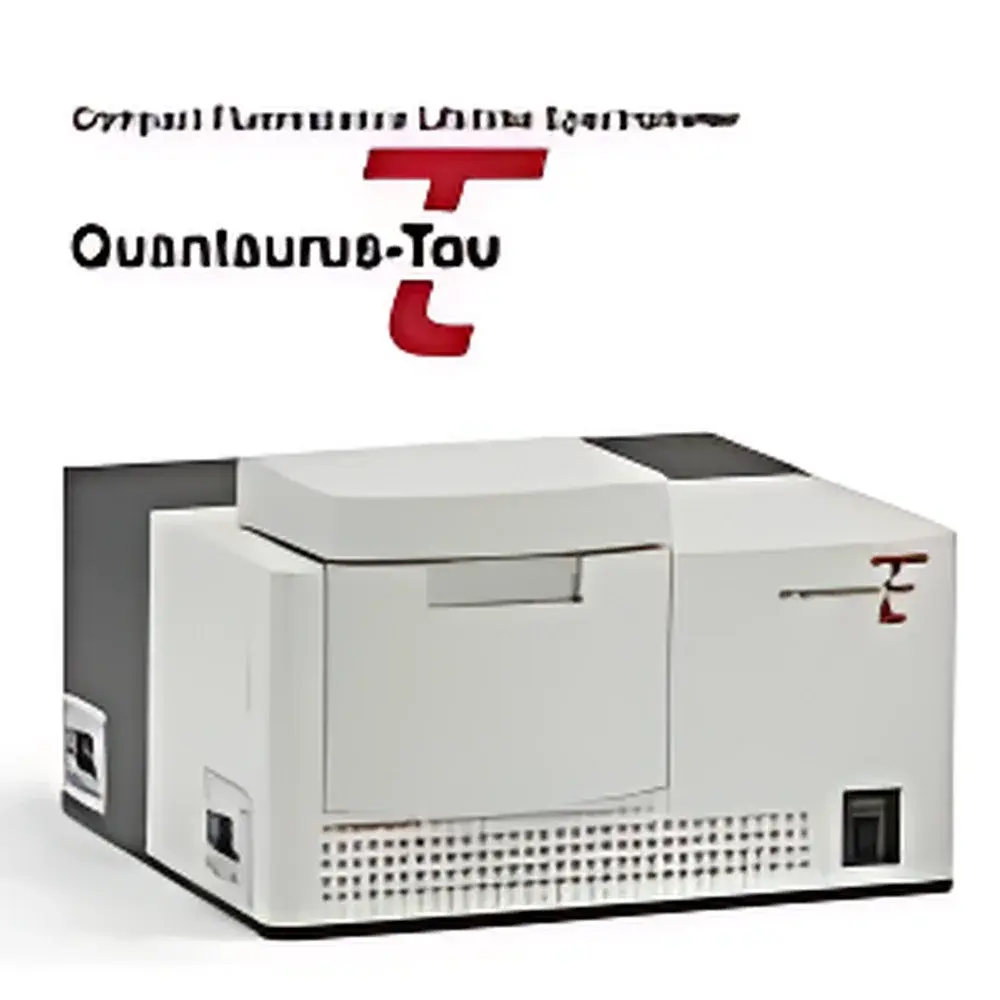
Photonics Multichannel Analysis System PMA
| Origin | Japan |
|---|---|
| Manufacturer Type | Authorized Distributor |
| Origin Category | Imported |
| Model | PMA |
| Pricing | Available Upon Request |
Overview
The Photonics Multichannel Analysis (PMA) System is a modular, high-integration optical measurement platform engineered for simultaneous multi-wavelength spectral acquisition across the ultraviolet (UV), visible (VIS), and near-infrared (NIR) ranges. Based on charge-coupled device (CCD) or complementary metal-oxide-semiconductor (CMOS) linear array detector architecture, the PMA employs fixed-grating spectrometry combined with fiber-optic coupling to deliver real-time, time-resolved spectral data without mechanical scanning. Its core design follows the principle of multichannel detection—capturing full spectra in a single exposure—enabling high temporal resolution essential for dynamic processes such as plasma decay kinetics, combustion intermediates, or transient fluorescence lifetimes. The system is optimized for laboratory-based quantitative photometry and qualitative spectral fingerprinting under controlled environmental conditions, supporting both benchtop and OEM-integrated configurations.
Key Features
- Monolithic multichannel architecture integrating spectrometer optics, photon detection electronics, and calibrated light source modules within a single thermally stabilized chassis
- Fiber-optic input interface compatible with standard SMA-905 connectors, enabling flexible probe integration for remote or in-situ measurements
- Real-time spectral acquisition at frame rates up to 100 Hz (model-dependent), supporting time-gated and trigger-synchronized operation
- Self-calibrating wavelength axis via embedded reference LED or optional Hg/Ar lamp module; spectral response correction using NIST-traceable calibration files
- Modular detector options: back-thinned CCD (200–1100 nm), InGaAs array (900–1700 nm), or hybrid dual-range configurations
- Ruggedized aluminum housing with passive thermal management; operating temperature range: 15–35 °C, <70% RH non-condensing
Sample Compatibility & Compliance
The PMA accommodates liquid cuvettes (1–10 mm pathlength), gas cells (with sealed quartz windows), solid thin films, reflective surfaces, and fiber-coupled microscopes. Sample interfaces comply with ISO 17025 traceability requirements when used with certified calibration standards. The system supports compliance workflows aligned with ASTM E308 (colorimetry), ASTM E131 (nomenclature for molecular spectroscopy), ISO 13406-2 (display measurement), and USP (spectrophotometric absorbance). Data integrity features include audit-trail logging, user-access controls, and electronic signature support—fully compatible with GLP/GMP environments requiring FDA 21 CFR Part 11 compliance when deployed with validated software packages.
Software & Data Management
The PMA is operated via SpectraView Pro™, a Windows-based application providing spectral acquisition, baseline correction, peak deconvolution, ratio analysis, and kinetic curve fitting. Raw data are stored in vendor-neutral HDF5 format with embedded metadata (wavelength array, integration time, detector gain, ambient temperature, calibration timestamp). The software supports automated batch processing, export to CSV, MATLAB (.mat), and ASCII formats, and integrates with LabVIEW™ via IVI-compliant drivers. Optional SDKs enable custom scripting in Python (PyVISA, NumPy) and C/C++. All firmware updates undergo cryptographic signature verification prior to installation, ensuring system integrity per IEC 62443-3-3 cybersecurity guidelines.
Applications
- Time-resolved fluorescence spectroscopy in photochemical reaction monitoring and quantum yield determination
- Plasma diagnostics including electron temperature estimation from atomic line ratios (e.g., Ar I 750.4 nm / 811.5 nm)
- Combustion analysis via OH*, CH*, and C₂* chemiluminescence band tracking in engine test beds
- Thin-film thickness quantification using interference fringe analysis in reflectance mode (20–2000 nm range)
- Colorimetric quality control of LEDs and OLEDs per CIE 1931 xy chromaticity and CCT calculations
- Environmental sensing: dissolved organic matter (DOM) characterization in water via UV-Vis absorption slope analysis (SUVA₂₅₄)
- Raman spectral acquisition with optional notch-filtered excitation modules (e.g., 532 nm, 785 nm)
- Microspectroscopy coupling with inverted research microscopes for single-cell autofluorescence mapping
FAQ
Is the PMA system compatible with third-party optical fibers?
Yes—standard 200 µm, 400 µm, or 600 µm core diameter silica fibers with numerical aperture ≤ 0.22 are fully supported.
Can spectral calibration be performed in-house?
Yes—the system includes a built-in LED reference source and supports user-initiated wavelength and intensity recalibration using certified NIST SRM 2031 or equivalent standards.
What is the typical signal-to-noise ratio (SNR) for low-light applications?
Depends on detector configuration and integration time; typical SNR exceeds 1,200:1 (rms) at 1 s integration with back-thinned CCD and TE cooling to –10 °C.
Does the PMA support synchronization with external triggers such as lasers or oscilloscopes?
Yes—TTL-compatible trigger input/output ports enable precise timing coordination with pulsed sources or data acquisition systems.
Are firmware and software updates provided free of charge during the warranty period?
Yes—lifetime access to firmware revisions and major software releases is included with hardware purchase; extended support contracts cover post-warranty updates and validation documentation.




