
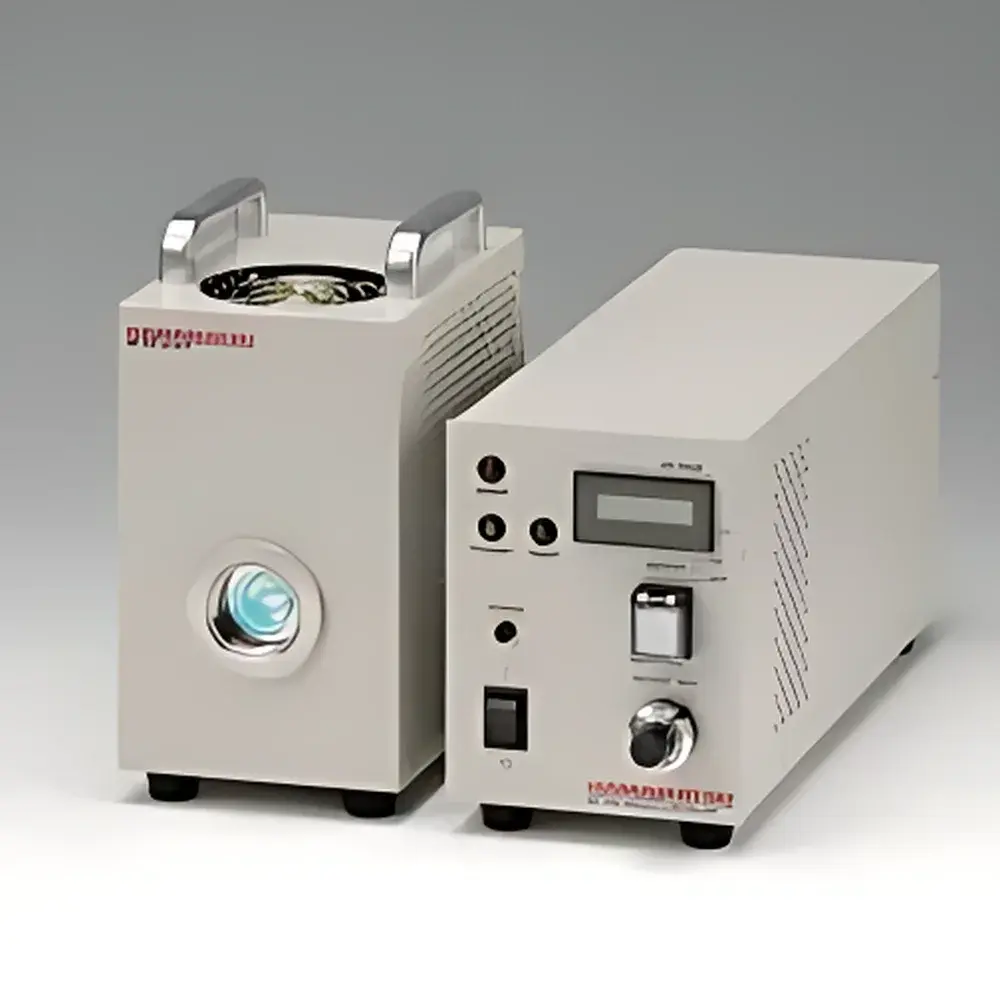
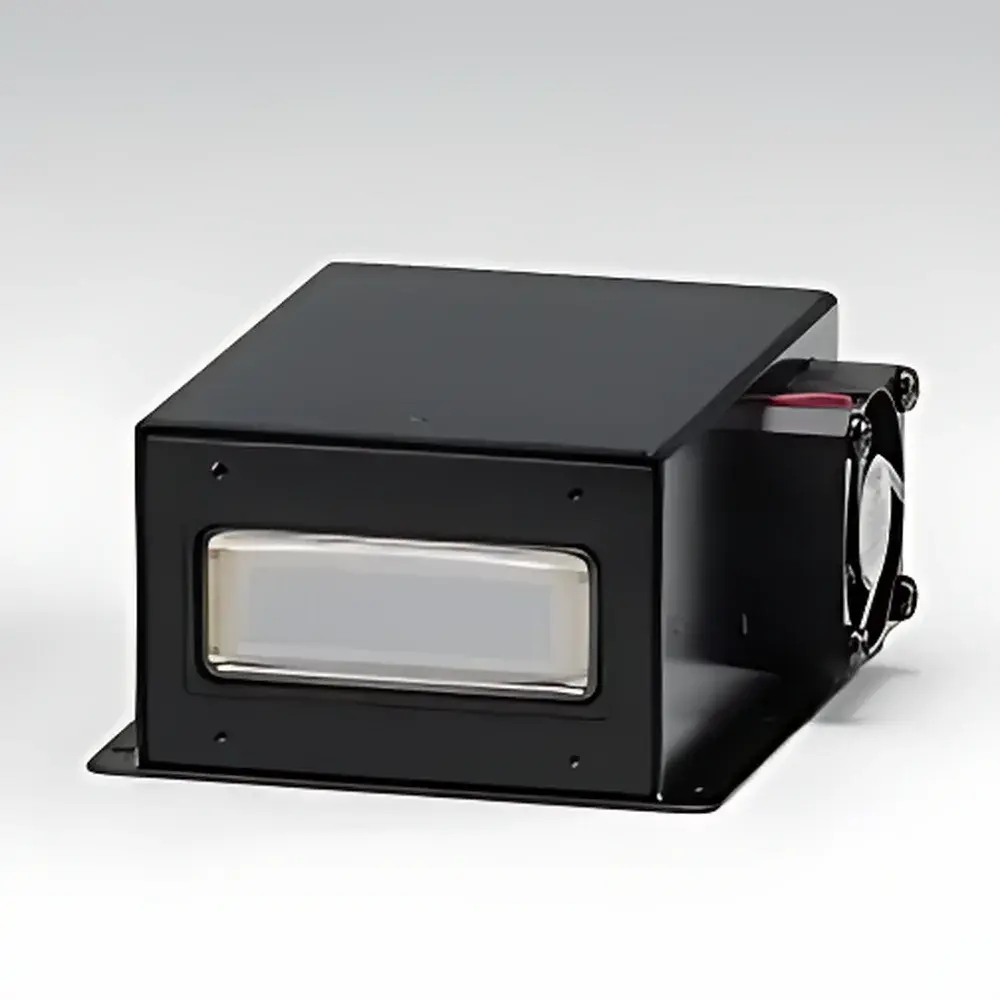
Hamamatsu Custom-Designed Photomultiplier Tube (PMT) Module
| Brand | Hamamatsu |
|---|---|
| Origin | Japan |
| Manufacturer Type | Original Equipment Manufacturer (OEM) |
| Import Status | Imported |
| Model Series | CH |
| Pricing | Available Upon Request |
Overview
The Hamamatsu Custom-Designed Photomultiplier Tube (PMT) Module is a high-performance, application-specific optoelectronic detection solution engineered for ultra-low-light signal acquisition in demanding scientific and industrial instrumentation. Based on the fundamental principle of secondary electron multiplication within a vacuum tube structure, PMTs deliver exceptional single-photon sensitivity, sub-nanosecond temporal response, and extremely low dark current—making them indispensable in photon-starved measurement environments where silicon-based detectors lack sufficient gain or speed. Unlike generic photodetectors, Hamamatsu’s CH-series modules integrate optimized photocathode materials, precision dynode chains, stable high-voltage power supplies (HVPS), and electromagnetic shielding into compact, mechanically robust housings—ensuring consistent quantum efficiency, pulse-height uniformity, and long-term operational stability across laboratory, field-deployable, and OEM-integrated platforms.
Key Features
- Customizable photocathode configurations—including bialkali (S-20), multialkali (S-25), GaAs, and extended-red/near-infrared (NIR) variants—to match spectral requirements from 185 nm to 1700 nm
- Integrated high-voltage power supply with regulated output (typically ±0.05% stability) and adjustable gain control via analog or digital interface
- Thermoelectrically cooled (TEC) options available for NIR modules (e.g., H10330B-45/-75), enabling dark current suppression below 1 pA at –20 °C
- Multi-anode architectures (e.g., H11460-03) supporting spatially resolved photon counting with <100 µm anode pitch and independent channel readout
- Ruggedized metal or ceramic packaging compliant with IEC 61000-4 electromagnetic compatibility standards and RoHS/REACH material directives
- OEM-ready mechanical interfaces including SMA, FC/PC fiber ports, and standardized mounting flanges compatible with spectrograph slit adapters and vacuum feedthroughs
Sample Compatibility & Compliance
These modules are designed for integration into optical systems requiring high linearity (≥99.5% over 6 decades dynamic range), pulse-counting fidelity (>95% collection efficiency for 10⁶ cps incident photons), and thermal drift compensation. They comply with ISO/IEC 17025 calibration traceability frameworks when used with NIST-traceable light sources and reference detectors. In regulated environments—including clinical analyzers (CLIA, IVD Directive 98/79/EC), environmental monitoring instruments (EPA Method 40 CFR Part 136), and pharmaceutical QC systems—the modules support audit-ready documentation packages aligned with FDA 21 CFR Part 11 electronic record requirements when paired with validated data acquisition firmware.
Software & Data Management
Hamamatsu provides the optional C10709-compatible PMT Control Software Suite (v4.x), enabling real-time gain calibration, dark count subtraction, pulse-height spectrum analysis, and time-resolved photon arrival timestamping (with 25 ps resolution). All firmware supports USB 2.0 and RS-485 communication protocols, and exports raw data in HDF5 and ASCII formats compatible with MATLAB, Python (NumPy/Pandas), and LabVIEW. For GxP-compliant deployments, optional GLP/GMP audit trail logging and user-access role management (admin/operator/reviewer tiers) are available upon configuration.
Applications
- Spectroscopy: High-resolution monochromator- and grating-based UV-Vis-NIR spectrometers; fluorescence lifetime imaging (FLIM); Raman scattering detection
- Nuclear & Particle Physics: Scintillation light readout in liquid argon time projection chambers (LArTPCs); Cherenkov radiation detection in neutrino observatories
- Medical Diagnostics: Flow cytometry signal amplification; gamma camera photodetection in SPECT systems; time-of-flight PET detector front-ends
- Industrial Process Monitoring: Real-time plasma emission spectroscopy in semiconductor etch chambers; laser-induced breakdown spectroscopy (LIBS) for elemental analysis
- Environmental Sensing: Low-level chemiluminescence detection in NOx/SO2 analyzers; bioluminescent toxicity screening in water quality testing
- Quantum Technologies: Single-photon source characterization; quantum key distribution (QKD) receiver modules
FAQ
What spectral response ranges are supported across the CH-series modules?
Standard configurations cover 185–420 nm (UV-enhanced), 300–900 nm (broadband visible/NIR), and extended NIR bands up to 1700 nm with thermoelectric cooling.
Can these modules be integrated into vacuum or inert-gas environments?
Yes—selected models feature hermetically sealed ceramic-metal housings rated for operation under ≤10⁻⁴ Pa vacuum or dry nitrogen purge conditions.
Is factory calibration provided with each module?
Each unit ships with individual spectral responsivity curves (QE vs. λ), gain-vs.-HV characterization data, and dark current vs. temperature profiles, traceable to Hamamatsu’s internal metrology lab accredited to ISO/IEC 17025.
Do you offer custom pinouts or signal conditioning circuits?
Yes—Hamamatsu supports full electrical interface customization including differential output stages, TTL/CMOS logic compatibility, and embedded analog-to-digital conversion per customer OEM specifications.
How is long-term gain stability maintained during continuous operation?
Dynode chain design incorporates low-noise, high-uniformity resistive divider networks with temperature-compensated voltage regulation; typical gain drift is <0.1% over 8 hours at constant ambient temperature.




