
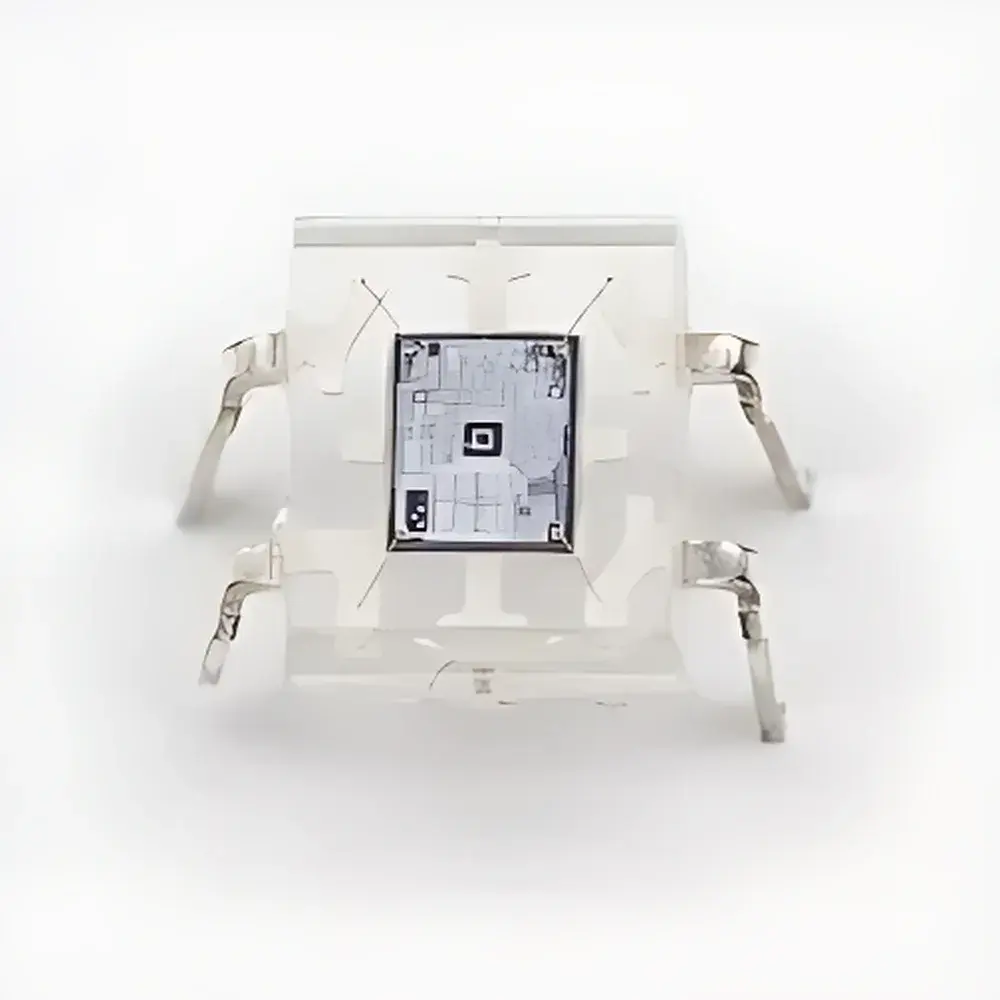
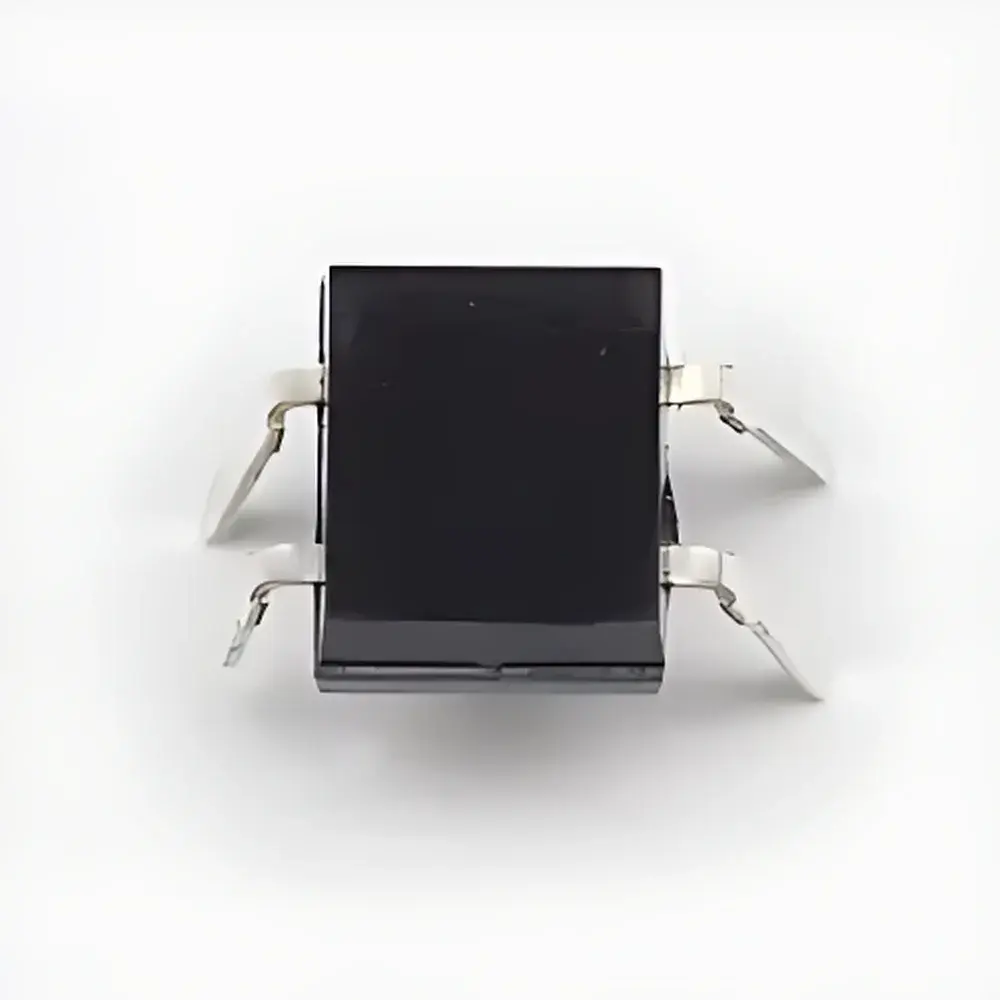
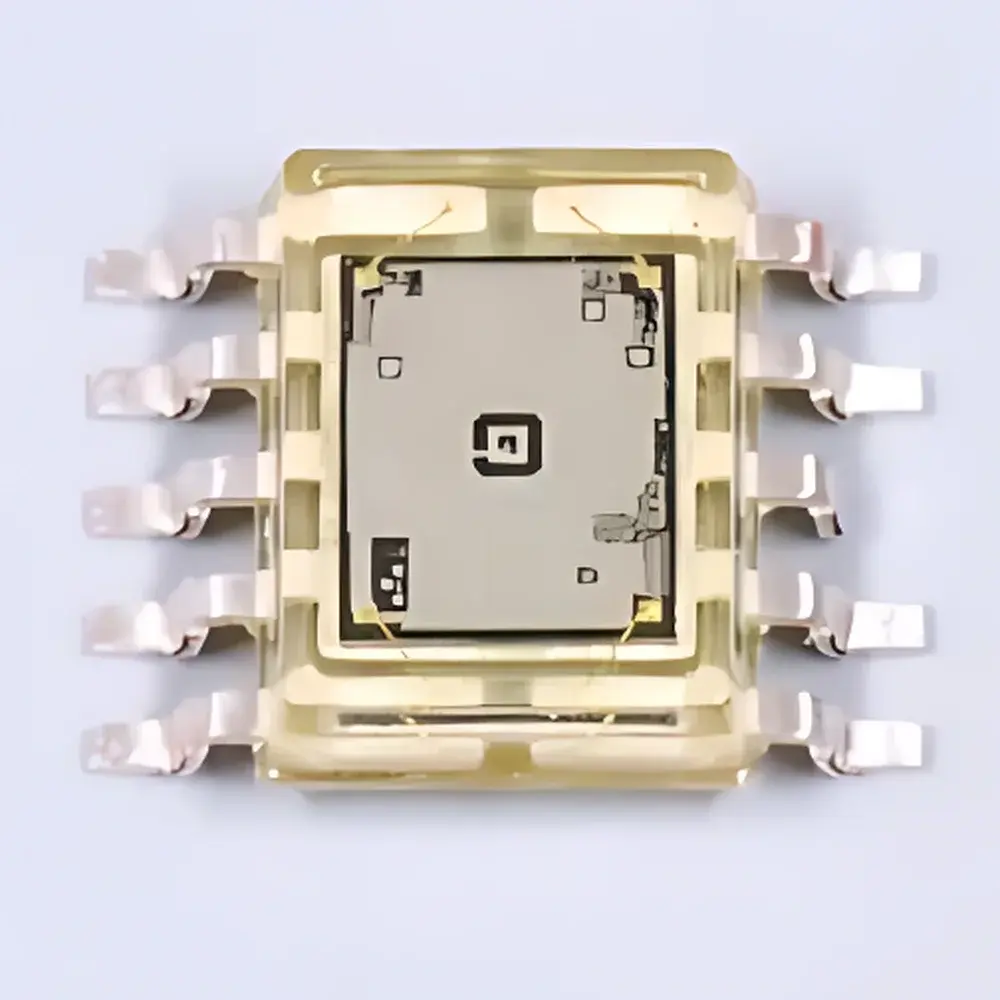
Hamamatsu S4282-51 Optical Modulation-Type Photointegrated Circuit
| Brand | Hamamatsu |
|---|---|
| Origin | Japan |
| Manufacturer Type | Original Equipment Manufacturer (OEM) |
| Import Status | Imported |
| Model | S4282-51 |
| Component Category | Optical Component |
| Package | Plastic, Transparent |
Overview
The Hamamatsu S4282-51 Optical Modulation-Type Photointegrated Circuit is a monolithic optoelectronic sensor designed for robust ambient-light-immune photodetection in industrial automation, precision positioning systems, and optical encoders. Unlike conventional photodiodes or phototransistors, this device integrates an optical modulation mechanism—typically implemented via internal carrier modulation synchronized with an external reference signal—enabling synchronous demodulation of the photocurrent. This architecture effectively suppresses low-frequency drift and DC background interference, including ambient light fluctuations from fluorescent lamps, LED lighting, or sunlight exposure. The S4282-51 operates on the principle of lock-in detection at the chip level: incident light is modulated either externally (e.g., via pulsed LED illumination) or internally (via integrated oscillator-driven photogate structures), and the IC extracts only the amplitude and phase components coherent with the modulation frequency. As a result, it delivers high signal-to-noise ratio (SNR) performance under uncontrolled illumination conditions—critical for applications demanding long-term stability without recalibration.
Key Features
- Integrated synchronous detection circuitry eliminates dependence on external lock-in amplifiers or discrete analog filtering stages
- Plastic transparent package optimized for visible-light transmission (peak sensitivity ~550 nm), compatible with standard 3 mm–5 mm LED emitters
- Low dark current (<1 nA typical at 25°C) and high linearity over 4-decade photocurrent range (100 pA to 1 µA)
- Supply voltage range: +4.5 V to +5.5 V; operating temperature: −10°C to +60°C (storage: −30°C to +70°C)
- Designed for surface-mount assembly (SMD); footprint compatible with JEDEC-standard SOIC-8 or custom leadframe configurations per datasheet revision
- No external biasing required—fully self-contained photodetection and signal conditioning in a single die
Sample Compatibility & Compliance
The S4282-51 is engineered for integration into optomechanical subassemblies where precise spatial alignment between emitter and detector is maintained—such as rotary/linear encoder slotted discs, proximity sensors, and reflective object detection modules. Its transparent plastic housing permits direct coupling with collimated or focused visible-light sources (400–700 nm). The device complies with RoHS Directive 2011/65/EU and REACH Regulation (EC) No. 1907/2006. While not certified as a standalone safety component, its electrical isolation and thermal characteristics support incorporation into IEC 61000-4-x compliant end systems. For medical or aerospace applications, Hamamatsu provides traceable lot documentation and extended reliability test reports (HTOL, TC, HAST) upon request—supporting ISO 13485 and AS9100-aligned design control processes.
Software & Data Management
As a hardware-level signal conditioning IC, the S4282-51 does not incorporate embedded firmware or digital interfaces. Output is a continuous analog voltage or current proportional to modulated light intensity, intended for acquisition by external ADCs (e.g., 12–16-bit SAR or sigma-delta converters) within host controller platforms. Hamamatsu supplies comprehensive SPICE-compatible behavioral models and IBIS files for PCB signal integrity simulation. Application notes—including timing diagrams for optimal modulation frequency selection (recommended: 1 kHz–20 kHz), PCB layout guidelines for noise suppression, and calibration procedures using NIST-traceable light sources—are available through Hamamatsu’s global technical library. Integration into automated test systems (ATE) is supported via standard LabVIEW™, Python (PyVISA), or MATLAB® instrument drivers when paired with compatible DAQ hardware.
Applications
- High-reliability optical encoders in CNC machine tools and robotics joints, where ambient shop-floor lighting varies significantly
- Non-contact position sensing in semiconductor wafer handling systems requiring sub-micron repeatability
- Industrial object presence/absence detection in packaging lines with mixed artificial and natural illumination
- Feedback elements in closed-loop laser power stabilization circuits using intensity-modulated pump diodes
- Low-cost alternative to fiber-optic isolators in PLC input modules requiring galvanic isolation and EMI resilience
FAQ
What modulation frequency range is supported by the S4282-51?
The device is optimized for modulation frequencies between 1 kHz and 20 kHz. Performance degrades above 50 kHz due to internal carrier lifetime limitations.
Can the S4282-51 be used with infrared (IR) light sources?
No—it features a visible-light-optimized photodiode structure with negligible responsivity beyond 700 nm. For IR applications, consider Hamamatsu’s S7136 series with silicon-on-sapphire or InGaAs variants.
Is there a recommended driver circuit for the modulation source?
Yes: Hamamatsu Application Note AN-217 specifies constant-current LED drivers with <1% ripple and fast rise/fall times (<100 ns) to preserve modulation fidelity.
Does the S4282-51 require factory calibration?
No—its gain and offset are trimmed during wafer probe testing. System-level calibration is performed in situ using known irradiance standards per ISO/IEC 17025-accredited procedures.
How does the transparent package affect UV or blue-light stability?
The epoxy resin exhibits gradual yellowing under prolonged UV exposure (>365 nm). For >10,000-hour outdoor use, Hamamatsu recommends the S4289-61 variant with UV-blocking shielding.



