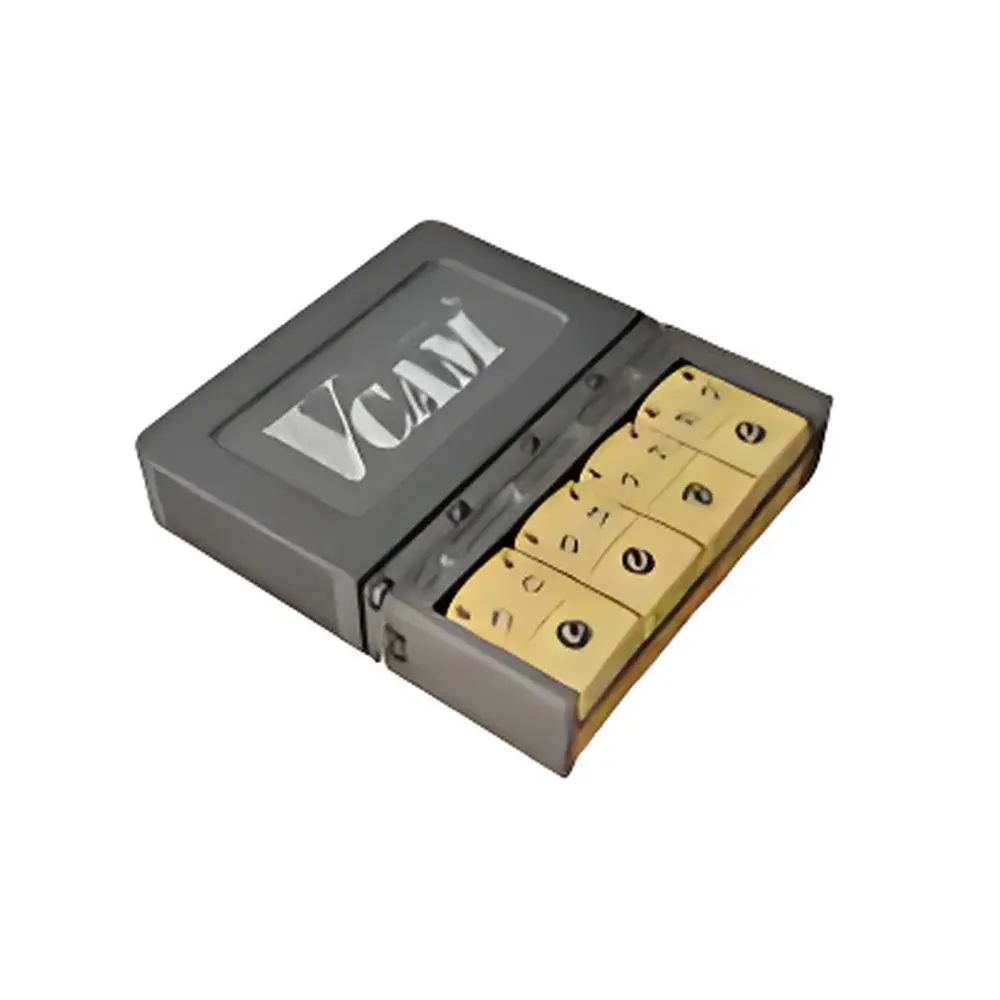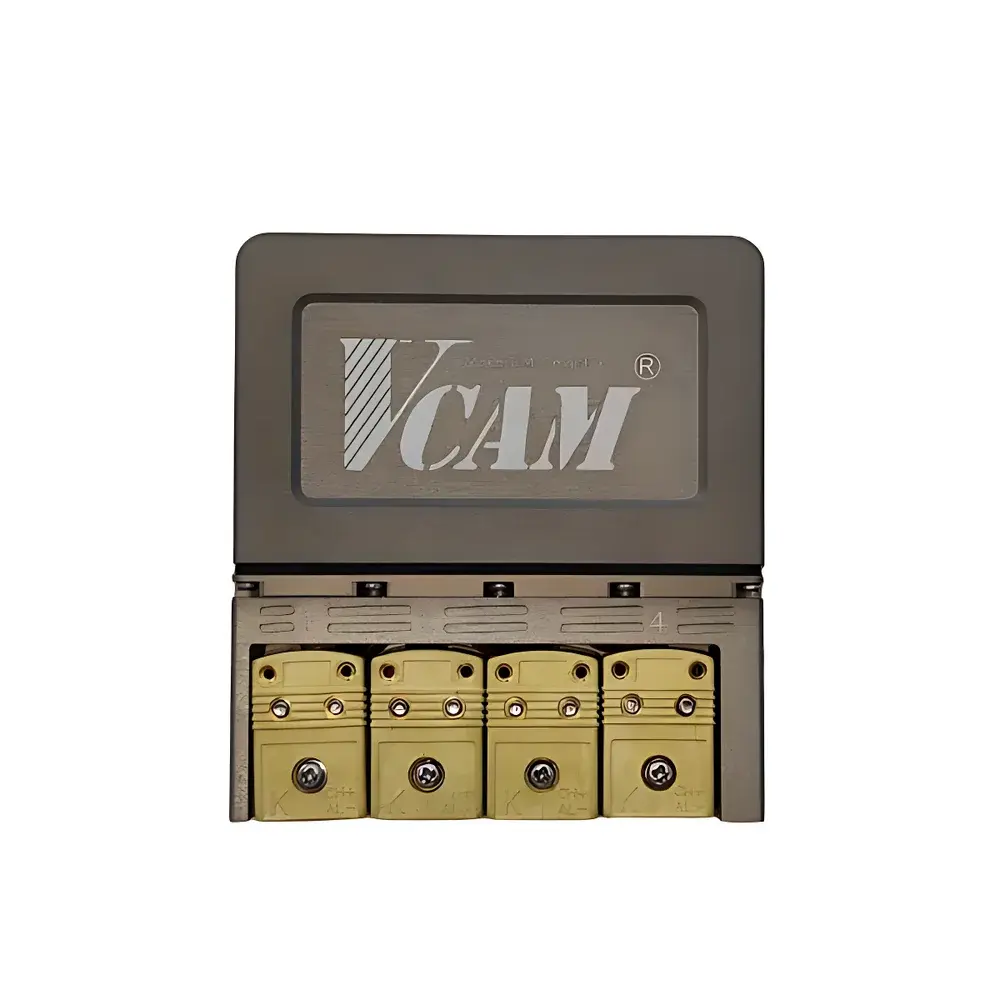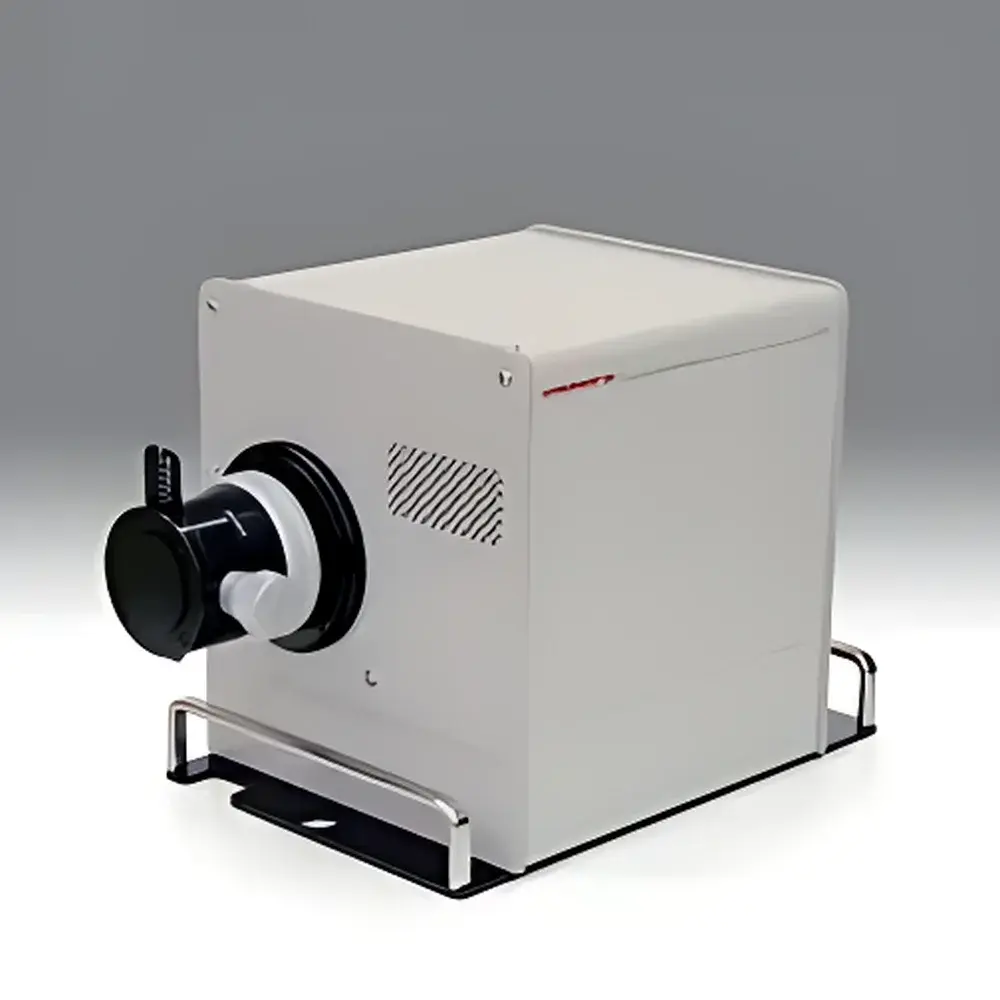
Hamamatsu C7700-01 High-Dynamic-Range Streak Camera
| Brand | Hamamatsu |
|---|---|
| Origin | Japan |
| Manufacturer Type | Manufacturer |
| Origin Category | Imported |
| Model | C7700-01 |
| Price | Upon Request |
| Spectral Response Range | 200 nm – 850 nm |
| Time Resolution | < 5 ps |
| Scan Repetition Rate | Single-shot to 1 kHz (max) |
| Dynamic Range | > 1:1000 (up to 10,000:1 under optimized conditions) |
| Sweep Duration | 500 ps – 1 ms |
| Effective Photocathode Length | 17 mm |
| Power Supply | AC 100–240 V, 50/60 Hz |
| Control Interface | IEEE-488 (GPIB) |
Overview
The Hamamatsu C7700-01 High-Dynamic-Range Streak Camera is a precision optoelectronic instrument engineered for single-shot, time-resolved optical diagnostics of ultrafast transient phenomena. Based on the principle of photoelectron deflection in a high-voltage sweep field, the system converts temporal intensity profiles into spatially resolved streak images on a phosphor screen or CCD sensor—enabling direct mapping of photon arrival time versus spatial (e.g., wavelength or position) coordinate. With sub-5-picosecond time resolution and a maximum dynamic range exceeding 10,000:1 under calibrated low-noise acquisition conditions, the C7700-01 supports quantitative intensity comparison across orders of magnitude within a single exposure—critical for capturing both weak spontaneous emission and intense laser-induced signals simultaneously. Its 17 mm effective photocathode length provides extended spatial acceptance for spectroscopic slit imaging, while its spectral response from 200 nm to 850 nm accommodates deep-UV to near-IR applications without external wavelength conversion.
Key Features
- Sub-5 ps intrinsic time resolution, verified via electron-optical transit time analysis and RF-calibrated streak calibration procedures
- Adjustable sweep duration from 500 ps to 1 ms, enabling optimization for femtosecond-to-microsecond scale dynamics
- High-dynamic-range operation (>1000:1 typical, up to 10,000:1 with gain stabilization and dark-current suppression)
- Integrated sweep generator and high-voltage pulse modulator—no external timing electronics required for basic operation
- GPIB (IEEE-488) interface for full remote control of sweep delay, sweep speed, photocathode voltage, and image readout synchronization
- AC-powered architecture (100–240 V, 50/60 Hz) with internal line-frequency rejection circuitry to minimize timing jitter induced by mains fluctuations
Sample Compatibility & Compliance
The C7700-01 interfaces directly with standard spectrographs (via fiber coupling or direct slit coupling), vacuum-compatible optical chambers, and ultra-high-vacuum plasma diagnostics setups. Its photocathode is compatible with common UV-enhanced S20 and multialkali (Na-K-Sb-Cs) coatings, ensuring quantum efficiency stability across the specified 200–850 nm band. The instrument complies with IEC 61000-6-3 (EMI emission) and IEC 61000-6-2 (immunity) standards. For regulated environments—including ISO/IEC 17025-accredited metrology labs and DOE-funded inertial confinement fusion facilities—the system supports traceable calibration using NIST-traceable pulsed LED sources and certified streak timing references. While not intrinsically 21 CFR Part 11 compliant, audit-ready data acquisition workflows can be implemented via third-party GPIB-controlled software platforms with electronic signature and change-tracking capabilities.
Software & Data Management
Hamamatsu provides the proprietary StreakCube software suite (Windows-based), which enables real-time preview, multi-frame averaging, background subtraction, intensity calibration, and spatiotemporal profile extraction (e.g., time-integrated spectra, time-gated spectral slices, and 2D intensity vs. time/wavelength matrices). Raw image data are saved in 16-bit TIFF or HDF5 format, preserving full bit-depth fidelity for post-acquisition analysis in MATLAB, Python (NumPy/H5Py), or Igor Pro. The GPIB interface allows integration into LabVIEW-based experiment control architectures and synchronization with external trigger sources (e.g., photodiodes, delay generators, or laser Q-switch signals) with jitter < 20 ps RMS. Exported metadata includes timestamp, sweep parameters, photocathode bias, ambient temperature, and hardware revision—supporting FAIR (Findable, Accessible, Interoperable, Reusable) data principles.
Applications
- Laser-driven plasma diagnostics: Thomson scattering, bremsstrahlung time-history, and x-ray precursor detection in ICF and Z-pinch experiments
- Ultrafast spectroscopy: Picosecond transient absorption, time-resolved fluorescence decay, and stimulated Raman scattering kinetics
- Pulsed laser characterization: Temporal pulse shape reconstruction, ASE suppression analysis, and cavity-dump timing validation
- Combustion and detonation physics: Chemiluminescence lifetime mapping, shock-front propagation, and radical emission dynamics
- Free-electron laser (FEL) beam diagnostics: Single-shot FEL pulse duration measurement and intensity fluctuation analysis at MHz repetition rates (via burst-mode triggering)
- LIDAR and time-of-flight systems: High-resolution atmospheric backscatter profiling and target ranging under low-SNR conditions
FAQ
What is the minimum measurable pulse duration with the C7700-01?
The system achieves <5 ps instrumental time resolution under optimal photocathode bias, sweep linearity, and detector cooling conditions—limited primarily by electron transit time spread and sweep field rise time.
Can the C7700-01 operate in vacuum environments?
The camera head is designed for atmospheric operation; however, it may be coupled to vacuum chambers via differential pumping stages or UV-grade fused silica viewports rated for UHV compatibility.
Is spectral calibration included with the system?
Yes—each unit ships with a factory spectral calibration certificate referencing NIST-traceable mercury-argon lamp lines at 253.7 nm, 404.7 nm, 435.8 nm, 546.1 nm, and 696.5 nm.
How is timing synchronization achieved with external lasers?
Via programmable delay generators connected to the EXT TRIG input, supporting TTL or ECL-level triggers with adjustable delay resolution down to 1 ps (with external timing module).
Does the C7700-01 support gated intensifier operation?
No—it is a direct-detection streak camera without microchannel plate (MCP) intensification; signal amplification relies on photocathode quantum efficiency and phosphor gain.