
Rain Test Chamber – Industrial-Grade IPX1 to IPX6 Ingress Protection Testing System
| Brand | OEM / Custom Brand |
|---|---|
| Origin | Imported |
| Manufacturer Type | Authorized Distributor |
| Price | USD 3,600 (FOB) |
| Compliance | IEC 60529, ISO 20653, GB/T 4208, SAE J2527 |
| Chamber Capacity | Standard 1.2 m³ (Customizable) |
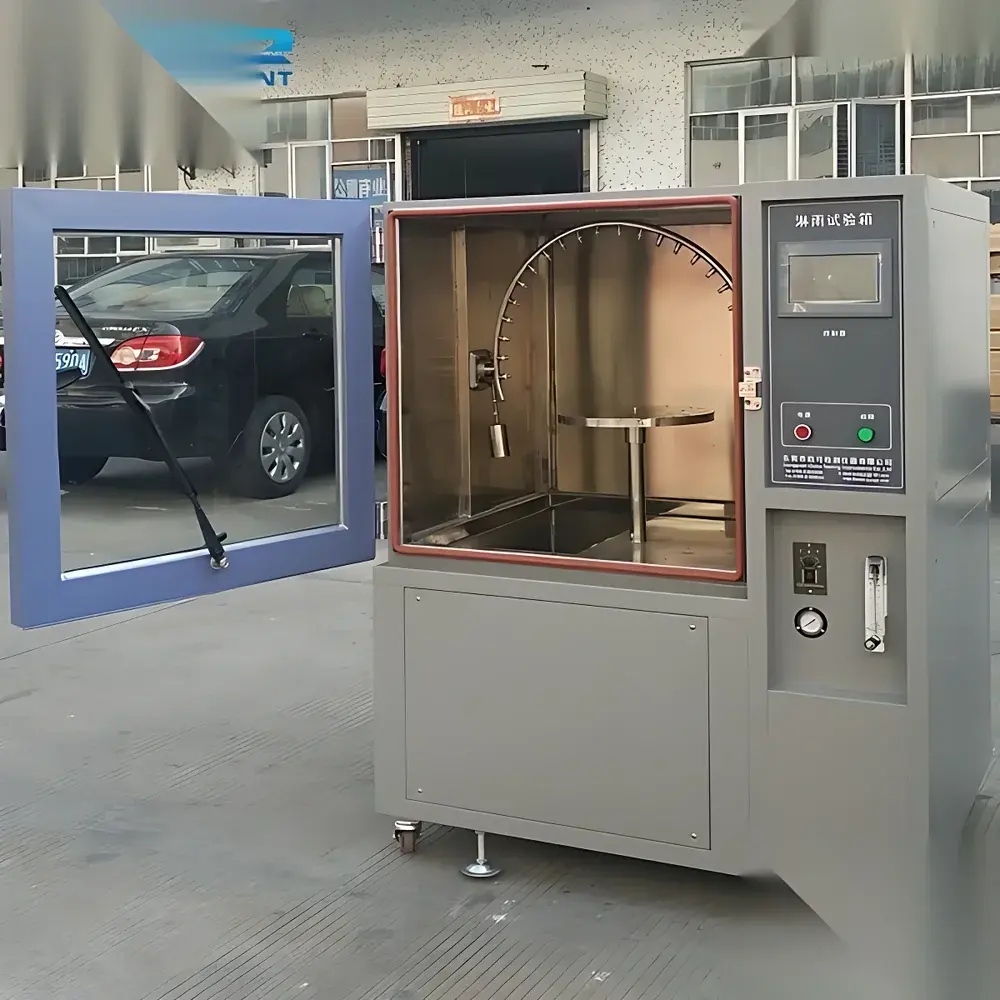
| Spray Nozzle Configuration | Adjustable multi-nozzle array (brass & stainless steel) |
| Water Flow Control | Precision solenoid valves with ±2% volumetric repeatability |
| Rotation Table | 360° continuous/intermittent rotation, max load 50 kg, speed 1–6 rpm adjustable |
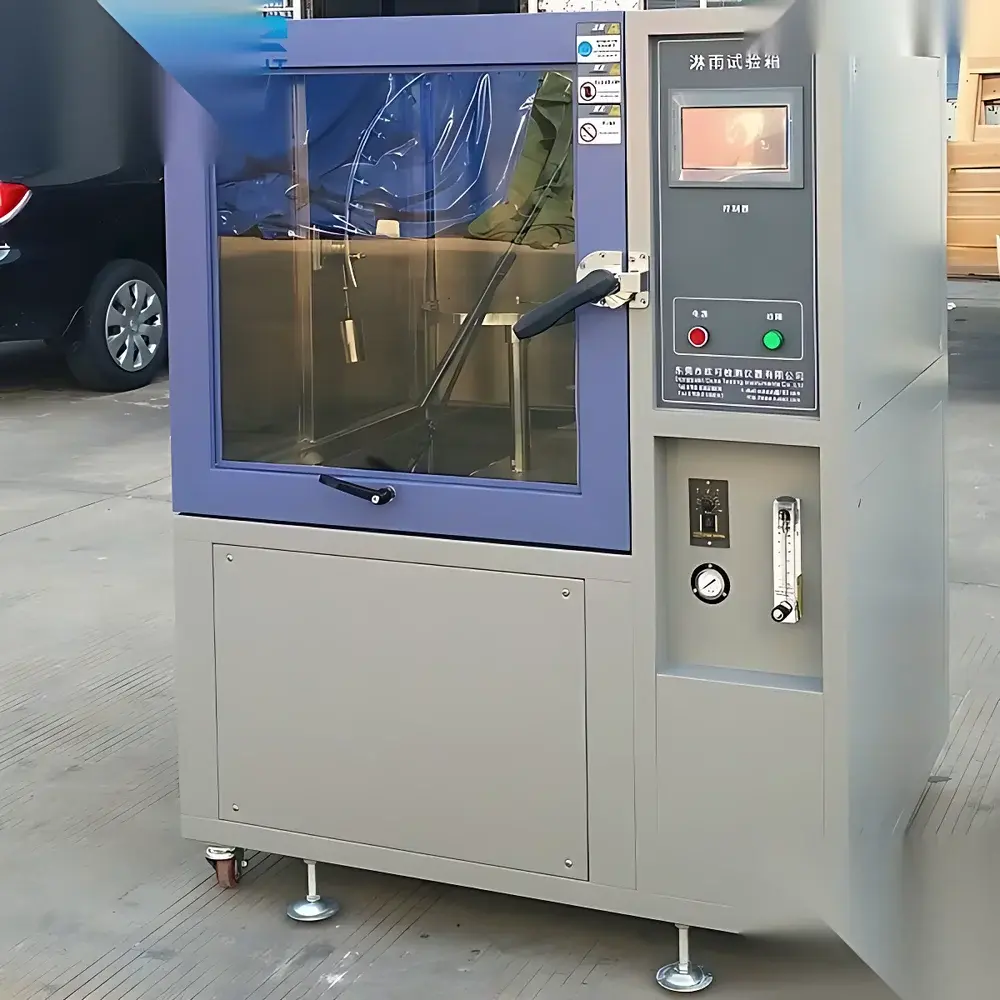
| Viewing Window | Tempered glass with heated anti-fog coating |
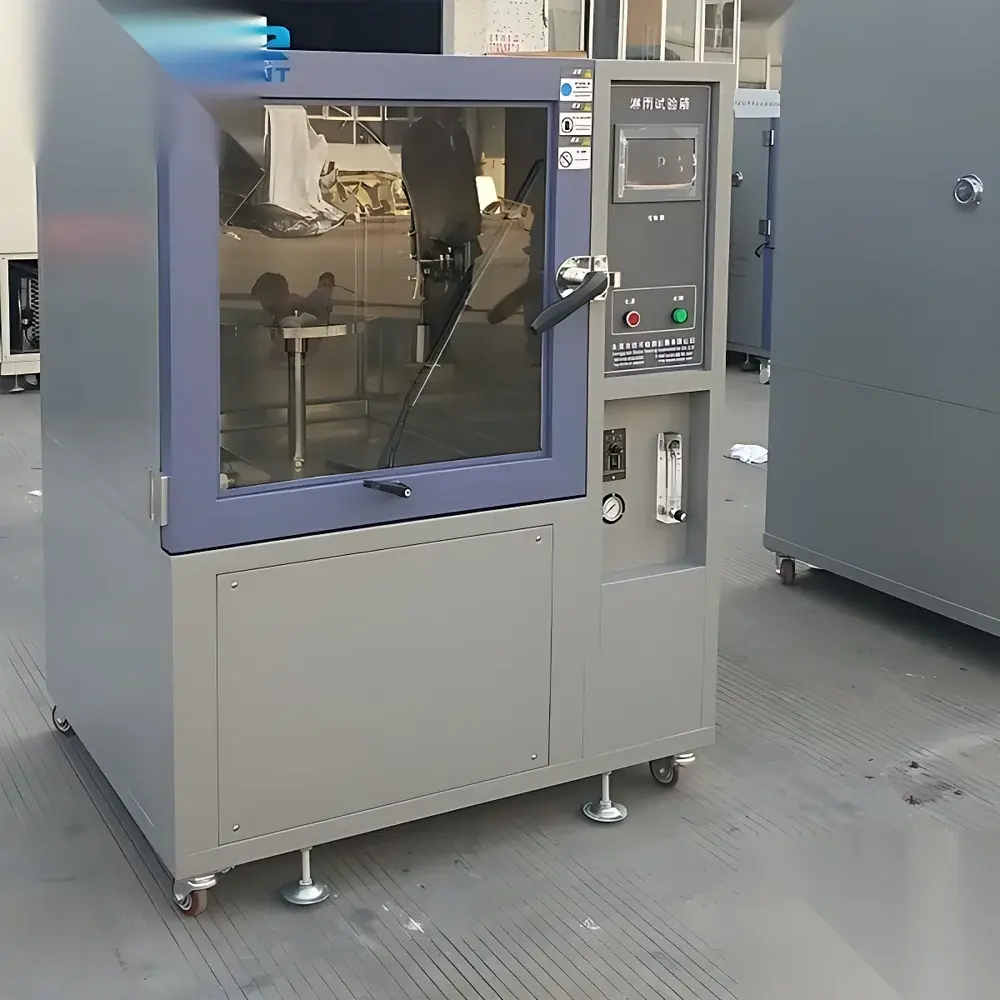
| Casters | Lockable PU swivel casters with stainless steel brackets |
| Drainage System | Sloped stainless steel floor with threaded outlet (DN50) |
Overview
The Rain Test Chamber is an engineered environmental test system designed to evaluate the ingress protection (IP) performance of electrical enclosures, automotive components, outdoor lighting fixtures, and industrial control panels against simulated rainfall under standardized conditions. Based on the hydrodynamic principles of controlled water impact, droplet size distribution, flow rate modulation, and exposure duration, this chamber replicates real-world rain exposure scenarios defined in IEC 60529 (IPX1–IPX6), ISO 20653 (IPX1–IPX9K), and SAE J2527 for automotive applications. Unlike generic water spray cabinets, this system integrates calibrated nozzle arrays, programmable rotation kinetics, and thermally stabilized viewing optics to ensure measurement traceability and test reproducibility across laboratories and production QA environments.
Key Features
- Robust dual-layer chamber construction: 1.2 mm cold-rolled A3 steel outer shell with electrostatic powder coating for corrosion resistance and mechanical durability; SUS304 stainless steel interior liner (mirror-finished) ensuring long-term chemical inertness and cleanability.
- High-efficiency thermal insulation: Rigid polyurethane foam (density ≥35 kg/m³) combined with layered glass fiber matting (≥50 mm total thickness) minimizes thermal bridging and maintains stable ambient conditions during extended tests.
- Corrosion-resistant fluid path: All wetted components—including nozzles, manifolds, piping, and drip trays—are fabricated from brass or AISI 316 stainless steel, eliminating electrolytic degradation and particulate leaching.
- Motorized rotating turntable: PVC-hardboard platform (chemical-resistant, non-conductive) with precision stepper motor drive; supports continuous or indexed rotation (1–6 rpm), ±0.5° positional accuracy, and static load capacity up to 50 kg.
- Optimized observation interface: Tempered safety glass viewport with integrated low-voltage heating element prevents condensation and ensures unobstructed visual monitoring without compromising chamber integrity.
- Modular drainage architecture: Sloped stainless steel base with integrated sump and DN50 threaded outlet enables rapid, residue-free water evacuation and facilitates periodic maintenance or dust removal per GB/T 4208 Annex B protocols.
Sample Compatibility & Compliance
This chamber accommodates samples up to 1200 × 1000 × 1000 mm (W×D×H) and supports both stationary and rotational testing configurations. It meets full compliance requirements for IPX1 (vertical dripping), IPX2 (15° tilted dripping), IPX3 (oscillating tube or spray nozzle), IPX4 (splashing), IPX5 (water jet), and IPX6 (powerful water jet) as specified in IEC 60529 Ed. 2.2. Optional calibration kits—traceable to NIST standards—are available for flow rate verification (±1.5% uncertainty) and droplet size profiling (via laser diffraction analysis). The system design aligns with GLP documentation practices and supports audit-ready test logs when paired with optional data acquisition modules.
Software & Data Management
While the base configuration operates via intuitive push-button HMI with analog flow meters and mechanical timers, an optional PC-based control module provides RS485/Modbus RTU connectivity and Windows-compatible software. This software enables automated test sequencing (e.g., IPX3 → IPX5 → IPX6 cascade), real-time flow rate logging (1 Hz sampling), digital signature-enabled report generation (PDF/CSV), and export of metadata compliant with ISO/IEC 17025 record retention guidelines. Audit trail functionality satisfies FDA 21 CFR Part 11 requirements for electronic records and signatures when configured with user role management and encrypted storage.
Applications
- Electrical & electronics: Enclosure validation for outdoor switchgear, LED streetlights, EV charging stations, and telecom cabinets.
- Automotive: Headlamp housing, sensor housings (radar/LiDAR), battery pack seals, and infotainment control units per ISO 20653 and VW 80101.
- Military & aerospace: MIL-STD-810H Method 506.6 (rain) qualification of avionics enclosures and portable field equipment.
- Railway: EN 61373 vibration-coupled rain testing for onboard signaling and power distribution systems.
- Quality assurance labs: Third-party certification testing per UL 50E, CSA C22.2 No. 94, and CCC mark requirements.
FAQ
What IP ratings can this chamber validate?
It fully supports IPX1 through IPX6 testing per IEC 60529. IPX7/IPX8 immersion testing requires supplementary equipment and is not included.
Is calibration documentation provided with shipment?
Yes — a factory calibration certificate for flow rate and rotation speed is included. NIST-traceable recalibration services are available annually.
Can the chamber be integrated into an existing environmental test lab network?
Yes — standard Modbus RTU protocol enables seamless integration with LabVIEW, SCADA, or MES platforms via optional communication modules.
What maintenance intervals are recommended?
Nozzle inspection every 200 operational hours; filter replacement every 500 hours; full system leak check and seal integrity verification every 12 months.
Does the system meet CE or UKCA marking requirements?
The chamber complies with the EMC Directive 2014/30/EU and Low Voltage Directive 2014/35/EU. CE marking is applied upon final configuration verification and technical file submission.



