
English Product Name
| Brand | Other Brands |
|---|---|
| Origin | Imported |
| Manufacturer Type | Authorized Distributor |
| Temperature Range | -20°C to 150°C / -40°C to 150°C / -60°C to 150°C / -70°C to 150°C |
| Humidity Range | 30–98% RH (at 25–80°C) |
| Temperature Uniformity | ≤ ±2°C |
| Temperature Fluctuation | ≤ ±0.5°C |
| Humidity Fluctuation | +2% / −3% RH |
| Heating Rate | 1.0–3.0°C/min |
| Cooling Rate | 0.7–1.2°C/min |
| Timer Range | 0–9999 h |
| Power Supply | AC 380 V, 50 Hz |
| Control System | PID + SSR with PT100 Platinum Resistance Sensors, 0.1°C Resolution, Real-Time Curve Display |
Overview
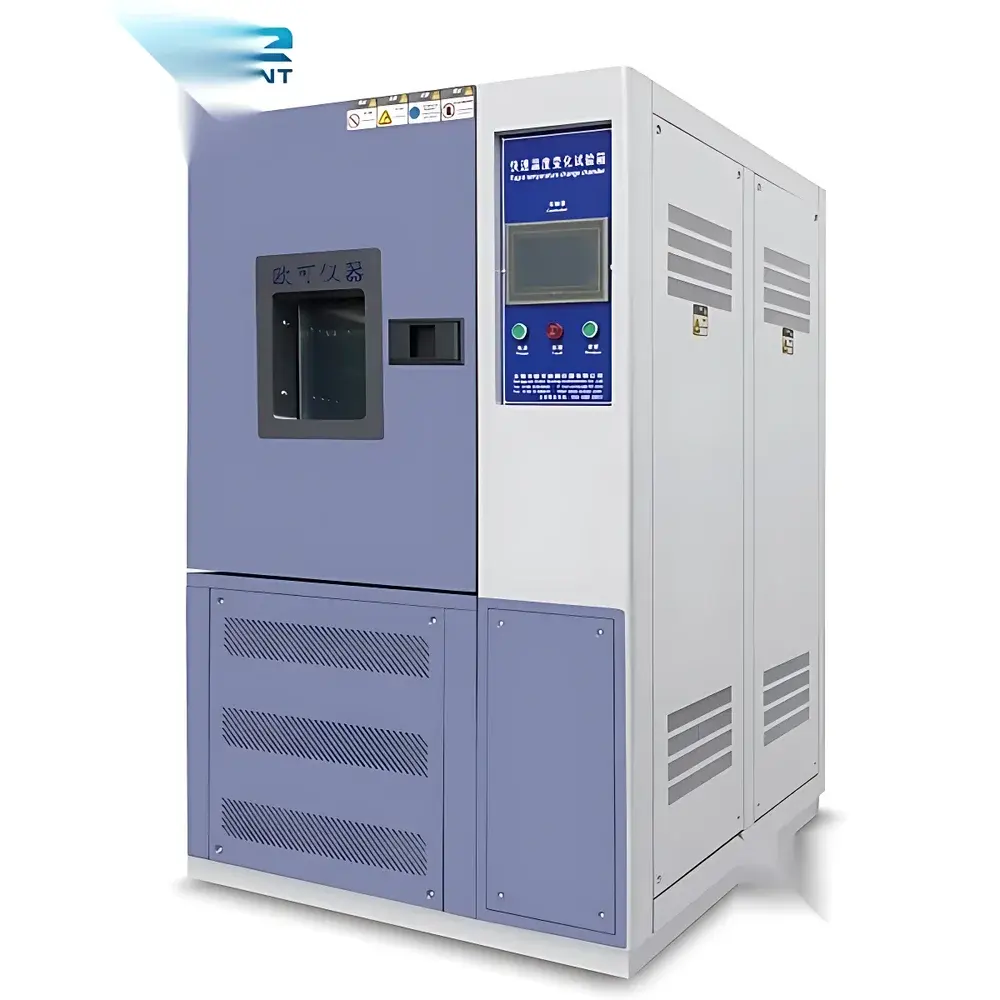
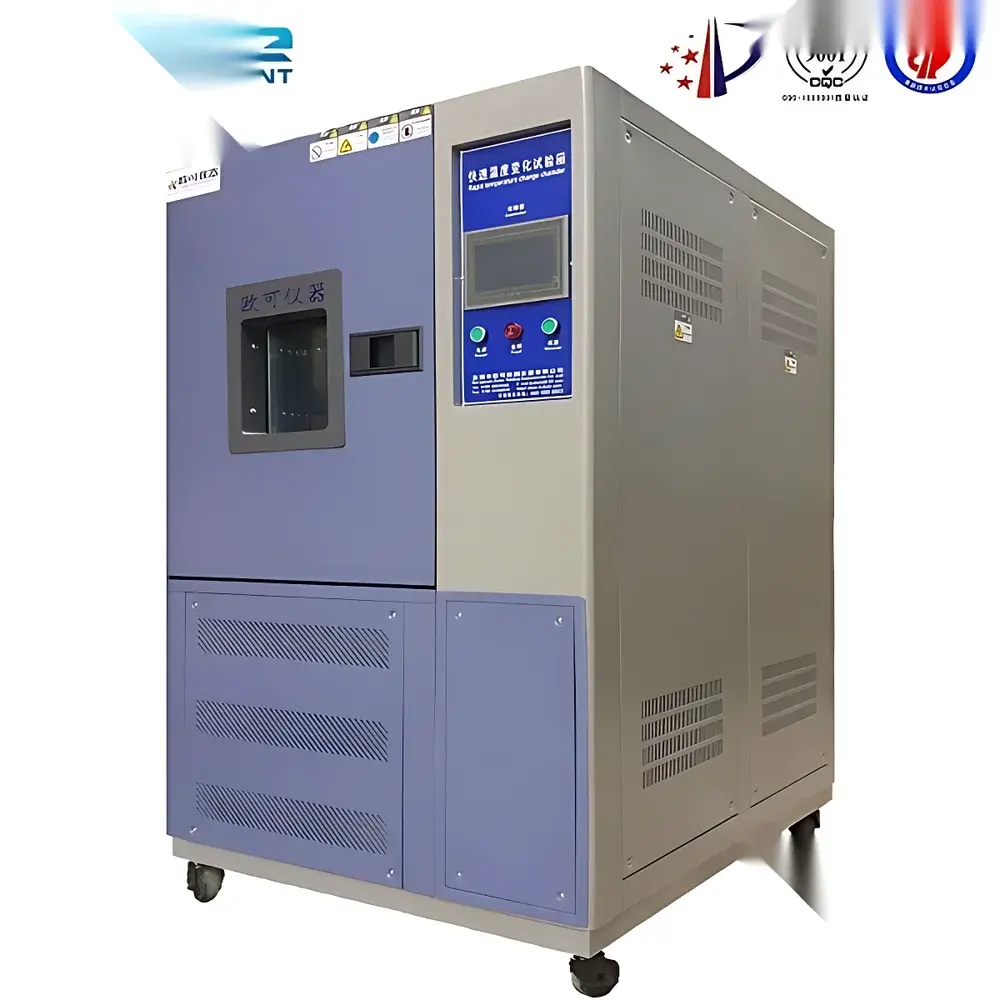
The KS-TH Series Environmental Stress Screening (ESS) Chamber is an engineered environmental test system designed for accelerated thermal and humidity cycling of electronic components, aerospace hardware, automotive modules, and industrial electronics. It operates on the principle of controlled thermal inertia modulation and precision psychrometric regulation to induce repeatable stress conditions that accelerate latent defects—such as solder joint fatigue, delamination, intermetallic growth, or seal integrity failure—without inducing non-representative damage. Unlike static chamber testing, this system supports programmable ramp-hold-soak profiles compliant with JEDEC JESD22-A104 (Temperature Cycling), MIL-STD-810H Method 503.6 (Temperature Shock), and IEC 60068-2-14 (Change of Temperature). Its dual-axis control architecture enables simultaneous, independent regulation of temperature and relative humidity across wide operational envelopes, making it suitable for HALT/HASS pre-screening, qualification validation, and reliability growth testing in R&D and production QA labs.
Key Features
- Four standard temperature range configurations: −20°C to +150°C, −40°C to +150°C, −60°C to +150°C, and −70°C to +150°C—each calibrated per ISO/IEC 17025-accredited procedures.
- Humidity control from 30% to 98% RH within the 25°C–80°C temperature band, achieved via steam injection and refrigerant-based dehumidification with dual-stage condensation recovery.
- High-stability PID + SSR control system featuring PT100 Class A platinum resistance sensors (IEC 60751), 0.1°C resolution, and auto-tuning algorithms that dynamically compensate for load mass, door openings, and ambient drift.
- Real-time graphical interface displaying concurrent temperature/humidity curves, deviation alarms, and profile execution status—exportable as CSV or PDF for audit trails.
- Low-noise, high-efficiency centrifugal air circulation system with multi-blade impellers and insulated ductwork, ensuring uniform airflow distribution and minimizing thermal gradients (≤ ±2°C spatial uniformity).
- Structural chamber construction using SUS304 stainless steel interior, double-wall insulation with vacuum-sealed polyurethane foam (λ ≤ 0.022 W/m·K), and reinforced observation window with anti-fogging heater.
Sample Compatibility & Compliance
The KS-TH chamber accommodates samples ranging from surface-mount device (SMD) trays and PCB assemblies to full ECUs, avionics enclosures, and battery packs. Internal dimensions span 450 × 450 × 500 mm (KS-TH-100) up to 1000 × 1000 × 1000 mm (KS-TH-1000), with optional internal shelves, cable ports (IP65-rated), and grounding terminals. All models comply with GB/T 2423.1 (cold), GB/T 2423.2 (dry heat), GB/T 2423.3 (damp heat), GB/T 10592 (temperature chamber specifications), and GB/T 10586 (humidity chamber specifications). The control firmware supports configurable pass/fail logic, event logging with timestamped metadata, and optional integration with LIMS or MES platforms via Modbus TCP or Ethernet/IP protocols—facilitating GLP/GMP-aligned data integrity per FDA 21 CFR Part 11 requirements.
Software & Data Management
Equipped with embedded Windows-based controller firmware, the system provides intuitive profile programming (up to 99 segments per cycle), multi-step ramp/soak/humidity hold sequencing, and real-time deviation monitoring with user-defined alarm thresholds. Data is stored locally on industrial-grade SD card (16 GB) with automatic rollover and tamper-evident file hashing. Optional PC software enables remote supervision, batch report generation (including min/max/avg/stdev statistics), and compliance-ready documentation export conforming to ISO/IEC 17025 Clause 7.8. Audit logs record operator ID, parameter changes, calibration events, and emergency stops—retained for ≥12 months without manual intervention.
Applications
- Qualification testing of automotive ADAS sensors under extreme diurnal cycling (−40°C to +85°C, 1000-cycle endurance).
- Reliability screening of Li-ion battery modules per UN 38.3 thermal shock requirements.
- Pre-compliance evaluation of medical electronics against IEC 60601-1 environmental clauses.
- Failure analysis support for solder joint reliability in high-density BGA packages using JEDEC JESD22-B104 profiles.
- Material compatibility assessment of conformal coatings and potting compounds under combined thermal-humidity stress.
FAQ
What standards does the KS-TH chamber support for temperature cycling validation?
It fully implements GB/T 2423.1, GB/T 2423.2, GB/T 2423.3, GB/T 10592, and GB/T 10586. Optional firmware upgrades enable direct loading of JEDEC, MIL-STD-810H, and IEC 60068-2 test templates.
Can the chamber operate continuously for extended durations (e.g., >1000 hours)?
Yes—designed for unattended operation up to 9999 hours per test sequence, with redundant safety cutoffs (over-temperature, over-humidity, compressor overload) and predictive maintenance alerts based on runtime diagnostics.
Is third-party calibration certification available?
Calibration certificates traceable to NIM (China National Institute of Metrology) or UKAS-accredited labs are provided upon request; field verification kits (NIST-traceable dry-well calibrators and chilled mirror hygrometers) may be supplied separately.
How is data integrity ensured for regulated environments?
All logged data includes digital signatures, immutable timestamps, and role-based access control (operator, engineer, administrator); electronic records meet ALCOA+ principles and support 21 CFR Part 11 compliance when paired with validated software configuration.
What maintenance intervals are recommended for long-term stability?
Compressor oil and refrigerant levels should be verified annually; humidity generator nozzles cleaned quarterly; PT100 sensors recalibrated every 12 months or after 2000 operational hours—logbook templates included in the user manual.



