
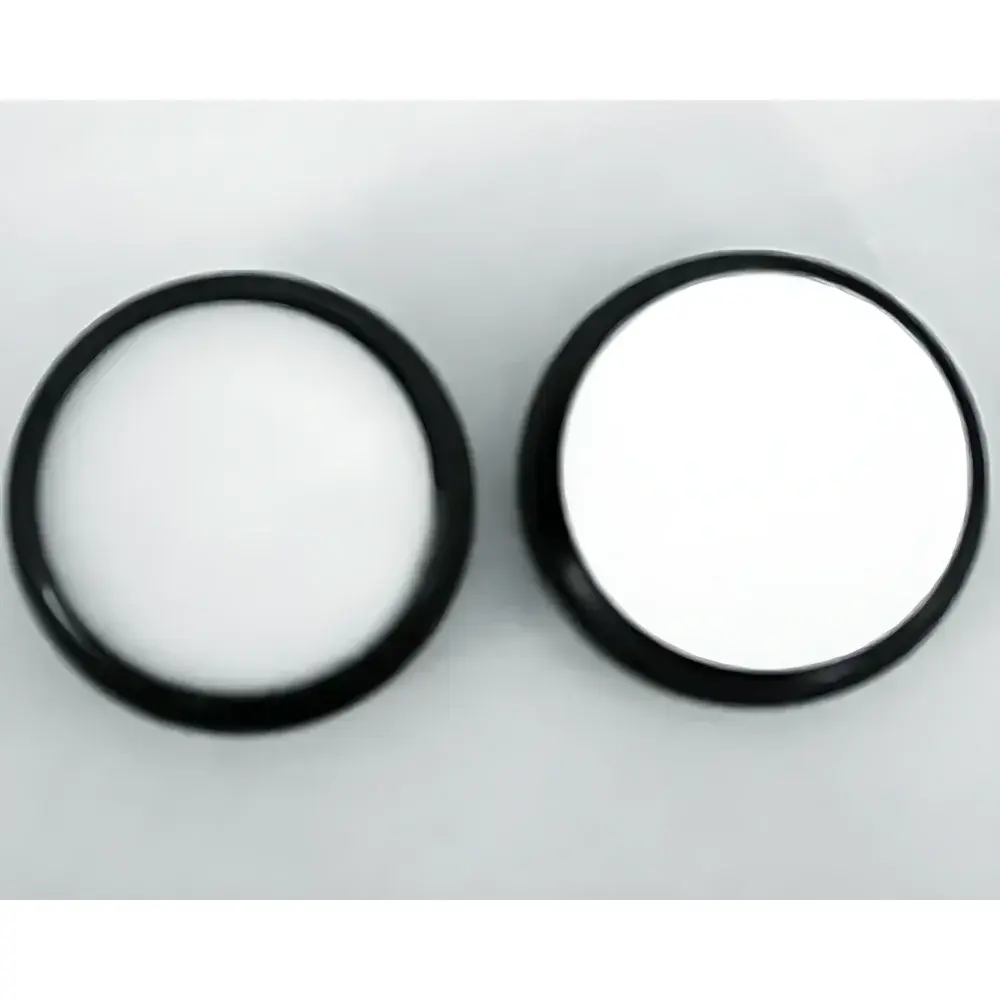
Jingfei FLB1004 Standard Diffuse Reflectance White Reference Tile
| Brand | Jingfei Technology |
|---|---|
| Origin | Zhejiang, China |
| Manufacturer Type | OEM/ODM Producer |
| Model | FLB1004 |
| Coating Material | Barium Sulfate (BaSO₄) or Polytetrafluoroethylene (PTFE) |
| Diameter | 30 mm |
| Spectral Range | 380–780 nm |
| BaSO₄ Reflectance | >98% (380–780 nm), ≥88% (UV–NIR extended range) |
| PTFE Reflectance | >93% (380–780 nm), ~90% (extended range) |
| Compliance | ASTM E259, ISO 2813, USP <857> |
Overview
The Jingfei FLB1004 Standard Diffuse Reflectance White Reference Tile is a precision-calibrated optical reference standard engineered for quantitative reflectance spectroscopy across UV-Vis-NIR spectral domains. Designed in strict accordance with the physical principles of Lambertian diffusion, the FLB1004 delivers highly reproducible bidirectional reflectance distribution function (BRDF) characteristics essential for instrument calibration, baseline correction, and spectral ratioing in benchtop and portable spectrophotometers. Its high-scattering surface minimizes specular contributions and ensures uniform angular response—critical for accurate measurement of matte, textured, or low-gloss samples such as ceramics, frosted glass, polymer films, and powdered pharmaceuticals. As a primary reference tile, it serves as the foundational traceable standard in reflectance workflows where absolute or relative reflectance quantification is required under controlled illumination geometries (e.g., d/8°, 8°/d, or 45°/0° per CIE and ISO conventions).
Key Features
- Two certified coating options: high-purity barium sulfate (BaSO₄) and sintered polytetrafluoroethylene (PTFE), each characterized and validated per ASTM E259-22 for diffuse reflectance stability and spectral uniformity.
- Diameter of 30 mm ensures compatibility with standard integrating sphere ports, sample holders, and collimated beam footprints used in commercial UV-Vis-NIR spectrometers (e.g., PerkinElmer Lambda, Agilent Cary, Shimadzu UV-2600).
- BaSO₄-coated variant achieves >98% average diffuse reflectance over the visible spectrum (380–780 nm), with minimal deviation (<±0.3%) across batch production—enabling high-fidelity radiometric calibration.
- PTFE-coated variant provides >93% visible reflectance and superior long-term photostability under repeated UV exposure, making it suitable for routine QC applications in regulated environments.
- Surface flatness tolerance ≤ ±1 µm and edge chamfering minimize stray light and vignetting effects during alignment-sensitive measurements.
- Supplied with individual certificate of calibration, including spectral reflectance data (at 5-nm intervals) traceable to NIM (National Institute of Metrology, China) standards.
Sample Compatibility & Compliance
The FLB1004 is routinely deployed in reflectance-based quality control of non-uniform surfaces—including granular solids, rough-cast metals, ceramic glazes, and matte-finish composites—where conventional mirror-based references fail due to directional bias. Its diffuse nature enables robust measurement under both collimated and hemispherical illumination. The tile complies with key international standards governing reflectance metrology: ASTM E259 (Standard Practice for Specifying and Testing Diffuse Reflectance Standards), ISO 2813 (Paints and varnishes — Determination of specular gloss), and USP (Spectrophotometry and Light-Scattering). When integrated into GxP-compliant laboratories, the FLB1004 supports audit-ready workflows through documented calibration history, lot-specific reflectance curves, and compatibility with 21 CFR Part 11–enabled software platforms.
Software & Data Management
While the FLB1004 operates as a passive hardware standard, its performance is fully leveraged via spectral acquisition software that supports user-defined reference normalization (e.g., %R = Rsample/Rref × 100). It is compatible with native instrument drivers from Ocean Insight, Avantes, Hamamatsu, and StellarNet, enabling automated reference capture, drift correction, and time-stamped calibration logging. For GLP/GMP environments, integration with LIMS or ELN systems allows direct association of reflectance data with batch IDs, operator credentials, and environmental metadata (temperature, humidity, lamp hours). Each tile’s unique serial number links to a digital calibration report hosted on secure cloud storage—accessible via QR code etched on the aluminum mounting ring.
Applications
- Calibration and validation of reflectance accessories in UV-Vis-NIR spectrophotometers and hyperspectral imaging systems.
- Quantitative colorimetry (CIE L*a*b*, ΔE) for coatings, textiles, and packaging materials under standardized illuminants (D65, A, F2).
- Pharmaceutical solid-dose analysis: tablet coating uniformity, excipient reflectance profiling, and blend homogeneity assessment via NIR diffuse reflectance spectroscopy (DRS).
- Materials science research: characterization of scattering coefficients in porous media, thin-film interference correction, and BRDF modeling validation.
- Environmental monitoring: soil albedo measurement, particulate matter reflectance indexing, and vegetation index calibration (NDVI, EVI).
FAQ
Is the FLB1004 traceable to national metrological institutes?
Yes—each tile is supplied with a calibration certificate referencing NIM-traceable spectral irradiance standards, with uncertainty budgets reported per GUM (Guide to the Expression of Uncertainty in Measurement).
Can the FLB1004 be used beyond the visible range?
The BaSO₄ version maintains ≥88% reflectance from 250 nm to 2500 nm; PTFE sustains ~90% from 200 nm to 2500 nm. However, UV degradation below 220 nm requires quartz-window-compatible fixtures and ozone-free purge environments.
How often should the FLB1004 be recalibrated?
Annual recalibration is recommended for GxP use. For non-regulated R&D, visual inspection and periodic reflectance verification against a master standard (e.g., NIST SRM 990c) every 6 months is sufficient.
What cleaning protocol preserves coating integrity?
Gentle dry-air blow-off followed by lens-tissue wipe with reagent-grade isopropanol (no abrasives). Avoid ultrasonic cleaning or solvent immersion—especially for BaSO₄, which is water-soluble and mechanically fragile.
Related Products





