
Programmable Temperature and Humidity Controlled Environmental Test Chamber
| Brand | Other Brands |
|---|---|
| Origin | Imported |
| Manufacturer Type | Authorized Distributor |
| Price | USD 3,100 (approx. based on ¥22,000 at 1 USD ≈ ¥7.1) |
| Temperature Range | –70°C to +150°C (configurable models) |
| Humidity Range | 20%–98% RH |
| Control Accuracy | ±0.5°C / ±2.5% RH |
| Uniformity | ±1.5°C / ±3% RH |
| Ramp Rate | 1–3°C/min (air average, load-dependent) |
| Compliance | GB/T 5170.2–1996, GB/T 5170.5–1996, GB 2423.1–1989, GB 2423.2–1989, GB 2423.22–1987, GB 10589–1989, GB 10592–1989, GB 11158–1989 |
Overview
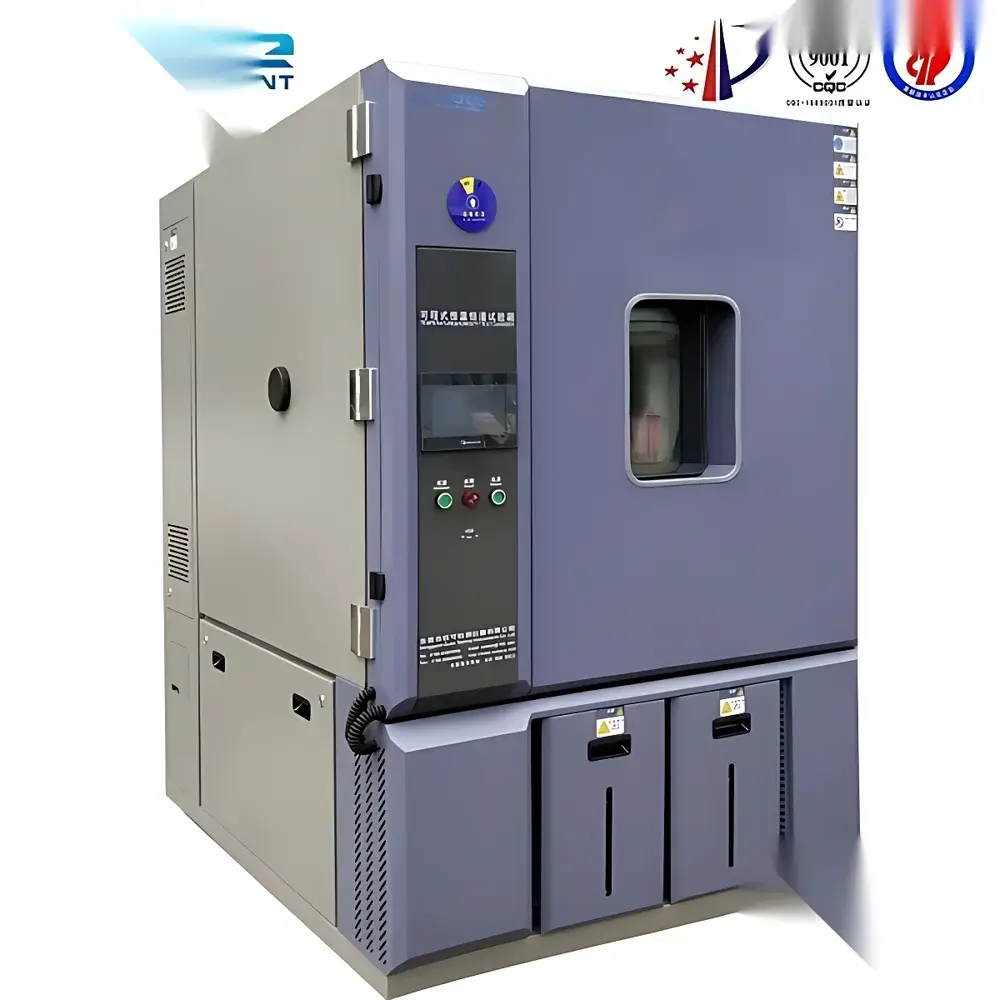
The Programmable Temperature and Humidity Controlled Environmental Test Chamber is a precision-engineered environmental simulation system designed for accelerated reliability testing of electronic components, automotive parts, aerospace materials, medical devices, and consumer electronics under controlled thermal and hygrothermal stress conditions. Based on the principle of forced-air convection with dual independent PID-controlled heating and refrigeration circuits, the chamber delivers stable, repeatable, and traceable environmental profiles across wide operational ranges. Its architecture integrates high-efficiency finned-tube evaporators, stainless-steel insulated double-wall construction, and a fully sealed humidification system with dehumidification via refrigerant-based condensation and optional desiccant assist—ensuring minimal cross-contamination and long-term calibration stability. Designed for compliance-driven laboratories, it supports programmable multi-step test sequences—including ramp-hold-soak cycles, cyclic humidity exposure, and temperature shock profiles—with real-time monitoring and data logging capabilities.
Key Features
- Advanced BTHC (Balance Temperature & Humidity Control) system utilizing SSR-driven P.I.D. regulation to dynamically match heating/humidification output with thermal/hygric losses—enabling uninterrupted operation over extended durations without drift.
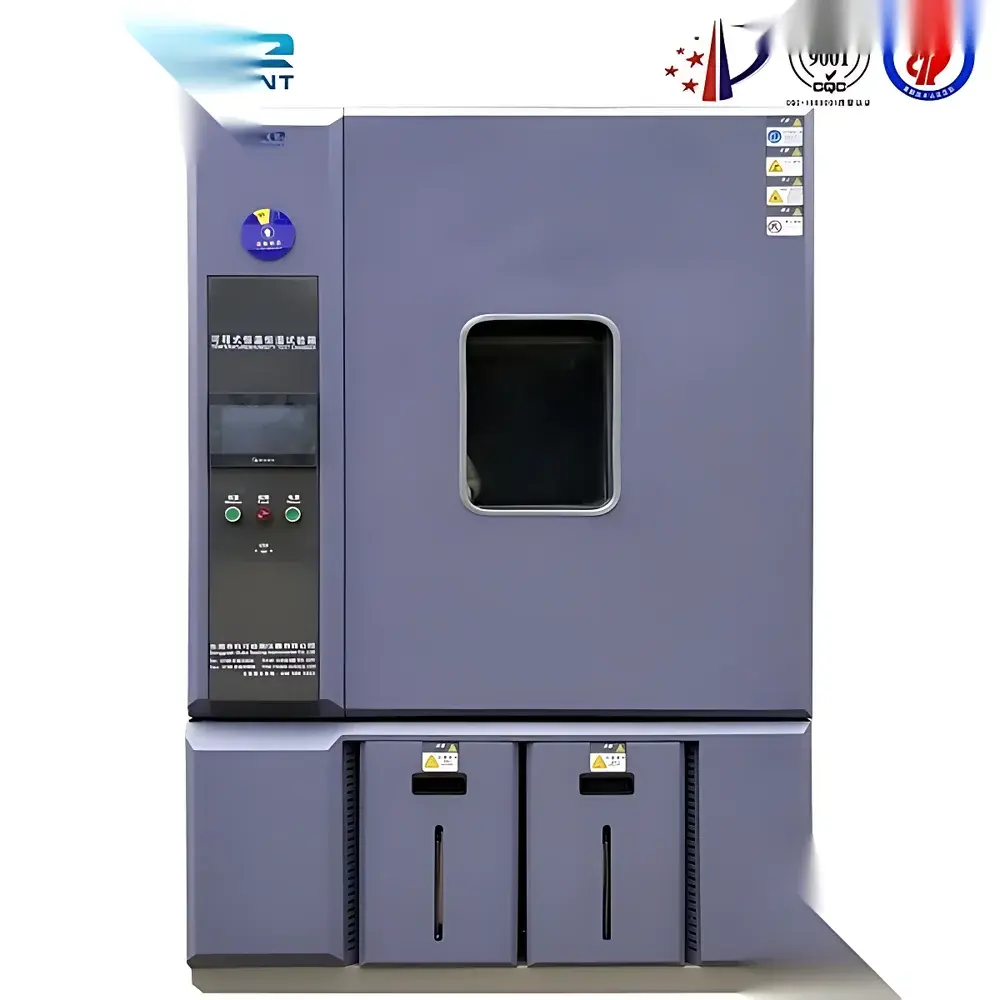
- Full-touch HMI controller with intuitive icon-based navigation, built-in USB port for profile import/export, and password-protected parameter lockdown for GLP/GMP audit readiness.
- High-performance refrigeration circuit employing all-copper capillary tube expansion technology—eliminating mechanical expansion valve hysteresis and delivering superior temperature response linearity and low-noise operation.
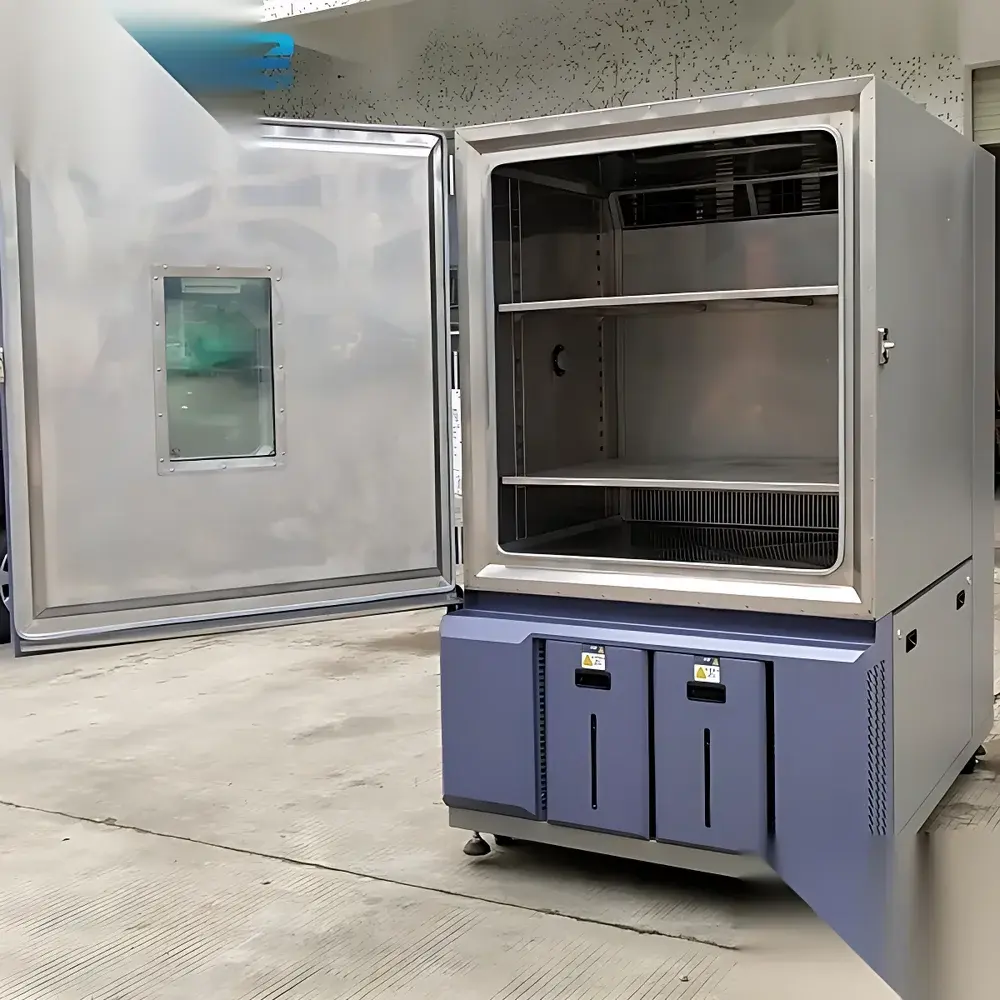
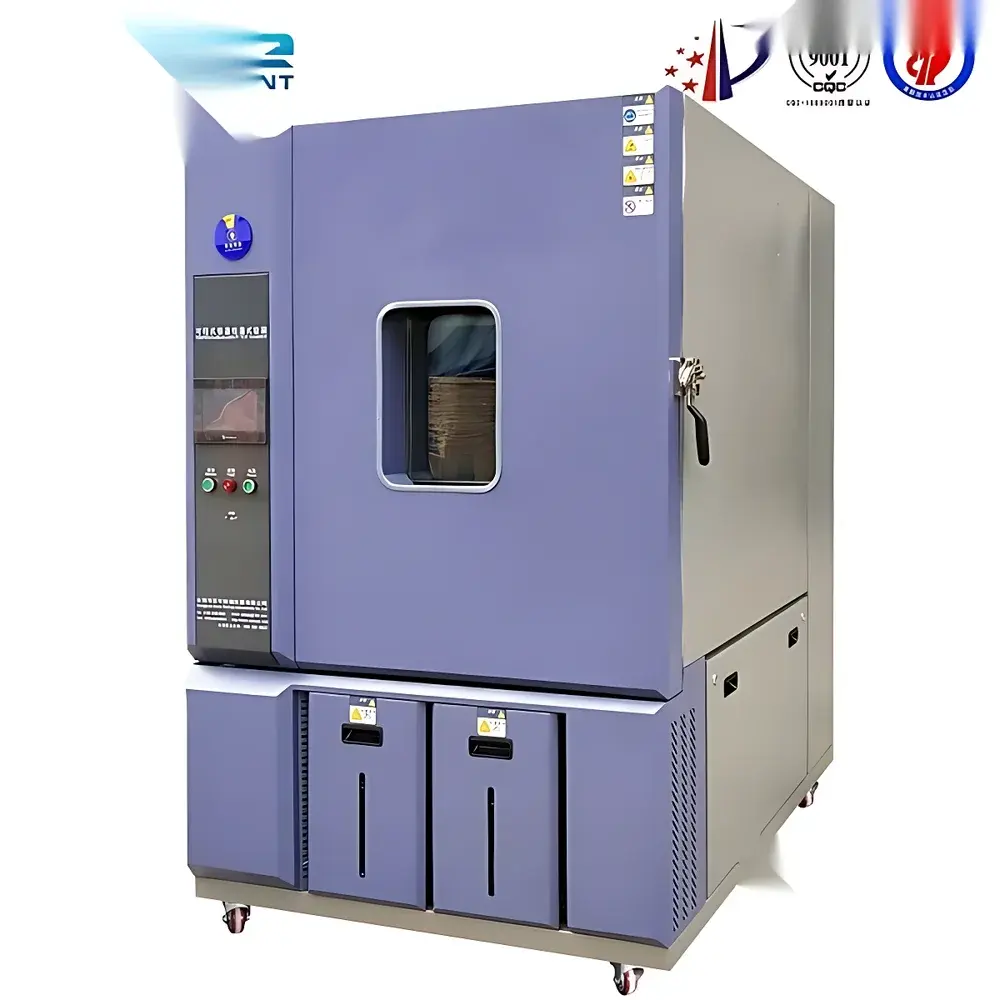
- Corrosion-resistant 304 stainless-steel interior chamber with seamless welded corners, removable insulated observation window, and plane-type ergonomic door handle for safe, glove-compatible access.
- Modular structural design accommodating custom internal dimensions (up to walk-in configurations), optional LN2 precooling, and auxiliary ports for sensor feedthroughs, power supply, or purge gas integration.
- Comprehensive safety architecture including over-temperature/over-humidity cut-off, refrigerant pressure monitoring, water-level alarm for humidifier reservoir, and emergency power-off switch compliant with IEC 61000-6-2 EMC standards.
Sample Compatibility & Compliance
This chamber accommodates diverse sample geometries—from PCB assemblies and battery packs to molded polymers and packaged pharmaceuticals—within standardized test baskets or custom fixtures. All standard configurations meet the metrological validation requirements of GB/T 5170.2 (temperature equipment verification) and GB/T 5170.5 (humidity equipment verification), with documented uncertainty budgets traceable to national standards. The system supports full qualification per ISO/IEC 17025:2017 laboratory accreditation criteria and provides raw data files compatible with FDA 21 CFR Part 11-compliant electronic record systems when paired with validated software extensions. It is routinely deployed in environments requiring adherence to IEC 60068-2 series, MIL-STD-810H, JEDEC JESD22-A104, and AEC-Q200 test protocols.
Software & Data Management
Equipped with optional PC-based control and analysis software (Windows 10/11 compatible), the chamber enables remote supervision, automated report generation (PDF/CSV), and time-synchronized multi-channel trending of chamber setpoints, actual values, and user-defined analog inputs. Audit trails include operator ID, timestamped parameter changes, alarm events, and calibration history—all stored with write-protection and digital signature support. Data export formats comply with ASTM E2913-22 for environmental test documentation and integrate natively with LIMS platforms via OPC UA or Modbus TCP protocols.
Applications
- Environmental stress screening (ESS) of avionics modules per DO-160 Section 4 & 5.
- Accelerated aging studies of lithium-ion battery cells under combined thermal cycling and humidity exposure.
- Validation of packaging integrity for sterile medical devices under ISO 11607-1 accelerated shelf-life conditions.
- Thermal fatigue assessment of solder joints in automotive ECUs using JEDEC JESD22-A104 temperature cycling profiles.
- Material compatibility testing of adhesives, sealants, and elastomers per ASTM D471 and ISO 188.
- Pre-conditioning of optical sensors and MEMS devices prior to functional testing under controlled dew point environments.
FAQ
What is the typical temperature stabilization time after a setpoint change?
Stabilization to ±0.5°C is typically achieved within 15–25 minutes for a 20°C step change under no-load conditions; actual performance depends on specimen thermal mass and chamber loading configuration.
Can this chamber operate continuously at –70°C with 10% RH?
Yes—models equipped with cascade refrigeration and auxiliary electric dehumidification are certified for continuous operation down to –70°C and as low as 5% RH, subject to ambient cooling water supply meeting specified inlet temperature (10–28°C) and pressure (0.1–0.3 MPa) requirements.
Is third-party calibration certification available?
Yes—NIST-traceable calibration certificates (including temperature, humidity, and uniformity mapping) are provided upon request, with optional on-site verification by ISO/IEC 17025-accredited service partners.
How is compliance with GLP/GMP maintained during routine use?
The system supports role-based access control, electronic signatures, and immutable audit logs—fully configurable to align with Annex 11 and ALCOA+ data integrity principles when integrated with validated software modules.
Are custom internal dimensions and electrical interfaces supported?
Yes—engineering consultation is included for bespoke chamber builds, including reinforced floor loading capacity, EMI-shielded variants, and I/O expansion for external instrumentation synchronization.



