
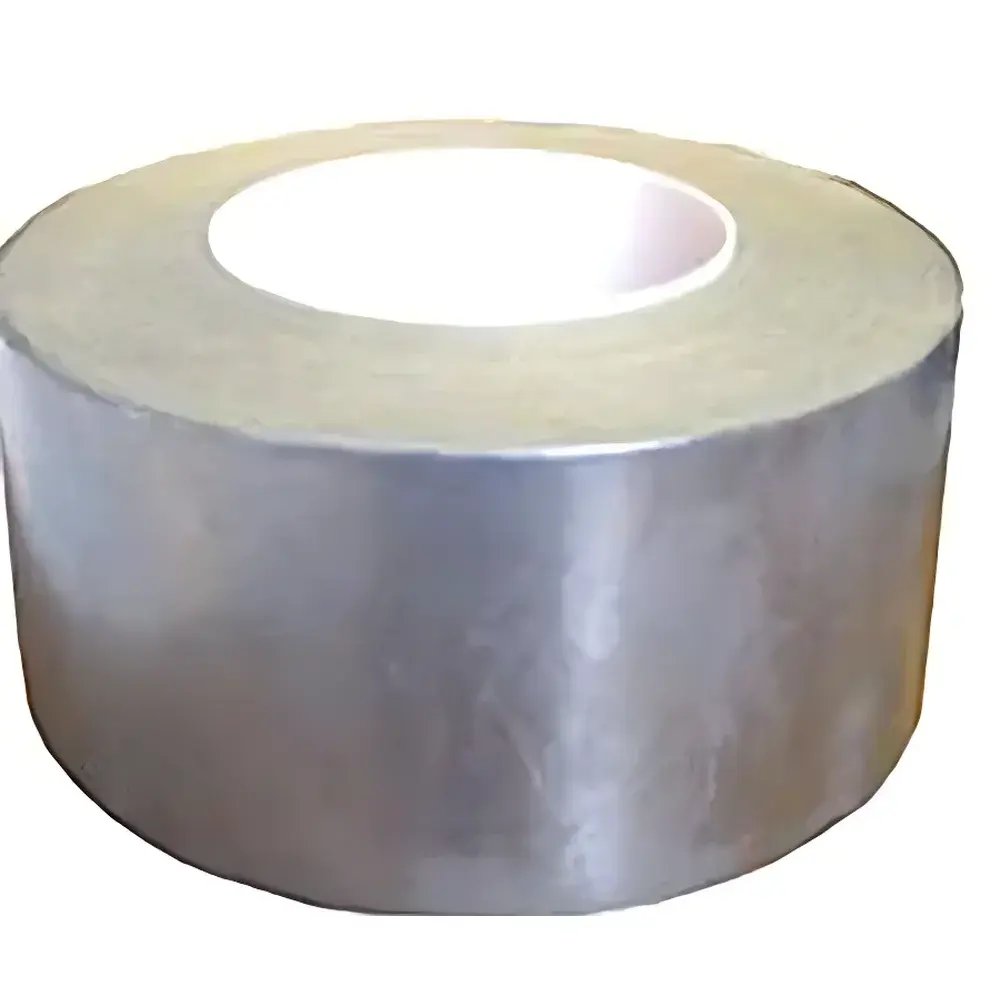
Lead Foil for Quartz Crystal Microbalance (QCM) Sensors – Hefei Kejing Model Pb-Foil
| Brand | Hefei Kejing |
|---|---|
| Origin | Anhui, China |
| Manufacturer Type | Authorized Distributor |
| Origin Category | Domestic |
| Model | Pb-Foil |
| Price Range | USD 0.15–150.00 (per roll) |
| Dimensions | 50.8 mm (2") width × 160 µm (0.0063") thickness × 32.9 m (36 yards) length |
| Packaging | Vacuum-sealed in Class 100 cleanroom bags, processed and packed in ISO Class 6 (Class 1000) cleanroom environment |
Overview
Lead (Pb) Foil is a high-purity, ultra-thin metallic substrate engineered specifically for sensor fabrication and functionalization in quartz crystal microbalance (QCM) systems. As a key electrode or mass-sensitive coating material, Pb foil serves as both an electroactive surface and a deposition template in gravimetric electrochemical sensing, corrosion studies, and heavy metal ion detection. Its use in QCM platforms relies on the piezoelectric resonance shift (Δf) induced by nanogram-level mass changes at the crystal surface—governed by the Sauerbrey equation—where Pb’s well-defined density, ductility, and electrochemical reversibility enable reproducible thin-film formation and controlled redox behavior. This foil is manufactured from imported high-purity lead ingot (≥99.99% Pb), cold-rolled to precise thickness tolerance, and subjected to rigorous particulate and organic contamination control throughout processing.
Key Features
- High-purity lead substrate (≥99.99% Pb), trace-metal certified for electrochemical compatibility
- Precise dimensional control: nominal thickness of 160 µm (±5 µm), width tolerance ±0.1 mm, length accuracy ±0.5%
- Surface roughness Ra < 0.2 µm—optimized for uniform sputtering, thermal evaporation, or direct lamination onto AT-cut quartz crystals (5–10 MHz)
- Low oxygen content (<10 ppm) and minimal oxide layer—ensures stable interfacial adhesion and reduced baseline drift during QCM-D (dissipation monitoring) experiments
- Consistent mechanical integrity: tensile strength ≥12 MPa, elongation at break ≥25%, enabling reliable handling in glovebox and vacuum deposition environments
- Batch-certified cleanliness: particle count ≤10 particles/mm² (≥0.5 µm) per ISO 14644-1 Class 5 (ISO Class 5) verification
Sample Compatibility & Compliance
This Pb foil is compatible with standard 14 mm and 25 mm diameter QCM electrodes, including those configured for liquid-phase, gas-phase, or electrochemical cell integration. It adheres to ASTM E2907–22 (Standard Practice for Calibration of QCM Sensors) for mass sensitivity validation and supports GLP-compliant workflows when used with traceable calibration standards. While not classified as a finished instrument, the foil conforms to ISO 10993-5 biocompatibility screening prerequisites for non-implantable sensor components and meets RoHS Directive 2011/65/EU exemptions for lead in scientific instrumentation (Annex III, Entry 7a). All lots undergo certificate-of-analysis documentation, including ICP-MS trace element profiling and SEM-EDS surface composition verification.
Software & Data Management
As a consumable material rather than an active instrument, Pb foil does not interface directly with software. However, its use is fully integrated into established QCM data acquisition ecosystems—including Q-Sense Analyzer (Biolin Scientific), Stanford Research Systems QCM200 firmware, and open-source QCM-D analysis pipelines (e.g., QTools, Python-based QCMDpy). When deployed in validated methods, Pb-coated sensors generate time-resolved frequency (Δf) and dissipation (ΔD) datasets that comply with FDA 21 CFR Part 11 requirements when collected using audit-trail-enabled platforms. Metadata tracking—including lot number, packaging date, and cleanroom processing log—must be manually recorded in laboratory information management systems (LIMS) or electronic lab notebooks (ELN) to maintain chain-of-custody integrity.
Applications
- Electrochemical QCM (EQCM) studies of Pb²⁺/Pb⁰ redox cycling in aqueous and non-aqueous electrolytes
- Heavy metal ion preconcentration layers for trace-level detection of Cd²⁺, Cu²⁺, and Hg²⁺ via underpotential deposition (UPD)
- Reference electrode fabrication for in-situ corrosion monitoring in simulated nuclear waste environments
- Model system for investigating interfacial viscoelasticity of Pb-based organometallic monolayers (e.g., alkylthiolates)
- Substrate for pulsed laser deposition (PLD) of PbTe or PbSe thin films in thermoelectric sensor development
- Calibration standard for mass-loading sensitivity verification across QCM frequency ranges (5–25 MHz)
FAQ
Is this Pb foil suitable for use in inert-atmosphere gloveboxes?
Yes—vacuum-sealed Class 100 packaging ensures integrity during transfer; recommended purge with N₂ or Ar prior to opening.
Can the foil be cut or re-rolled without compromising surface quality?
Manual cutting with clean stainless steel shears is acceptable; avoid abrasive tools or repeated bending to prevent microcracking.
What is the shelf life under recommended storage conditions?
24 months when stored at 15–25°C, <40% RH, away from UV exposure and oxidizing agents.
Do you provide lot-specific certificates of conformance?
Yes—each shipment includes a CoC with ICP-MS impurity profile, dimensional inspection report, and cleanroom processing log.
Is this material compatible with sputter-coating processes?
Yes—Pb foil exhibits excellent target stability under RF magnetron sputtering (10–100 W, Ar atmosphere); recommended base pressure <5×10⁻⁷ Torr.
Related Products




