Hefei Kejing A-Z Series Metal Evaporation Materials
| Brand | Hefei Kejing |
|---|---|
| Origin | Anhui, China |
| Manufacturer Type | Authorized Distributor |
| Origin Category | Domestic (China) |
| Model | A-Z Series |
| Pricing | Upon Request |
Overview
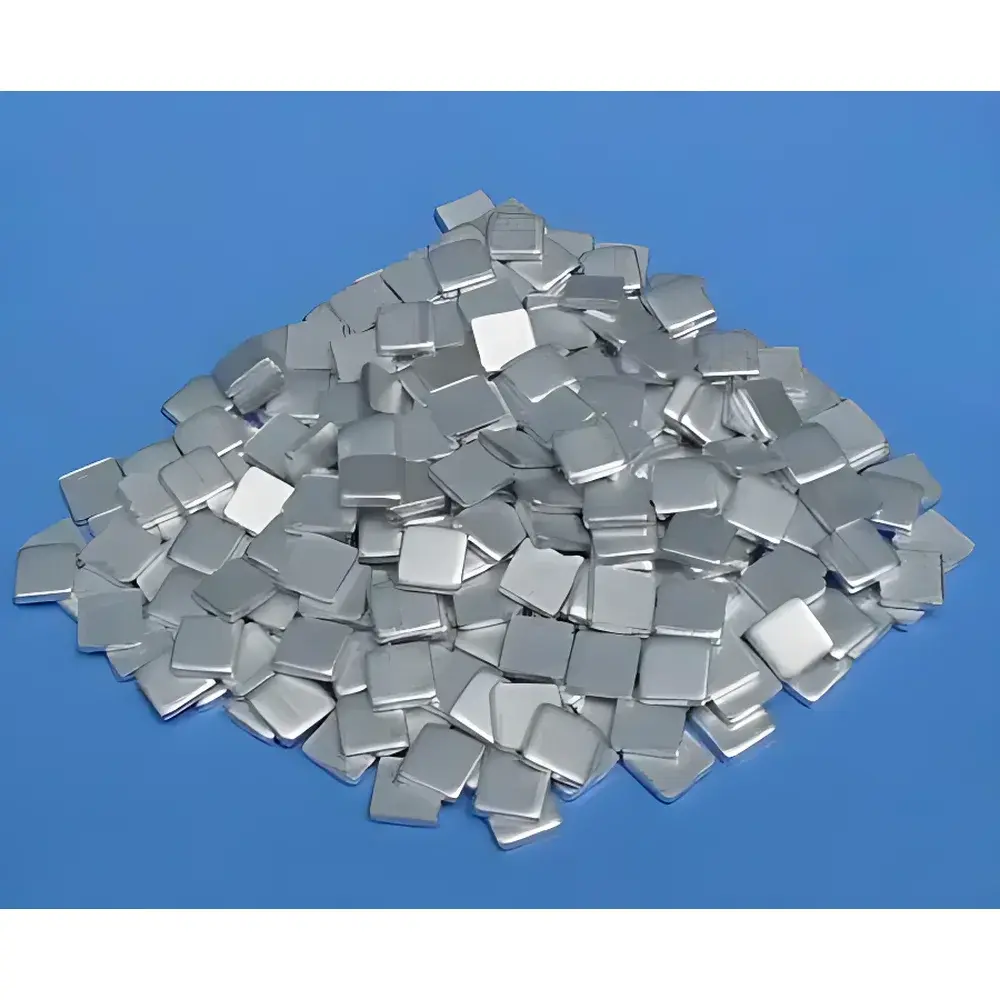
The Hefei Kejing A-Z Series Metal Evaporation Materials are high-purity elemental and alloy thin-film source materials engineered for physical vapor deposition (PVD) processes—including thermal evaporation, electron-beam evaporation, and resistive heating deposition—in vacuum environments. These materials serve as critical consumables in the fabrication of functional thin films for semiconductor devices, optical coatings, magnetic multilayers, superconducting structures, and research-grade nanoscale heterostructures. Each material is supplied in forms optimized for consistent vapor flux and stoichiometric fidelity—typically as granules, chips, rods, or pellets—with traceability to certified purity levels (typically ≥99.95% to 99.999% atomic purity, depending on grade). The A-Z designation reflects a comprehensive portfolio spanning all stable metallic elements and selected intermetallic alloys commonly employed in academic, industrial, and national laboratory settings.
Key Features
- Comprehensive elemental coverage from Aluminum (Al) through Zinc (Zn), including transition metals (e.g., Cr, Mn, Fe, Co, Ni, Cu, Zn), refractory metals (e.g., Mo, Nb, Ta, W, V), rare earths (e.g., Gd, Nd, Y, La, Pr, Sm), and noble metals (e.g., Au, Pt, Pd, Ag)
- Alloy compositions available with controlled stoichiometry—such as AgFe (80:20 wt%), TiAl, NiFe, and BiIn—certified via ICP-MS or GDMS analysis
- Form factor optimization per deposition method: high-density sintered pellets for e-beam crucibles; low-melting-point chips for resistive boats; spherical granules for uniform feed in automated evaporators
- Batch-specific Certificate of Analysis (CoA) provided, including impurity profiles (e.g., O, C, N, H, and residual process metals), particle size distribution (where applicable), and surface oxide thickness (measured by XPS or AES)
- Packaged under inert atmosphere (Ar or N₂) in double-sealed, static-dissipative containers compliant with ISO 8502-3 cleanliness standards for vacuum-compatible handling
Sample Compatibility & Compliance
These evaporation materials are compatible with standard high-vacuum (10⁻⁶–10⁻⁸ Torr) and ultra-high-vacuum (UHV, ≤10⁻¹⁰ Torr) deposition systems from major OEMs including Kurt J. Lesker, Angstrom Engineering, Denton Vacuum, and custom-built R&D chambers. All materials meet ASTM F2627–21 (Standard Specification for High-Purity Metals for Thin-Film Applications) for residual gas evolution and outgassing rate limits. Alloy batches intended for medical device or aerospace coating applications can be supplied with full traceability to raw material mill certificates and conform to AS9100D and ISO 13485 documentation requirements upon request. Packaging complies with IEC 61340-5-1 for electrostatic discharge (ESD) safety during cleanroom handling.
Software & Data Management
While the materials themselves are passive consumables, Hefei Kejing provides digital inventory integration support for laboratory information management systems (LIMS) and manufacturing execution systems (MES). Each lot number is encoded with a 2D DataMatrix barcode linked to an online portal containing full CoA data, shelf-life tracking (based on storage condition logs), and historical deposition yield metrics aggregated across user-reported feedback. For regulated environments, audit trails—including material receipt, lot release, and usage logging—can be configured to satisfy FDA 21 CFR Part 11 electronic record requirements when deployed with validated LIMS platforms.
Applications
- Preparation of Ohmic and Schottky contacts in microelectronics (e.g., Ti/Al/Ni/Au stacks for GaN HEMTs)
- Growth of ferromagnetic tunnel junctions (e.g., CoFeB/MgO/CoFeB) for spintronic device prototyping
- Deposition of transparent conductive oxides (TCOs) via reactive co-evaporation (e.g., ZnO:Al, ITO precursors)
- Fabrication of thermoelectric thin films (e.g., Bi₂Te₃, Sb₂Te₃, PbTe) using multi-source sequential evaporation
- Calibration standards for X-ray photoelectron spectroscopy (XPS) and Auger electron spectroscopy (AES) depth profiling
- Substrate metallization for subsequent lift-off patterning in photolithography workflows
FAQ
Are purity certifications available for each batch?
Yes—each shipment includes a Certificate of Analysis (CoA) with elemental impurity quantification by GDMS or ICP-MS, oxygen/nitrogen/hydrogen content by inert gas fusion, and, where relevant, grain size and density measurements.
Can custom alloy compositions be manufactured?
Hefei Kejing offers custom alloy development and small-batch synthesis services under NDA, subject to minimum order quantities and lead time validation.
What packaging options are available for UHV applications?
Materials designated for UHV use are double-bagged in Al-laminated static-dissipative pouches, purged with ultra-pure argon (≤1 ppm O₂/H₂O), and sealed with heat-welded seams verified by helium leak testing.
Do you provide technical support for deposition parameter optimization?
Application engineers provide free baseline evaporation rate data (nm/s at specified power/voltage), recommended boat/crucible types, and oxidation mitigation strategies based on published vapor pressure curves and thermal stability data.
Is REACH and RoHS compliance documented?
All standard A-Z series materials comply with EU RoHS Directive 2011/65/EU Annex II maximum concentration values and are registered under REACH (EC No. 1907/2006) with full SVHC screening reports available upon request.