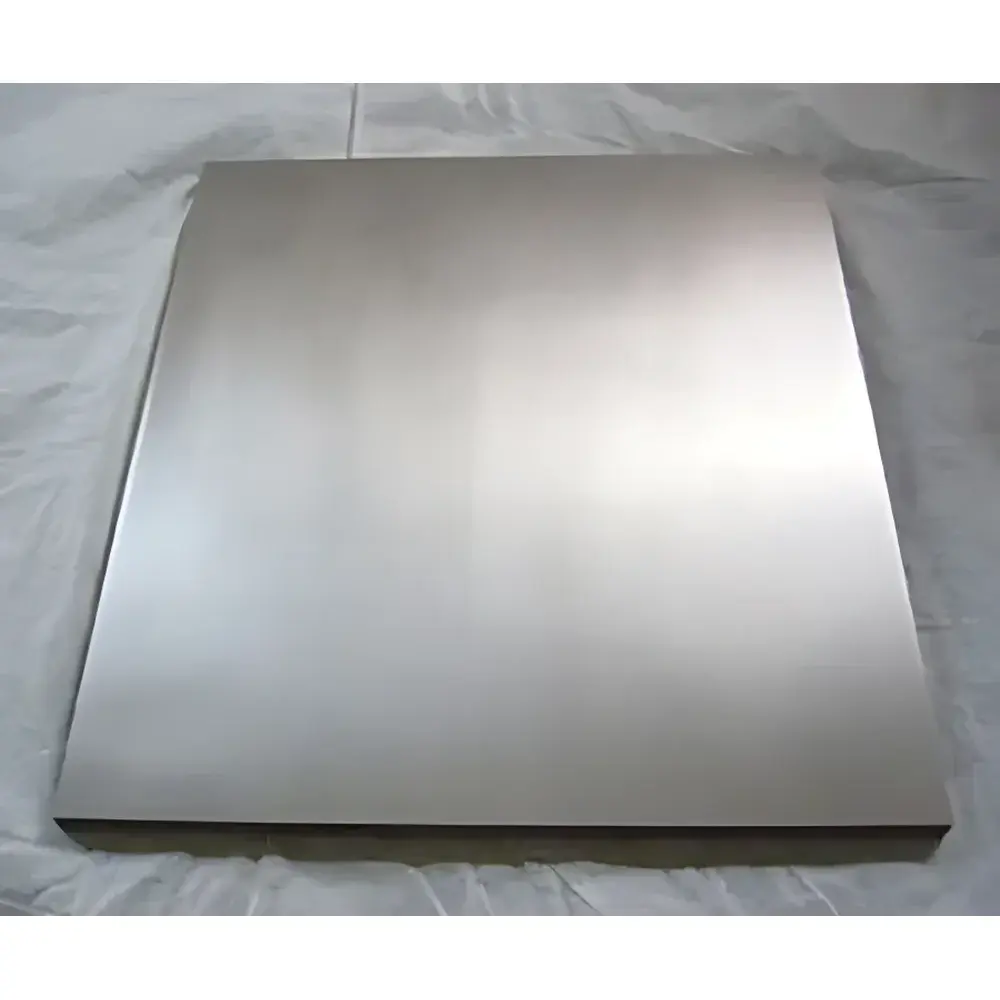
Tantalum (Ta) Foil Sheets
| Brand | Hefei Kejing |
|---|---|
| Origin | Anhui, China |
| Manufacturer Type | Authorized Distributor |
| Origin Classification | Domestic |
| Model | Tantalum (Ta) Foil Sheets |
| Pricing | Available Upon Request |
| Standard Dimensions | 10 mm × 10 mm × 1.0 mm |
| Packaging | Vacuum-sealed in Class 100 cleanroom bags, processed in Class 1000 cleanroom environment |
| Storage Requirement | Must be stored under vacuum to prevent surface oxidation |
Overview
Tantalum (Ta) Foil Sheets are high-purity metallic components engineered for use in ultra-high-vacuum (UHV) systems, thin-film deposition chambers, sputtering targets, and specialized electrochemical cell assemblies. Composed of ≥99.95% pure tantalum, these foils exhibit exceptional corrosion resistance—particularly against concentrated acids including sulfuric, hydrochloric, and nitric acid—and maintain structural integrity at elevated temperatures up to 250 °C in inert or reducing atmospheres. Their low vapor pressure, high melting point (3017 °C), and excellent ductility make them ideal substrates for epitaxial growth, diffusion barriers, and hermetic sealing applications in semiconductor fabrication, nuclear instrumentation, and advanced materials research laboratories.
Key Features
- High-purity tantalum (minimum 99.95% Ta by ICP-MS assay), certified per ASTM B365–22 for wrought tantalum sheet specifications
- Precisely controlled thickness tolerance of ±0.05 mm, ensuring uniform thermal and electrical conductivity across sample surfaces
- Surface finish optimized for electron-beam evaporation and magnetron sputtering—low particulate generation and minimal native oxide layer (<2 nm Ta2O5) prior to in-situ cleaning
- Vacuum-compatible geometry: 10 mm × 10 mm × 1.0 mm nominal dimensions, compatible with standard sample holders in UHV XPS, AES, and RHEED systems
- Controlled handling protocol: processed and packaged in ISO Class 6 (Class 1000) cleanrooms; final packaging performed in ISO Class 5 (Class 100) laminar flow hoods using nitrogen-purged, vacuum-sealed polyethylene-aluminum barrier bags
Sample Compatibility & Compliance
These tantalum foils are routinely employed as substrates for atomic layer deposition (ALD) of dielectrics (e.g., Al2O3, HfO2), as counter electrodes in solid-state battery testing cells, and as crucible liners in high-temperature thermogravimetric analysis (TGA). They comply with material traceability requirements under ISO/IEC 17025:2017 for calibration laboratories and meet the elemental purity thresholds referenced in ASTM F2849–19 (Standard Guide for Selection of Materials for High-Purity Semiconductor Processing Equipment). While not intended for direct human contact or implantable medical device use, they conform to RoHS Directive 2011/65/EU Annex II exemptions for high-melting-point metals used in analytical instrumentation.
Software & Data Management
As passive physical components, tantalum foil sheets do not incorporate embedded electronics or firmware. However, full material certification documentation—including lot-specific ICP-OES elemental analysis reports, tensile strength data (≥240 MPa yield strength), and grain orientation histograms (via EBSD)—is provided digitally in PDF format with each shipment. All certificates adhere to GLP-compliant record retention protocols, supporting audit readiness for ISO 9001:2015 and FDA 21 CFR Part 11–aligned quality management systems. Traceability metadata includes cleanroom batch ID, packaging date, vacuum seal integrity test log (helium leak rate <1×10⁻⁹ mbar·L/s), and ambient exposure duration prior to sealing.
Applications
- Substrate material for in-situ TEM grid preparation and electron-transparent specimen lift-out via FIB-SEM
- Diffusion barrier layer in multilayer metallization stacks for MEMS sensor packaging
- Anode material in laboratory-scale tantalum capacitors for reliability stress testing (bias-temperature-humidity, THB)
- Reference standard for X-ray fluorescence (XRF) calibration of transition metal quantification in geological and metallurgical samples
- Component in custom-built Knudsen effusion cells for molecular beam epitaxy (MBE) source calibration
FAQ
What is the recommended method for surface deoxidation prior to vacuum deposition?
A 10-minute argon ion sputter etch (1–2 keV, 5 µA/cm²) in UHV (<1×10⁻⁹ mbar) is standard practice. Alternatively, flash-annealing at 1200 °C for 60 seconds under 1×10⁻⁷ mbar UHV yields atomically clean (100)-oriented terraces.
Can these foils be soldered or brazed in air?
No. Tantalum forms a stable, insulating Ta2O5 layer rapidly upon air exposure above 200 °C. Joining must occur in high-purity argon or vacuum environments using resistance welding or diffusion bonding.
Is there batch-to-batch variation in grain structure?
Yes. Grain size distribution (typically 20–50 µm mean diameter) and texture are process-dependent. Each lot includes EBSD-derived orientation distribution function (ODF) maps for reproducibility-critical applications.
Do you provide custom dimensions or annealing treatments?
Yes. Custom cutting (laser or wire EDM), cold rolling to sub-0.5 mm thickness, and recrystallization anneals (1600 °C/1 h in high-vacuum) are available under NDA-supported engineering collaboration.
Related Products