LiFePO4 Sputtering Target (合肥科晶 | Hefei Kejing)
| Brand | Hefei Kejing |
|---|---|
| Origin | Anhui, China |
| Manufacturer Type | Authorized Distributor |
| Origin Category | Domestic (PRC) |
| Model | LiFePO4 |
| Pricing | Upon Request |
| Standard Dimensions | Customizable per Client Specification |
| Packaging | Class 1000 Cleanroom Environment, Sealed in Class 100 Clean Bags |
Overview
The LiFePO4 sputtering target is a high-purity cathode material engineered for physical vapor deposition (PVD) processes—specifically magnetron sputtering—to fabricate uniform, stoichiometric lithium iron phosphate thin films. As a critical component in the fabrication of cathode layers for solid-state batteries, microbatteries, and thin-film battery prototypes, this target enables precise control over film composition, crystallinity, and electrochemical homogeneity. Composed of phase-pure olivine-structured LiFePO4, the material exhibits excellent thermal stability, low electronic conductivity (necessitating carbon coating or nanoscale compositing in functional devices), and intrinsic safety advantages over layered oxide cathodes. Its use is grounded in fundamental solid-state ionics principles, where controlled sputter deposition allows atomic-level tuning of Li+ diffusion pathways and interfacial kinetics.
Key Features
- High phase purity (>99.95% by XRD, confirmed via Rietveld refinement) with minimal Fe2+/Fe3+ oxidation deviation
- Dense microstructure (≥96% theoretical density) achieved via hot isostatic pressing (HIP) or spark plasma sintering (SPS), minimizing arcing during DC/RF sputtering
- Controlled grain size distribution (D50 ≈ 2–5 µm) to ensure stable erosion profiles and uniform target utilization
- Low metallic impurity content (<1 ppm each for Na, K, Ca, Ni, Cu), critical for preventing electrolyte decomposition in Li-ion systems
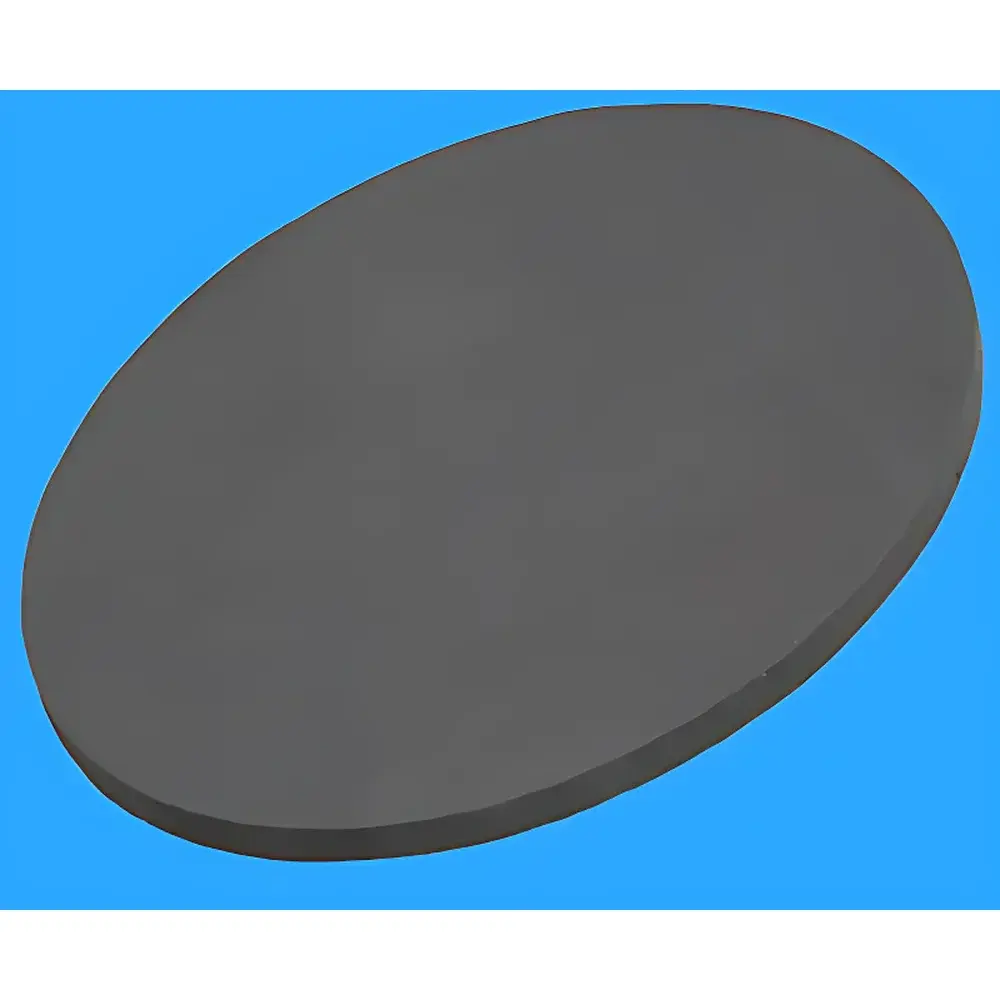
- Customizable geometry—including circular (diameters from 50 mm to 200 mm), rectangular, and segmented configurations—with optional bonding to copper or molybdenum backing plates
- Traceable lot documentation including ICP-MS elemental analysis, SEM-EDS mapping, and relative density reports
Sample Compatibility & Compliance
This target is compatible with standard DC magnetron, pulsed DC, and RF sputtering systems operating under argon/oxygen mixed atmospheres (O2 partial pressure ≤ 5%). It meets baseline requirements for semiconductor-grade thin-film deposition workflows and aligns with common industry specifications including ASTM F2627 (Standard Guide for Thin-Film Battery Materials Characterization) and ISO 14644-1 Class 5 (equivalent to ISO Class 100) clean handling protocols. All targets undergo final inspection and packaging in certified Class 1000 cleanrooms, followed by double-bagging in electrostatic-dissipative, particle-shedding–free Class 100 clean bags compliant with IEST-STD-CC1246E particulate limits (≤10 particles ≥0.5 µm per cubic foot). While not certified to FDA 21 CFR Part 11 or GMP Annex 11, documentation packages support GLP-compliant lab records and internal quality audits.
Software & Data Management
No embedded firmware or proprietary software is associated with the target itself; however, its performance is fully integrable into established PVD process control ecosystems—including those from Applied Materials, Angstrom Engineering, Kurt J. Lesker, and custom-built vacuum cluster tools. Process parameters (power density, pressure, substrate temperature, deposition rate) are logged via host system SCADA interfaces and exported in CSV or HDF5 formats for post-deposition correlation with XRD, XPS, and electrochemical impedance spectroscopy (EIS) datasets. Traceability data—including batch ID, sintering log files, and certificate of conformance—is archived in accordance with ISO/IEC 17025 clause 7.10 on reporting and record retention.
Applications
- Deposition of cathode-active layers in all-solid-state thin-film batteries (e.g., LiPON/LiFePO4/Li metal architectures)
- Research-scale fabrication of model electrodes for operando X-ray diffraction and in situ TEM studies
- Development of microscale energy storage devices for MEMS and IoT sensor nodes
- Co-sputtering with conductive additives (e.g., carbon nanotubes or graphene) to enhance electronic percolation networks
- Baseline reference material in interlaboratory round-robin studies evaluating sputter-deposited cathode performance metrics (capacity retention, voltage hysteresis, C-rate capability)
FAQ
What minimum purity level is guaranteed for this LiFePO4 target?
The target meets ≥99.95% chemical purity as verified by ICP-MS, with phase purity confirmed by quantitative XRD analysis.
Can the target be bonded to a water-cooled backing plate?
Yes—standard bonding options include indium soldering or epoxy-based metallurgical bonding compatible with thermal cycling up to 150 °C.
Is oxygen stoichiometry monitored during manufacturing?
Yes—oxygen content is validated via combustion analysis and correlated with lattice parameter shifts measured by high-resolution XRD.
Do you provide deposition rate calibration data?
Calibration curves (nm/min vs. W/cm² at fixed Ar pressure and 100 mm target-to-substrate distance) are available upon request for standard geometries.
Are there restrictions on export classification or ITAR status?
This product is classified under EAR99 and is not subject to ITAR controls; no license is required for export to most destinations.