
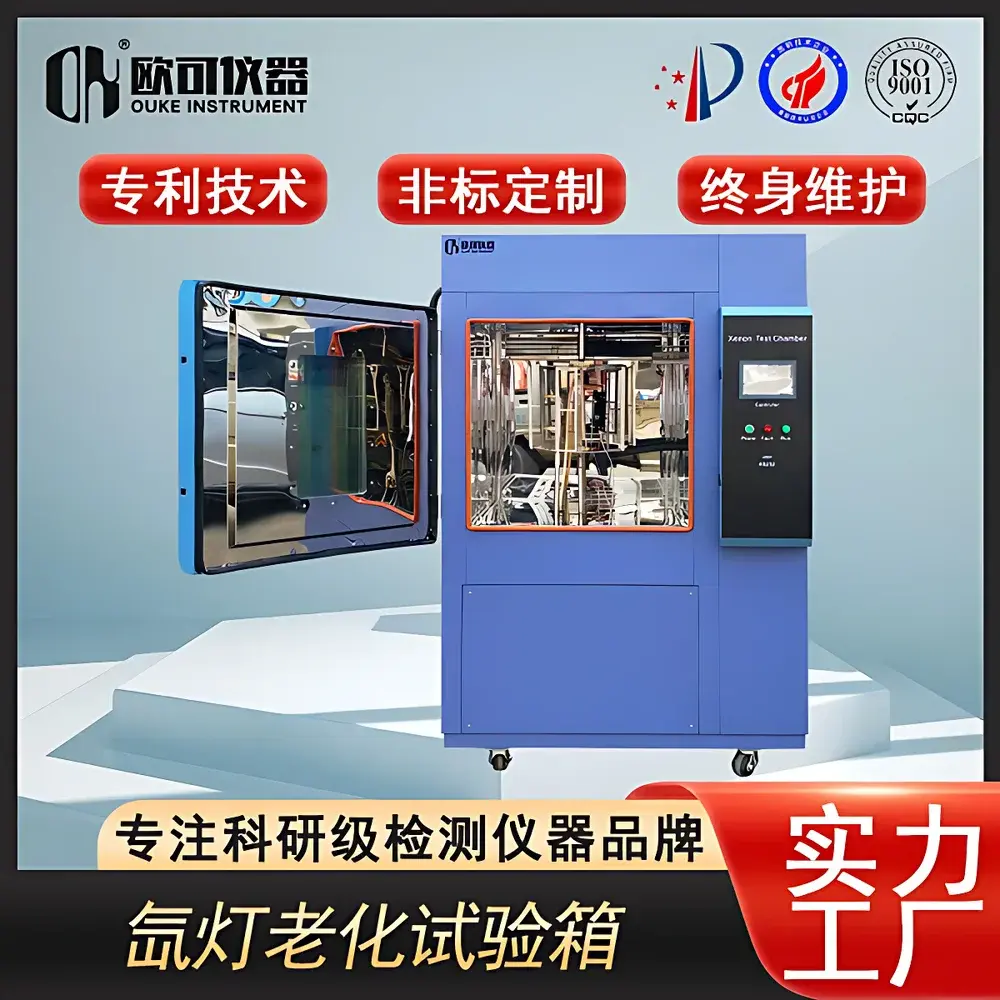
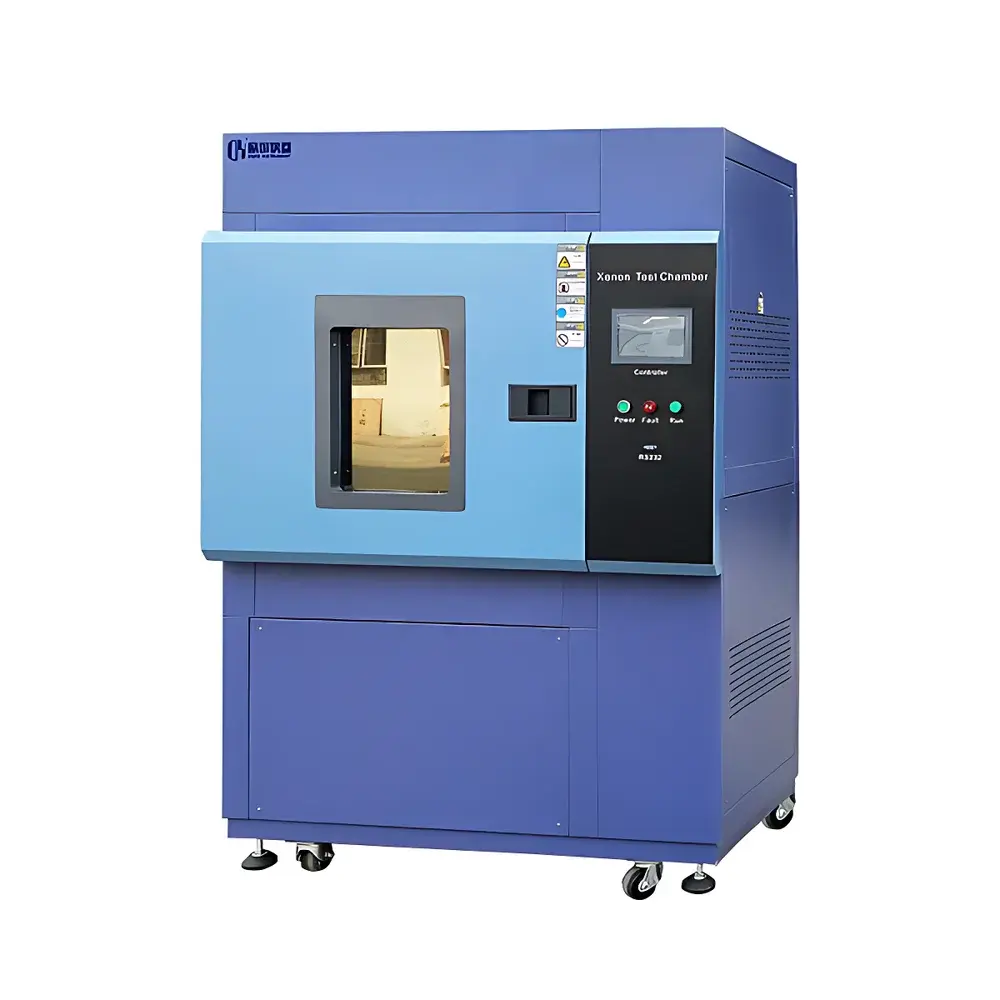
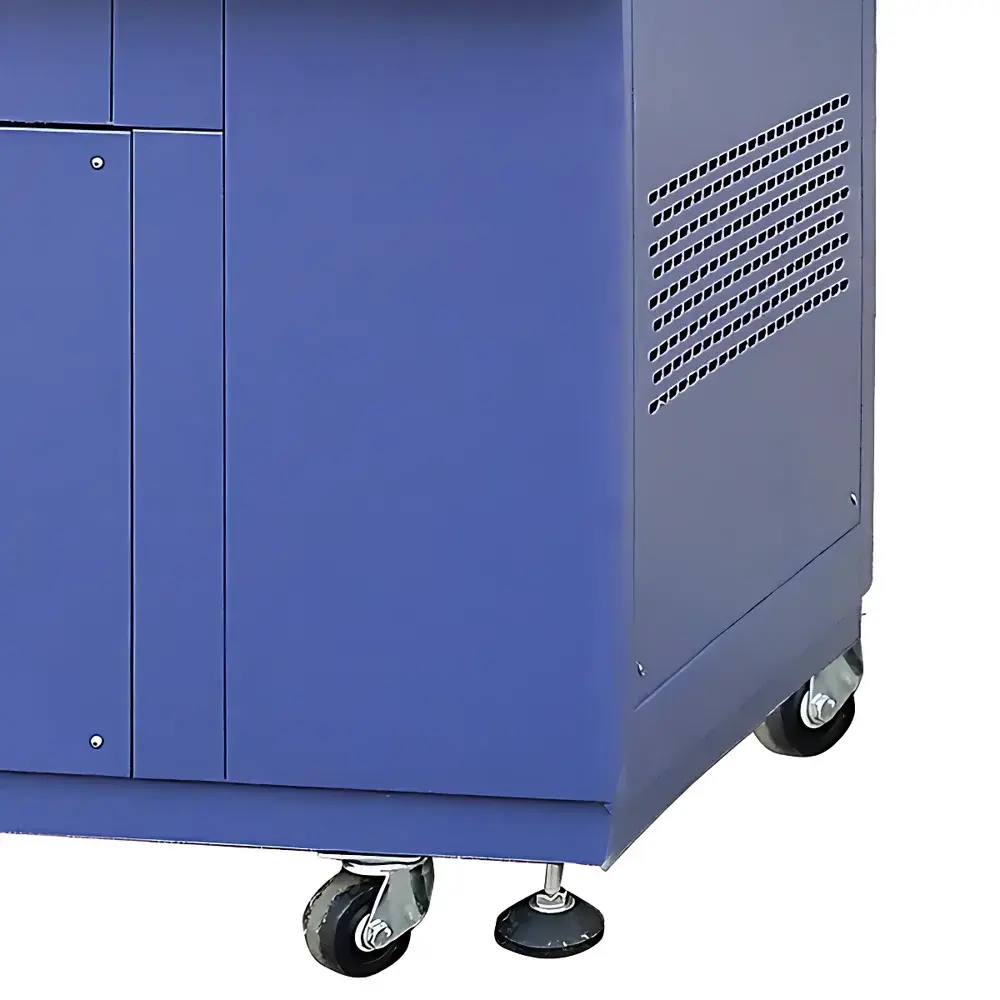
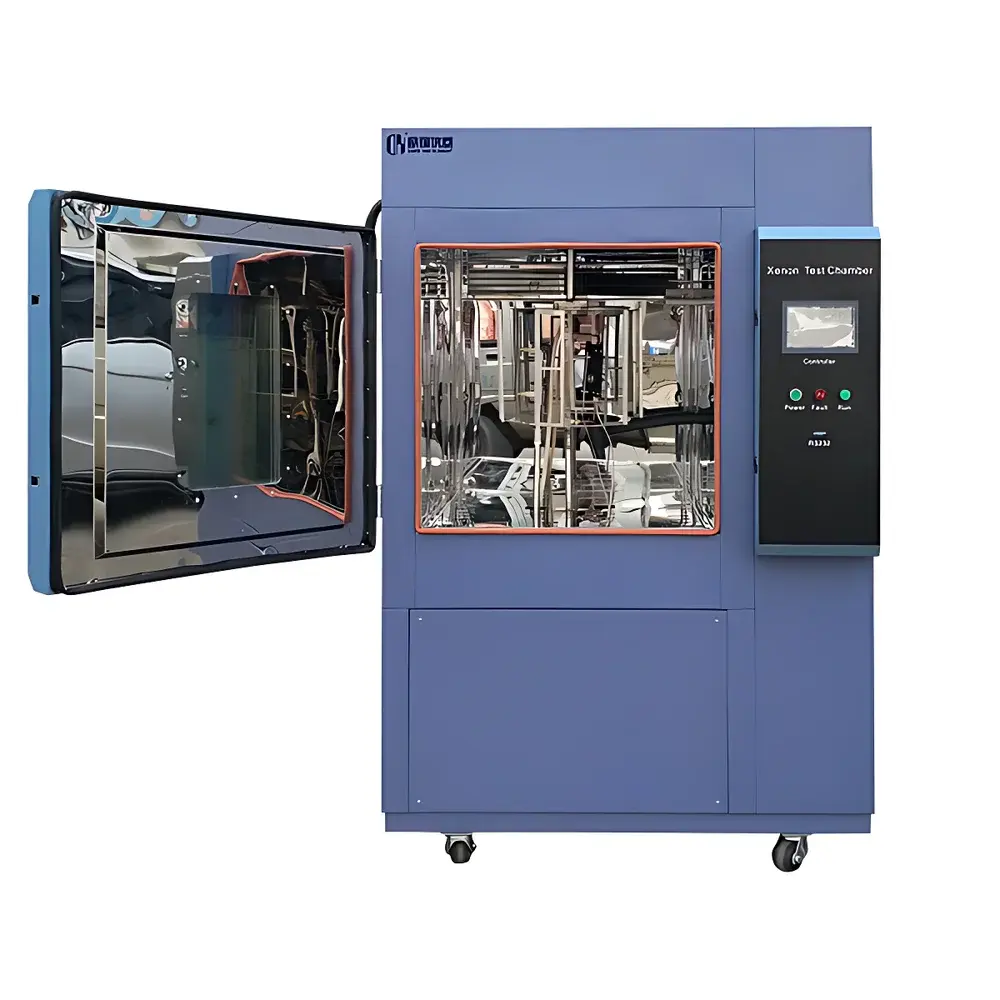
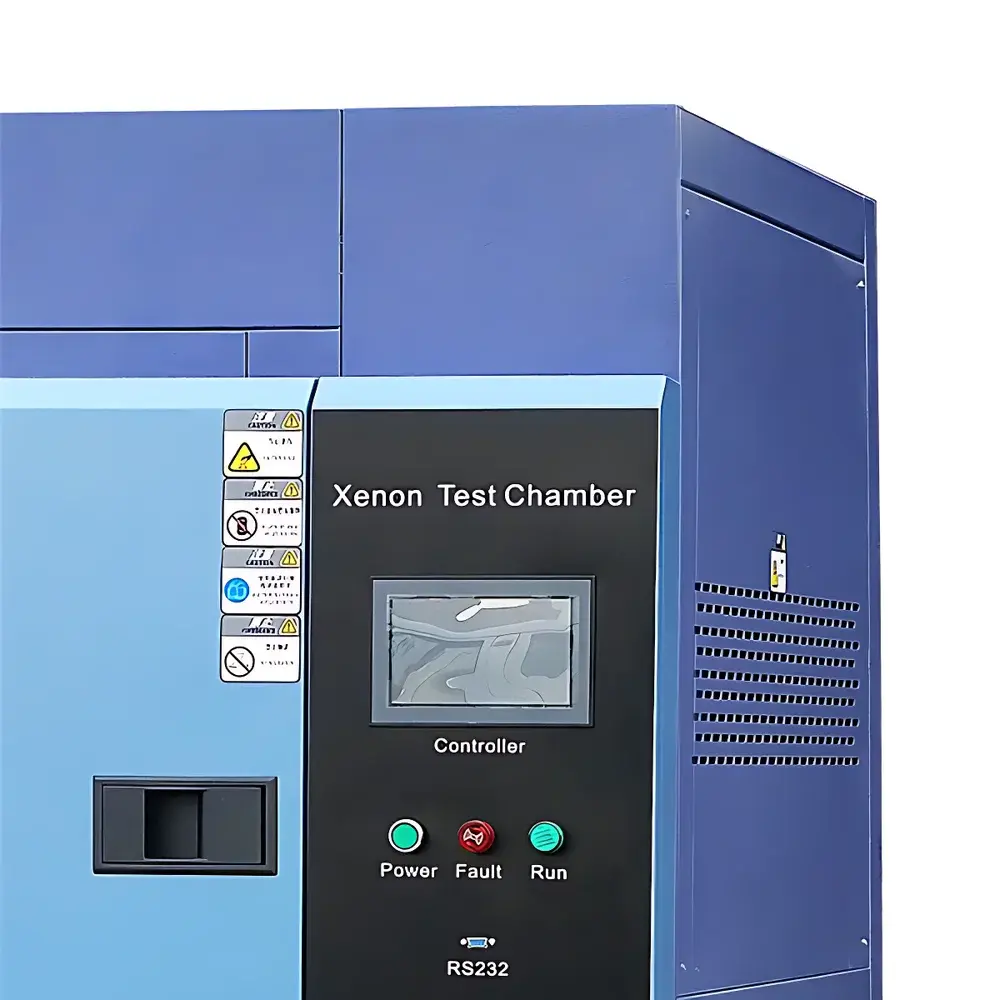
OK-XD-500 Xenon Arc Weathering Test Chamber
| Brand | OK Instruments |
|---|---|
| Origin | Guangdong, China |
| Manufacturer Type | Direct Manufacturer |
| Model | OK-XD-500 |
| Xenon Lamp Power Options | 1.8 kW / 2.5 kW / 6 kW |
| Spectral Irradiance Range | 300–800 nm, calibrated at 550 W/m² ±10% |
| Light Exposure Cycle | 1–999 h/min/sec (programmable) |
| Humidity Range (Light Cycle) | 20–75% RH |
| Cooling Method | Air-cooled or optional water-cooled lamp system |
| Filter Configurations | Daylight Filter (ISO 4892-2), Window Glass Filter (ISO 16474-2) |
| Black Standard Temperature Control | Ambient to 120°C |
| Sample Rotation | Motor-driven drum rotation for uniform irradiation |
| Compliance | ISO 4892-2, ISO 16474-2, ASTM G155, ASTM D7869, SAE J2527/J2412, GB/T 16422.2, GB/T 1865 |
Overview
The OK-XD-500 Xenon Arc Weathering Test Chamber is an engineered environmental simulation system designed to replicate and accelerate the complex degradation mechanisms induced by outdoor exposure—primarily solar radiation, thermal cycling, humidity, and moisture ingress. At its core, the chamber employs a high-intensity xenon arc lamp whose spectral power distribution (SPD) closely matches natural terrestrial sunlight across the ultraviolet (290–400 nm), visible (400–700 nm), and near-infrared (700–800 nm) regions. This spectral fidelity enables physiologically relevant photochemical aging—unlike narrowband UV sources—making the OK-XD-500 suitable for evaluating long-term durability of polymeric, coated, textile, and composite materials under realistic stress conditions. The system integrates real-time control of irradiance, black standard temperature (BST), chamber air temperature, relative humidity, and programmable wet/dry cycles—including spray and optional condensation—to emulate diurnal and seasonal climatic patterns in a reproducible laboratory environment.
Key Features
- Xenon lamp options (1.8 kW, 2.5 kW, or 6 kW) with air-cooled or water-cooled configurations, supporting extended operational stability and consistent spectral output over lamp lifetime (typically 1,000–2,000 hours).
- Interchangeable optical filter systems: daylight-filtered (for outdoor exposure simulation per ISO 4892-2) and window-glass-filtered (for indoor applications such as automotive interiors or printed media per ISO 16474-2).
- Precise irradiance control at user-selectable wavelengths (e.g., 340 nm or 420 nm), maintained within ±10% tolerance via integrated radiometric feedback and automatic lamp power modulation.
- Motorized rotating sample drum ensures uniform photon flux distribution across all specimens; sample backside temperature can be independently monitored and regulated per test protocol requirements.
- Multi-stage climate control architecture: PID-regulated heating/cooling, steam-based humidification, refrigerated dehumidification, and programmable spray nozzles delivering calibrated water volume and impact pressure.
- Microprocessor-based controller with Ethernet interface, supporting up to 999-step cyclic programs (e.g., light → light + spray → dark → condensation), data logging at 1-second intervals, and password-protected parameter access.
Sample Compatibility & Compliance
The OK-XD-500 accommodates flat or contoured specimens up to 500 mm × 500 mm (standard drum configuration), with customizable fixtures for automotive trim, textile swatches, coated panels, and photovoltaic encapsulants. It meets functional and metrological requirements of internationally recognized weathering standards including ISO 4892-2 (plastics), ISO 16474-2 (coatings), ASTM G155 (non-metallic materials), ASTM D7869 (automotive coatings), SAE J2527 (exterior components), SAE J2412 (interior materials), and Chinese national standards GB/T 16422.2 and GB/T 1865. All irradiance measurements are traceable to NIST-calibrated reference sensors, and the system supports GLP-compliant audit trails when configured with optional 21 CFR Part 11 software modules.
Software & Data Management
The embedded control platform provides intuitive touchscreen operation and supports export of time-stamped datasets (irradiance, BST, chamber RH, spray status) in CSV format. Optional PC-based software enables advanced analysis—trend plotting, pass/fail threshold alerts, comparative aging curve overlays, and automated report generation compliant with ISO/IEC 17025 documentation practices. Data integrity safeguards include electronic signatures, version-controlled method files, and immutable event logs for regulatory review. Remote monitoring via secure HTTPS connection allows real-time supervision without compromising network security.
Applications
This chamber serves critical roles across R&D, quality assurance, and regulatory validation workflows. In the automotive sector, it validates exterior paint fade resistance, headlamp lens yellowing, and interior fabric colorfastness per SAE J2527 and J2412. Coating manufacturers use it to benchmark UV stabilizer efficacy and cross-link density retention in architectural and industrial finishes. Polymer compounders assess HALS/UV absorber synergies in PP, PE, and PVC formulations exposed to tropical or desert climates. Textile labs evaluate sun protection factor (UPF) degradation and dye migration under cyclic UV/humidity stress. Photovoltaic material suppliers qualify backsheet delamination resistance and EVA encapsulant discoloration under accelerated damp-heat irradiation protocols.
FAQ
What is the typical service life of the xenon lamp in the OK-XD-500?
Lamp lifetime ranges from 1,000 to 2,000 hours depending on operating irradiance level, cooling efficiency, and power setting—regular spectral verification and radiometric recalibration are recommended every 500 hours.
Can the chamber operate without spray or condensation cycles?
Yes—each environmental stimulus (light, heat, humidity, spray, condensation) is independently programmable, enabling isolated parameter studies or simplified exposure protocols.
Is calibration certification included with shipment?
A factory-issued irradiance calibration certificate (traceable to NIST standards) is provided; annual third-party recalibration is advised for ISO/IEC 17025 compliance.
How does the OK-XD-500 differ from UV fluorescent aging chambers?
Unlike UV chambers that emit only discrete UVA/UVB lines, the xenon source delivers continuous full-spectrum irradiance, enabling evaluation of infrared thermal effects and visible-light-induced chromophore degradation not replicable with fluorescent lamps.
Does the system support multi-lamp configurations or larger test volumes?
The OK-XD-500 is a single-lamp, 500 L working volume platform; OK Instruments offers scalable variants (OK-XD-1000, OK-XD-Water-Cooled) for higher throughput or extreme irradiance demands.



