
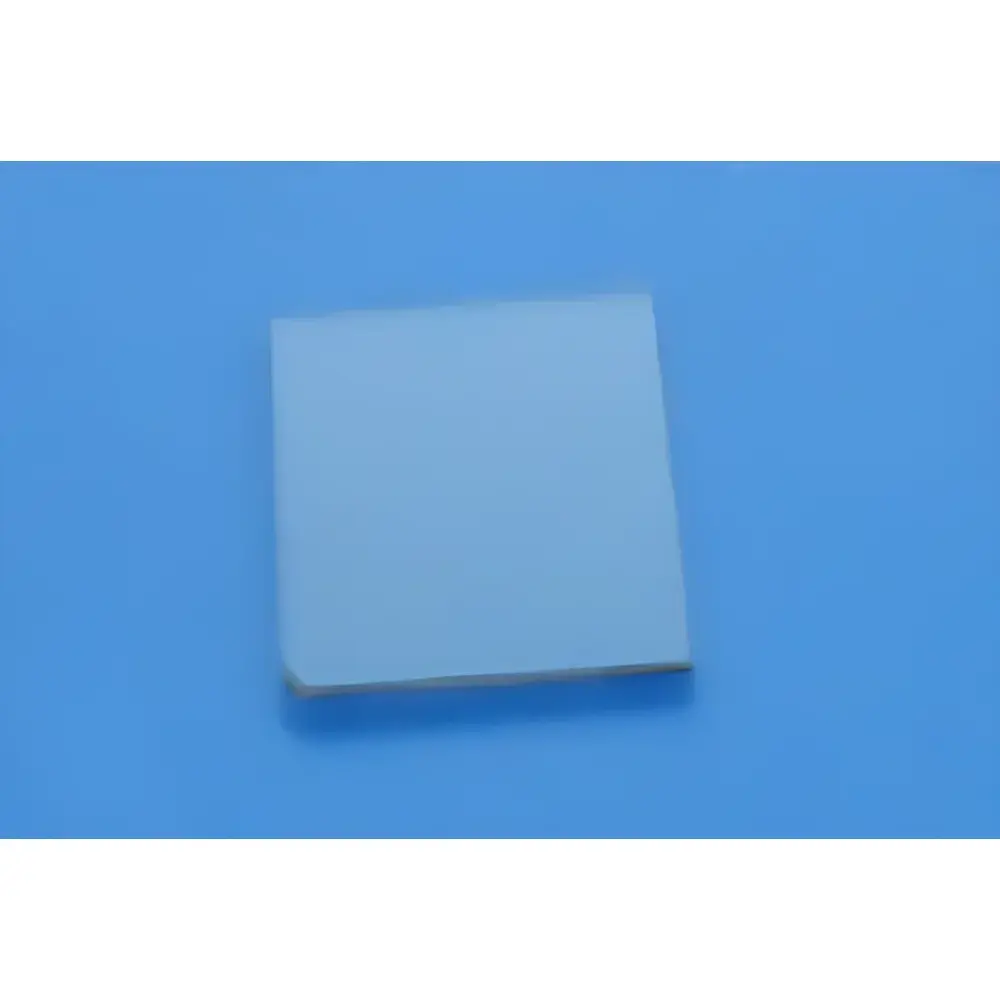
GaN Crystal Substrates (HVPE-Grown, N-type & Semi-Insulating)
| Brand | Hefei Kejing |
|---|---|
| Origin | Anhui, China |
| Manufacturer Type | Authorized Distributor |
| Origin Category | Domestic |
| Model | G-a-N |
| Pricing | Available Upon Request |
| Growth Method | Hydride Vapor Phase Epitaxy (HVPE) |
| Conductivity Type | N-type / Semi-Insulating |
| Resistivity | < 0.5 Ω·cm (N-type) / > 10⁶ Ω·cm (Semi-Insulating) |
| Surface Roughness (Ra) | < 0.5 nm |
| Threading Dislocation Density | < 5 × 10⁶ cm⁻² |
| Usable Surface Area | > 90% |
| Total Thickness Variation (TTV) | ≤ 15 µm |
| Bow | ≤ 20 µm |
| Crystal Orientation | c-plane (0001) |
| Diameter | 50.8 mm ± 1 mm |
| Thickness | 350 µm ± 25 µm |
| Packaging | Class 1000 Cleanroom, Class 100 Clean Bag or Individual Wafer Cassette |
Overview
GaN crystal substrates are single-crystal wafers engineered for high-performance epitaxial growth of III-nitride semiconductor heterostructures—particularly AlGaN/GaN and InGaN/GaN systems. These substrates serve as the foundational platform for fabricating high-electron-mobility transistors (HEMTs), UV optoelectronic devices (LEDs, laser diodes), and surface acoustic wave (SAW) sensors integrated with quartz crystal microbalance (QCM) platforms. Unlike sapphire or SiC templates, native GaN substrates eliminate lattice mismatch-induced strain and threading dislocation propagation, enabling two-dimensional electron gas (2DEG) channels with measured low-temperature mobilities exceeding 10⁵ cm²/V·s—attributable to effective screening of optical phonon, ionized impurity, and piezoelectric scattering mechanisms. The substrates described here are grown via hydride vapor phase epitaxy (HVPE), a scalable, high-growth-rate technique yielding thick, low-defect bulk crystals suitable for mechanical slicing and polishing into device-ready wafers.
Key Features
- Single-crystal c-plane (0001) orientation with precise off-axis control (< ±0.5°), ensuring uniform epitaxial registry during MOCVD or MBE deposition.
- Dual-conductivity availability: N-type (resistivity 10⁶ Ω·cm) for RF and high-voltage isolation applications.
- Ultra-smooth surface finish (Ra < 0.5 nm) achieved through chemical-mechanical polishing (CMP), compatible with atomic-layer deposition (ALD) and molecular beam epitaxy (MBE) processes requiring monolayer-level interface control.
- Low threading dislocation density (< 5 × 10⁶ cm⁻²) confirmed by cathodoluminescence (CL) and transmission electron microscopy (TEM), directly correlating with improved carrier lifetime and reduced non-radiative recombination in UV-emitting structures.
- Tight dimensional tolerances: TTV ≤ 15 µm and bow ≤ 20 µm ensure uniform thermal expansion and stress distribution during high-temperature thin-film processing (e.g., annealing at >800 °C).
- Customizable geometry—including diameter (up to 100 mm), thickness (200–500 µm), and crystallographic orientation (e.g., m-plane, r-plane)—to support specialized QCM electrode architectures and SAW resonator designs.
Sample Compatibility & Compliance
These GaN substrates are fully compatible with standard semiconductor fabrication workflows: photolithography (UV and DUV), reactive ion etching (Cl₂/BCl₃-based chemistries), lift-off metallization (Ti/Al/Ni/Au, Cr/Au), and electrochemical characterization cells. All wafers undergo rigorous post-polish inspection per SEMI MF-1530 (specifications for compound semiconductor wafers) and ISO 14644-1 Class 5 cleanroom handling protocols. Surface contamination levels meet ASTM F1723-21 requirements for metallic impurities (Fe, Cu, Ni < 1 × 10¹⁰ atoms/cm² via TXRF). For regulated environments—such as GLP-compliant sensor development labs or FDA-regulated medical device R&D—the substrates are supplied with full traceability documentation (lot number, growth date, polishing batch ID, and metrology report).
Software & Data Management
While GaN substrates themselves are passive components, their integration into QCM-based electrochemical instrumentation requires precise calibration and data correlation. When used in conjunction with commercial QCM-D systems (e.g., Q-Sense E4, Biolin Scientific), these substrates enable real-time monitoring of interfacial mass changes (ng/cm² resolution) during GaN surface functionalization (e.g., silane coupling, peptide immobilization) or corrosion studies in aggressive electrolytes (pH 1–13, Cl⁻-rich media). Raw frequency (Δf) and dissipation (ΔD) datasets are exportable in CSV or HDF5 formats and support automated baseline correction, Voigt-model fitting, and compliance with 21 CFR Part 11 audit trail requirements when paired with validated instrument control software.
Applications
- Epitaxial template for AlGaN/GaN HEMTs targeting 5G RF power amplifiers and millimeter-wave communication systems.
- Active layer substrate for deep-UV (210–280 nm) photodetectors and solid-state lighting with enhanced external quantum efficiency (EQE > 65%).
- High-stability sensing platform for QCM-based detection of heavy metal ions (Pb²⁺, Hg²⁺) in aqueous environmental samples.
- Model system for fundamental studies of piezoelectric charge generation, surface state kinetics, and electrochemical double-layer capacitance at wide-bandgap semiconductor/electrolyte interfaces.
- Test vehicle for evaluating novel passivation layers (Al₂O₃, SiNₓ) under accelerated aging conditions (85 °C/85% RH, bias stress).
FAQ
What is the typical lead time for custom-oriented GaN substrates?
Standard c-plane wafers ship within 5–7 business days; custom orientations or dimensions require 3–4 weeks for metrology validation and packaging certification.
Are these substrates suitable for direct use in electrochemical impedance spectroscopy (EIS)?
Yes—both N-type and semi-insulating variants support three-electrode EIS measurements when coated with conductive seed layers (e.g., 5 nm Ti + 100 nm Au); open-circuit potential stability is verified over 24 h in 0.1 M KCl.
Do you provide certificates of analysis (CoA) with each shipment?
Yes—each lot includes a CoA listing XRD rocking curve FWHM (≤ 120 arcsec), surface defect map (per SEMI MF-1390), and resistivity verification data.
Can these wafers be bonded to quartz or silicon carriers for hybrid QCM assemblies?
Absolutely—surface activation via O₂ plasma (100 W, 60 s) enables robust anodic bonding or polymer-mediated adhesion (e.g., BCB or polyimide) without compromising acoustic coupling fidelity.
Is hydrogen termination stable under ambient storage conditions?
Hydrogen-terminated surfaces degrade after ~72 h in air; we recommend storage in N₂-purged desiccators or immediate use following in-situ dehydrogenation in UHV systems prior to film deposition.



