
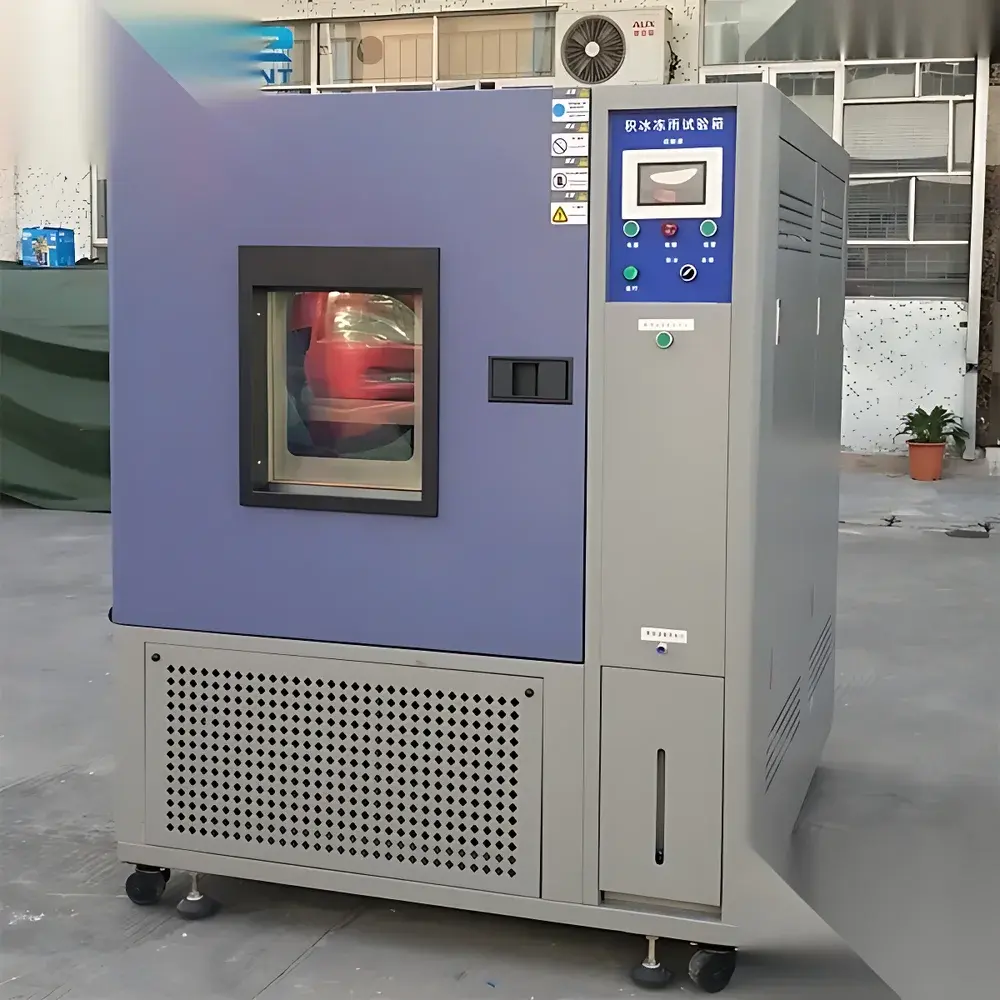
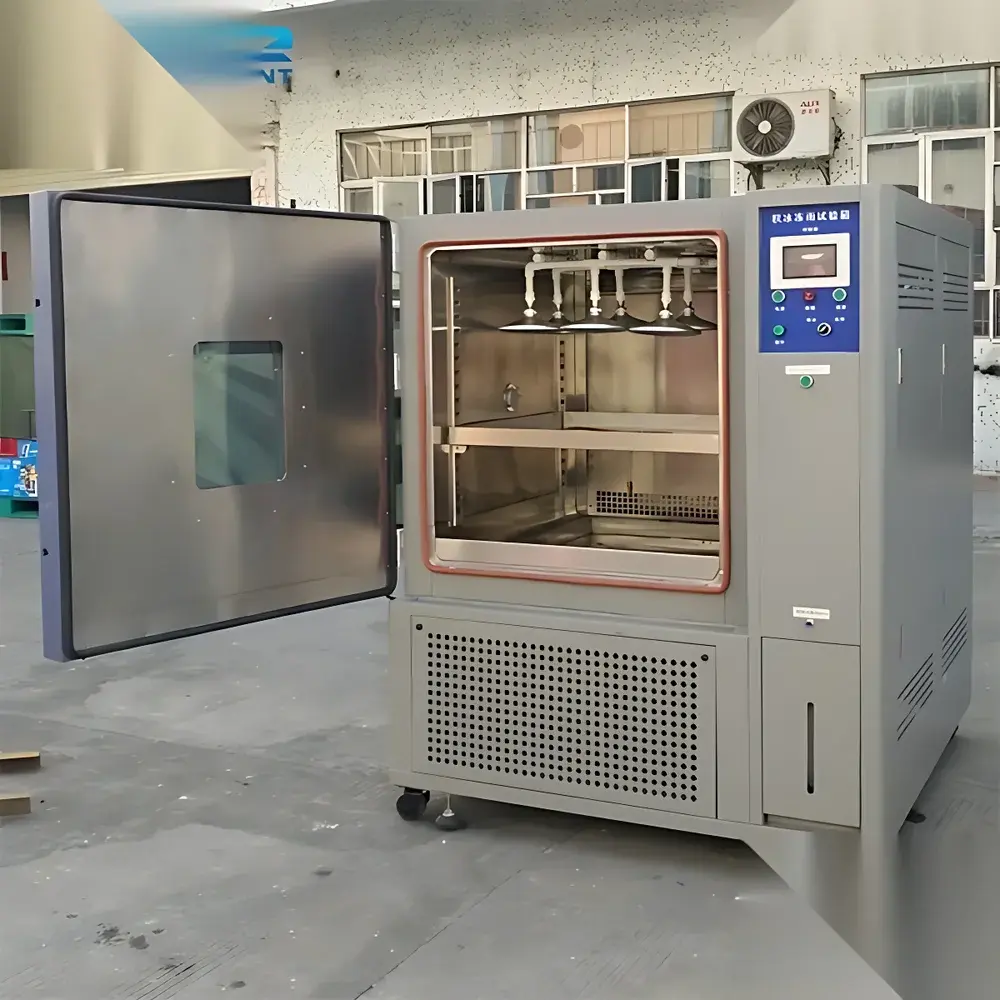
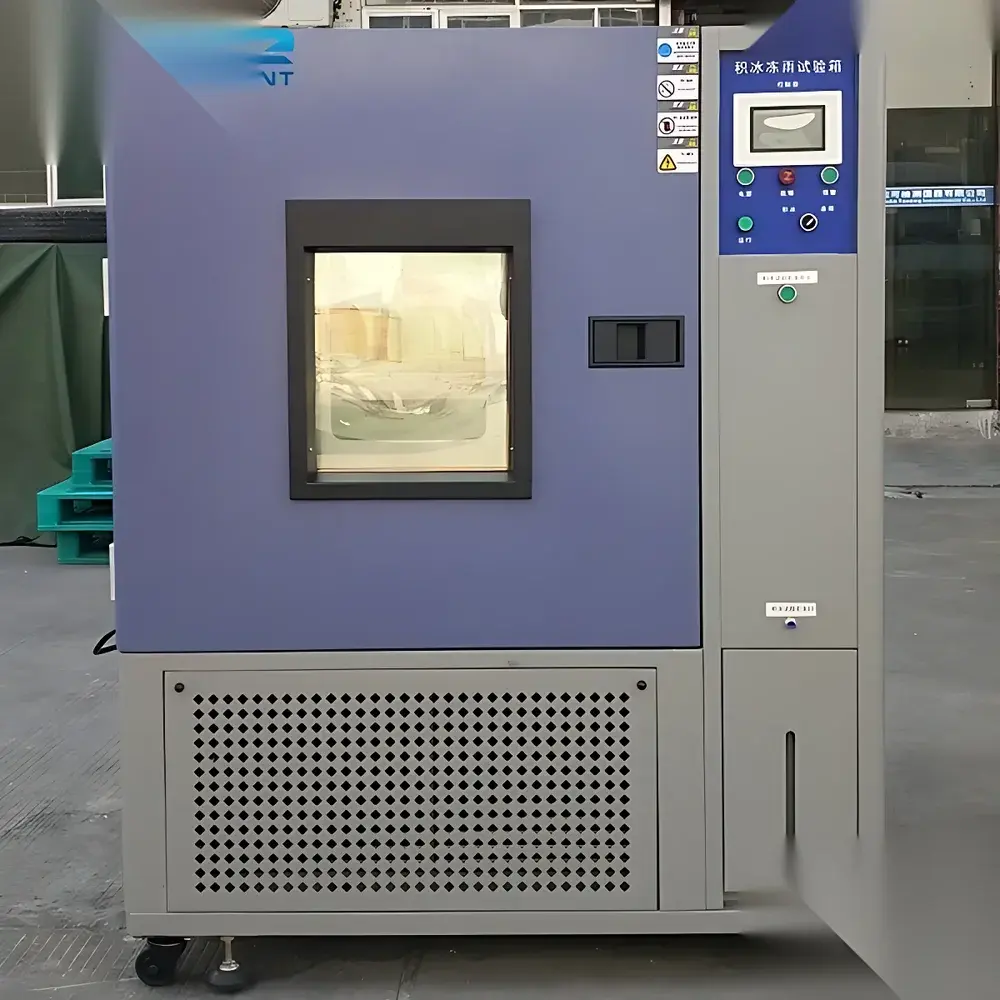
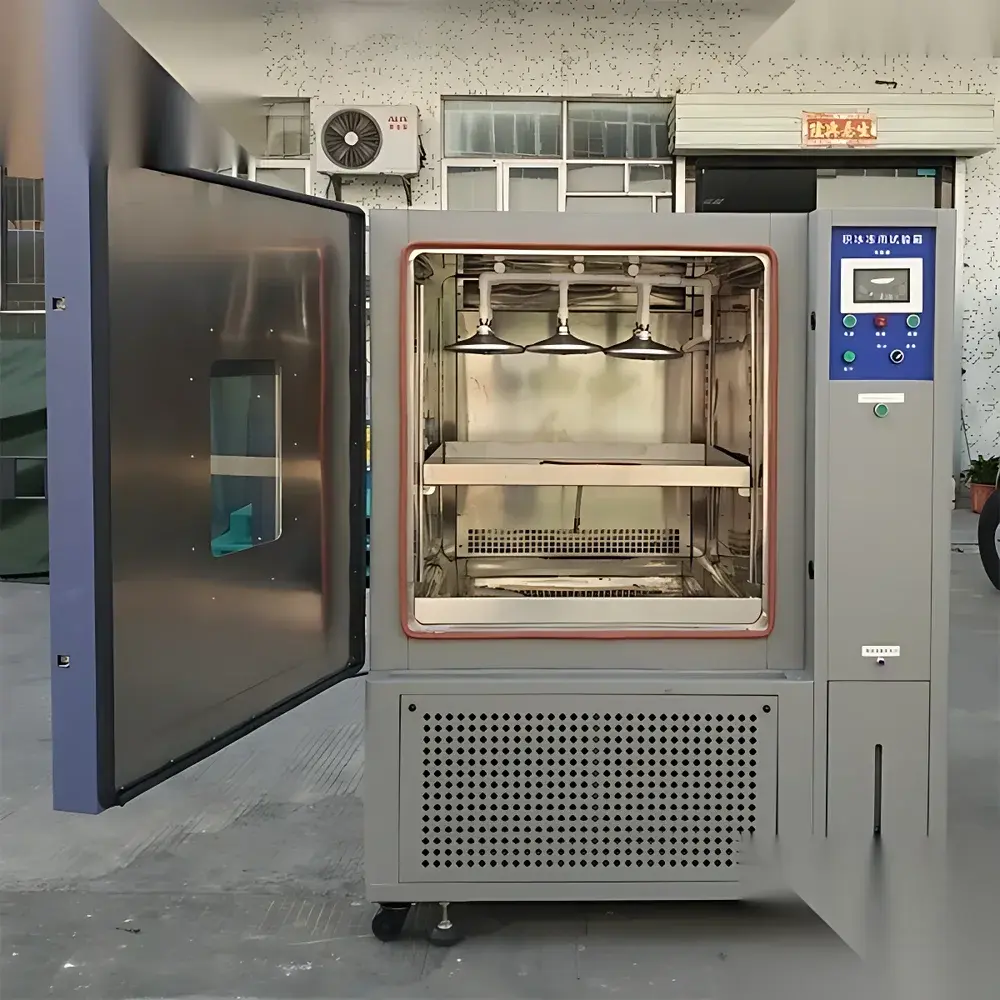
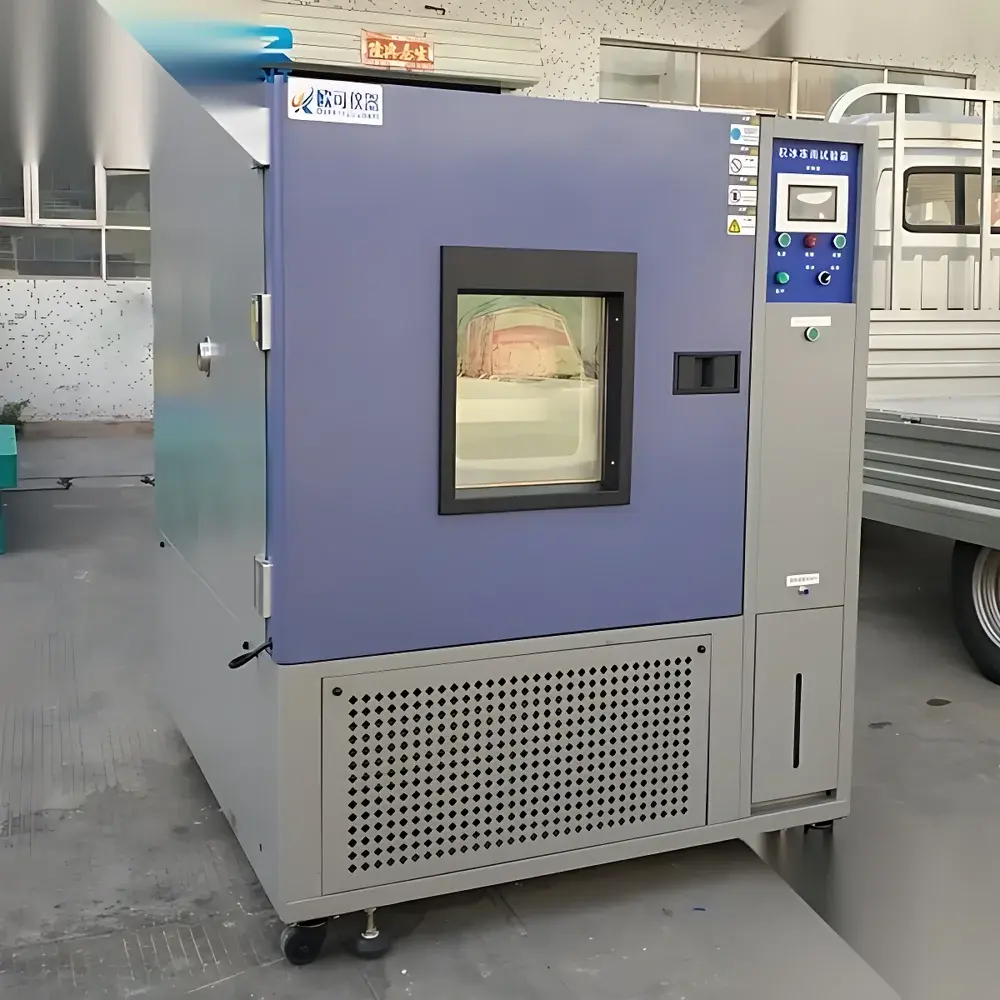
English Product Name
| Brand | Other Brands |
|---|---|
| Origin | Imported |
| Manufacturer Type | General Distributor |
| Price | USD 14,000 (approx.) |
| Internal Dimensions (mm) | 500×600×500 / 600×700×600 / 800×900×700 / 1000×1000×1000 |
| External Dimensions (mm) | 1000×1750×1100 / 1100×1900×1100 / 1300×1900×1300 / 1500×2000×1600 |
| Temperature Range | −10 °C to 80 °C or −20 °C to 80 °C (customizable) |
| Temperature Uniformity | ±2.0 °C |
| Temperature Fluctuation | ±0.5 °C |
| Rainfall Intensity | 25 mm/h |
| Nozzle Orifice Diameter | φ0.4 mm |
| Simulated Droplet Diameter | 1.0–1.5 mm |
| Ice Accumulation Thickness Options | 6 mm, 13 mm, 37 mm, 75 mm |
| Ice Density Range | 0.2–0.9 g/cm³ |
| Water Temperature Control | 0–5 °C |
| Inner Chamber Material | SUS304 Stainless Steel |
| Outer Chamber Material | Galvanized Steel with Powder Coating or Optional SUS304 |
| Heating System | Helical Ni-Cr Alloy Heaters with Ceramic Insulation |
| Humidification | Embedded Ni-Cr Alloy Heater-Based Humidifier |
| Refrigeration Unit | Hermetic Compressor (French or Tecumseh) |
| Controller | 5.7″ TFT Color LCD Touchscreen (Bilingual English/Chinese) |
| Cable Port | Ø50 mm × 1 |
| Standard Accessories | Adjustable Test Sample Rack, Power Supply: AC 220 V ±5%, 50 Hz ±0.5 Hz, Single-Phase Three-Wire |
| Operating Ambient | 5–35 °C, RH ≤85% |
Overview
The OK-JBDY Series Icing and Freezing Rain Test System is a purpose-built environmental simulation chamber engineered for rigorous laboratory evaluation of equipment performance under controlled icing and freezing rain conditions. It replicates the physical formation mechanisms of glaze ice, rime ice, and mixed-phase accretion resulting from supercooled liquid precipitation—specifically freezing rain (drizzle) and cloud/fog droplets—as defined in military and aerospace environmental testing standards. The system operates on the principle of controlled nucleation and growth of ice layers through precise regulation of ambient temperature, water droplet size distribution, impact velocity, liquid water content, and surface thermal dynamics. Designed in accordance with GJB 150.22A–2009 (the People’s Republic of China Military Standard for Environmental Testing Methods – Part 22: Icing and Freezing Rain Testing), it enables quantitative assessment of functional degradation, structural loading, sensor obscuration, aerodynamic interference, and de-icing system efficacy under repeatable, traceable test profiles.
Key Features
- Four standard chamber configurations (OK-JBDY-150 to OK-JBDY-1000) offering scalable internal volumes from 0.15 m³ to 1.0 m³, all customizable in dimensions and performance envelope upon request.
- Independent dual-zone temperature control architecture supporting simultaneous low-temperature chamber operation (down to −20 °C) and regulated water supply at 0–5 °C—critical for maintaining droplet supercooling without premature freezing in delivery lines.
- Precision nozzle array calibrated to deliver uniform rainfall intensity of 25 mm/h with tightly constrained droplet diameter (1.0–1.5 mm) and orifice geometry (φ0.4 mm), ensuring compliance with droplet size distribution requirements specified in MIL-STD-810H Method 521.4 and RTCA DO-160G Section 22.
- Adjustable ice thickness accumulation modes (6 mm, 13 mm, 37 mm, 75 mm) with programmable ice density modulation (0.2–0.9 g/cm³), enabling differentiation between low-density rime and high-density glaze ice morphologies.
- Robust thermal management system featuring hermetically sealed compressors (Tecumseh or French-sourced), ceramic-insulated Ni-Cr heating elements, and embedded humidification—ensuring long-term stability under continuous sub-zero operation.
- TFT touchscreen controller with real-time logging, alarm history, and password-protected parameter locking—supporting audit-ready operation per GLP and ISO/IEC 17025 documentation requirements.
Sample Compatibility & Compliance
The OK-JBDY system accommodates a wide range of test articles, including airborne avionics housings, rotorcraft sensors, wind turbine blade sections, UAV propulsion components, railway signaling units, and maritime navigation equipment. Its chamber geometry and door configuration allow vertical or horizontal mounting of samples up to 900 mm in height. All models meet the mechanical, thermal, and fluidic boundary conditions required by GJB 150.22A–2009. While not certified to ASTM D3359 or ISO 20623, the system’s operational parameters are fully compatible with test plan development aligned with those standards. Optional calibration reports traceable to NIM (National Institute of Metrology, China) or UKAS-accredited laboratories can be provided upon request.
Software & Data Management
The embedded controller supports CSV export of time-stamped temperature, humidity, and cycle-stage data at user-defined intervals (1–60 s). Logged datasets include chamber setpoints, actual readings, alarm triggers, and actuator status flags. For integration into enterprise test management systems (e.g., NI TestStand, Siemens Teamcenter), optional RS-485 Modbus RTU or Ethernet TCP/IP communication modules are available. Audit trail functionality records operator ID, timestamp, and parameter modification events—meeting baseline requirements for FDA 21 CFR Part 11 electronic record integrity where local regulatory interpretation permits. Raw data files are stored internally on non-volatile memory and can be retrieved via USB interface.
Applications
- Verification of ice protection system (IPS) activation thresholds and de-icing cycle effectiveness on electrothermal, pneumatic, or fluid-based platforms.
- Functional endurance testing of optical sensors, radar apertures, and pitot-static probes under progressive ice accretion.
- Mechanical stress analysis of structural components subjected to asymmetric ice loads, including torsional and bending moment estimation.
- Validation of thermal management strategies for battery enclosures and power electronics exposed to coastal freezing fog environments.
- Supporting qualification testing per MIL-STD-810H, RTCA DO-160G, and EASA CS-25 Appendix C requirements for transport category aircraft certification.
FAQ
What standards does the OK-JBDY system directly support?
It is designed and validated against GJB 150.22A–2009. Its operational parameters align with the physical test conditions specified in MIL-STD-810H Method 521.4 and RTCA DO-160G Section 22.
Can the system simulate both glaze and rime ice formation?
Yes—by adjusting water temperature (0–5 °C), droplet size (1.0–1.5 mm), air temperature (−10 °C to −20 °C), and exposure duration, users can reproduce representative glaze (high-density, transparent) or rime (low-density, opaque) ice morphologies.
Is remote monitoring or automation integration possible?
Standard models include Modbus RTU; optional Ethernet/IP and OPC UA gateways enable integration with SCADA or MES platforms for automated test sequencing and centralized data aggregation.
What maintenance intervals are recommended?
Compressor oil inspection every 12 months; nozzle cleaning and calibration every 200 operational hours; full system verification annually using NIST-traceable thermocouples and calibrated flow meters.
Does the system support custom test profiles beyond GJB 150.22A?
Yes—the controller allows user-defined multi-segment cycles with variable temperature ramps, rain-on/off timing, and dwell periods, facilitating research-grade icing studies and proprietary protocol execution.



