
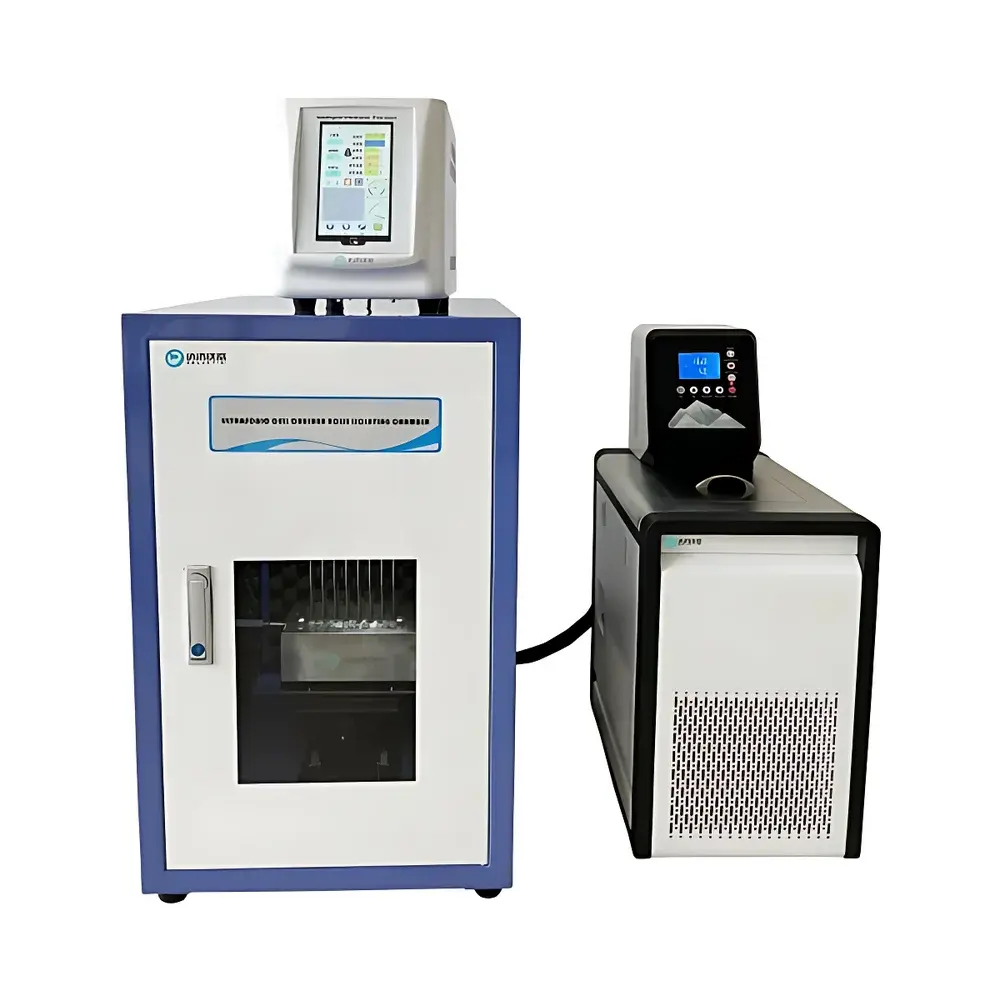
Daxluot Daxluot-16S 16-Channel High-Intensity Ultrasonic Cell Disruptor
| Brand | Daxluot |
|---|---|
| Origin | Shanghai, China |
| Manufacturer Type | Authorized Distributor |
| Product Category | Domestic |
| Model | Daxluot-16S |
| Instrument Type | Ultrasonic Cell Disruptor |
| Ultrasonic Power Output | 22–2200 W (continuously adjustable) |
| Operating Frequency | 20–25 kHz (auto-frequency tracking) |
| Temperature Control Range | −5 to 100 °C |
| Sample Volume per Channel | 5–100 mL |
| Parallel Channels | 16 |
| Probe Material | Titanium Alloy (Ti-6Al-4V) |
| Amplitude Regulation | Auto-compensated under variable load |
| Data Storage Capacity | 20 user-defined protocols |
| Display | 7-inch TFT capacitive touchscreen |
| Safety Protections | Overtemperature, overcurrent, overtime, and fault alarm |
| Input Power | AC 220 V ±5%, 50 Hz (110 V optional) |
Overview
The Daxluot Daxluot-16S is a high-throughput, multi-channel ultrasonic cell disruptor engineered for reproducible, scalable lysis of biological samples in life science research and bioprocessing laboratories. It operates on the principle of high-intensity focused ultrasound (HIU), where acoustic energy is transmitted via titanium alloy probes into liquid media, generating controlled cavitation—microbubble formation, growth, and violent collapse—that mechanically shears cellular membranes, organelles, and macromolecular complexes. Unlike bath-type or single-probe systems, the Daxluot-16S delivers simultaneous, independent ultrasonic energy to 16 discrete samples (5–100 mL each), eliminating inter-sample variability and enabling statistically robust comparative studies. Its frequency range (20–25 kHz) ensures optimal energy coupling across diverse sample viscosities and densities—from bacterial suspensions and mammalian cell cultures to plant tissue homogenates and nanoparticle dispersions—while auto-frequency tracking maintains resonance stability under dynamic load conditions.
Key Features
- Parallel 16-channel architecture with individually addressable titanium alloy probes (Φ6 mm × 16), enabling true high-throughput processing without cross-contamination or batch-to-batch drift.
- Continuously adjustable ultrasonic power output (22–2200 W) with real-time digital feedback and amplitude auto-compensation—ensuring consistent mechanical energy delivery regardless of sample volume, temperature, or viscosity changes.
- Integrated cryogenic-compatible temperature control system (−5 to 100 °C) with Peltier-cooled circulating probe holder, critical for preserving labile proteins, nucleic acids, and post-translational modifications during lysis.
- 7-inch capacitive touchscreen interface running Daxluot’s proprietary firmware, supporting intuitive protocol creation, parameter logging, and password-protected user access (compliant with GLP audit requirements).
- 20 programmable method storage slots with timestamped execution history, including sonication ON/OFF duration (0.1–99.9 s), total cycle time (up to 99 h 59 min 59 s), and thermal setpoints.
- Comprehensive hardware safety suite: overtemperature cutoff (±0.5 °C accuracy), overcurrent protection, timeout termination, and real-time fault diagnostics with audible/visual alerts.
Sample Compatibility & Compliance
The Daxluot-16S accommodates standard centrifuge tubes (15 mL and 50 mL) and custom tube formats via modular rack adapters. It is validated for use with Gram-positive and Gram-negative bacteria, yeast, mammalian cells (adherent and suspension), plant tissues, viral particles, and spores. For regulated environments, the instrument supports 21 CFR Part 11–compliant data integrity when paired with optional PC connectivity (RS-232/USB) and audit-trail-enabled software. All operating parameters—including power, duration, temperature, and user ID—are recorded with ISO/IEC 17025-aligned traceability. The titanium probe construction meets ASTM F136 standards for biomedical-grade corrosion resistance, ensuring compatibility with acidic, alkaline, and organic solvent-based extraction buffers.
Software & Data Management
The embedded firmware enables full method definition, execution, and export of raw parameter logs (CSV format) via USB drive. Optional Windows-based Daxluot Control Suite provides advanced features: remote scheduling, multi-instrument fleet monitoring, statistical analysis of lysis efficiency (e.g., protein yield vs. sonication energy), and automated report generation compliant with ISO 15189 and CLIA requirements. All data entries include electronic signatures, modification timestamps, and immutable audit trails—meeting FDA and EMA expectations for analytical instrument qualification (IQ/OQ/PQ).
Applications
- Chromatin shearing for ChIP-seq and ATAC-seq library preparation with narrow fragment size distribution (100–500 bp).
- High-yield extraction of intracellular enzymes, recombinant proteins, and inclusion bodies from E. coli and P. pastoris.
- Soil metagenomic DNA isolation with minimized humic acid co-precipitation.
- Preparation of nanoemulsions and lipid nanoparticles (LNPs) for mRNA delivery systems.
- Rapid dispersion and deagglomeration of carbon nanotubes, graphene oxide, and metal-organic frameworks (MOFs) in aqueous and organic media.
- Accelerated enzymatic hydrolysis and transesterification reactions in biodiesel synthesis.
FAQ
Is the Daxluot-16S suitable for GMP-compliant manufacturing environments?
Yes—when configured with audit-trail software and operated under documented SOPs, it fulfills Annex 11 and PIC/S requirements for computerized system validation.
Can I integrate this instrument into an automated liquid handling workflow?
Yes—via TTL-triggered footswitch input and RS-232 command protocol, enabling synchronization with robotic arms and plate handlers.
What maintenance is required for the titanium probes?
Probes require no routine calibration; however, visual inspection for pitting or erosion after 500 hours of cumulative operation is recommended per ISO 13485 preventive maintenance guidelines.
Does the system support external cooling recirculation?
Yes—the built-in chiller interface accepts standard ¼” quick-connect fittings for integration with external glycol chillers (−10 to 25 °C range).
How is inter-channel consistency verified during qualification?
Daxluot provides a NIST-traceable acoustic power mapping certificate (per IEC 61000-4-3) and offers on-site verification using calibrated hydrophones and calorimetric power measurement per ASTM E2810.



