
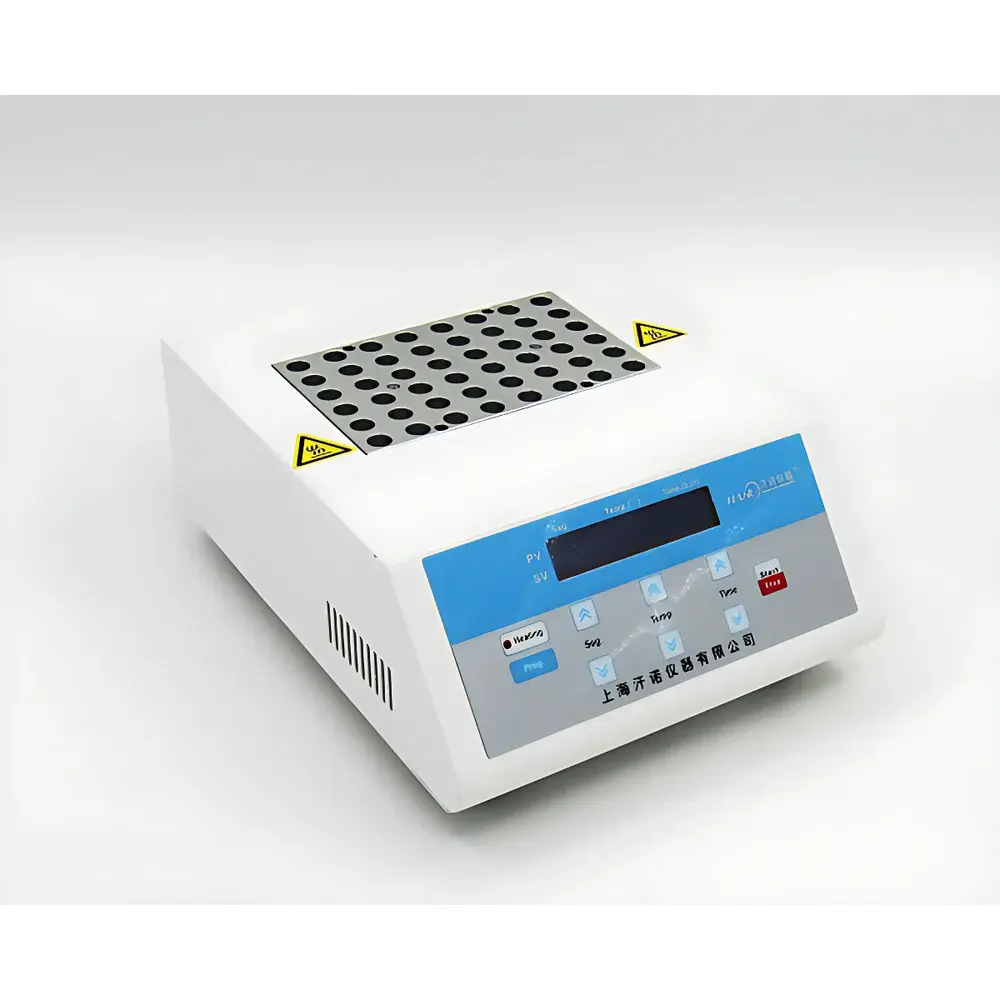
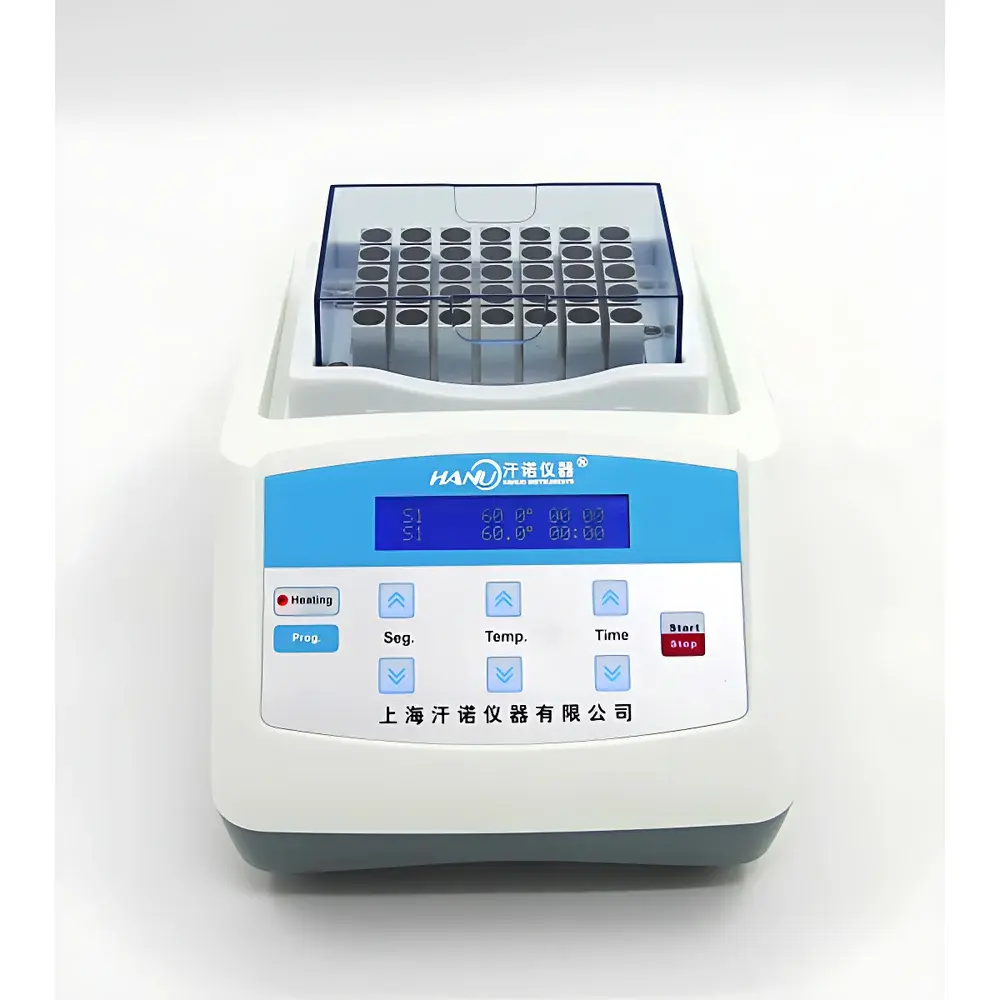
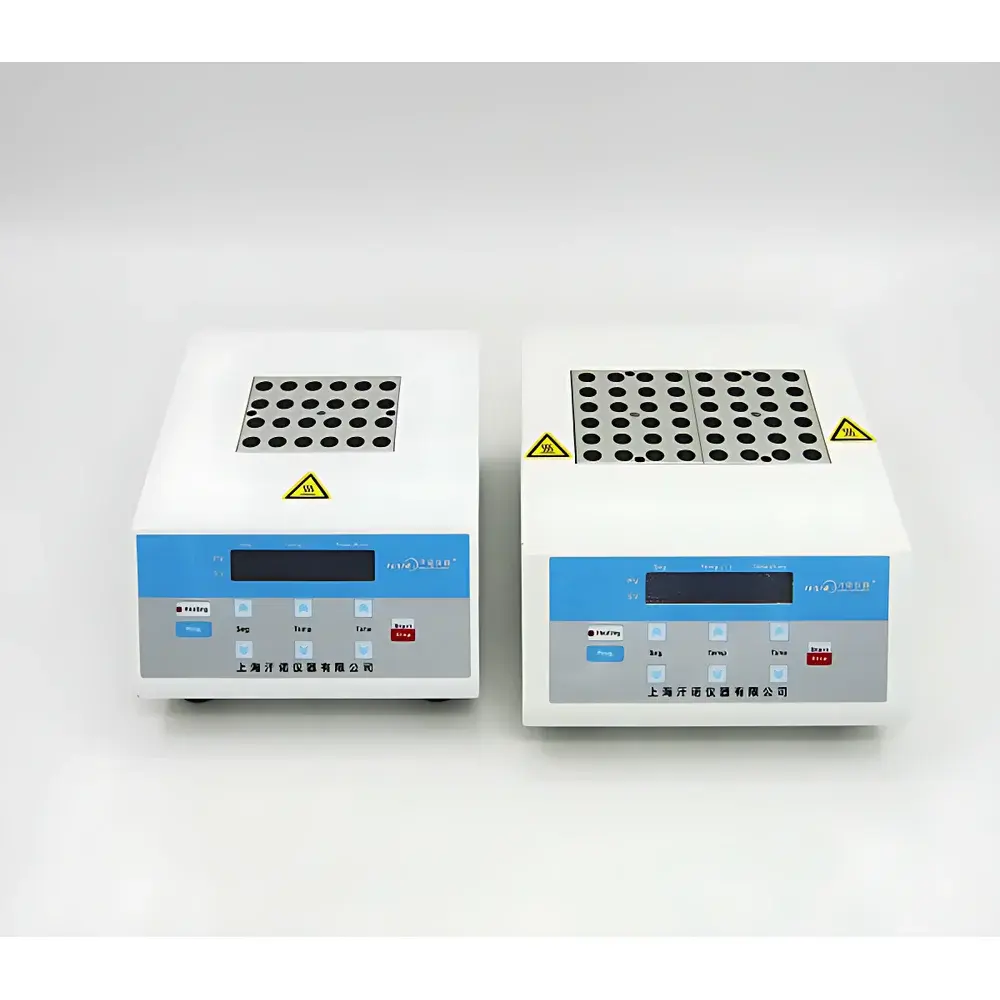
Hanuo HNDKT200-1 Precision Metal Block Heater
| Brand | Hanuo |
|---|---|
| Origin | Shanghai, China |
| Model | HNDKT200-1 |
| Temperature Range | RT + 5°C to 150°C |
| Temperature Accuracy | ±0.5°C (at 40–100°C), ±1.0°C (at 100–150°C) |
| Temperature Uniformity | ≤ ±0.5°C across block surface |
| Block Temperature Gradient at 40°C | ≤ 0.3°C |
| Display Resolution | 0.1°C |
| Timer Range | 0–99 h 59 min |
| Heating Time | ≤ 30 min (20°C → 150°C) |
| Block Dimensions | 95.5 × 76.5 × 50 mm (standard modules) |
| Weight | Not specified |
Overview
The Hanuo HNDKT200-1 Precision Metal Block Heater is a microprocessor-controlled dry bath instrument engineered for stable, uniform, and repeatable thermal incubation of samples in molecular biology, clinical diagnostics, and analytical laboratories. Unlike water baths—prone to evaporation, contamination, and inconsistent heat transfer—the HNDKT200-1 employs solid aluminum heating blocks with high thermal conductivity and low thermal inertia, enabling rapid equilibration and precise temperature maintenance across the entire sample interface. Its design eliminates fluid handling, reducing cross-contamination risk and supporting aseptic workflows required in DNA amplification, enzyme assays, serum coagulation, and pre-PCR denaturation protocols. The unit operates within a calibrated range from ambient +5°C to 150°C, making it suitable for both low-temperature incubation (e.g., restriction digests at 37°C) and high-temperature applications (e.g., protein denaturation or wax melting).
Key Features
- Real-time digital display of setpoint temperature and countdown timer with 0.1°C resolution and minute-level timing precision
- Dual-stage programming: independent time and temperature settings for sequential thermal profiles (e.g., 95°C for 5 min → hold at 4°C)
- Self-diagnostic system with audible alarm and on-screen error code upon overtemperature, sensor failure, or power anomaly
- User-accessible temperature offset calibration to correct for systematic drift against traceable reference standards
- Quick-release modular block system—compatible with standardized tube diameters (6–40 mm), PCR strips (0.2 mL), microcentrifuge tubes (1.5/2.0 mL), and 96-well microplates—enabling rapid reconfiguration and autoclavable cleaning
- Integrated overtemperature cut-off circuit with redundant thermal fuse protection, compliant with IEC 61010-1 safety requirements for laboratory equipment
Sample Compatibility & Compliance
The HNDKT200-1 supports broad sample format flexibility through interchangeable aluminum blocks, each machined to ISO-toleranced cavities ensuring mechanical stability and optimal thermal coupling. Tube compatibility spans common laboratory consumables—including thin-wall PCR tubes, glass vials, and conical centrifuge tubes—without requiring adapters. For regulated environments, the heater’s deterministic thermal response, non-volatile parameter retention, and auditable alarm logging support adherence to GLP and GMP documentation practices. While not inherently 21 CFR Part 11–compliant, its operational consistency and traceable calibration capability align with FDA-recognized validation frameworks for ancillary lab instrumentation used in QC/QA testing per ASTM E2875 and ISO/IEC 17025 guidelines.
Software & Data Management
The HNDKT200-1 operates as a standalone instrument with no embedded software or network interface. All configuration and operation are managed via front-panel keypad and LED display. Parameter settings—including temperature setpoint, dwell time, and calibration offset—are retained in non-volatile memory during power cycles. No data export, remote control, or audit trail functionality is provided; users requiring electronic recordkeeping must integrate external logging devices (e.g., calibrated thermocouple data loggers) validated per SOPs. This architecture prioritizes reliability, electromagnetic immunity, and minimal firmware attack surface—consistent with IEC 61326-1 for measurement equipment in industrial and laboratory settings.
Applications
- Thermal pre-treatment in nucleic acid workflows: DNA denaturation (94–98°C), hot-start PCR activation, and post-amplification hold (4–10°C)
- Enzyme reaction incubation: restriction endonuclease digestion, ligase assembly, and phosphatase treatment at defined temperatures (37°C, 50°C, 65°C)
- Clinical specimen processing: serum clotting (37°C), antigen retrieval (95–100°C), and blood bank compatibility testing
- Chemical and material science protocols: solvent evaporation support, polymer melt conditioning, and small-volume reagent warming without condensation
- Quality control of temperature-sensitive reagents: stability verification of antibodies, enzymes, and lyophilized standards under accelerated storage conditions
FAQ
What is the recommended calibration frequency for the HNDKT200-1?
Annual calibration against an NIST-traceable reference thermometer is advised for routine use; more frequent verification (e.g., quarterly) is recommended in GLP/GMP environments or after physical impact or extended high-temperature operation.
Can the unit be used with non-standard or custom blocks?
Yes—Hanuo offers OEM block customization services. Customers may supply dimensional drawings and thermal load specifications for application-specific aluminum or stainless-steel blocks, subject to minimum order quantities and lead time confirmation.
Is the device suitable for continuous operation at 150°C?
Yes. The unit is rated for uninterrupted operation within its full temperature range. However, prolonged exposure above 120°C may accelerate thermal aging of silicone O-rings (if present in optional accessories) and reduce long-term sensor stability; periodic verification is recommended.
Does the HNDKT200-1 meet CE or UL certification requirements?
The device complies with CE marking directives (EMC Directive 2014/30/EU and Low Voltage Directive 2014/35/EU) and carries the CE mark. It is not UL-listed, but conforms to IEC 61010-1:2010 Edition 3 for safety of electrical equipment for measurement, control, and laboratory use.



