
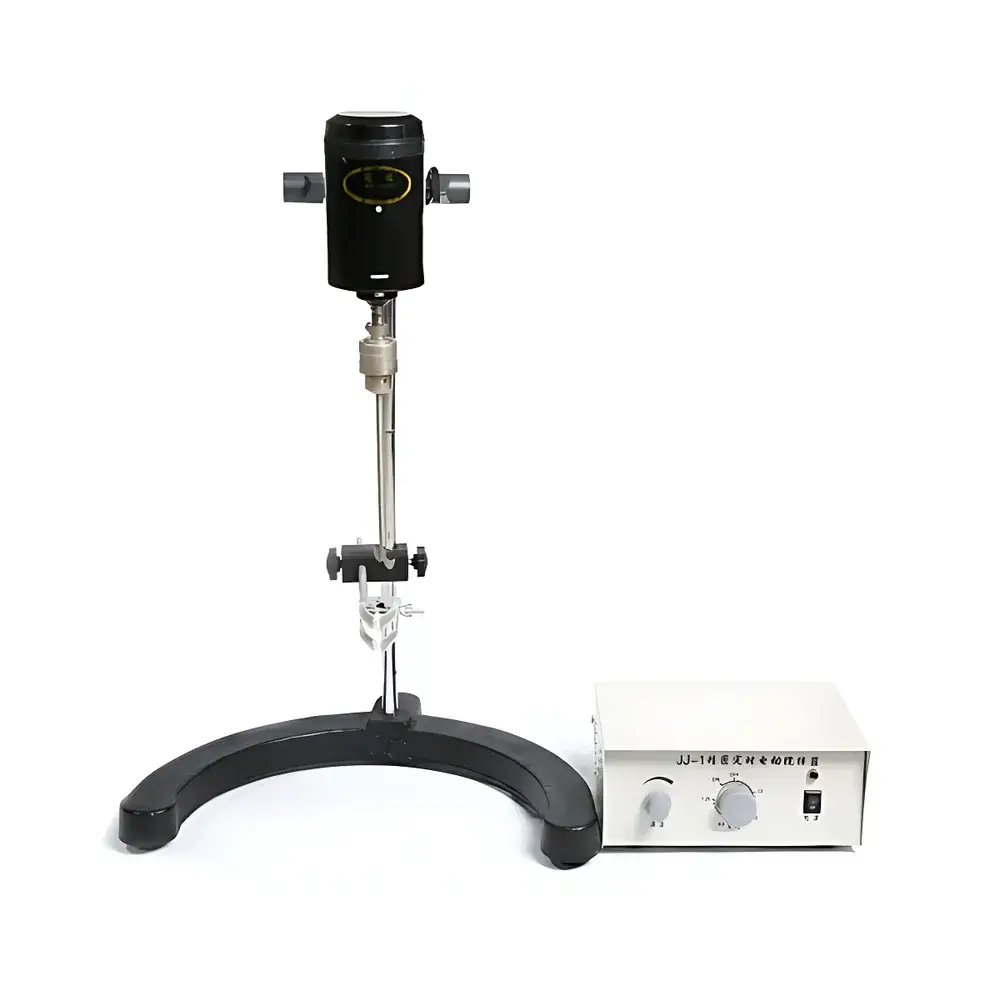
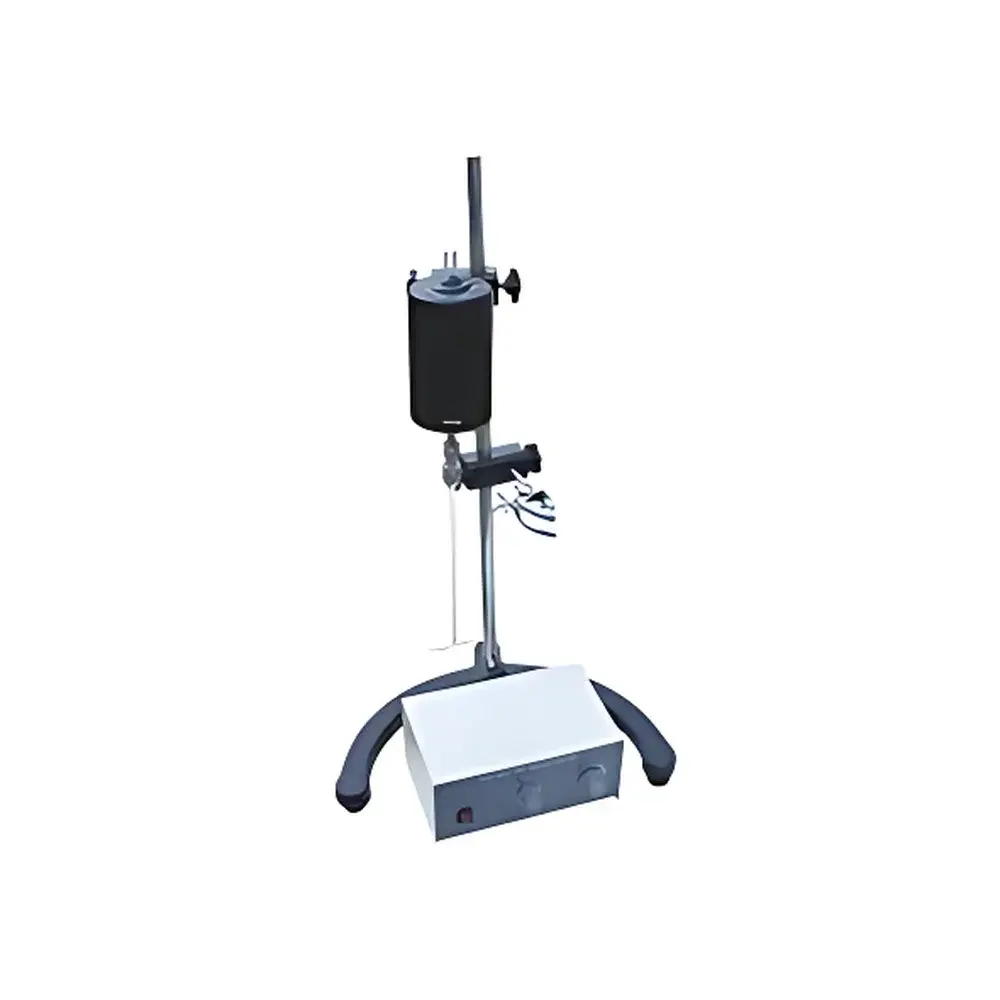
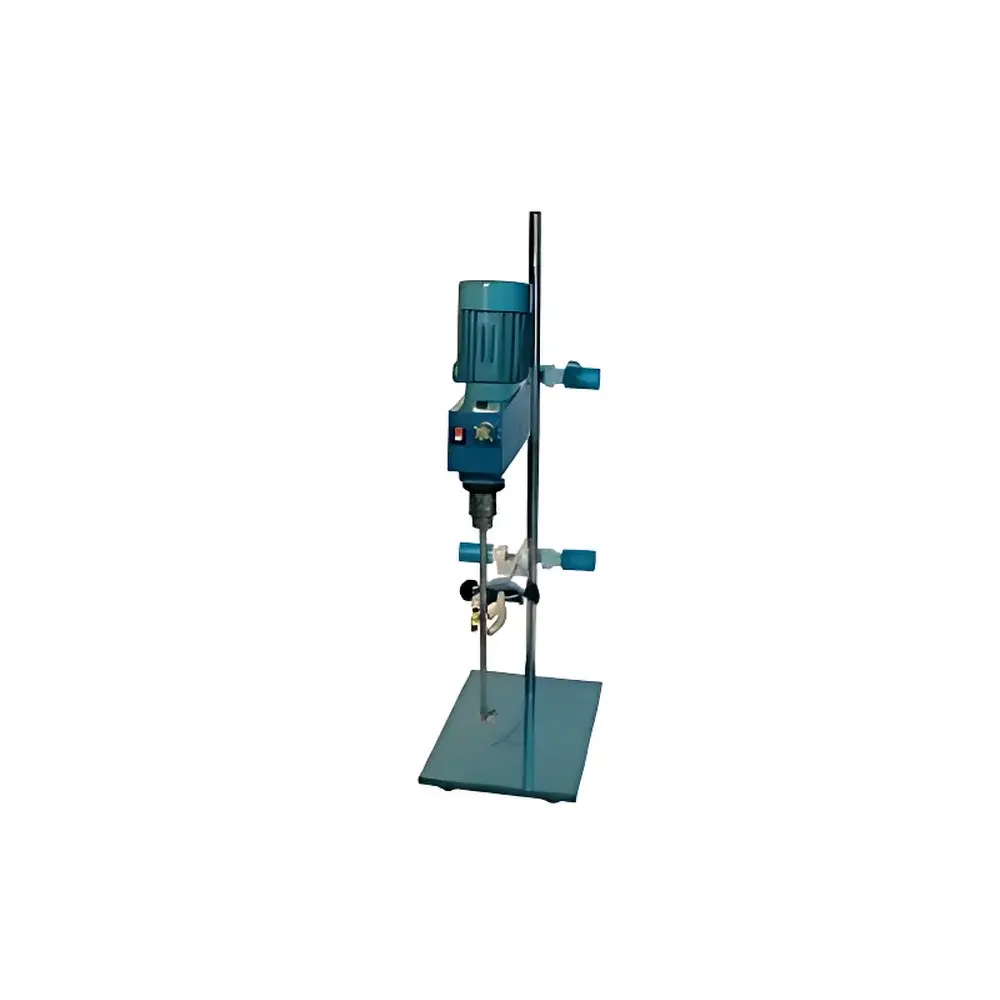
Hanuo JJ-200WA Bidirectional Electric Stirrer
| Brand | Hanuo |
|---|---|
| Model | JJ-200WA |
| Drive Type | Brushless DC Motor |
| Max. Stirring Volume | 3 L |
| Speed Range | 0–120 rpm |
| Speed Display | Digital LED |
| Torque | 0.7 N·m |
| Viscosity Range | 0–100,000 mPa·s |
| Timer Range | 0–120 min |
| Power Rating | 200 W |
| Construction | Stainless Steel Stirring Rod & Blade |
| Compliance | CE-marked for laboratory use (IEC 61010-1) |
Overview
The Hanuo JJ-200WA Bidirectional Electric Stirrer is an engineered solution for precise, reproducible mixing of low- to high-viscosity liquid samples in research, quality control, and routine analytical laboratories. Designed around a brushless DC motor architecture, it delivers spark-free operation, high torque output (0.7 N·m), and stable rotational performance across its full speed range — from gentle homogenization of suspensions to vigorous dispersion of viscous polymer solutions. Unlike AC-driven stirrers prone to thermal drift and speed instability under load, the JJ-200WA maintains consistent rotational velocity regardless of medium viscosity or vessel geometry, ensuring process repeatability critical for method validation and regulatory compliance. Its bidirectional rotation capability enables controlled de-agglomeration and improved suspension uniformity — particularly valuable in pharmaceutical formulation development, catalyst slurry preparation, and environmental sample digestion protocols.
Key Features
- Brushless DC motor with integrated thermal protection and electromagnetic interference (EMI) shielding — compliant with IEC 61000-6-3 for laboratory electromagnetic compatibility.
- Digital LED speed display offering real-time, ±1 rpm resolution feedback — eliminating analog dial ambiguity and supporting SOP-driven documentation.
- 0–120 minute mechanical timer with audible end-of-cycle alert — configurable for unattended operation during extended dissolution or extraction procedures.
- Stainless steel (AISI 316) stirring rod and impeller assembly — certified per ASTM A276 for corrosion resistance in aqueous, acidic, and mildly alkaline media.
- Adjustable clamping base with dual-axis leveling mechanism — accommodates vessels from 50 mL beakers to 3 L jacketed reactors while minimizing vibration-induced resonance.
- No-load speed stability ≤ ±0.5% over 8-hour continuous operation — verified per ISO 5725-2 precision criteria.
Sample Compatibility & Compliance
The JJ-200WA supports mixing of Newtonian and non-Newtonian fluids up to 100,000 mPa·s (e.g., xanthan gum solutions, silicone oils, and molten polymers at elevated temperatures when used with external heating mantles). It is routinely deployed in applications requiring adherence to USP (Dissolution Apparatus Calibration), ASTM D2196 (Rheology of Paints), and ISO 4618 (Coating Viscosity Testing). While the unit itself does not include temperature control, its robust thermal management allows safe integration with Peltier-cooled or oil-jacketed vessels operating between –20 °C and +80 °C. Device construction meets IEC 61010-1 safety requirements for Class II laboratory equipment, and electrical certification includes CE marking under the Low Voltage Directive (2014/35/EU).
Software & Data Management
As a standalone benchtop instrument, the JJ-200WA operates without proprietary software dependency — aligning with GLP/GMP environments where validated, minimal-software configurations are preferred. All operational parameters (speed setpoint, timer value, direction toggle) are manually entered and retained via hardware-based memory. For audit-trail requirements, users may integrate the stirrer into digital lab notebooks (e.g., LabArchives or Benchling) via timestamped manual entry or optional RS-232 interface (available upon request with firmware version 2.1+). No cloud connectivity or remote firmware updates are implemented — preserving data sovereignty and reducing cybersecurity exposure vectors common in IoT-enabled lab devices.
Applications
- Pharmaceutical: Dissolution testing of solid oral dosage forms; buffer and excipient blending prior to lyophilization cycle development.
- Chemical R&D: Catalyst slurry homogenization for heterogeneous hydrogenation reactions; emulsion polymerization initiation under inert atmosphere.
- Environmental: Digestion of soil/sediment matrices in EPA Method 3050B acid leaching protocols; suspended solids stabilization for turbidity calibration standards.
- Food Science: Hydration of hydrocolloids (e.g., carrageenan, guar gum); uniform dispersion of lipid-soluble vitamins in fortified beverages.
- Academic Teaching: Kinetics experiments involving iodine clock reactions; viscosity-temperature correlation studies using calibrated glycerol/water mixtures.
FAQ
Does the JJ-200WA support external temperature feedback control?
No — it is a dedicated stirring device without integrated heating/cooling or PID loop capability. Temperature regulation must be achieved externally via heated/stirred baths or jacketed vessels.
Can the stirrer operate continuously for 24 hours?
Yes — rated for continuous duty under nominal load (≤3 L water-equivalent viscosity). Thermal cutoff activates only if ambient temperature exceeds 40 °C or airflow is obstructed.
Is the stainless steel shaft compatible with chlorinated solvents?
AISI 316 stainless steel offers moderate resistance to dilute sodium hypochlorite (<5%) but is not recommended for prolonged exposure to concentrated chlorine-based oxidizers per NACE MR0175 guidelines.
What is the maximum allowable vessel diameter for stable operation?
Up to 150 mm — beyond which lateral deflection may exceed 0.3 mm at 120 rpm; use of a centering guide sleeve is advised for vessels >120 mm.
Does the unit comply with FDA 21 CFR Part 11 for electronic records?
Not applicable — as a non-data-generating device with no electronic storage or user authentication, it falls outside Part 11 scope. Its use in Part 11-regulated workflows requires procedural controls documented in site-specific SOPs.



