
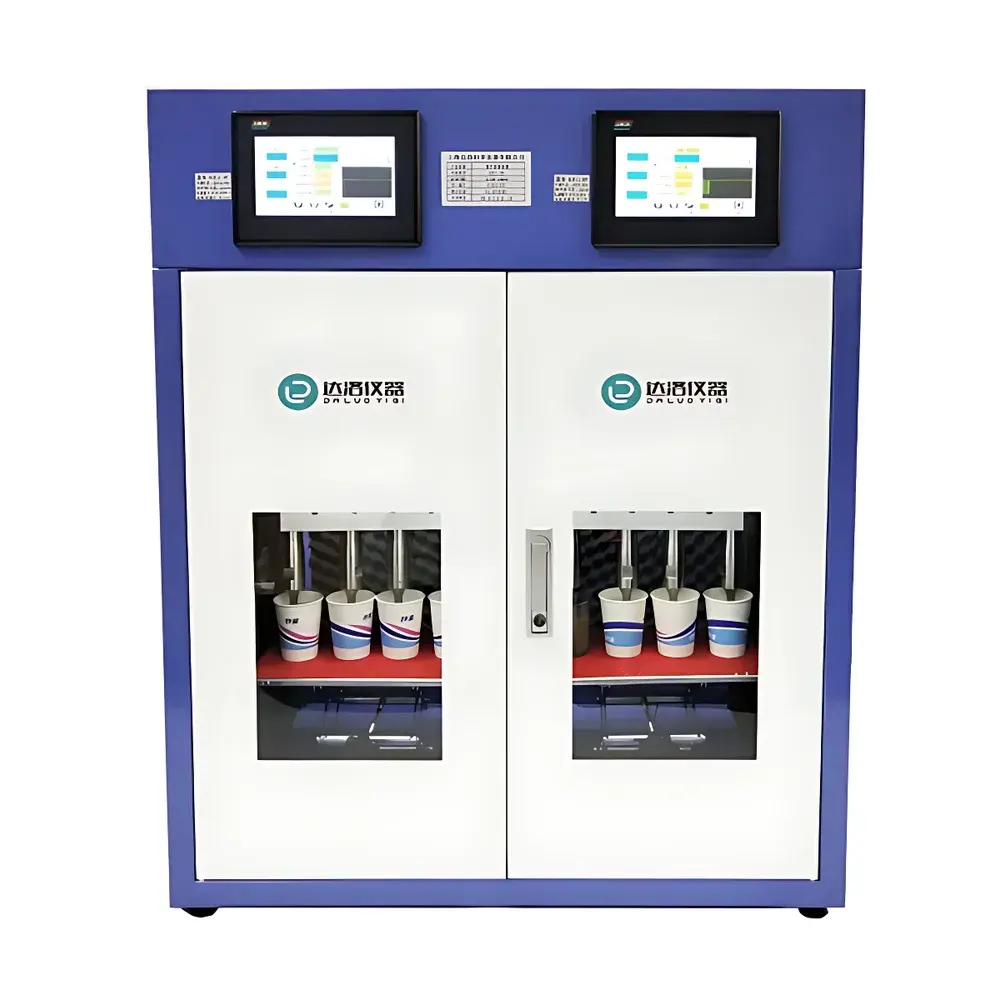
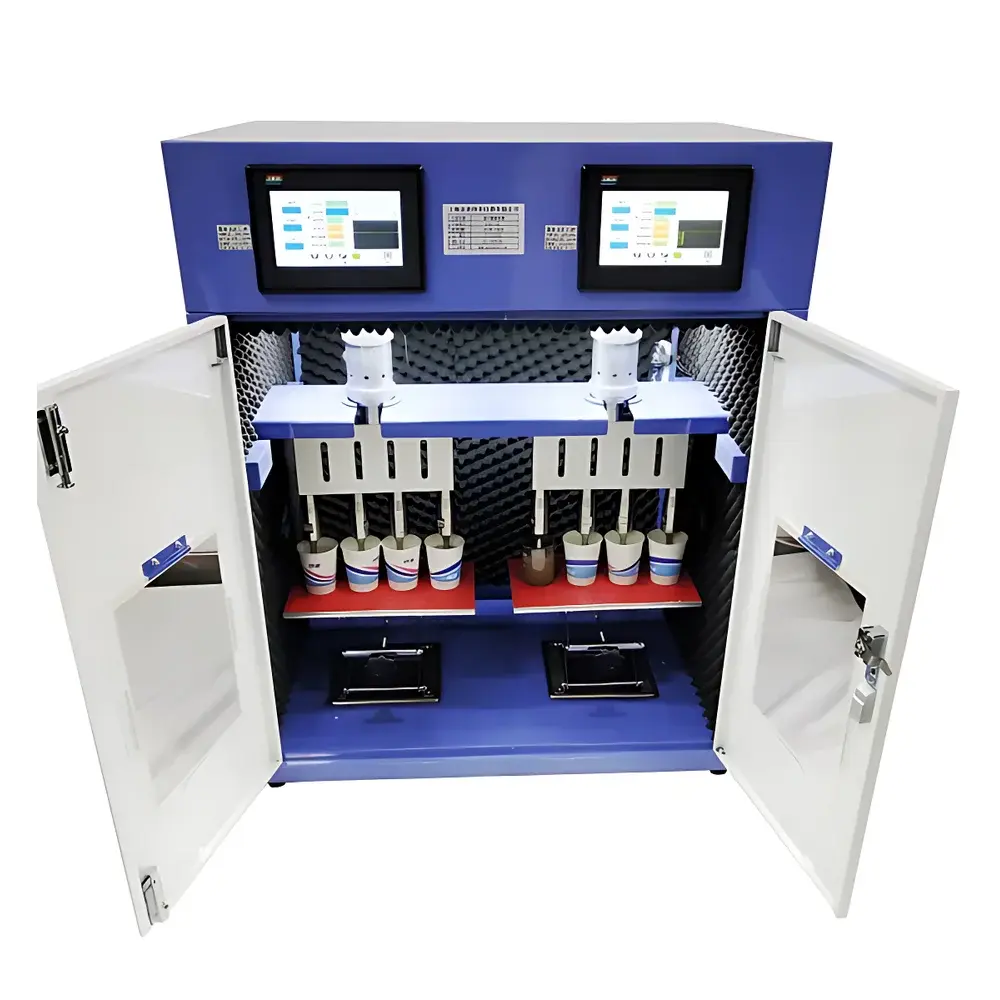
Daxluot HJ911-8P 8-Channel High-Power Ultrasonic Extractor
| Brand | Daxluot |
|---|---|
| Origin | Shanghai, China |
| Model | HJ911-8P |
| Ultrasonic Power | 4000 W (2 × 2000 W channels) |
| Frequency | 20 kHz ±1 kHz |
| Temperature Range | Ambient to 90 °C |
| Sample Capacity | 300 mL × 8 channels |
| Transducer Diameter | 12 mm × 8 |
| Control Interface | 7-inch color touchscreen + PLC-based dual-control system |
| Operation Modes | Pulsed or continuous ultrasonication |
| Safety Features | Overtemperature protection, fault alarm, password-protected program access, integrated acoustic shielding |
| Application Scope | Laboratory-scale and pilot-scale extraction, cell disruption, nano-dispersion, emulsification, and cleaning |
Overview
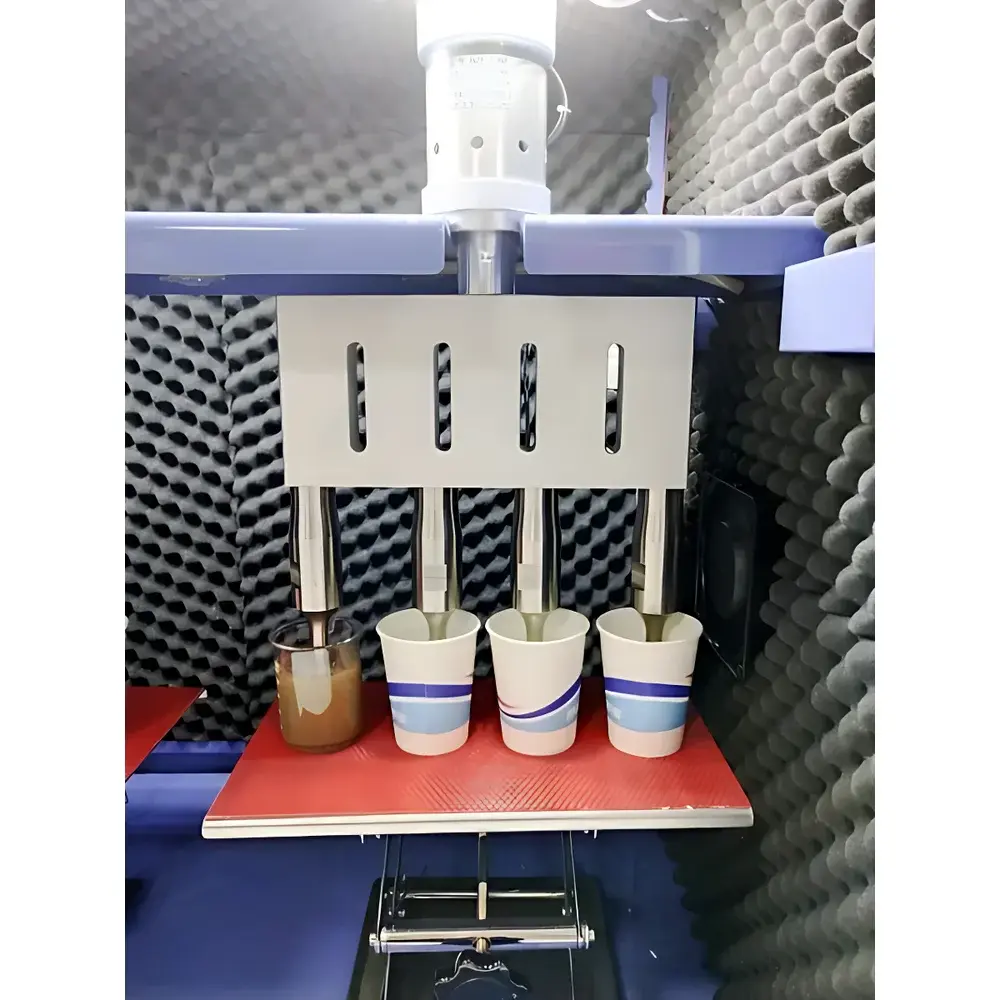
The Daxluot HJ911-8P is an 8-channel high-power ultrasonic extractor engineered for reproducible, scalable solid–liquid and tissue–solvent extraction in research laboratories and pilot development settings. It operates on the principle of high-intensity focused ultrasound (HIU) at 20 kHz, inducing controlled acoustic cavitation in liquid media. This process generates transient microbubbles that collapse violently near solid surfaces—producing localized shockwaves, microstreaming, and shear forces sufficient to disrupt cell membranes, desorb analytes from matrices (e.g., soil, sediment, plant tissue), and enhance mass transfer kinetics. Unlike bath-type ultrasonicators, the HJ911-8P employs eight fixed-position, horn-type titanium alloy transducers (12 mm diameter), delivering direct energy coupling into individual sample vessels—ensuring uniform power density distribution and eliminating cross-contamination between channels. Its modular architecture supports method development across diverse sample types while maintaining traceable operational parameters required under GLP-compliant workflows.
Key Features
- Simultaneous parallel processing of up to eight 300 mL samples with independent amplitude control per channel
- Dual PLC-based control system enabling synchronized or staggered ultrasonication protocols
- Real-time dynamic ultrasonic waveform visualization via 7-inch capacitive touchscreen interface
- Auto-frequency tracking circuitry maintains resonance stability across varying load conditions and temperature gradients
- Programmable pulse modulation (on/off ratio, duty cycle) to mitigate thermal accumulation during sensitive extractions
- Integrated overtemperature cutoff with PT100 sensor feedback loop—active cooling not required due to low-duty-cycle design
- Acoustic enclosure lined with vibration-damping composite material reduces ambient noise to ≤65 dB(A) at 1 m distance
- Non-volatile memory stores ≥100 user-defined methods with timestamped execution logs
- Password-protected administrator mode ensures data integrity and audit readiness per FDA 21 CFR Part 11 guidelines
Sample Compatibility & Compliance
The HJ911-8P accommodates a broad range of sample matrices including but not limited to: environmental solids (soil, sludge, sediment), botanical materials (leaves, roots, seeds), microbial cultures (Gram-positive/negative bacteria, spores), mammalian tissues, and colloidal suspensions (e.g., graphene oxide, metal oxides). It supports both volatile (e.g., hexane, chloroform) and non-volatile solvents (e.g., methanol, ethanol, water-based buffers). The instrument complies with IEC 61000-6-3 (EMC emissions) and IEC 61000-6-2 (immunity). All electrical components meet CE marking requirements. For regulated environments, the system supports electronic signature capture and full audit trail generation when connected to validated LIMS or ELN platforms.
Software & Data Management
The embedded firmware enables local method creation, parameter logging (power, duration, temperature, pulse profile), and CSV export via USB port. Optional Ethernet connectivity allows remote monitoring through a secure web interface compatible with modern laboratory network architectures. All stored protocols include metadata fields for analyst ID, sample ID, SOP version, and calibration status—facilitating alignment with ISO/IEC 17025 documentation standards. No proprietary software installation is required; exported datasets are natively readable in MATLAB, Python (Pandas), and commercial chromatography data systems.
Applications
- Accelerated solvent extraction (ASE) of PAHs, PCBs, pesticides, and pharmaceutical residues from environmental and food matrices
- Cell lysis and subcellular fractionation in proteomics and metabolomics workflows
- Preparation of nanomaterial dispersions with reduced agglomeration and improved zeta potential stability
- Enhanced enzymatic digestion efficiency by pre-disrupting fibrous or lipid-rich tissues
- Ultrasonic-assisted synthesis of metal–organic frameworks (MOFs) and co-crystals
- Routine cleaning of glassware and stainless-steel components prior to trace-metal analysis
FAQ
Is the HJ911-8P suitable for GMP-regulated production environments?
It is designed for laboratory and pilot-scale use—not for full-scale manufacturing. However, its programmable controls, audit-trail capability, and temperature/power logging support validation activities under GMP Annex 15.
Can I replace the 12 mm probes with larger diameters?
No. Probe geometry is calibrated to the resonant frequency and power output of the transducer stack. Substitution voids calibration and may damage the generator.
Does the system require external cooling?
Not under standard operation. The pulsed-mode functionality and built-in thermal cutoff prevent excessive heating in most aqueous and polar solvent systems. For low-boiling-point solvents, optional chilled circulator integration is available.
What maintenance is required?
Annual verification of transducer tip erosion (via micrometer measurement) and calibration of temperature sensors using NIST-traceable references are recommended.
Is remote software update supported?
Firmware updates must be performed locally via USB drive following formal release notifications from Daxluot Technical Support.
Related Products



