
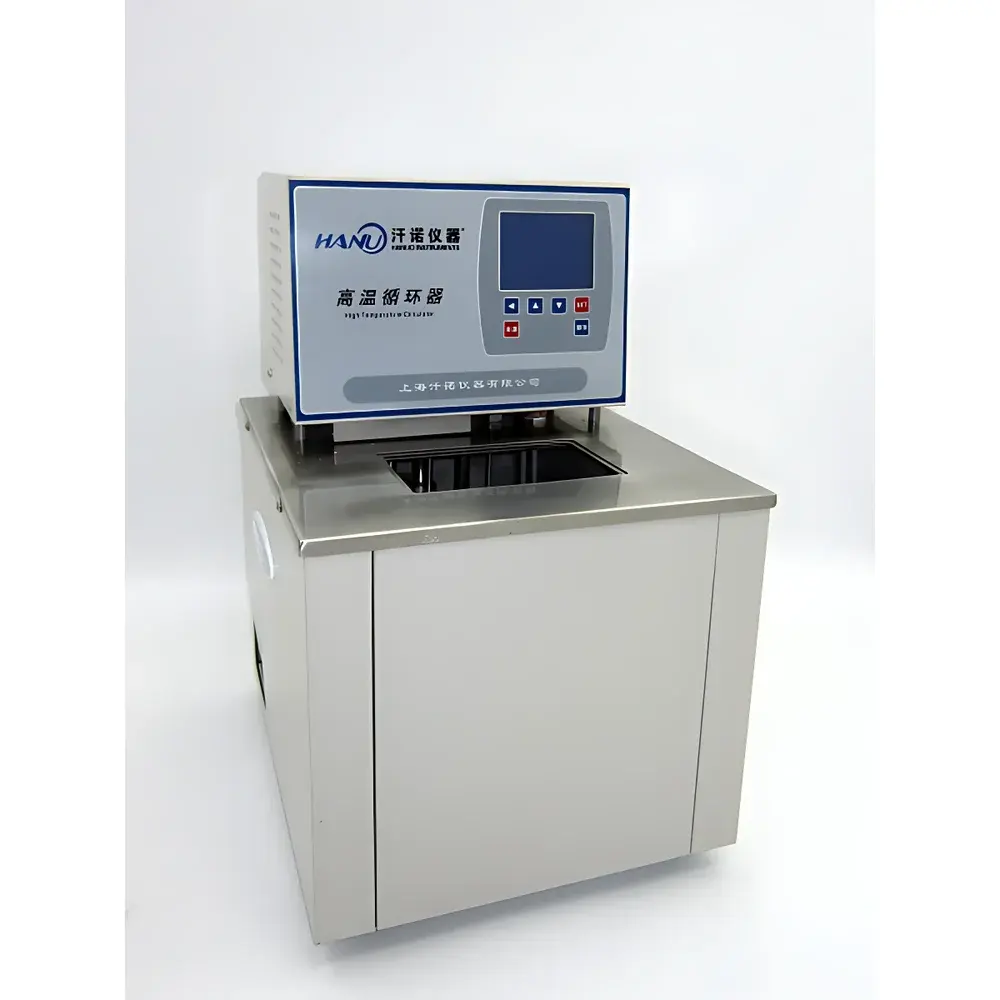
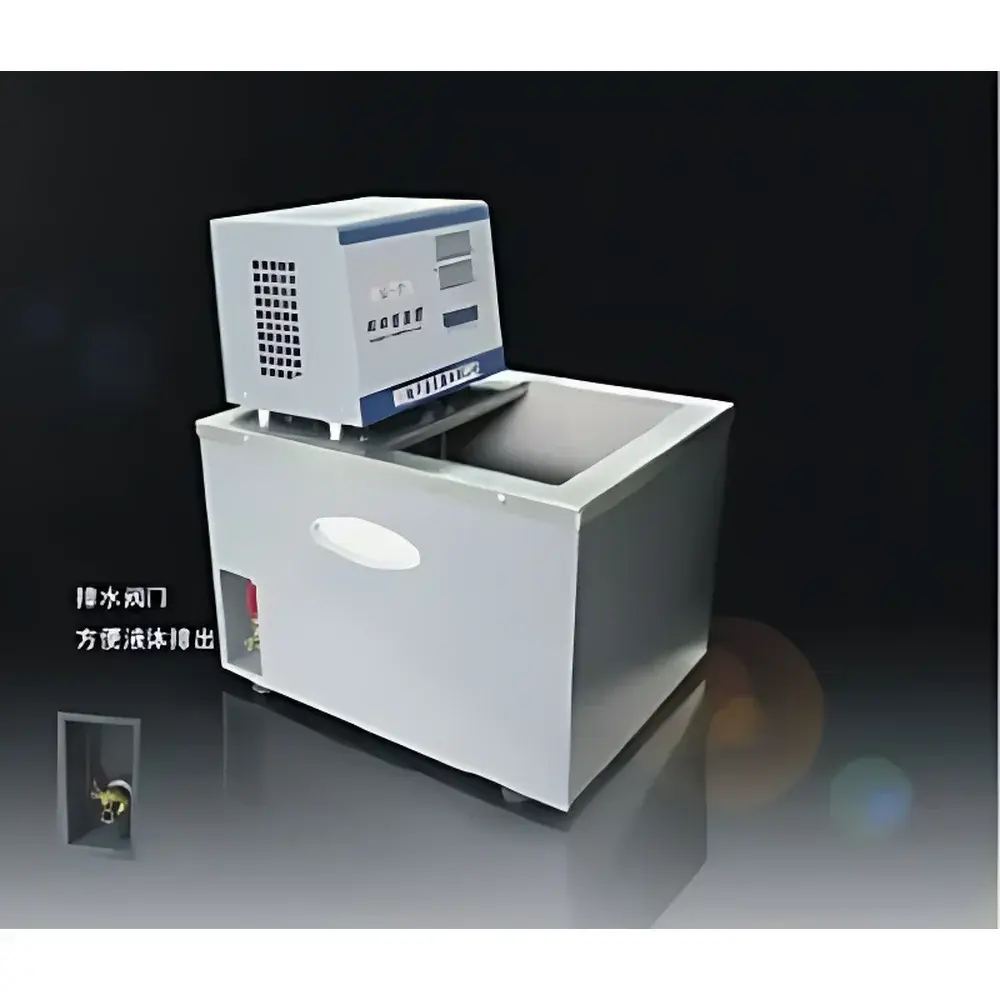
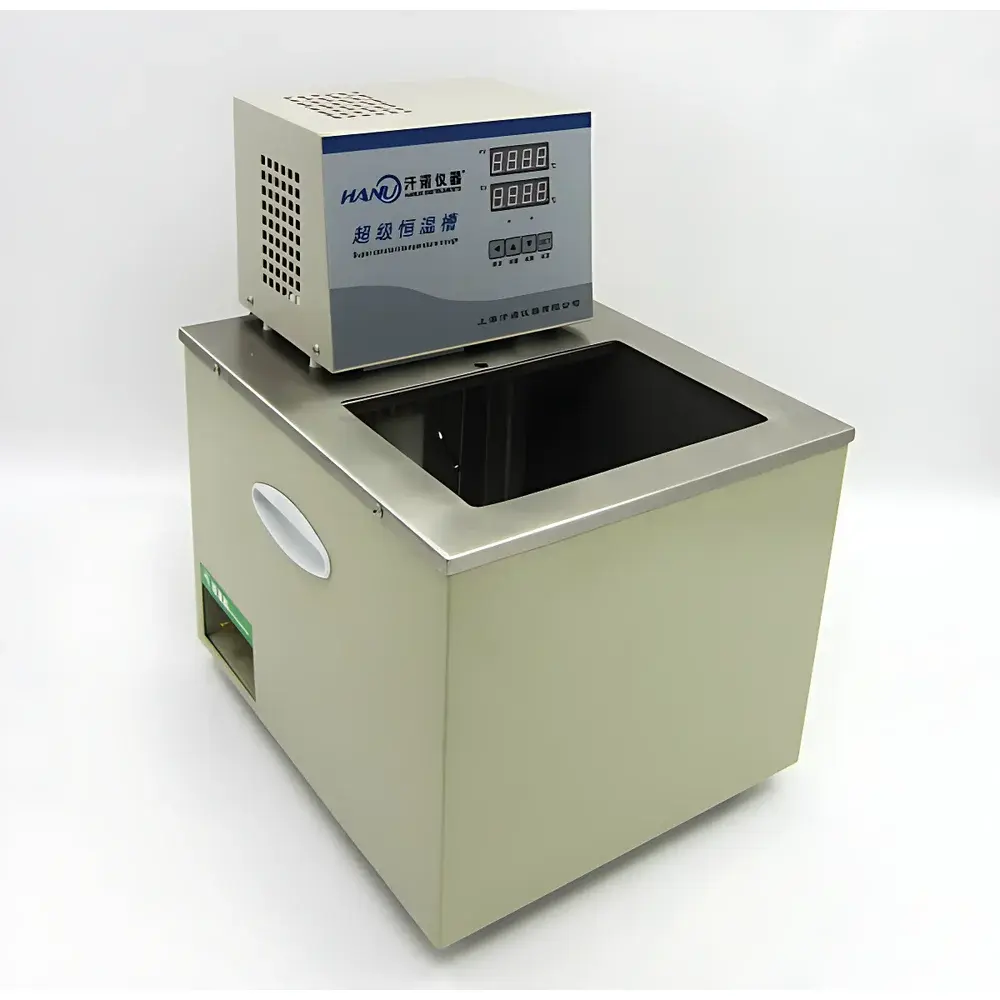
Hanuo GX-2015 High-Temperature Circulating Oil Bath
| Brand | Hanuo |
|---|---|
| Origin | Shanghai, China |
| Model | GX-2015 |
| Instrument Type | Constant-Temperature Circulating Bath |
| Circulation Mode | External Circulation |
| Temperature Control | Heating-Only |
| Bath Volume | 15 L |
| Temperature Range | Ambient to 300 °C |
| Temperature Stability | ±0.2 °C |
| Pump Flow Rate | 15 L/min |
| Tank Dimensions (W×D×H) | 280 × 250 × 200 mm |
| Tank Depth | 200 mm |
| Construction Material | Stainless Steel 304 |
| Display | Dual LED, Setpoint & Actual Temperature |
| Control Method | PID Digital Temperature Control |
| Optional Feature | Integrated Cold-Water Inlet for Rapid Cooling |
Overview
The Hanuo GX-2015 High-Temperature Circulating Oil Bath is an engineered thermal management system designed for precise, stable, and reproducible temperature control in demanding laboratory and pilot-scale applications. Operating on the principle of forced convection via external circulation, it delivers uniform heat transfer to external devices—including jacketed reactors, distillation columns, semiconductor processing fixtures, and high-temperature analytical instrumentation—without direct immersion. Unlike water baths limited to 100 °C, this unit utilizes thermally stable silicone or mineral oils as heat-transfer media, enabling continuous operation up to 300 °C with minimal volatility and oxidation risk. Its stainless steel 304 tank construction ensures long-term resistance to corrosion from both aqueous and organic solvents, supporting compatibility across chemical synthesis, materials testing, and process development workflows.
Key Features
- External recirculation pump delivering up to 15 L/min flow rate, optimized for low-pressure drop in extended tubing loops and jacketed vessel systems
- PID-based digital temperature controller with dual LED display—simultaneously showing setpoint and real-time bath temperature—with intuitive touch-sensitive interface
- Temperature stability maintained at ±0.2 °C under steady-state conditions, verified per ASTM E2779-21 guidelines for thermal stability assessment of liquid baths
- Stainless steel 304 tank and internal plumbing, passivated and electropolished to resist pitting and stress corrosion cracking in aggressive chemical environments
- Modular cold-water inlet port compatible with standard 1/2″ BSP fittings, enabling rapid thermal quenching during exothermic reaction control without requiring auxiliary chillers
- Over-temperature cut-off protection, dry-run sensor, and ground-fault circuit interrupter (GFCI) integrated into power supply for operational safety compliance
Sample Compatibility & Compliance
The GX-2015 supports a broad range of heat-transfer fluids—including Dow Corning PM-100 silicone oil, Marlotherm SH, and Shell Heat Transfer Oil S2—each selected for thermal stability, low vapor pressure, and oxidative resistance above 250 °C. It complies with IEC 61010-1:2010 for electrical safety in laboratory equipment and meets CE marking requirements for electromagnetic compatibility (EMC) and low-voltage directive (LVD). While not certified for Class I Division 1 hazardous locations, its sealed pump housing and non-sparking motor design make it suitable for general-purpose use in ISO 17025-accredited laboratories conducting GLP-compliant thermal validation studies. Documentation includes factory calibration certificate traceable to NIM (National Institute of Metrology, China), with optional UKAS-accredited calibration available upon request.
Software & Data Management
The GX-2015 operates as a standalone analog-controlled instrument; no embedded software or network connectivity is provided. However, its analog 0–5 V or 4–20 mA output signal (optional accessory) enables integration with third-party data acquisition systems (e.g., LabVIEW, DeltaV, or Siemens Desigo CC) for time-stamped temperature logging and alarm triggering. When deployed in FDA-regulated environments, users may configure external SCADA systems to enforce 21 CFR Part 11-compliant audit trails—including user authentication, electronic signatures, and immutable record retention—for temperature-critical processes such as API crystallization or polymer curing validation.
Applications
- Temperature control of jacketed glass or stainless steel reactors during high-boiling-point solvent reflux (e.g., xylene, diphenyl ether, or DMSO-based reactions)
- Heating source for fractional distillation columns in fine chemical pilot plants, maintaining column base temperature within ±0.5 °C over 8+ hour runs
- Thermal conditioning of semiconductor wafer chucks and photomask holders prior to lithography alignment
- Calibration reference bath for RTDs, thermocouples (Types K, S, R), and infrared pyrometers across the 50–300 °C range
- Accelerated aging studies per ASTM D5721-19, where polymeric specimens require sustained exposure at elevated temperatures under inert atmosphere
FAQ
What types of heat-transfer fluids are recommended for operation at 300 °C?
Silicone-based oils (e.g., Dow Corning DC-200 series) and synthetic aromatic hydrocarbons (e.g., Marlotherm SH) are validated for continuous use at 300 °C; mineral oils are not recommended above 220 °C due to coking risk.
Can the GX-2015 be used as a water bath?
Yes—though only up to 95 °C to avoid boiling and cavitation; stainless steel construction prevents rust, but prolonged water use requires periodic descaling and biocide treatment.
Is the external circulation port compatible with standard laboratory tubing?
Yes—the 1/2″ BSP male thread accepts reinforced silicone or PTFE-lined hoses rated for >300 °C; maximum backpressure tolerance is 1.2 bar.
Does the unit include a calibration certificate?
Each unit ships with a factory-issued calibration report (NIM-traceable) covering three points: 100 °C, 200 °C, and 300 °C, performed using a Fluke 1523 reference thermometer and dry-block calibrator.
What maintenance intervals are recommended for continuous operation?
Oil level and clarity inspection every 200 operating hours; full fluid replacement every 1,500 hours or annually—whichever occurs first—using manufacturer-specified filtration protocols.



